Saturday, April 24, 2010

Birthday Girls: Shirley MacLaine

Shirley MacLaine, Irma La Douce
★ ★ ★ ★ ★
(lost the 1963 Best Actress Oscar to Patricia Neal for Hud)

Why I Waited: Neither Billy Wilder nor Jack Lemmon is high on my list of favorites; it's quite possibly true that I've seen too many of the wrong movies by both of them, but I don't care for The Apartment, the previous and more famous outing for this trio. Irma La Douce is appreciably longer and less well-liked than that one is. Plus, in my experience, Hollywood producers not named Arthur Freed should have stayed out of their studio-set versions of "Paris" more often than they did. Plus, we know right off that we're dealing with a "cute" hooker, handled by a director whose apparent feelings about women I am elated I do not share. So, I admit I had the collywobbles.

The Performance: You say tomato, I say tomahto, you say self-fulfilling prophecy, I say no, Irma La Douce really is incredibly lame, despite the game contributions of cinematographer Joseph Ruttenberg and the production designers. MacLaine doesn't help out nearly as much as you're hoping, partly because she can't, and partly because she won't. First, the "can't" part: while it's no surprise that Wilder and Lemmon are utterly besotted with each other, I still thought a film called Irma La Douce had a fighting shot at being about Irma. But once Lemmon's naïve, incompetent police officer shows up, and then falls for Irma, and then concocts one of those don't-ask schemes for why he just has to spend half of the film as a tony British aristocrat duping Irma into serving him exclusively, you just know who's going to win the looming mug-off. In this case, Wilder won't even allow for a fair fight. He cedes MacLaine less and less screen time as the film wears on, and more than that, he pushes her into second- and third-level planes of his setups, or frames her in key scenes so that her back is to us during most of her dialogue. She's annoyingly, joylessly neglected in her own film, which I suspect might have been sold to her as a chance to seize center stage in flouncy costumes and expensive studio style, especially after she was the best damn thing in The Apartment, and cruelly un-Oscared.

So, poor Shirley, whom I often like. But there is most certainly a "but," since nearly all of the charm she used to endear us to Fran Kubelik and distract us as well she could from the distasteful and chauvinist story-structures of The Apartment has turned into a rote, flippant kookiness in Irma La Douce. To grind down all of MacLaine's appeal would take a much worse movie than this one is; she's hard pressed to reap any laughs, but she wins a few smiles. Still, she occupies an unenviable middle-ground between limping through the tired motions of the screenplay and buying into the myth of her own pixie irresistibility. One needn't blame her for the script's many redundancies, like the long opening sequence in which she wheedles extra cash out of all her johns through a daisy-chain of cooked-up bathetic stories. However, she sells all of these stories in just the same low-energy way, appearing as though she adores Wilder and Diamond's dialogue beyond any sense of having to help it along, yet without actually believing a word of it. The character and her circumstances are just a routine to her, a middling-at-best sketch that she might use to pad out a Vegas show or a variety hour, and so it's telling when she ends one scene grinning nonsensically into the camera and making jazz-hands at the audience, and later has to batten down her own giggles after bellowing out a seemingly random line, with a deep, chesty bravado that makes no sense except as the fleeting impulse of an inveterate cut-up who's just entertaining herself.

What MacLaine needs, not for the first or last time, is a director who won't cut away from her quite so often but also won't put up with all her tics and lunges for audience affection. She also needs a film that yanks the lapdog out of her hands and the black rat's-nest wig off her head and gives her something to do instead of crap to hold. Her whole being is cluttered here with props to assemble into a color-by-numbers character—though I admittedly liked her adorable emerald bra, and feel it more than earned its screen time. The one scene where the writing breaks form to suggest what Irma La Douce might have been, if it felt like turning the tables with real zeal on Hollywood's massive dowry of pop-sexist clichés, comes when MacLaine's Irma begs Lemmon's nebbishy boyfriend not to get a job, asking what kind of woman it would make her if she couldn't support a man through her own honest work. It's clearly meant as a needle in the eye of all those "Baby, I'm the breadwinner!" scenes in mid-century movies (and in mid-century marriages), but there's nothing on either side of this scene, despite the gigantic 150-minute running time, to let MacLaine take it anywhere... and because she's taking such a slim and coasty approach to Irma anyway, she's built no reserves of emotion or personality in the character by which to sell the joke as anything but a toss-off gag. She tries that laughing-through-tears bit that shows up in so many of her performances, particularly on the seemingly annual occasion when she rendered another gamine streetwalker, but the bit doesn't have any specificity. You can't deny the movie or the lead performances their moments of zest and color, but there's a lassitude and a spendthrifty, Brat Pack-y complacency to the whole affair, and certainly, too, in MacLaine's comportment. It still speaks ill of Wilder that he so patently loses interest in Irma, but it's more than possible that Shirley beat him to it, and I can't honestly say that I missed her when she receded.

The Best Actress Project: 1 More Down, 38 to Go

Labels: , , , , , ,

Sunday, September 30, 2007

Supporting Actress Sundays: 1990

It's That Time of the Month again, when all of the acolytes of actressing collect at StinkyLulu's house to stump for and swipe at the best and the worst of a given year's Best Supporting Actress Oscar roster. Up to bat this month are the contenders from 1990. Together, they constitute a redoubtable and dissimilar field of actresses but, perhaps, a middle-of-the-road group of performances. You can, and should, read all about that over at the Smackdown. Dip into the warm, perfumed waters of the Comments section, and you'll also see that my own dream list of nominees for that year is probably:

GLENN CLOSE in Reversal of Fortune, who somehow missed a mention despite the film's multiple noms in leading categories, and despite being an 0-for-5 bridesmaid that everyone seems to like;
WHOOPI GOLDBERG in Ghost, who actually won the thing and, as far as I'm concerned, doesn't owe anybody an apology for that;
DIANE LADD in Wild at Heart, a performance championed by several Smackdowners despite the fact that most of us, myself included, have little love for the film;
JENNIFER JASON LEIGH in Miami Blues, who Tim and I agree does an affecting, funny, and atypically unhistrionic job of underplaying her dim Florida call-girl (and has the cinema's all-time best scene concerning vinegar pie); and
SHIRLEY MACLAINE in Postcards from the Edge, a film which you should already know is a favorite, in which MacLaine is an almost Whoopi-level hoot and a holler, and also a game belter and a surprisingly tough cookie, doing a terrific acting duet with Meryl Streep

Mary Alice in To Sleep with Anger might belong here, but she's construable as a lead, and I haven't seen the film in a long while. Helen Mirren also deserves a consolation prize, or maybe an actual nod, for making such brilliant, suggestive use of her screen time in The Comfort of Strangers, acing that Pinter dialogue and adopting a demure voice and delicate demeanor that still puts everyone on edge.

Of the three actress vehicles from 1990 that I screened in the last 24 hours, as a build-up exercise to this morning's Smackdown, the jewel is Paul Brickman's Men Don't Leave, in which fans of You Can Count on Me or Truly, Madly, Deeply will recognize another tart, carefully measured, wonderfully acted tale of bereavement, quiet comedy, and persuasively wrought ties to family, neighbors, lovers, and friends. Joan Cusack gives one of her best Kooky Joan performances as the downstairs eccentric who's putting the moves on Jessica Lange's 17-year-old son, very well played by Chris O'Donnell; Arliss Howard and Kathy Bates are also incredibly deft and funny in their roles as Lange's pseudo boyfriend and insensitive boss. Lange comes closer to Tootsie-style melancholy comedy than she has before or since, and it's nice to see her at comparative ease for once. The writing, especially in the first two-thirds of the film, is clever and economical, and the editing achieves poignancy not by dawdling but through carefully timed pruning and expertly showcased moments. B

Bates pops up in a single scene of Luis Mandoki's White Palace, which also features a generation-gap relationship where the woman is again the senior partner. Susan Sarandon has several effective scenes as a working-class waitress at a "White Palace" restaurant that primarily slings bite-sized hamburgers (uh....), and James Spader gives his eerie, clammy eroticism another go as the upwardly mobile yuppie whom Sarandon takes home for a hot roll in the sack. Spader has a Sadness in His Past that he won't snap out of; Sarandon also has a Sadness in Her Past that she pretends to have snapped out of, which is a good thing, because the screenplay barely makes it playable. All in all, White Palace is one of those movies that rails against embarrassment and deceit while constantly lying and emanating embarrassment about the grief, the religious disparity, and the class divide between its characters, though Sarandon does sell a great fuck-you speech as she storms out of a well-appointed Thanksgiving dinner. C

The movie could have been worse but also could have been much better, which also describes Philip Kaufman's gorgeously photographed Henry & June. Sadly, the director's follow-up to The Unbearable Lightness of Being is nowhere near as confident or as mysterious. The effortful recreation of 1930s Paris looks fussy and tacky despite Philippe Rousselot's diligent attempts to sublimate it, the script is full of faux-serious and ersatz-literary howlers, and the cast simply isn't up to the complexities or the charismas of their characters. Fred Ward and Maria de Medeiros give things an honest go, but either they don't have a knack for stylized performance, or else their maladroit versions of realist acting come across as failed stylization. Kevin Spacey and Richard E. Grant are cloying in second-tier parts, and Uma Thurman is, as so often, a disaster. The period seemingly means nothing to her except a reason to assume awkwardly "sultry" poses and stares in a series of exotic outfits, and she hasn't got the head for the writerly themes nor the physical grace required for the slinky character and mise-en-scène. Some welcome touches of wit are scattered through the film, and you can see the smarter, tighter movie lurking beneath the existing version, but it's still a bit of an ordeal. C

As for the nominated Supporting Actress movies, I'd give The Grifters a B– for nastily diverting but annoyingly hollow showmanship; Goodfellas an A– for prodigious, engaging technique and daringly comic overtones, whatever its lapses into autopilot machismo and style for style's sake; Ghost a B+ (and y'all can complain if you want to) for playing its sentimental plotline affectingly straight and also for laughs, and working the machinery of Pop Cinema quite deftly; Wild at Heart a C+ for finding 20 minutes' worth of truly startling images within 124 minutes' worth of drafty self-indulgence; and Dances with Wolves a B for telling an embarrassingly Uncle Tom's Cabin-level tale of white male sentiment, and orbiting around a terrible Costner performance, but nonetheless achieving real majesty in its score, its cinematography, and its editing.

Labels: , , , , , , , , , , ,

Sunday, July 30, 2006

Best Actress Update: Counting Down by Fives

A few months ago, I wrote this update when I watched my 288th Best Actess nominee, meaning that I had exactly 100 nominees left to investigate in that category. I thought now might be a good time to catch you up on the 15 contenders I've since crossed off my list, urging you all toward the best of the lot. Plus, since Supporting Actress Sundays has turned into such an energizing treat, I've grouped these fifteen gals in brackets of five, determined by the order in which I watched them, and I've rated them along the same five-star system that StinkyLulu uses for our Smackdowns. Enjoy!

(This from Derek, as I prepare to write yet another Oscar-themed blog entry: "Is Best Actress, like, its own sexual orientation?" I haven't thought of a way, or a reason, to disagree with this.)

#96-100
Greta Garbo in Ninotchka (1939) ★ ★ ★ ★ ★
(Lost to Vivien Leigh in Gone With the Wind)
Utterly beguiling. I'd halfway expected to feel like Garbo was being goaded along by Lubitsch and the studio bosses, given how the "Garbo Laughs" premise was such an instant, easy sell. Happily, if anything, she keeps the movie going even when the script and the supporting cast hit a few ruts. Her poker face is somehow a different creation from the familiar, enigmatic mask of her romances and dramas, but her eruption into laughter in the famous café scene with Melvyn Douglas is perfectly timed and pitched. Great line deliveries, too. The movie doesn't allow the performance to grow or deepen as much as it might, but it's still a totally fetching piece of work.

Greer Garson in Mrs. Miniver (1942) ★ ★ ★ ★ ★
(Winner)
Previously, I only knew Garson from her sweet but minor love-interest turn in Goodbye, Mr. Chips and from her spry, sensitive, and charismatic performance in Random Harvest, made the same year as Mrs. Miniver. Her appeal on screen is never to be underestimated, and given how doggedly the Miniver script means to endear us to the character, it's impressive that Garson humanizes and particularizes her. She seizes opportunities like the spendthrift purchase of a silly hat to make Kay Miniver a little more approachable, and she works smartly and generously with all of her co-stars. Still, the notes of tactful pluckiness and unpretentious nobility don't stretch her all that much, and she isn't covering the amount of ground or plumbing quite so deeply as the best nominees and winners do.

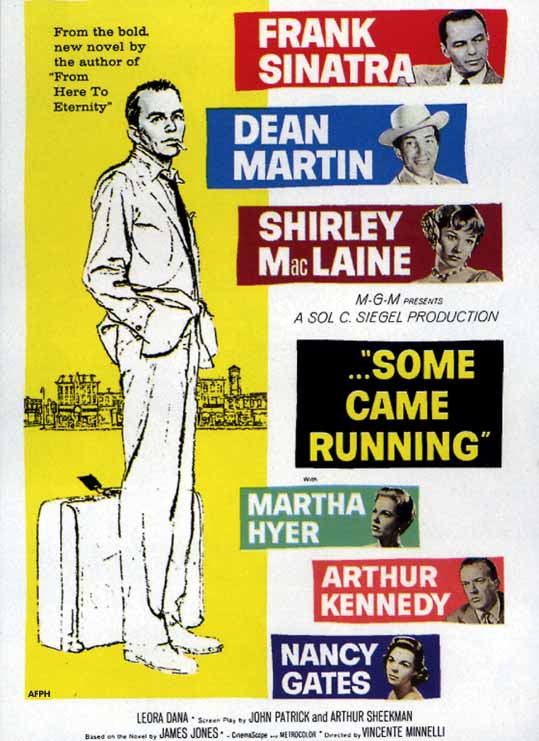
Shirley MacLaine in Some Came Running (1958) ★ ★ ★ ★ ★
(Lost to Susan Hayward in I Want To Live!)
When we first meet her on a long bus-ride with Frank Sinatra, MacLaine's character comes across as a pretty standard-issue "free spirit," and it's hard to fix exactly why she hops off with him, uninvited, in his home town. From there, this lengthy, deceptively simple drama will keep MacLaine's character waiting in the wings, and she holds out beautifully until her brilliant closing moments: once everyone else has tied their love-lives into intransigent knots, Ginnie figures it might finally be her turn. Actress and character seize their chances in perfect synch. MacLaine's lovely in her frank prostration before Martha Hyer, and she's truly sympathetic in the film's unexpected finale. All in all, she unearths the human being inside a Kooky Sprite.

Rosalind Russell in Auntie Mame (1958) ★ ★ ★ ★ ★
(Lost to Susan Hayward in I Want To Live!)
A bull terrier among actresses, Roz is perpetually prone to driving a solid character approach right into the ground. In the early chapters of Mame, especially in the delightful opening soirée, she is grand and fabulous, with gleeful, impeccable comic timing on simple lines like "Knowledge is power." By the end, though—like the film, and in some ways because of the film—she pounds down on all the same keys for far too long. I ended the movie quite eager to escape her rigidly "eccentric" guardianship, especially since she keeps Mame from really learning anything or evolving while the decades swim by.

Teresa Wright in The Pride of the Yankees (1942) ★ ★ ★ ★ ★
(Lost to Greer Garson in Mrs. Miniver)
I'm all for actresses having stellar breakout years, and Teresa Wright is such an instantly likeable performer—charming and lovable, while always communicating a sincere thoughtfulness—that I hate to begrudge her anything. She even goes far toward redeeming the "meet cute." Still, this is a supporting performance that, like everything else in Pride of the Yankees, is relentlessly keyed to reflect further glory unto Gary Cooper's Lou Gehrig. It goes down easy but lacks weight and insight, virtually by design.

The Pick of This Litter: Greta Garbo wins for showing us so many untapped facets and potentials in a persona we thought we knew so well. Her Ninotchka is several rungs above the stunt casting it could have been... though MacLaine's careful, delicate managing of another "type" is nearly as impressive.

Images © 1942 MGM, reproduced from this Japanese fan site; © 1939 MGM, reproduced from this Spanish-language Bela Lugosi fan site; © 1958 MGM, reproduced from this Lyonnaise movie site; and © 1942 Samuel Goldwyn Co./RKO Radio, reproduced from Modern Art Reproductions.

Labels: , , , , , , , ,