Nick's Flick Picks: The Blog

Y Kant Nick Read?
 The scintillating and bookwise Dr. S posted a comment to my last entry in which she heartily recommended a new book by Jonathan Safran Foer (I assume she means this one). I'd love to read it; I'd love to read everything. Sadly, as you watch the titles drop like flies from that "On My Nightstand" roll-call in the right-hand margin, you'd be wrong to get the idea that I am finishing these tomes. Great Expectations started deliciously, and my long-distance love-button and I were trying to read it in tandem, but he lapped me a long time ago and I can't catch up.
I have been relishing The Divine Husband by Francisco Goldman even more. It's a tantalizing, perversely embellished, and wittily historical story about two young novitiate nuns in 19th-century Guatemala and their rebellious libidos, acrid jealousies, religious confusions, and their intersections with various real-life characters from that volatile moment in Central American history. If I'm making it sound dry, it isn't. Read the first page or two, and you're in. But I'm still having the Jabba problem, so I haven't picked it up again in three weeks.
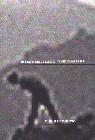
The one book I did finish recently was another academic read, D.N. Rodowick's Gilles Deleuze's Time Machine (pictured above), which is a sort of graduated explication of Deleuze's theories of film, as propounded in his pair of famous Cinema books. Rodowick is a more than reliable Virgil if you're still trying to keep all of Deleuze's dazzling but dizzying categories straight in your mind; at the same time, it's not the kind of book you can read instead of the Cinema volumes, because Rodowick's translations and expansions already assume that you've made your own first pass through Deleuze (even if it was a slightly bewildered one, which, c'mon, is likely). So, I recommend the book, but it's kind of got limited appeal.
Plus it's not what you wanna take with you on Spring Break. If I had my druthers right now, I'd sail through the rest of Divine Husband and quench my desire to read a good play, which I haven't done in a while: piling up in my living room, I've got Jean Genet's The Screens (think The Battle of Algiers as staged by Artaud), John Guare's Landscape of the Body (a personal fave of Tony Kushner, apparently), and the collected works of Maria Irene Fornès. With the Pulitzer announcements just around the corner, I always get a hankering to read good plays. They're amazing, and they're short.
What's everyone else reading?
Labels: Academia, Gilles Deleuze, Literature, Theater
posted by NicksFlickPicks at 3:24 PM
13 comments


 So, to the rescue comes Ian Buchanan's