Tuesday, December 14, 2010

Five More Thoughts on The Social Network

Click here for my first five thoughts...)

6. Three things strike me as peculiar about the film's version of the Winklevosses. First, by digitally doubling the same actor, Fincher goes out of his way for a special effect where he doesn't need one, because this is who he wants to film. Second, rather than entice the kind of reviews that would follow behind any actor who managed to etch two completely distinct personalities, Armie Hammer plays both roles in such a shrewd but low-key way that his own work and the effects artists' work draw even less attention to themselves. Third, though the Winklevii clearly stand in for a register of moneyed, heavily laureled Ivy League culture that Zuckerberg cannot stand, neither the actor nor the film makes us particularly dubious about them. In creating Tyler and Cameron out of the same person, Fincher is doing something ornate with technology not because he needs to but because he can, which the film simultaneously boasts as a near-seamless effects achievement and makes so very seamless that you almost don't notice. We aren't far, then, from Zuckerberg's own relation to technology: the eccentric innovator, pushing at limits for his own inscrutable reasons, making things harder for himself for almost no reason, loudly declaiming his glory while giving away the bonanza of rewards that accrue to him. I appreciate that the Winklevosses have different mentalities, especially in the way they get angered by different things: getting snowed by a contract employee vs. seeing the Harvard Student Handbook flouted. Still, neither is made a stooge, and I like that Zuckerberg's spirit of meticulous construction for its own sake gets embedded in the film in an unexpected place. Also, neither "Old Money" nor "New Money" gets painted with any kind of broad brush in The Social Network. The distrusts, the opportunities, and the imprecations are always based on something else.

7. Meticulousness, though, isn't always an asset to this movie. I almost always love the geometry of Fincher's frames and the choreography of movement inside them. Even in scenes full of people talking, there is usually a great deal going on in several shots beyond the talk. The scale of visual depth and the abundance or suppression of movement in Fincher's shots often bear an important dramatic relation to what's going on in the scene. At the same time, the lighting of The Social Network, however impeccable, often feels a bit more portentous and solemnizing than I suspect it really needs to. That dark palette of browns, ambers, burgundies, grays, and greens that has been a Fincher trademark since Alien³ sometimes seems to be here because it's what he and his D.P.s default to, and sometimes to lend the invention of Facebook an ominous visual heaviness that the stakes of the events don't always live up to. The film is so sober, so deliberately handsome, that The Social Network occasionally feels like a state funeral for the family cat. The explosion in social networking, the coining of a 26-year-old billionaire: I agree that these deserve a weighty reckoning, and it probably helps the movie to risk taking itself too seriously rather than seeming embarrassed about its subject matter, as if nervous that the audience will think Facebook is really not a big deal. But I'm not on Facebook, and the jury's still out to me about how big a deal it really is. I occasionally want the movie to let in a little oxygen from the world outside itself. Some of the shots look just like the ones where Morgan and Brad find the bodies in Seven. You're watching a film about a friendship busting up and a dot-com going boom, and visually, you're thinking, "Who died? Is everyone gonna die?" Framing and blocking participate in this misgiving. Maybe it's just personal taste, but I like Fincher's monomaniacs best when his wide, wide frames reveal that what counts as Everything to these fixated zealots is not necessarily Everything to us, or to everyone else on screen. Jake pores obsessively over his Zodiac paraphernalia in a newsroom that stretches seemingly for miles, where a lot else is going on. The police headquarters in Seven brim with people who worry just as much about whatever it is they worry about as Brad worries about his case, and as Morgan worries about our bankruptcy as a species. The Social Network seems too full, too many times, only of people who are obsessed with Facebook, or Harvard, or Napster, or appletinis. Almost every time Zuckerberg steps outside, the world is empty, especially on the campus. The Social Network might be making a point there, but it feels like a bit self-serving, overly credulous point.

8. But then, just when you're getting aggravated by all the hermetic enclosure, Fincher disarms you with a quick, beautiful detail that he refuses to vulgarize with a close-up, as when Eduardo and Mark repair to Mark's suite to have the conversation that eventually gets torqued by Eduardo's discovery of the Cease and Desist letter. You learn a lot about these guys from their reactions to that letter and from their responses to each other's reactions. But you learn just as much when they walk into the room, Eduardo reflexively grabs two beers out of Mark's fridge, then Mark grabs his own. Mark never notices that his friend's automatic impulse was to grab something for both of them. Eduardo does notice, right as he's about to pass one bottle to Mark. Andrew Garfield, who gives such a good performance, shows us a split second of Eduardo's feelings being hurt by the fact that his best friend is not only someone who doesn't notice him, but someone who does not in any way expect to be taken care of. Eduardo clearly craves a form of friendship that involves at least some mutual solicitude. Judging from Garfield's face, he takes this silent moment harder than the ones where he gives Mark tricky information ("I just got punched by the Phoenix!"), and Mark responds with something both congratulatory and withering ("It probably is a diversity thing"). Eduardo already has his guard up for that. It hurts more when his guard is down, which is certainly proven again in the last act. I love Fincher when he allows himself the kind of soft touch necessary for these muted but rich details of performance.

9. In a strange way, The Social Network is entirely suffused with conflict and seems not to have much of it. In the two tracks of legal deposition, it's kind of remarkable how rarely the various plaintiffs and defendants are actually disagreeing about facts, and how the outcome of the film-long litigations is deferred to postscript captions. The structure and premise of the case is bitterly contestatory, but there's a lot more aching than shouting in The Social Network. The Winklevosses and Narendra look like they'll need a while to recover from the fact that "Connect U" obviously was junior varsity compared to what Zuckerberg concocted from their rudimentary ingredients. They look shell-shocked by the fact that they hadn't even seen all the way to the bottom of the glass they poured for themselves (as Zuckerberg did, almost instantly). Eduardo and Mark look like they're in a divorce hearing, the kind where there's anger, but heartbreak wrapped around all of the anger, despite how Eduardo's Piglet-ish self-effacements and Zuckerberg's porcupiney semi-autism make it hard to associate either of them with a melodramatic word like "heartbreak." Even the big High Noon climax is between Eduardo and Sean, who never got along anyway, not Eduardo and Mark—though Garfield lifting Eisenberg's laptop to smash it on the desk is a surprisingly dismaying image of aggression. All the major characters seem palpably wounded by what has happened, in ways that are rarely if ever the subject of their voiced regrets, even though the film is full of voiced regrets. You never hear: I never took my talents for granted, but I thought they stretched further than they do. I should never have stayed friends with someone who doesn't know how to have a friend. I, as much as Sean, was too hard on Eduardo. I've had the biggest idea I'll ever have, maybe bigger than anyone will ever have, and I'll never stop being asked to apologize for it.

10. I'm leaving the tenth idea open, because I feel like I haven't had it yet. Is it about the weirdly perfunctory, finally truncated and witchy handling of Brenda Song's character? My feeling sure that these guys, and maybe these girls, would not have rushed sex in adjacent bathroom stalls, dankly lit to look like sewage-storage units? The debt Jesse Eisenberg owes to Jeff Cronenweth for making sure no light ever reaches his irises? My curiosity about how long my own students will collectively cite this as their favorite movie, as they did about Fight Club (but not till after DVD), and how long it will take them to move on to something else? My joy at seeing that being a geek, in itself, is never seen as The Problem these characters face, which is as refreshing as seeing that being plus-sized and lanky-haired is, praise God, not The Problem that Lena Dunham faces in Tiny Furniture? My delirious happiness that Hollywood can grow an American story within an American studio using American talent and take this much stylistic and thematic care with it, and that American audiences actually lined up to see it?

I'm not sure what my final thought about The Social Network is, because that's just where the movie leaves me. For all that I appreciate and admire in it, even for all that I second-guess in it, I still don't feel very much about it, and there's something vaguely disheartening about seeing it trounce all comers as the year's critical darling. I don't think it's cold or heartless or smug. I don't have the big reservations about it that I hear being voiced by some more forceful detractors. But I don't actually feel connected to it, even after two viewings. I would teach it in a class about directorial technique, I think it's terrific for Hollywood that it exists, and, rarely among movies I admire this much, I don't know if I'd miss it if it hadn't been made. Films like The Town or Animal Kingdom or How to Train Your Dragon feel so much more modest and familiar about what they're trying to do, via their own impressive proficiencies. But I left each of those movies wondering when I'd see them again. Aside from what I've written above, I left The Social Network thinking—well, I don't really remember what. There's something missing in the middle of my relation to the film, if not in the middle of the film itself. If I were actually on Facebook, and The Social Network sent me a Friend Request, I don't know how I'd answer, or if I would. Why is that? I still don't know.

Labels: , , ,

Monday, December 13, 2010

Five Thoughts on The Social Network

1. I graduated from Harvard three years before Mark Zuckerberg started, and only a summer before "the movie star" enrolled, so getting critical distance on The Social Network was a little tricky at first, both because of the movie's intense overlap with places, structures, and phrases that used to be daily vocab for me (Ad Board, Kirkland House, etc.), and because it's in many ways a completely different world than the one I remember. No one reading will be surprised to know that I was nowhere near the final club ecosystem, though I did go in one once, and I did not observe any strip poker, Olympic rowers, or popped collars first-hand. Here's my closest connection: in Massachusetts Hall, where the Winklevii meet with Larry Summers (and one of the few locations where The Social Network actually uses a real location shot of a Harvard exterior), the third and fourth floors above the President's suite of offices serve as first-year dormitory space, and I was the weekly janitor for the bathrooms in those dorms for my whole first year. Ka-ching! Where's my movie? Meanwhile, just as context, when I graduated in 1999, every upper-class house had its own "Facebook" with names and photos, as did the entire freshman class, but except in one case, all of the Facebooks were still hard-copy, Kinko's-type paperbacks. They were endlessly swapped around at parties and "study" sessions, while everyone played informal versions of "Hot or Not?" It's just incredible to me to contrast these memories with the internet-immersed, 2002-03 campus of The Social Network and realize that in many ways the "online revolution" really spiked in the space of a few short years. Corroborating points: the first version of my website, on a fas.harvard.edu URL, made me one of three or four people I knew, tops, who had any individual web-presence at all as an undergraduate. It was still seen as more of an unusual hobby than anything, somewhere between a marketable skill and a Dungeons & Dragons obsession. When I was applying to graduate school in the fall of 1998, only about half of the programs to which I applied, including Ivy League schools, had any apparatus for applying online, or even requesting an application online. To the extent that The Social Network is a period film, it's a very, very specific period, hugely changed from how a 1998-set film would work, but already palpably alien from our vantage of 2010. (Last annoying Harvard reference: I met Rashida Jones there once, when I was working with her roommate on a group project for our Divinity School class. She was awesome, very funny and very observant, and though her role in The Social Network is small, I'm sure she was a big help to the filmmakers in "getting" the social vibe of the campus.)

2. Some of my favorite scenes in the movie are the deposition scenes. Maybe my favorite performance in the film, especially if you compare what's in the script to the deftly shaded personality on the screen, is Denise Grayson's as Gretchen, the lawyer for Eduardo Saverin. She balances disdain for Mark and exasperation with his obstinacy with a kind of subliminal excitement at the challenge he poses to her sharp, canny interrogatory strategies. She furnishes shades, too, of admiration for Mark's feistiness, sympathy for but also doctor-patient detachment from Eduardo, astonishment at the stakes and details of these friends' mutual falling out, fatigue with the whole affair, and an obvious, gendered pleasure in having called Mark on the carpet for his Facemash- and Erica-related sexism. She gets even this into the performance, without the screenplay allowing her to recite any of Erica's testimony in an actual scene. Way to go, Denise Grayson, and David Selby, too, who is super as the older lawyer trying, somewhat in vain, to command Zuckerberg's attention.

3. The larger point to make here is that the depositions play a larger role in the film than a lot of reviews admit. Fredric Jameson ingeniously argued that Dog Day Afternoon, so colorfully staged as a standoff between Al Pacino's showboating bank robber and Charles Durning's frustrated local cop, is actually a shrewdly veiled platform for evoking the quietest but most trenchant figure in the movie: the faceless feds, hiding behind their reflective sunglasses, absolutely laconic in speech and movement and attitude, who barely try to "hold" the screen but most assuredly decide Sonny's fate. They represent to Jameson an era-specific image of a new form of power: no personality, neutral voice, lethal anonymity. Hugo Weaving in The Matrix, 25 years ahead of time. I see The Social Network as doing something similar. If you look past the Zuckerberg-Saverin-Parker-Winklevoss-Narendra pentagon of vivid recrimination, there's a pretty fascinating snapshot of America as a purgatory of legal arbitration that's all but decided in advance. (As even Jones's character knows, of course they're going to wind up settling.) Facebook is described endlessly in and around the movie as a "game changer" in terms of how we all relate to each other, as both a venue for expressing personality and a monolith for crushing and homogenizing personality. But look at the warring lawyers, who yield only sidelong impressions of individuality while serving functional positions within a convoluted series of highly rhetorical, probably unwinnable arguments. Despite Zadie Smith, whose essay on The Social Network I admire enormously, it's not clear to me that we weren't already "People 2.0" well before "the" Facebook ever arrived. Zuckerberg, Saverin, and their ilk in one way represent a new social creature, and in another way look very much like the logical offspring of the elders who "represent" them, in more than one sense.

4. One last comment on the depositions, this time related to the film's structure. Normally, I'd be irritated by such constant flashback/frame oscillations, especially since the depositions carry such a heavy expository burden (even if, as I hope I've made clear, I think they serve the movie in infinitely richer ways). Whenever, for instance, Milk or the more recent Howl kept hustling us back and forth to scenes of retroactive narration and context, I felt dramaturgically cheated. But something else The Social Network manages is a deeply Web-conditioned, hyperlinking structure wherein I, as a viewer, feel like I am constantly "clicking" between past and present episodes trying to get at the bottom of what, if anything, is the root of the collective web of grievances. That this is achieved without dumbly straightforward Citizen Kane homages is itself cause for celebration. Granted, I feel like The Social Network stumbles a few times in trying to trace its way backward to the first seeds of discord. Erica-as-Rosebud feels too neat. I suspect the film is airbrushing the extent of the intellectual property claim of the Winklevosses and Narendra, since I don't see how the on-screen details would yield a $65 million payday. And the details of Saverin's assassination-via-legalism get kind of rushed through, on the way to the more emotionally showy but more dramatically superficial personality standoff with Sean. That said, I like that the film seems more driven by the nervous, uncertain, acrimonious "surfing" of the conglomerated problem of Facebook than by an impulse to settle or to crystallize these disputes. Structurally, the movie feels almost the same way it would feel if you got on Google, or Wikipedia, and tried to research the legal and personal history of who wronged whom in the creation of Facebook: hundreds of page views, lots of facts, many but not all of them disputed by various parties, but no clear "answer" at the end of all that. In this way, it is very much a Zodiac companion piece, without the glory or the tedium of that film's even more dogged commitment to illustrating a hopeless, boggy, monomaniacal fact-finding mission.

5. The movie steers largely clear of moralism, though not entirely. A great badge of credit in this direction is the characterization of Erica Albright, played with terrific focus and intelligence by Rooney Mara, who wins our sympathy without begging for it, or needing to. Somehow, despite giving Erica two full scenes plus one, furious, silent, moist-eyed reaction shot to clarify just how grossly Mark has used her and how much more ethically conditioned she is than he, The Social Network is scripted, acted, shot, and edited so as to avoid a kind of easy-pickings TKO of its own main character. The dialogue, the camera placement, and the utter unflappability of Eisenberg in the opening scene make it feel like an exciting square-off, even though in every moral way, Erica trounces him in straight sets. The movie is generous enough to make the programming of Facemash, the going-live of Facebook, and the boys' first tastes of peer approval feel genuinely exciting and more or less ingenious, rather than reducing these to melodramatic, Faustian moments where Zuckerberg sells his soul. Erica strikes me as correct in everything she ever says, but her being right is not allowed to feel like the only point of The Social Network, and Mara's performance isn't infected by seeming smugly self-conscious of her character's victories. By contrast, Justin Timberlake, who gave smart, differently charismatic performances in Alpha Dog, Black Snake Moan, and Southland Tales, is the only actor in The Social Network who seems to play to the audience's impressions rather than to the core of what his character thinks and says. You can see the cocky walk and flamboyant gestures he has worked out for Sean Parker, just as you see and hear the extra arrogance he needlessly injects into his already-arrogant dialogue about lacquered pork, moving to California, billion-dollar paydays, et al. The movie joins him in ganging up on Sean Parker, who is triply embarrassed as the finale approaches: flinching from Eduardo and pathetically lying to the cops and making an absurdly paranoid phone call from a holding cell. It's not that I'm eager to see Parker recuperated, but the movie's willingness to maintain multiple points of view within a highly contested situation is one of its biggest credits. In acting and scripting, the handling of Parker falls short.

This post is already too long. Five more thoughts to follow, in due course.

Labels: , , ,

Saturday, December 11, 2010

Ten Thoughts on Inception

1. My second viewing only intensifies my biggest misgiving from the first viewing: has any film since Lady in the Water spent this much laborious time reciting the rules of its own game, which constantly change anyway, and thus become subject to new, gregarious articulations of mutable "rules"? At the 1 hour, 59 minute mark, Leonardo DiCaprio says to Ellen Page, "There's something you ought to know about inception," and I'm thinking, "Jesus, how much exposition does one film need?"

2. Partly for being drowsy and partly for my own inadequacies, I was one of the people who didn't follow Inception all that well the first time out. So, when I would read in reviews, "Anyone complaining that Inception is impossible to follow has just given up on any willingness to think at the movies," etc., I was both sheepish and defensive about feeling, "Well, I love thinking at the movies, and I was frigging lost." I don't know if I was more awake this time, or just had so much more of a leg up having seen it once, but the plot didn't feel any tougher to follow than, say, last year's twisty caper comedy Duplicity. Just without any of that film's delicious fizziness.

3. I still think way too much of Inception is given over to shoot-outs, explosions, and rote, Greengrassy chases through mazelike cities, when the script is going to such ambitious and laudable lengths, however tortuous, to stake out a new form of intellectual thriller.

4. God bless costume designer Jeffrey Kurland. I loved the duds the first time out, but they are just as natty and pleasurable the second time out. Excepting the fact that Ellen Page is just never going to look comfortable in a short-skirted business suit, high heels, and a French twist, every single "look" in this movie is a grabber without being a show-offy spectacle.

5. God bless cinematographer Wally Pfister and his team of camera operators. No question a Pfister-Nolan visual style is starting to feel a mite too predictable. Still, there are moments where (for example) just by making a sudden, jittery, handheld circle around Marion Cotillard, as she and Ken Watanabe advance toward a huge mahogany table, the image itself quivers with tensile, nightmarish energy that feels more "dreamlike" than do many of the ornate spectacles in the film.

6. It still feels profoundly naïve of the film to pretend that planting an idea in someone's head, even with the added task of making them feel it's their own idea, is actually harder than removing an idea that already resides in someone's head. Anyone who teaches already knows the reverse to be true: exterminating a misconception or a prior belief is much tougher than introducing a new thought. If any doubt remained, the 30% of Americans who still claim that Obama is not a U.S. citizen live and breathe so as to prove how ideas can be externally implanted but privately cultivated as if based on autonomous inspiration and real knowledge, rather than propagandistically induced, and experienced very much as one's "own" conviction. Hilariously, the same film that tells us how hard it is to import a single idea into someone else's head nonetheless depends on our accepting that someone else's brain will recognize an entire, city-sized mindscape, boutique-designed by Ellen Page, as a plausible product of its own subconscious.

7. I think the film might have worked better if we spent the first while in Leo and Marion's shared dream state, which she's still enjoying and which he's starting to feel itchy about inhabiting indefinitely. Watching him attempt his first, duplicitous act of inception—so as to trick her into thinking the world isn't real, and that suicide is necessary—would provide a story-driven rather than a fussily expository means of explaining how inception actually works. It would also start us distrusting or disliking Leo and feeling sorry for Marion, so that the turning of those identificatory tables felt more complex over the rest of the film. As it is, he's way too much the self-pitying hero, and she's way too much the evil, recriminating haint. The revelation of how he made her that way comes far too late, and is structured too much like the rest of this hyper-edited film, to land the immense moral and psychological blow that it's probably meant to.

8. The exploding-café scene between Leo and Ellen, which looked weirdly fake and unfinished in the cinema, still looks weirdly fake and unfinished on DVD. Both actors look like they've been uncomfortably forced to sit in front of a green screen, while being assured that something digital and awesome will be happening around them. The CGI here is way too shoddy, too Tempestesque, and neither of them looks remotely sold on the moment. But then, even in the hurtling van, Leo falls well short of, say, Joseph Gordon-Levitt in the simple act of looking plausibly asleep. Leo just looks like he has his eyes closed and is waiting for someone to say "cut."

9. Part of what confused me about Inception the first time was understanding exactly whose "dream" we are in during the interstate-chase, the zero-gravity, and the Antarctic sequences. I am the first to concede, this doesn't seem quite so difficult now. Still, I have a hard time seeing the first or third of those realms as anything Ariadne would design—there's no linking stamp of personality between her characterization and her work, and she gives up much too easily and quickly on the elaborate conceits of her first, Paris-as-origami experiments. Her brilliance and her impetuousness are the first things we learn about her (she can't say no to this assignment, even when her ethics and reason tell her she should), so Ellen Page's soft-spoken playing of the character already feels like a bit of a letdown. More than that, though, such a free-thinking upstart would never have designed that boring Antarctic planet or the snowbound fortress therein, which are no easier to connect with Eames, the dapper, muscular, puckish, effetely virile "forger." The links between dreamer and dream-state, or architect and dream-state, are entirely notions of the script, without enough substantiating hooks into personality.

10. Still, Inception tries to do a lot, and takes a big risk on the cognitive stamina of its audience, which I ought to have appreciated more than I did the first time out. I still find the film heartless and overthought, with almost chillingly stock images of romantic, filial, and parental love, but I can at least work up a bit more enthusiasm for its palimpsestic gambits and its elegant visual surfaces than I did last July.

Revised Grade: C– to C+

Labels: , , , , , , ,

Sunday, November 28, 2010

Five Thoughts on Monsters

1. Director-writer-production designer-cinematographer-visual effects supervisor Gareth Edwards makes an impressively audacious debut, especially given his extremely pennywise budget. He hands his industry colleagues and his audience a whole handful of calling cards. I actually think he excels most at the lensing and the convincingly offhanded blend of found locations and incorporated design elements—i.e., the dimensions of his work for which Edwards is reaping the least credit. (By contrast, his scripting is James Cameron-level regrettable, and the visual effects are inconsistent in design and execution, though this is more than forgivable.) Monsters's images pack a charge from noonday sun to humid dawn to barely any light at all, and feels visually spontaneous, three-dimensional, and tense in its framings. Its world is as conceptually compelling as it is convincingly lived-in. And the unquantifiable drift of the crash-landed aliens beyond the parameters the government designates as a discretely bounded "infected zone" seems a much sturdier metaphor for dangerous bureaucratic folly than does the bizarrely meticulous yet completely unworkable tenement-colony of District 9.
2. Monsters not only allows its expository passages to continue twice as long as they ought to, but they encompass at least twice the necessary number of incidents. Insufferable assignments from the boss. Professional disappointment. Pre-wedding heebie-jeebies. Wrecked train. Exploitation of those in crisis. Port closings. Lost passports. Fumbled flirtations. Jealous reactions. "Why are you marrying him?" "You have a kid?" We know the entire time that Monsters just needs to get its leads skulking through the alien-infected wilds of northeastern Mexico. I suspect the impetus is budgetary: Edwards probably lacked the funds and the logistical support to shoot for long on rougher terrain, or to include as many creature F/X sequences as he might have wanted, so he has to pad out the surrounding material. And I'm sure he meant to give his actors more to work with, though the most effective performance by far is Mario Zuniga Benavides's, rendered in only two appearances as an unapologetically cynical ticket vendor. And anyway, the film still mires us for much too long in plotty curlicues involving one and a half dislikable people (she's okay, he's just awful). Worse, it then regroups around their problems at the end. Hasn't Edwards seen Casablanca? Doesn't he know that the problems of two very little people don't amount to a hill of beans in this crazy world? Especially this crazy world?

3. Monsters doesn't extend its fantasy scenario with the broad, idiosyncratically textured, multi-layered brio of District 9 and, inevitably, can't match the pure spectacle menace or technical wizardry of the alien assaults in War of the Worlds. To its credit, though, the movie doesn't blow any of its driving conceits as badly as District 9 does its tattered "faux-documentary" frame, and doesn't get stuck for a deadly span in Tim Robbins's basement. Even if Monsters abstracts its protagonists too much from their ten-times-more-fascinating contexts in the finale, that context remains grievous, unresolved, and mysterious—rather than dopily white-washed and tied-up, as in the Spielberg film. Its highs aren't as high as those of its closest analogues, but its errors aren't as handicapping, either.

4. I was going to add that Monsters doesn't scapegoat or exoticize its Mexican characters the way District 9 does its black Africans, and doesn't seize on glib 9/11 metaphors to buttress spectacular entertainment the way War of the Worlds did. However, it does manage to kill off all of its nonwhite characters and make some very ham-handed jabs at Saying Something about the U.S.'s mythologies of itself and about the quagmire of U.S.-Mexican border-crossing. It's no less obviously and no less stiffly an "America as seen by Europeans" picture as something like Monster's Ball. And as the movie continues, it becomes more annoying that there's no reason for our protagonists to be white (to say nothing of aggressively blonde, in the woman's case). For all the Mexicans who keep protesting they can't afford to leave Mexico, the film ties itself in needless knots to flesh out the motives of its incongruous main characters. Does Monsters somehow not trust us to root for Mexican leads, in a film that is otherwise thoroughly Mexican in casting, locations, and locus of narrative crisis? Would such casting make the last-act revelations appear too dogmatic? I don't think so. Replace Andrew and Samantha with two Mexican characters trying to grab the last train or ferry to join relatives who have already bounded north—to certain or uncertain success—and you immediately have an emotionally richer and less convoluted narrative line, raising fewer specters of entrenched Anglo-Caucasian bias.

5. Maybe my favorite thing in the movie is how it captures a citizenry that has in many ways resigned themselves not just to the terror but the inconvenience of the alien menace. Watching them haggle over boat tickets and prices, or watching Mexican escorts debate whether it's too late in the day or the season to risk another river-crossing, is to watch people consumed by pressing issues rather than broad implications. They seem exhausted by each other's needs and by their own bad days—not so much debilitated by the tremendous scale of a global calamity, the likes of which could never have been predicted. It's spooky, the fright, the weariness, but ultimately the acceptance with which people treat world-altering events as impediments to their own plans, or as problems they have to work around while accomplishing other tasks. Not always, but often, Sam and Andrew look more bored and tired by their journey northward than terrified out of their skulls. Yes, this amounts to yet another indulgence of their film-long mopes over things we never care about, but there's also an eerie truth in it.

Grade: B–

Labels: , ,

Saturday, November 27, 2010

10 Reasons To Be Thankful in '10

So many film bloggers put their own spins on the idea of giving thanks this week. Keeping things short and simple, here is a list of films released in the U.S. in 2010 that I value even more highly than my grades would indicate, and for which I personally thank the producers, distributors, directors, writers, crews, and casts. Not necessarily my favorites of the year, and even less close to being the "best." Just films about which I feel compelled to say, I like this even more than you might imagine I do. In alphabetical order:
Burlesque - Because it radiates equal joy in its showcasing of real talent, its exposure of its own semi-competence, and its unrepentant fondness for the ersatz. At the level of form and technique, it's like a middling but exuberant karaoke performer you totally cheer for, whatever the magnitude of its failings—a sort of a film equivalent of Cameron Diaz's "Don't Know What To Do with Myself" coup in My Best Friend's Wedding, endearing in almost all of the ways it's off. Yet it often achieves real showmanship. I had a great time.

Cairo Time - Because what I liked on sight, the modest revelation of fully grasped characters and the subtle tilting away from generic expectations, has continued to linger three months later. Contra my review, I'm thinking it was a touchstone of the August multiplex, at least for me. If you read the script, you might respond to it in terms of big turning points and filler sequences. The film as produced, however, makes no such distinctions. As un-self-consciously as it plays, you can still see how fully its makers have thought through all of their choices.

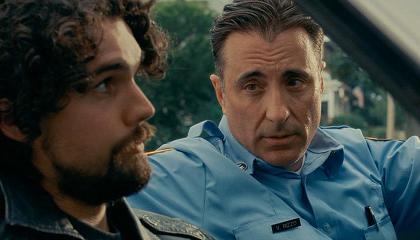
City Island - Not unlike Burlesque in its unabashed bearhug of sitcommy situations and mechanistic writing. The movie generates a huge, contagious affection for its characters, whose familial vibe is utterly convincing. Makes Andy Garcia four times as likable as he's ever been, but the whole ensemble shows to advantage, from Julianna Margulies (whom almost everyone seems to admire) to Emily Mortimer (whom I found quite fetching, though I guess a lot of folks didn't). The movie is very sweet, which is harder to nail than you'd think, given how many films aspire to that quality and to little else.

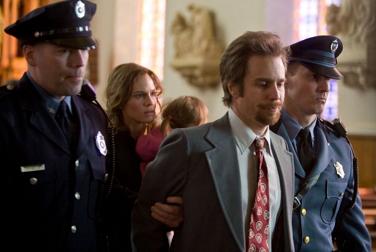
Conviction - I'm with everybody who valued the acting highly while finding the narrative too compressed and the emphases misplaced. The first part bears repeating and expanding, though: Swank and Rockwell win a shared Laura Linney Award for conveying deep sibling connections. Scenes like the one where Minnie Driver forces her friend to confront an undesirable truth in front of her kids captured a certain kind of awkward, adult moment that we don't see in enough movies, or between enough women in Hollywood movies.

Easy A - It's not just that Emma Stone is so talented and funny, but that the film seems genuinely excited for its female lead to be so funny, and to give her a star-is-born vehicle on those exact terms. Hollywood is rarely so sanguine about women being so hysterical, especially new stars, and in ways that imply the actress's sophistication as well as her charm. She's beautiful in a non-cookie-cutter way, yet her looks take even more of a backseat to personality, quickness, and wit than Silverstone's and Lohan's did in Clueless and Mean Girls. Bravo.

Fish Tank - A second full screening might elevate an already high grade, but I'm just thrilled to have a filmmaker working comfortably across downmarket realism, stylistic adventurousness, and poetic conceits, regardless of whether the moments or the blend always click perfectly. Breakout female first-timers often face even bigger sophomore-slump problems than men, but Arnold seems more exciting than ever.

For Colored Girls - When the movie works, it really works, as when Anika Noni Rose and Janet Jackson hold the screen for close-ups of several uninterrupted minutes, hitting home-runs with very tricky speeches. The haunting image of the digital clock has outlived its degrading juxtaposition to the opera cutaways. The cast is so nice to spend time with; they all deserve more and better work than they usually find. The ambition to adapt this story, no matter how often or badly it's flubbed in the execution, remains inspiring to me.

The Ghost Writer - Stumping for this movie since early winter means I was with it when it was seeming unceremoniously ignored and am still with it now that it's on the cusp of seeming overpraised. I think it distills so well what acute, precise, tonally complex direction can do for a script that could easily have been a dumb throwaway. Not only is every actor good in it (Cattrall aside), but it raises the possibility that everyone in it is, in general, better than you've given them credit for being (uh, Cattrall aside).

Mother - Another movie I've hardly stinted on praising—it featured in my Top 100 Films of the 00s—but that I revisit in my mind more often than I do a lot of the other films that I graded similarly, or higher. Currently my favorite example of that herky-jerky storytelling mode in Korean cinema, sometimes too broad and sometimes just right, that makes a cumulative impression in excess of its uneven parts. And boy does that ending land it. So many cinematic character studies are afraid of being stylistically florid; I love that Mother takes such confidence, even at times too much confidence, that bold strokes can sometimes acquaint you with an enigmatic person as well as finely etched details do.

October Country - A documentary almost nobody caught, about an upstate New York family that has seen marital discord, generational conflict, poverty, and early pregnancy pass across generations, but in a way where chronicling misery is not the point. At its best, the film captures a sense of how difficult lives are actually lived, from the perspective of those who are living them, rather than a more outwardly editorial position. Desi, the preternaturally spunky pre-teen girl, is a real "find," the kind of character you never forget, even though she's hardly the center of the film or its only indelible figure.

Labels:

Monday, November 22, 2010

An Open Letter to Roger Durling

The very short version is: what on earth got into me? Here is the very long version.

If you follow this site at all, you might know that I've worked myself into a tiny lather in recent years – drawing bubbles from my admittedly small soapbox – as both an incorrigible devotee of the Oscars and a somewhat cranky critic of how long, expensive, and over-crowded with nuggets and chatter the so-called "awards season" (or, worse, the "campaign season") has become. It's hard enough when so many of the wrong films seem either pre-targeted for consideration or disappointingly excluded from it. I find my Oscar addictions, which are no one's fault but my own, prompting me to think and write more about movies I don't really care about, just because they're likely to be nominated, than about movies for which I might actually have a thought-out, passionate, more valuable critique to put forward.

Meanwhile, I always feel sorry for actors and other filmmakers (some, not all) when we hear them say what a tiring grind "awards season" becomes, no matter how flattered they are by the attention, and no matter how happy they are to promote a film they are proud of, and which might struggle to find an audience without the spotlight of awards. Speaking only for myself, I dislike when awards and their surrounding discourses become goals in themselves, rather than opportunities for rich, detailed debate and conversation about the films in question—the quality of the work, including but not limited to, or even centered upon, its possible appeal to AMPAS. Anyone who reads even a little about the Oscars—and I stick to what I see as the best, The Film Experience and In Contention—may also have heard some editors and journalists say that the season has gotten out of hand, with too much to cover, and too little differentiation among events and prize-giving bodies. December becomes so crowded with films that many of them are doomed to box-office failure. The entertainment pages themselves are so glutted with tightly or loosely awards-based coverage that what (I think) should be a fun hobby and a spontaneous honor can become a bewildering blur, an echo chamber, or a vegetative industry all its own.

Beyond forming these aggravated opinions in recent years, I have jumped to my own conclusions about what is or isn't a "legitimate" event and what seems, by contrast, like a pure publicist's coup, with little to teach anyone about filmmaking. I haven't been consistent or very well-informed in arriving at these knee-jerk opinions, so I usually keep them to myself. Yesterday, though, in a comment thread at In Contention, I arbitrarily seized the occasion of a news item about the Santa Barbara International Film Festival to vent some of this frustration. The gap between what I have prejudicially been feeling and what I actually know quickly became obvious. I don't withdraw from many of the general principles of what I've outlined above, but I didn't take any time to phrase them carefully or test their validity before posting the comment, and I sure did a ham-handed job of picking a scapegoat without any basis in knowledge. (Perhaps you have heard of this kind of thing transpiring - even, occasionally, on the Web.) Having been rightly called out and calmed down by In Contention's editor, Kris Tapley, I then received a personal invitation from Roger Durling, the Executive Director of the Santa Barbara International Film Festival, to come attend the festival and "have priority access to everything and criticize from experience. Let me know, and I will make it happen." I am taking for granted that Mr. Durling is in earnest, though he would be well within his rights not to be. What follows is my open response:
Dear Roger Durling,

The humble pie keeps coming, and deservedly so. Believe me, I fully appreciate what a classier, more generous overture you have made than I deserve from my exchange on In Contention. I feel particularly humbled after having aired my prejudices so vehemently and recklessly. I've been behind the scenes of enough festivals to know at least a little of what it takes to put one on. So on those grounds alone, cheers to you and the SBIFF, and hosannas from high up in the nosebleed seats for choosing a Vanguard award winner in Nicole Kidman who inspires so many people – including me – in just the ways you single out in your publicity release: her talent, her range, her fearlessness, her filmography, and her wonderful performance in Rabbit Hole, which I saw at a festival screening here in Chicago.

I've already caught myself red-handed, and enabled others to further catch me out, connecting faraway dots as an uninformed reader. So you know already that as one Oscar enthusiast, unusually or not, I have felt liable to fuse together in my mind several Southern California film festivals of the fall and winter (Santa Barbara, Hollywood, et al.), their pre-announced awards, the various career-recognition and Lifetime Achievement awards emanating from other groups, and all the other press releases and ceremonial prizes unfolding through the fall and early winter as one long campaign for Oscar. For me, this becomes especially tempting when, year to year, there seems like such strong overlap between the spotlighted recipients at these events and the actors and films we know to be involved in carefully orchestrated campaigns. But I should take more responsibility for these subjective impressions I've knitted together. I just never see coverage of SBIFF or the Hollywood Film Festival or other, similar events except as regards these pre-announced awards. I could obviously take the initiative to look up more coverage—and certainly should, at least before airing my arbitrary, petulant grievances about them, with no necessary basis in reality.

Foolishly, like other media consumers who think we can read between the lines and discern The Truth, I imagine I know what nominees or prospective nominees are talking about when I read them saying they wish the season were shorter, required fewer PR appearances, and felt like less of a grind, even amid all the generous adulation they receive. The truth, of course, is that I don't really know what these artists are talking about, and don't even know enough about what I'm talking about, so for lack of a better phrase, I ought to shush up. I have attended plenty of festival galas honoring artists and senior executives for their work. Of course it is often the case that the readiest people to accept are often those who are trying to cast a light on recent efforts that are just finding their way to market, to voters, or to critical notice. I have seen them be very proud and flattered by the recognition of their own careers, and pleased that someone else's gracious admiration has enabled them to draw extra eyes to a just-emerging film that could use the support in a crowded market, at a frantic time of year.

I wrote on In Contention as though this entails an implicit act of bad faith or "shilling" on the part of festivals I have never attended, even though I know it not to be the case at any festivals I have attended. You don't have to be naïve about publicity to know how earnest a festival or an executive director or a programmer or a festival staff is in honoring someone whose contributions they truly admire, and whose time they appreciate. It's one of several grounds on which I owe you and your colleagues an apology.

No matter how coordinated or not your festival is with other publicity efforts for actors or their films, I do know that every festival in the world only comes together through long, hard work and coordination. You'd never know I understand that, based on what I said above, and I'm sorry to have rejected the possibility out of hand—based in part on what I have projected onto the timing of Santa Barbara's film festival and the framing of the small bits of coverage I happen to see. My perceptions or misperceptions of what's going on half a country away are just that: cursory, faraway perceptions.

Most importantly, I at least oughtn't pull the two lamest moves on the internet: forming strong opinions in the absence of adequate knowledge, and then broadcasting those opinions with a cynical vehemence that's beneath my age and good sense. I admit to wanting to see more diversity in the range of names getting honored and fêted at this time of year, and to other personal hankerings and nostalgias related to film awards and press campaigns, past and present. But they, too, are subjectively cultivated biases, and I should have stated them responsibly as such, if they even needed stating at all.

Please accept my apology for what I wrote, including tones and claims that were more scurrilous than I intended or ought to have allowed. Meanwhile, I wish I could accept your humbling, generous offer to grant me press access to SBIFF, were I able to attend. I can't be there, and at least in the context of today, I think it's clear I haven't warranted the privilege; maybe you can extend it instead to a journalist, writer, or blogger who has already supported the festival and would be thrilled to enjoy their first press pass at an international film festival.

As an alternative, either sooner or much later, may I propose a short, open interview to be published as free publicity on this site for SBIFF, about how your role as Executive Director works, how the festival's honorees are chosen, how you see the festival as relating or not relating to the awards campaigns that are ramping up around the same time and around many of the same people, and what you most wish people knew about SBIFF that we might not know or understand. I would learn a great deal from this, I expect my readers and students would learn a great deal from this, and it would be my privilege to promote the festival, even from afar, as – wait for it – an informed member of the blogosphere. E-mail me if you're interested and available. If no (or even if yes!), many, many best wishes for your festival. I look forward to reading about it, carefully and in context.

Sincerely,
Nick Davis

Labels: , , , , ,

Sunday, November 21, 2010

I'm Still Breathless: The Final Weeks

This late in the year, the original Fall Preview post gets a little tricky to read, with all the grades and the font colors, and the "passes." Plus, it helps to see light at the end of the yearly tunnel and to know exactly how much you have to look forward to (or not) before you can officially tie a bow on 2010. In the months since drafting that first list, some of my reservations have been cheerfully dispelled, some of my optimisms have cooled, and some titles have become such awards-circuit inevitabilities that I h-h-h-have to s-s-see them even if I d-d-d-d-don't want to. So, preserving our Madonnarific categories, here are all the remaining films for which I'm still "like a virgin."

EROTICA
Closed category. After the sublime White Material, I'm not panting for anything.

LIKE A PRAYER
Blue Valentine A - Gosling and Williams meet sky-high hopes in vivid, deft film
Carlos B+ - Opaque politics, indulgent length, but still a lot to chew on and savor

LOVE PROFUSION
Another Year B - Odd courting of cliché and rude moralism, but intriguing layers
Burlesque B– - Such pop flair, so damn amiable and dopey, you forgive a host of sins
The Illusionist B - Single frames and sum effect entrance; less satisfying scene by scene
Samson and Delilah Drat! - Held up with work on the only two nights it showed
Tiny Furniture C– - Signs of promise drowned in flat writing, overwhelming narcissism

GIVE IT 2 ME
Boxing Gym Drat! - Getting ever further off my game. This darn day job!
The Fighter B+ - Actors all click, but vital, resonant direction really sells it
Love and Other Drugs D+ - Glimmers of hope snuffed by very narcissism film critiques
Night Catches Us B/B– - Slow to find story and footing, but bristles with complex ideas
The Way Back B– - Aptly sobering, but chatty screenplay intrudes, structure flags

PROMISE TO TRY
Country Strong - I like the full-on push Gwyneth is giving, even if it's iffy
Fair Game B/B– - Strong first half compensates for patchy, off-topic dénouement
Frankie and Alice - Halle's Country Strong? Vanity project, but anti-typecasting
The King's Speech C– - Ill shot, poorly written; good perfs not enough to redeem flaws
Somewhere C - Even airier than usual for Coppola, as in, it barely exists
True Grit B– - Kinda sweet, pretty cold, mostly handsome, acted okay, quite dull

SOONER OR LATER
Helena from the Wedding Drat! - Badly timed one-week run; sorry to have missed this
How Do You Know Pass - I didn't even read reviews, but I gather they were ...not good
Leaving Drat! - Same four-day run as Helena, same problems catching it
Made in Dagenham C+ - Satisfying story, but filmmaking below par. Hawkins a plus.
Nowhere Boy C - Some tart images, but too shellacked, lacking in stakes
Vision Drat! - Now only playing in the northern suburbs. That settles that.

JUSTIFY MY LOVE
Biutiful - I'm all but dreading this, but hopefully the actors do some triage
The Tempest - Boy has this gotten clobbered, but I can't help seeing for myself
The Tourist Pass - Reviews confirm my worst suspicions about plotting and casting
Unstoppable - Who knew the critics would be so jazzed and generous?

BORDERLINE
All Good Things - Early notices are poisonous; wisps of curiosity linger
Barney's Version - Guy was gently admiring at Venice, but is it my cuppa?
The Company Men - Trailer has some charm, and I'm pro-Ben at the moment
TRON: Legacy Pass - Just doesn't sound fun or impressive enough to make time for
Welcome to the Rileys Drat! - Spent a couple weeks in Chicago, but I didn't make it

LOVE DON'T LIVE HERE ANYMORE
Casino Jack Pass - If the script couldn't attract bigger talent than Kelly Preston...
Tangled B– - Tender, funny second half elevates what is maladroit and off-putting in first

SOMETHING TO REMEMBER
(Rental Possibilities)
City Island B–/C+ - Clunkily shot and written, but quite charming; good use of actors
The Disappearance of Alice Creed C - Stylishly shot but unedifyingly lurid
Going the Distance B/B– - In its modest way, manages good jokes and plausible layers
Legendary C/C– - Unrepentantly stock, even clunky, but actors save enough of it
Sweetgrass B/B+ - Casually majestic but thin until late-film outpourings of inner strain
Ajami, Cell 211, Leaves of Grass, Soul Kitchen, Spring Fever

I'M SO STUPID
(Wish I hadn't missed these)
Enter the Void, Last Train Home

RESCUE ME
The Chronicles of Narnia: The Voyage of the Dawn Treader, Due Date, Faster, Gulliver's Travels, Harry Potter and the Deathly Hallows, Part 1, Little Fockers, The Warrior's Way, Yogi Bear

Labels: ,

Wednesday, September 22, 2010

Chicago Film Festival 2010

The full lineup for the 46th Chicago Film Festival, the longest-running competitive film festival in North America, went live on the web last night at midnight. Members of the non-profit umbrella organization Cinema/Chicago get to buy tickets today and tomorrow before the full onslaught begins on Friday. I might be officially the biggest CIFF nerd in the city, having bought all my tickets in person at the office from the minute the second hand hit 10:00:00 this morning. They all have a little "#1" on them, referring to the fact that I was first in line, so my film-festival OCD can be preserved for future generations.

Not much Venice carry-over but quite a bit from Berlin, which pleases, since that festival's entrants tend to have a harder time reaching the U.S. Plus, a full half of the official Cannes competition slate. I told you this festival works hard to be au courant. As per usual, though, it's just as thrilling to see how loaded the large World Cinema program is with titles and directors I've never heard of, and with appearances by personal favorites like Since Otar Left's Julie Bertuccelli whose recent works have been flying slightly under the radar, and with festival phenoms I haven't yet encountered, like Aaron Katz and Xavier Dolan. Dolan's second film, Heartbeats will play along with Bertuccelli's The Tree in the New Directors competition, reserved for filmmakers' first and second features, and also in the "Outrageous" LGBT program, burgeoning from six entries last year to nine in 2010. (I have it on good authority that Dolan's even better-received debut I Killed My Mother, which apparently got a nominal NYC/LA release this summer, will appear as part of the queer Reeling Film Festival in Chicago in November, so put $10 aside now!)

Official press screenings aren't tremendously numerous, leading nicely to the media mostly seeing the films alongside "real" audiences. Between those that have been formally scheduled and the tickets I scooped up out of my own pocket this morning, based on the color-coded Excel sheet I rocked so hard into the wee hours of night, here are the films I'm currently slated to see, in addition to the four I've already screened:

Amphetamine (Hong Kong, dir. Scud; Outrageous)

Black Field (Greece, dir. Vardis Marinakis; New Directors)

Black Swan (USA, dir. Darren Aronofsky; Special Presentation)

Caterpillar (Japan, dir. Kôji Wakamatsu; World Cinema)

Certified Copy (France/Italy/Iran, dir. Abbas Kiarostami; Main Competition)

Cold Weather (USA, dir. Aaron Katz; World Cinema)

Heartbeats (Canada, dir. Xavier Dolan; New Directors)

The Housemaid (South Korea, dir. Im Sang-soo; World Cinema)

How I Ended the Summer (Russia, dir. Aleksei Popgrebsky; Main Competition)

If I Want to Whistle, I Whistle (Romania, dir. Florin Serban; World Cinema)

Loose Cannons (Italy, dir. Ferzan Ozpetek; Outrageous)

Love Like Poison (France, dir. Katell Quillévéré; New Directors)

Love Translated (Canada/Ukraine, dir. Julia Ivanova; DocuFest)

Of Love and Other Demons (Costa Rica/Colombia, dir. Hilda Hidalgo; World Cinema)

On Tour (Tournée) (France, dir. Mathieu Amalric; World Cinema)

Revolución (Mexico, dir. Misc.; Special Presentation)

The Robber (Austria/Germany, dir. Benjamin Heisenberg; Main Competition)

A Screaming Man (Chad, dir. Mahamat-Saleh Haroun; Main Competition)

The Sentiment of the Flesh (France, dir. Roberto Garzelli; New Directors)

The Tree (Australia, dir. Julie Bertuccelli; New Directors)

Tuesday, After Christmas (Romania, dir. Radu Muntean; Main Competition)

Waste Land (UK/Brazil, dir. Lucy Walker; DocuFest)

We Are What We Are (Mexico, dir. Jorge Michel Grau; Main Competition)


I also bought tickets to two groups of collected shorts, the scary Midnight Mayhem program and the Tales of the Unexpected collection, which I'm guessing means the "weird" ones, and includes the James Franco-directed Feast of Stephen.
But you know I love to give you all homework, and since I will have possibilities to add here and there to this itinerary, have a look at my CIFF 2010 page and let me know if you recognize anything in the Main or New Directors Competitions or the Outrageous lineup that you think I'm short-changing. Or, obviously, if there's anything else in the full schedule that you can vouch for. I am aware of skimping on the documentary offerings at present, but I cannot say a lot of them sound like they're up my particular alley. Happy to be instructed otherwise, though. Whereas I'm unlikely to take any hints to check out Special Presentations of 127 Hours, Fair Game, Made in Dagenham, The Tempest, and other Oscar hopefuls that will be easy enough to track down later. I did make one exception to that rule for Black Swan, following the same "But I'm Gonna Explode If I Don't!" principle that I followed last year into Precious. But that's it.

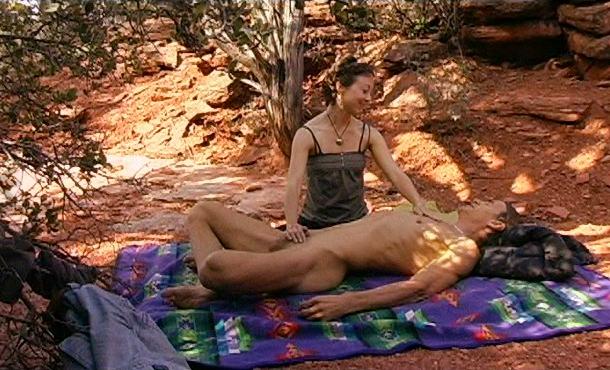
I'll add in closing that Sex Magic: Manifesting Maya, the documentary I screened this morning, was funny, unpredictable, and frank, not just in its advertised sexual explicitness but in the extensive, casual access that its key figures enable into a subject that can be very hard to make a documentary about that isn't stuck operating from a considerable distance. I'll be seeing as much as possible of the sex-focused material in the lineup, because that's how I suffer for my job. That is, not only have I published on films in that vein, so one must keep up, but the Festival office has asked me to speak on an October 9 panel about Sex and Cinema, alongside the makers of some of this year's movies. I have been asked to track down those directors' work and to follow all the envelopes they have pushed therein. I was even encouraged to wear to the panel what I was wearing last night to the pre-festival press kickoff, where the invitation was very kindly and unexpectedly extended.

It's one of those life lessons people can be slow to divulge, even though it's been known since the time of Confucius: if you're hoping opportunity will find you, give it a little nudge by wearing hot pink.

Labels: , , ,

Monday, September 20, 2010

Monday Reviews: Never Let Me Go. Also: CIFF Looms!

I'll be surprised if Mark Romanek's Never Let Me Go stays in the Oscar hunt in any category except Best Original Score, even though Rachel Portman's maudlin and overly conspicuous music is, sadly, the only thing in the movie about which I can't think of anything nice to say. Well, the music and the wigs: just awful. The rest of the movie is either an intriguing failure or a seriously flawed success, depending on my mood; almost every element has moments of working and moments of falling short. Did you feel differently, or do you plan to see it? Full review here, including two paragraphs guest-written by the main character, Kathy H.

The multiplex has a welcome aura of real appeal these days, with The Town and Easy A pulling down numbers and high critical marks. Buried is also on the way to Chicago on Friday, packing the same enviable cred of impressing reviewers and filmgoers back at Sundance, so I'll aim to see one of those three this week.

The full lineup for the Chicago Film Festival goes public on Wednesday, so in whatever time I have left, I'll try to say something about that and offer up some early reviews about the three movies I've gotten to screen in advance, all of them carried over from Cannes. Michael Rowe's Leap Year and Apichatpong Weerasethakul's Uncle Boonmee Who Can Recall His Past Lives come in about the same gradewise, though the former is sort of half full, using a taut, judicious shooting and editing to elevate a shaky premise, and the other, sadly, feels half empty, showcasing the filmmaker's ingratiating visual, tonal, and sonic trademarks through the first act, but then taking them nowhere truly satisfying.

Both films are easily worth a look, but neither is a patch on the Ukrainian showstopper My Joy, which starts as a kind of highway noir in the sunny but unsettling vastness of rural Russian highways but then gathers force as something more fractured, more uncanny, but equally gripping. Lots of movies sacrifice tension when they make a move toward national allegory, because you suddenly start seeing more or less how everything is meant to add up. By contrast, though, as My Joy raises its stakes and broadens its canvas, it actually becomes even richer and stranger, and the bravura technique astonishes even further. Standout passages, confirming Romanian cinematographer Oleg Mutu as even more of a world-class treasure, include a long sequence shot at a rural town market and a late, masterfully mounted rencontre among multiple characters at a roadside checkpoint. If you're reading this and already planning to hit the film festival in October, you've already got at least one movie on your docket that you owe it to yourself to catch.

Labels: , , , , , ,

Monday, September 13, 2010

Monday Reviews: The American. Also: Venice

Henry James kept warning us: Americans going to Italy are always asking for trouble.

Exhibit A: The American, which I'm so glad I elected to see, despite the strenuous pooh-poohing of early audiences and several reviewers. The movie is nifty and tense, if not quite rich enough to prompt full outrage at the bad rap it's gotten for not being a Bourne film. Then again, it's also earned back its moderate production costs already, so no need to cry over spilled bullet casings. Yes, it's a bit slow and airy as thrillers go, but the tension surged impressively more than once, and I followed the dénouement with bated breath. Always exciting, too, to find out that a film that looks this good cost so little, but then, maybe George owns all the Italian locations? Anyway, go see The American, and make sure not to expect either a lemon or an unfairly maligned masterpiece. I'm sure it prompts a wide range of responses on its own without buzz-slaves and their viral preconceptions doing that work on its behalf. Here's my full review.

Exhibit B: Venice, and lo scandalo Tarantino. I find it completely plausible that Tarantino & Co. fluffed things bigtime, but it's hilarious to me how little sense of independent agency is being ascribed to the other jurors in a lot of the press. Guy Lodge, as riled as anyone about the double-dipping for two of the Competition's less well-received entrants, at least makes the rational observation that the inordinate attention cast on A Sad Trumpet Ballad (Director and Screenplay) and Essential Killing (Special Jury Prize and Actor) is as likely a symptom of intense, maybe even factionalized feelings spread across the jury as it is of a Tarantino oligarchy, Dogtoothing poor Arnaud, Luca, Danny, Guillermo, Gabriele, and the much-missed, unbeatably named Ingeborga Dapkunaite into crawling on their knees and speaking Quentin's private, profane language. (By the way, we already have it on good authority that Arriaga, as soon as his blindfold was lifted and his legs unbound, began to write a non-chronological screenplay about the whole, bitter, Salò-style experience. Imagine how much he loooved the dawning reveal that wait! Quentin and Sofia have known each other in the past!)

Please know that I'm in no mood or position to apologize for this jury, especially having seen literally none of the movies. Almost all the critics I trust seem agreed that notable perfidies of evaluation have been committed. And please note that Tarantino is now a surprising 2-for-2 in reporting his festival juries to have been unanimous in picking the top prize, though certainly stranger things have happened. To me, the Hellman citation really tipped things: even if lots of the jurors like Hellman and/or Road to Nowhere, surely they realized that the laurels to Coppola and de la Iglesia would already be received as Tarantino tossing bouquets at an ex and a stylistic sibling, but they might have survived the impression of favoritism without the additional, effusive hat-tip to Monte, for a category of award they didn't even need to give. It kind of seals the perception. Still, I do think it's worth pointing out the following:

• The Reuters/New York Times piece that's floating all over is at least as meretricious as the jury decisions it criticizes. Or maybe you agree that the vaunted and longstanding Toronto International Film Festival is an "up-and-coming rival" to the completely different scene of the Lido? Similarly absurd: griping about there being "no prizes for Italian films," when this is hardly a mandate, and Guadagnino and Salvatores were right there in the jury box to wave the ol' green, white, and red if they had felt so moved; and expressing astonishment that Gallo copped a Volpi Cup for a performance "during which he uttered not a single word." Taken any temperature reads lately on an AMPAS voter watching a wordless performance—say, by Jane Wyman, Holly Hunter, Marlee Matlin, or Samantha Morton? Familiar with the idea of silent acting? Did you know They used to do that, and that it occasionally turned out okay? I can imagine Gallo's prize being specious in other ways, but his lack of dialogue hardly seems like the lead story here.

• People can question Tarantino's favoritism as much as they like, and there may well be a warrant, but Venice can't possibly have expected him to operate otherwise, given that Cannes '04 already served the template for what a QT presidency looks like: runner-up prize for something right in his wheelhouse (Oldboy/Trumpet), and a controversial top prize that gives him plenty to talk about (read: loudly stick up for himself about). Guadagnino's friend and muse Tilda Swinton was widely rumored to have stood up against Tarantino's tastes on the Croisette six years ago; her advocacy of Tropical Malady was almost certainly crucial to that film's winning of a Jury Prize. The takeaway here is to make sure Swinton is always on a Tarantino jury, or else on every jury. Her platoon of tastemakers did awfully well by the Berlin slate in 2009, spreading the wealth around well-liked titles while still making adventurous choices, and passing over famous Swintonian accomplice Sally Potter.

• Coppola is Tarantino's ex, but surely Isabelle Huppert's debts to Michael Haneke are at least as deep, probably more. The White Ribbon maybe had more advocates at Cannes '09 than Somewhere did on this year's Lido, but it's not as though everyone adored it, and journalists were less quick to accuse Huppert of "favoritism" than they are to allege it of Tarantino. Why? I wonder if the European press is making more than we Anglos are of the little-acknowledged fact that no American director had ever won a Golden Lion that wasn't part of a split decision until Aronofsky did it two years ago for The Wrestler, and now we've got another victory for a studio-backed U.S. auteur already. If you consider that Taiwanese filmmaker Ang Lee's Brokeback Mountain and Lust, Caution were largely American-mades films (Lust had Taiwanese and American funding), then that's four out of the last six. Does this made-in-the-USA mini-wave factor into the irritation so many are feeling?

• One year's outraging jury choices occasionally turn out to look like pretty good calls in retrospect, or at least highly defensible ones. David Cronenberg almost got thrown out of Cannes in 1999 for daring to give the Dardennes' Rosetta a Palme over All About My Mother, and for sending three trophies the way of Bruno Dumont's L'Humanité. The stink was unbelievable, but I bet a lot of cinephiles today have at least as much time for Rosetta as for Mother (and Almodóvar did take the directing prize), and Cronenberg's wasn't the first or the last Cannes jury to give it up big-time for Dumont. Even people who hate his films have had an awfully easier time seeing and fighting about them after the Humanité gongs than they would have before, and miraculously, things turned out okay for Pedro and his gal-pals. All of which is good for film culture, even if Cecilia Roth's Manuela admittedly knocks Séverine Caneele's hardy, pugnacious rutting for six.

So before we all go burning our Jackie Brown DVDs in the streets, then, or hiring George Clooney to shoot QT in the head from some nearby, impossibly verdant Italian mountaintop, maybe we all ought to have a look at the films (which only some of the furious protesters have done). We also might wait for a sense of how the awards outcomes ultimately wind up serving the winners as well as the abjectly unchosen. No press is bad press, particularly not the "You wuz robbed" press that Almodóvar rode all the way to his first Oscar. I'd love to see something semi-comparable happen for admittedly tougher sells like Post Mortem or Black Venus, or at least for the more insulated snubbee, Black Swan.

If you're still not appeased, and you feel compelled to pop a valentine into the mailbox along with your condolence note to Natalie Portman (who I suspect will find it in her to survive this devastating setback), may I suggest addressing it to the true believers of SIGNIS? In the last three years, they've given their Competition prize to The Hurt Locker, Lourdes, and now Meek's Cutoff. Maybe a lot of distinguished Catholics doubt whether women can be priests, but they sure seem to believe they can be cream-of-the-crop filmmakers, and I know which one I'd rather be. So, hooray for them and their flawless choices, regardless of gender ramifications. In fact, they've managed to coronate my own favorite Competition films of '08 and '09 and my most-anticipated title from '10, and I wonder what I did to deserve to have my own predilections flattered in this way. I know the Catholic church, via its Legion of Decency, did no favors to American film culture when they used to run our ratings system, in the pre-MPAA days, but time does fly, and I'm starting to think these SIGNIS/OCIC folks oughta be granted their own distribution wing. Why should Sony Classics have all the fun?

And if I have so much to say about Venice jurying, why not do some of it myself? I've added a Venice Film Festival subsection to the site, mostly as a smaller companion piece to the Cannes pages I've maintained for a while. As with most things, though, the new, slimmer model is also a notable upgrade. Best feature: tiny Twitter-sized reviewlets of all the Golden Lion competitors I've seen from the last six years. Worst feature: the number of legendary Lion claimants I have never seen, by Tarkovsky, Dreyer, Rossellini, Ray, Godard, Antonioni, Hou, Varda, Tsai, von Trotta, Olmi, Zanussi, Zhang, Rosi, and many more.

Clearly, I need to get on top of this situation. By all means, tell me the first Lion of Yore that you think I ought to visit. If I start getting too heckled for my own shortcomings, though, or feeling too embarrassed, I will gladly relight the pyramid of dry wood underneath Tarantino, just to deflect attention. Because, after all, what on Earth could he possibly have been thinking? I heard a rumor that Fedorchenko did actually win, but Jack Palance, that nutty old coot, read the wrong name. And what did the petite Natalie ever do to Quentin, anyway? Maybe he's an O.G. Star Wars fan?

Labels: , , , , , , ,

Friday, September 10, 2010

I'm Breathless: Fall/Holiday Season 2010

One more early fall tradition, and then we can actually get on with things! Typically, after The Fifties have passed, I provide a sort of almanac of what I'm eagerly anticipating, less eagerly anticipating, and not so much anticipating in the coming months—perpetually ballyhooed as the season when "all the good movies" open, though I think regular readers will know how seriously I take that adage. Probably Nine and The Lovely Bones cemented that point on my behalf last year (sorry, Andrew!), even though I was anticipating them as much as anyone. With Telluride and Venice both having kicked off and Toronto set to go commence momentarily (or maybe by the time this post goes live, it will have?), we're starting to hear a little more about several of these titles, and the release calendar is always volatile, so of course these classifications are subject to change. But I'm always surprised how much readers respond to this list, it's a fair confession of my early biases, and it's a handy one-sheet for me. So, with a somewhat arbitrary tip of the hat to Madonna...

EROTICA
White Material - Easily one of our greatest filmmakers and greatest stars
  A– - Agonized and fearless, eerily sympathetic, formally electric

LIKE A PRAYER
Black Swan - Requires a lot of trust in Portman, but who isn't fascinated?
  B– - Works as schizo freakout, but resorts to too many cheap tactics
The Illusionist - No such thing as a review of this that isn't a heartfelt paean
Inside Job - No End in Sight rocked, and this seems even mightier
  B+ - Strong! Just as compelling as No End, if more testily self-righteous

LOVE PROFUSION
Another Year - I'm guessing I'll like but not love it, which is plenty
Blue Valentine - Could collapse in flames of pretense, or could invigorate
Buried - I am all for a well-played gimmick, and reviews have all been kind
  C– - Enervating and implausible in all the wrong ways
Enter the Void - Inevitably self-indulgent, but his visuals entrance
  pass - Inconvenient length and showtimes plus bad word-of-mouth kept me out
The Fighter - A sharp cast and a director who's always worth trusting
For Colored Girls - I like Perry, and I love this text, and many of the women
  C+ - Very worth seeing for power of best bits, but troubling and ill-integrated
Last Train Home - Everything I've read is a rave; Up the Yangtze redux?
  pass - Saw first half and had to leave on work-related emergency! Was going fine...
Monsters - Came sailing out of Edinburgh fest; seems genuinely unusual
  B– - Excitingly odd, great lensing and production, but ratios way off
Mugabe and the White African - A buzz builder for over a year
  C+ - Both essential and disappointing (full review)
Rabbit Hole - Somebody buy this! Seems ideal for Kidman, especially
  B– - Uneven and limited, but affecting and smartly performed
The Social Network - Very intriguing, but lots of room for error
  B+ - Fleet, sharp, engaging, impressive, just a bit too deoxygenated
The Town - The promise of Gone Baby Gone, minus the cheese?
  B+ - Muscular, absorbing pulp; unexpected tenderness and humor
Valhalla Rising - I'm all for nutso, heightened historiography
  C+ - Gruff, deadpan, and proudly bizarre (full review)
The Way Back - I didn't get Master & Commander right away, but now I'm sold

GIVE IT 2 ME
The American - The studio just knows we'll hate it, so I'll probably like it
  B - A bit clichéd but subtle and insinuating (full review)
Burlesque - Cher in a film is an event. One of our most underused actresses
Carlos - Festival notices hadn't been raves, but Assayas is unmissable
Fair Game - Cannes notices didn't inspire, but the story bears repeating. Sean!
Love and Other Drugs - Zwick and all, but Hathaway shimmers in the ads
Never Let Me Go - I'm mystified by the book, but I still feel drawn to the film
  C+ - Mix of pros and cons re: already shaky book (full review)
Night Catches Us - Mackie and Washington; surely one has to go bonafide soon?
Somewhere - I'm curious, but will her next be called Deck Chair? Drifting?

PROMISE TO TRY
Country Strong - Welcome back to the 5 & dime, Gwynnie P, Gwynnie P!
Easy A - Emma Stone charmed even in Superbad, and this looks scrumptious
  C+ - Stone's aces, plus some good sidebar moments; film's a breezy mess
Hereafter - Clint whiffed three in a row, but it's an important career
  pass - I'll see it eventually. Maybe. Probably. It just sounds so lame.
How Do You Know - I'm not a Reese guy, and I still found the trailer inviting
Howl - Neither of Franco's pics looks like a sure thing, but I'm curious
  C - Ginsberg on Ginsberg, a trial about Ginsberg, all indirect and choppy
It's Kind of a Funny Story - Boden & Fleck compel respect, but are we suuure?
  pass - Sounds increasingly clear like they're off their game, and I don't want to see that
Leaving - Could be juicy vehicle for Scott Thomas, who says final cut surprised her
Nowhere Boy - I'd avoid it if the reviews for the actresses weren't so strong
Soul Kitchen - Please tell me this is genuinely winning, and not just pandering
  pass - Had every intention, but I, like the distrib, thought it would catch on longer
The Tempest - Taymor isn't trustworthy, but the elements still scintillate
The Tillman Story - My brother took this story really hard, so I feel compelled
  B - Sober, effective storytelling with many-sided characters
The Tourist - Wasn't a Lives of Others fan, but this could be smart, or taut
True Grit - Dubious match of Coens to shaky material, but can't be ignored
Vision - Von Trotta's an interesting case, and I work with a Hildegard expert

SOONER OR LATER
127 Hours - I'd put it lower, but I'm sure I'll still wind up seeing it
  C+ - Very capable with local details but awfully fuzzy on larger ideas
All Good Things - Much delayed, but Gosling, Wiig, Venora are big draws for me
Biutiful - I don't think González Iñárritu or Bardem has lived up to potential
Bran Nue Dae - Glenn at Stale Popcorn has been beating this drum for a while
  pass - People who saw it doubted whether it was my thing; I'll wait for DVD
Conviction - We'll know from the first reviews if we really need to bother
  C+ - Unremarkable filmmaking, hugely patchy script, but leads sell the heck out of it
Down Terrace - Tim Robey gave it a very admiring review in the Telegraph
Jackass 3-D - Call me a groundling, but I loved the first, seems perfect for 3-D
  pass - ...though not enough, apparently, to get me to commit another $15
The King's Speech - It reads sort of ludicrous, but I might feel obligated
Let Me In - Unlike most others, I don't hold the original sacred
  pass - Sympathetic as I was to chance of improvement, I didn't care to investigate
Making the Boys - The subject can't help but move me, but how's the film?
  pass - Never came anywhere near me, assuming it opened at all
The Next Three Days - Crowe is always worth it, and Haggis retains potential
  C - Embarrassing start, watchable and sometimes great in middle, infuriating end
Paranormal Activity 2 - I might not have learned my lesson at Book of Shadows
  B - Enjoyment predicated on fondness for first movie, but I went for it
Waiting for 'Superman' - Even if it overstates the obvious, I feel implicated
  pass - The critics I care most about seem all but agreed that this is thin soup.

JUSTIFY MY LOVE
Barney's Version - The IMDb plot précis gave me a genuine twinge of acid reflux
Machete - I still can't decode the reviews. Should I go? For Trejo?
  pass - I'd have gone in a different season, but fall's too crowded as is
Morning Glory - An inspired grouping of cast members, but ads are groaners
  D - Some yuks, but a sinkhole of incoherence. McAdams deserves better
Stone - Wouldn't stand a chance, but written by Junebug scribe!
  pass - Sounds mildly unusual, but not enough to entice me back to De Niro or Norton
Welcome to the Rileys - These three actors are a tough combo to ignore
You Again - Seems like something I'd skip, but lotsa great ladies
  pass - Oh, so it's Mean Girls meets Bride Wars with dumb jokes? Oh.

BORDERLINE
The Company Men - If it's "Up in the Air but 'not quite as good,'" I'm out
Due Date - I chuckled once or twice at the trailer, but mostly groaned
  pass - Reviews, especially A.O. Scott's, didn't tell me anything I want to hear
Heartbreaker - Reviews and business in France have been pretty spectacular
  pass - Couldn't see appeal, but imagine what French think of Hitch
I'm Still Here - I am not fascinated by the shenanigans of the weird and privileged
  pass - Some praise mixed with the pans, but nothing turned me around
Made in Dagenham - Maybe if Sally Hawkins is the real deal, but awfully light
Mademoiselle Chambon - Seems pretty anonymous, but it's got Lindon and a César
  pass - In a very crowded season, I just couldn't justify the time
Red - Only if reviews signal it as more than an arbitrary stunt
  pass - Reviews confirmed worst fears, and I'm Mirren'd out at the moment
Secretariat - Only if I'm having one of those pint-of-Häagen-Dazs days
  pass - Critical scuffles have been intriguing, but I haven't bought a ticket
TRON: Legacy - Only if the reviews are above Speed Racer
Wall Street: Money Never Sleeps - Carey Mulligan and Josh Brolin, but still...
  pass - Checked in on Carey for Never Let Me Go. Why visit twice?

LOVE DON'T LIVE HERE ANYMORE
Harry Potter and the Deathly Hallows, Pt.1 - Dropped Harry, don't regret it
  pass - Exactly what I already said
I Want Your Money - And I want a doc that doesn't just preach things we know
  pass - I don't think this ever showed up, and I think Inside Job satiated me
Jack Goes Boating - Loved Synecdoche but can't take much more schlub
  pass - Reviews more encouraging than I expected, but I'm still just not ready
Legendary - What will I do for Patty Clarkson? Attend a wrestling pic?
  pass - Only opened in northern suburb! I'm not traveling for this thing
Megamind - Only if the reviews are above Despicable, and doubtful even then
  pass - If anything, reviews are more muted than for D-Me, so I'm out
My Soul to Take - For Wes Craven, I need Freddy, or else Meryl on fiddle
  pass - Already clear this won't be my thing
The Sicilian Girl - Ever hear about the Sicilian movie about the Mafia?
  pass - Preview even more rote than what I had imagined; no peep from critics
Skyline - This seems Dean Koontzy to me. Is it Dean Koontz?
  pass - I thought so.
Tangled - "Alex, I'll take 'Completely Charmless Trailers' for $1000..."
The Warrior's Way - An unexpected cast, but I bet I'll still pass
Wild Target - Nighy? Blunt? Everett? Atkins? Enough to reserve judgment
  pass - Can already tell from trailer that this won't be my cuppa
You Will Meet a Tall Dark Stranger - Still haven't liked an Allen in 13 years
  pass - Reviews, especially A.O. Scott's, have confirmed all my fears

RESCUE ME
Case 39, Faster, The Girl Who Kicked the Hornet's Nest, Gulliver's Travels, Legend of the Guardians: The Owls of Ga'Hoole, Life As We Know It, Tamara Drewe, Unstoppable, The Voyage of the Dawn Treader, Yogi Bear

FROZEN
(i.e., confirmed postponements)
Brighton Rock - Unless reviews curdle, I'll want to see if they nail the nastiness
The Conspirator - Forget box-office poison; Robin is like distributor poison
The Debt - I liked Munich, twice, but will this measure up?
Hesher - Gordon-Levitt indifference persists, but script by Animal Kingdom guy
London Boulevard - Lots of potential but are we positive it's opening?
Miral - I'm expecting a bit of a slog, but I'm curious to follow Schnabel
Passion Play - Rourke's first post-Ram gig that offers real opportunity
Red Dawn - Must every damn thing be remade? Now, if it were Red Sonja...
Tree of Life - As if anyone needs me to explain my hopeful ardor
What's Wrong with Virginia? - Rare gig for scripter behind camera really hooks me

Labels: