Thursday, July 31, 2014

Best Supporting Actress 1973: Nominees and Outside Possibilties


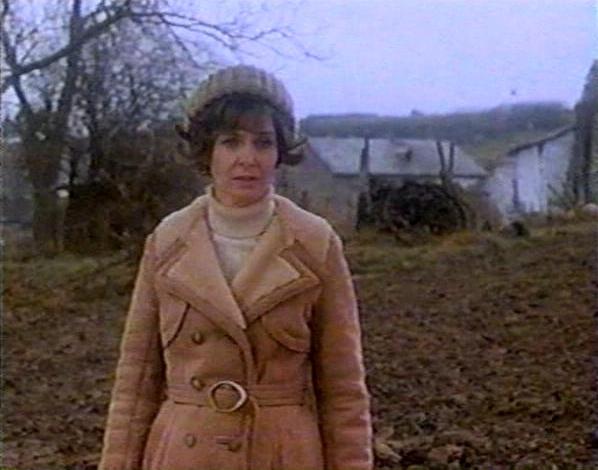
This is a picture of me sitting on a hilltop in a fetching blonde bowl cut, while Nathaniel, not unusually dressed as Madeline Kahn, warily approaches. Despite my years of conscientious service, he's actually asking me to bow out from this month's installment of the Supporting Actress Smackdown, dedicated to the roster of 1973, and to let five interlopers sit up front with their big tits.

I guess when the new passengers are extraordinary film critics Bill Chambers and Karina Longworth, peerless popular film historian Mark Harris, sickeningly young movie smarty-smart Kyle Turner, and multiple-Emmy-winning actress Dana Delany, I might see the logic of moving to the back seat. Hell, for that crowd, I'd ride in the trunk.  Just like you, I cannot wait for this episode of the Smackdown and its associated podcast, both because I so admire all the panelists and because—in a major reversal from last month—I think the Academy did an absolutely splendid job filling out this field.  If there'd been room for me on this varsity squad, I'd have said the following... and in 73 words apiece, because you know I don't play:

Linda Blair, The Exorcist
★ ★ ★ ★
I get it: Blair’s performance encompasses major assists from makeup, effects, and a pissed-off Mercedes McCambridge. Awarding her may not be the appropriate channel for recognizing the impact of the characterization. But when the impact is that astounding… Plus, I like her muted, underplayed chipperness and frightening fatigue in the opening acts. You feel that an already-recessive personality is being further endangered, which is more interesting than a precocious dynamo coming under attack.

Candy Clark, American Graffiti
★ ★ ★ ★ ★
Nobody's bad in Graffiti but many are boring. Dreyfuss begs to get noticed; others could stand being more noticeable. Oscar's singling out of Clark makes sense: she famously campaigned, but she's also got a peculiar, genuinely comic presence. From the start, foggily contemplating which celebrity she most resembles, she looks perpetually like she's entertaining other, weirder thoughts than the script's, without detaching from scene partners, getting too broad, or leaning into kooky-blonde caricature.

Madeline Kahn, Paper Moon
★ ★ ★ ★ ★
Kahn can unmask Trixie's core and animate a whole scene simply by belting "Son of a bitch!" with impressive vulgarity. She gets aroused just hearing about hotel rooms, daddy. Silencing her seditious, over-sharing traveling companion with one look, she gets her laugh while disclosing how terrified Trixie is of blowing even this shoddy chance for—money? companionship? adulation? Still, she sometimes settles for surface. Often more involved in her performances than her films.

Tatum O'Neal, Paper Moon
★ ★ ★ ★
Yes, she's a lead, from first shot to last. More caveats: like Blair, she benefits as much from savvy typecasting as from inspired technique; huge swaths of her performance unfold in isolated close-ups, enlivened as much by editing as by anything Tatum is doing. But? She's sweet, sad, conniving, funny, and ill-tempered without being insufferable. She radiates constantly how unhappy she'd be living in some nice lady's house. She makes the movie work.

Sylvia Sidney, Summer Wishes, Winter Dreams
★ ★ ★ ★
It's one thing to establish a lasting impression in the first 20 minutes. It's another to convey such steely self-absorption within that narrow window that we believe you'd inspire the biggest chip Joanne Woodward ever had on her shoulder... and she's had a lot of big ones. And to be funny, but not comic, while doing it! And to render a memorably upsetting death scene. Extra points for eye-rolling at that baby’s picture.

Clearly no complaints this time around, even though I'm still not sure whom I'd have voted for—probably Sidney, since hers is the most obvious display of proficiency without editing or effects boosting her along in any way. But really, this category couldn't have gone too wrong.

That said, I always love seizing Nathaniel's monthly focus on a given year to (re)visit as many movies as I can. This month I watched over two dozen releases from 1973 I'd never seen before and re-watched several others, plus some slightly older films that qualified for Oscar in 1973. For the purposes of today, here's what I learned about 18 eligible members of the competitive field from which Oscar culled Blair, Clark, Kahn, O'Neal, and Sidney. Many of these performances, including those nominated for other major awards, might have given those gals a run for their spots (though honestly, consensus seemed pretty strong that these would be The Five). No longer promising 73 words a piece, though. Take what you can get...

Read more »

Labels: , , , ,

Monday, June 07, 2010

Actress Files: Liv Ullmann

Liv Ullmann, The Emigrants
★ ★ ★ ★
(lost the 1972 Best Actress Oscar to Liza Minnelli for Cabaret)

Why I Waited: The Criterion Collection deserves a newly inaugurated Nobel Prize for Cinema in my book, but I'm sure I'm not the only devotée who harbors dream-visions of expanding their catalog. Jan Troell's The Emigrants and its sequel The New Land, revered on their release but extremely difficult to track down these days, strike me as an ideal box-set for some well-resourced DVD imprint, especially now that Criterion is gracing Troell's more recent arthouse hit Everlasting Moments with a typically lustrous packaging. I'd hoped by the time I got around to The Emigrants that a revival-house screening or an official DVD pressing somewhere would show the film to superior advantage. As it is, I'm enormously grateful, and for the umpteenth time, to my friend Mike, who provided me with a copy of this film way back when we were first getting to know each other. We swap stuff like this the way addicts trade needles, but mercifully, the only health risks are mental. And even when I want a hit so bad I can taste it, I can resist the urge for years when I suspect it will be worth the wait.

The Performance: Ironically, the two performances for which Liv Ullmann secured her two Oscar nominations are, today, two of her most impossible films to see—despite the usual axiom that the point of the Academy Awards is to ensure visibility for films that need it. Neither of them has ever appeared on DVD, unless you count the hacked-up and English-dubbed limited release of The Emigrants that Warner barely put out in 2007, minus 40 minutes of original footage. Even VHS copies are very hard to come by, and most of those are severely truncated, too. Someone will eventually explain to me the reasons for such rude treatment. Besides these headaches of ready availability, however, neither the two films nor Ullmann's performances in them have much in common. I ought to return one day to 1976's Face to Face, since I do love Bergman and I cherish any top-grade actress rendering an all-stops-out mental crackup on screen. Some people cite Ullmann's explosive charting of the mental deterioration of a Swedish psychoanalyst to be one of the greatest performances ever lensed, but the film's muddy symbolisms, the repetitions in the screenplay and the acting, and the almost lewd overvaluation of howling despair put me off a little. By contrast, Jan Troell's The Emigrants—also a nominee for Best Picture, Best Director, and, in the previous year, Best Foreign Language Film—is a much more stately, superficially conventional chronicle of a nonetheless harrowing experience, as a party of 14 loosely related men, women, and children from the rustic Småland province of Sweden decide to take their chances in the reputed promised land of North America. Together, they have had their fill of tyrannical employers, religious persecution, thwarted opportunities for learning, and alternately drowned and sun-blasted crops.

In deference to my promised focus on Ullmann's performance, I'll say quickly that The Emigrants is an absolute stunner of naturalistic historical recreation and intimate human portraiture. Balancing the majestic visual scale, the low visual contrasts, and the sedate color palettes of rural 19th-century paintings with the nervy camera movements and unsettling sound design of up-to-the-minute cinematic technique, The Emigrants is all the more impressive for the fact that Troell worked as director, cinematographer, editor, and co-adapter of Vilhelm Moberg's novels. Certainly since the Best Picture slate was shrunk down to five nominees in 1944, and perhaps not even beforehand, I don't think that category has ever again in a single year boasted four such superior movies as Cabaret, The Emigrants, The Godfather, and Sounder, which of course only makes it more frustrating that Troell's achievement cannot be more readily savored by a wider audience.

But we were speaking of Ullmann, whom we first meet as a blonde-plaited girl perched lazily on a swing, itself suspended from a huge tree branch. With the light behind her and a consequent golden nimbus of backlighting tickling away at her features, Ullmann is a radiant image of youth. For a story that will lean so heavily on everyone's massive utopian investments in the myth of America, there is some irony to the fact that no one in the film ever looks as sublimely inspiring or as contentedly situated in time and place—not even once they've reached their mythopoetic destination—as Ullmann's Kristina does in these introductory shots. Kristina soon marries the young, local farmer Karl-Oskar Nilsson (Max von Sydow, or were you expecting someone else?). As she moves in with Karl-Oskar's crippled father and silent, vaguely censorious mother, Ullmann maintains a ruddy, only half-concealed vitality: seeing to her chores of milking cows and preparing food and gathering straw, but occasionally espied having a respite on yet another swing, when she probably ought to be toiling. The presence in the household of Karl-Oskar's younger, more handsome brother Robert (Eddie Axberg), a precocious reader, a riverside dawdler, equally stirred by philosophy, natural science, and faraway locales, suggests an inevitable romantic tangle. In fact, though, he and Kristina never come anywhere close. Ullmann makes subtle but quick work of suggesting the swift erosion of Kristina's restless girlishness, and her stalwart disinclination toward sin. She can still be sweet-talked into a nocturnal roll on the straw pallet she shares with Karl-Oskar, but not without suggesting that a fourth pregnancy in four years might be something to avoid, given their intractable debts and their stingy fields. Kristina is by far the most fertile thing on Karl-Oskar's farm, but she is no earth mother. Despite the initial impression Ullmann made of gorgeous, arousable mischief—made more tranquil as the years pass, but still vaguely palpable as she, and she alone, listens with thoughtful fascination to what Robert reads aloud—she has to give Karl-Oskar the same warning that Alma gave Ennis in Brokeback Mountain against conceiving more children he has no way of feeding. She's still a smitten wife, but life has begun to sober her up. Worry has begun to nibble at her, like bedbugs that won't go away.

Nonetheless, in offscreen moments, Kristina keeps relenting to Karl-Oskar's advances, and they keep adding to their brood. She is a much more pious believer than her husband, and Ullmann imparts a sense that Kristina's practical reservations about bearing a larger family are suffused with a theological fear that she is tempting God's patience by living and loving beyond her means—that she is professing a mindfulness of resources that she is not fulfilling, or that Karl-Oskar keeps upsetting on both their behalves. She is understandably piqued, then, when Karl-Oskar reacts with glumness to her announcement of another pregnancy. Still, her heated reaction—especially in proportion to his swift self-recovery and his earnest vows of continued adoration—imply that she has silently been fretting, even berating herself, well before disclosing the news to her nonplussed husband. She is rankled and scared enough by his casual blasphemies in the fields, blaming God for his own pathetic harvests, that it's a bit less surprising, though only a bit, when she holds him so severely to task after lightning strikes their only barn and burns it fully away. Ullmann holds up her hands in an etherized pose of praying after this happens, gazing stonily into the camera and toward Karl-Oskar as they jointly approach. She looks sphinxlike and serenly taunting, like one of those women who wordlessly beckon from uncanny landscapes in Tarkovsky's films. But the bizarre edge of thrill and relief that Ullmann sneaks into Kristina's fearful recriminations suggests that she'd rather pay an inevitable bill to their angered God by sacrificing a farm than by losing a child. Before long, Kristina and Karl-Oskar do lose a child through a dismal accident, and only then does she accede to everyone else's avid longings for the New World. However, she's pregnant once again by the time they leave on their grueling voyage, and it's clear that she expects still more trials from the Holy Ghost.

From time to time she says as much, but it's really by watching Ullmann's uneasy pensiveness in the backs of several shots that we best track what she's feeling. Hunkered into the wagon that hauls them from their family plot to the chaotic seaport, barracked into the massive ship that is their tightly-packed home and their fetid prison for a ten-week voyage, not quite becalmed even after the ship arrives in New York City (minus several of its original passengers), Kristina typically subsists as a quietly but nervously reactive presence. Many of her close-ups are brief, wordless inserts, in which Ullmann capitalizes on her amazing knack for profound but unshowy distillation of emotion, a capacity for total expressive lucidity that has recently become the provenance of Juliette Binoche. To be sure, she gets some more volatile moments, too. She weeps in weary self-disgust when she discovers her clothes crawling with lice. She raves in desperation, looking to find a daughter who has somehow wandered off while a second passenger-boat temporarily docks. She is incensed to be traveling in the company of a prostitute named Ulrika (Nonica Zetterlund), whom her uncle, a zealous and scarily arrogant minister, praises as God's favorite child in the entire community. Why else, he asks, does Ulrika go unbitten and undiseased, even as seasickness, scurvy, and vermin infestations ripple through the rest of the ship's hold? Kristina has no answer except a fuming, almost cellular rejection of this logic, though whether she's angry with Uncle Danjel or Ulrika or herself, maybe even at God, is something for the viewer to think about throughout the tantrum and through lots of subsequent inserts of Ullmann, weary behind the eyes and obviously troubled at heart.

The scenes of strenuous emoting were not my favorites in Ullmann's performance, partly because they risk being predictable reactions to generic goads (humiliation, parental fright, moral disgust), and partly because these facets of Kristina sometimes arise too quickly or too floridly. The most substantial reason, though, is that the wealth of information Ullmann conjures about Kristina even when she's doing and saying much less constitutes such an extraordinary display of unegotistical artistry that one almost hates to see Kristina pipe up. All she needs is one incongruously fretful expression while a hundred other characters are rejoicing in the finally-attained dockside of New York for us to see that Kristina is contemplating this whole journey in a different, more inward, more inviolably skeptical plane than anyone else among her company, even her husband. She's the God-fearing pilgrim among all the secular travelers, who dream of Minnesota topsoil and assimilated American consonants and California gold.

Refreshingly, though, Ullmann and Troell refrain from making Kristina a hysteric or a nag, and they wouldn't dream of using her to pathologize older ways of feeling. Ullmann's concessions to period are to play Kristina as someone who expects discomfort and hard work and to retain a bone-deep consciousness of divine observation, responding to calamities or provocations not as things to be angry about but as moments to be humble—although here again, Ullmann captures Kristina's piety while forbearing from making her meek or passive or impenetrably internalized. So many actors play period by giving their characters ornate or estranged exteriors out of step with contemporary idioms but emphasize that their hearts and minds are as modern as could be. Ullmann, though, has neatly reversed that equation. Aside from the strongly marked regional accent in her voice, she speaks, moves, and breathes with an unself-conscious immediacy unusual for performances in tales of the 1840s, and yet it's tangible at every moment that Kristina's soul measures itself by different values. Her joys and worries and expectations are those of a very different era. If she's a bit tacit, it's not because she's under her husband's thumb or in some other way "unliberated" but because she is so deeply habituated to the ways in which even the mainstays of her life—the ground, the water, the air, her Lord, her womb, her food, her questions, her work, her dislikes, her hunches about the future—regularly resist even the hardiest work ethic, the most Christian modesty, the best attempts to manage her family or to earn God's clemency.

This is why, even as I am tempted to say that Cicely Tyson's Rebecca in Sounder and Ullmann's Kristina in The Emigrants might come closer to a mutual understanding than you'd expect from any two characters in the same Oscar race, I cannot imagine Kristina being capable of that heart-stopping, plaintive, desperate, and loving sprint that Rebecca climactically takes toward her husband. Ullmann keeps Kristina vital, open, accessible, and matrimonially devoted without suggesting that she could love a husband as voluminously as Rebecca loves hers, without committing a sin of pride. In fact, when Kristina lies bloody and depleted, in the advanced stages of shipboard illness, what she offers as a dying confession to Karl-Oskar is a barely audible "I care for you very much, and always did. We're such good friends." Ullmann, who has mapped ecstatic, ambivalent, and openly hostile marriages during her storied career, is in full command of the actorly dexterity required to express such a modest, fragile emotion in a way that suits the character and the period without disappointing a modern audience's desire for emotional identification and release. She has need to wail and weep elsewhere in The Emigrants, but mostly she's defined by a placid but uncomplacent watchfulness, keeping one eye on her children and one on the uncertain future, near or far.

It's hard to imagine serving The Emigrants much better than this, and if the performance feels just marginally shy of the highest heights, that speaks less to any deficiency than to Ullmann's mature contentment to fit within Troell's grand, deliberate, but nonetheless astonishing schema. (It may also have to do with the superhumanly high bar that this actress sets for herself in other work.) So little is Ullmann interested in knocking our socks off or bending her scenes to privilege Kristina that when The Emigrants ends, you may have trouble, or at least I did, remembering exactly how the character looked or where she was for her final shot. One of the other co-leads is gloriously settling, and one is ardently commencing yet another voyage. Both impressions are indelible. Whether Kristina, though, has a sense of having arrived or of only now embarking on a new voyage is much less certain, and as we've learned from Ullmann's performance, it probably has less to do with physical locations than with spiritual soundings. Gazing at Ullmann at any given time, you learn plenty about the character, and you desire to find out more. While taking in the full scope of The Emigrants, though, you occasionally lose track of her completely, or you realize you haven't seen her lately and start scouring the corners and the backgrounds of the group shots. Given the way the actor and filmmaker have collaborated to conceive Kristina and to integrate her within the novelistic riches of The Emigrants, all of these responses—fixated, distracted, and curious—are equally suggestive of how fully Ullmann warrants our praise.

The Best Actress Project: 1 More Down, 3 to Go

BONUS: Notoriously, Ullmann lost her shot at a third nomination when an arcane AMPAS rule prohibited the Oscar eligibility of Scenes from a Marriage in 1974. It isn't simply that Scenes debuted on Swedish TV, albeit in a much longer form, but that this broadcast and the U.S. theatrical release failed to coincide in the same calendar year. I read in Inside Oscar about the ad taken out in the Los Angeles Times by a group of actresses who wanted Ullmann to be considered, and while preparing this post, I decided I had to see it for myself. So here you go, a top-drawer artifact of actressexuality, straight from page F12 of the Times on January 17, 1975. Now that's what I call the approval of your peers. Sometimes it's just an honor not to be nominated!

Labels: , , , , ,

Thursday, May 27, 2010

Actress Files: Joanne Woodward

Joanne Woodward, Summer Wishes, Winter Dreams
★ ★ ★ ★
(lost the 1973 Best Actress Oscar to Glenda Jackson for A Touch of Class)

Why I Waited: So what if Columbia had no idea how to market this movie to a general audience, saddling it with that title Woodward hated so much and an even worse tagline on the poster: "Beautiful. Frigid. She is called a Snow Queen." Were they dead-set on losing their investment? For me, though, this prospect is pure catnip: a pedigreed lead actress, 30s darling Sylvia Sidney in a comeback cameo, and nominations for both. I've enjoyed looking forward to this one.

The Performance: I know there are exceptions to this rule, but especially after the mid-60s or so, "a Joanne Woodward movie" means something at least as specific to me as "a Howard Hawks movie" or "an Alfred Hitchcock movie." Lots of actresses take pains to advertise their versatility, and Woodward's most famous, Oscar-winning role in The Three Faces of Eve accomplishes just that in the space of a single film. But at the expense, I'm sure, of working as often as she deserved to, Woodward's presence above the title signifies a strongly internalized drama, slightly vinegar in flavor, depending entirely on very fine subtleties in line readings, rhythms, and facial expressions—notwithstanding the fact that Woodward has an acerbic, somewhat defiant screen presence that would seem to forestall rather than encourage spectatorial penetration. For the most part, she's the polar opposite of more florid, gestural performers like Ellen Burstyn and Jessica Lange, although she adjoins them in my mind because they all share a gift for seeming wholly committed to their characters even when they telegraph a cranky discontent with their movies. They also seem a lot smarter and pricklier than most of the people who interview them, are quite unafraid to disclose this, and are completely uninterested in amending those aspects of their acting that detractors most dislike: Burstyn's officious, very Actor's Studio compositing of character tics, Lange's restless riflings through her regular bag of mannerisms, or Woodward's tendency to lower the temperature in a given room while looking rather haughty about it. Probably, by someone, she is called a Snow Queen. Disciples of movie divas who crave bright colors, movements across a range of genres, and zingy PR are inescapably brought up short by Woodward. If you like her style, though, you really like it, as witness her becoming only the fourth actress to rack up three Best Actress citations from the New York Film Critics Circle.

Summer Wishes, Winter Dreams was the second of those three films, and it perpetuates the driving paradox of Woodward's big-screen career: almost every one of her starring vehicles serves as a kind of apotheosis for her flinty persona and for her particular angles of interest in human character, and yet, if you set Eve White, Rachel Cameron, Rita Walden, Amanda Wingfield, and India Bridge side-by-side, they barely resemble each other. As Rita, the frosty, ornery centerpiece of Summer Wishes, Winter Dreams, she has none of the frustrated sensuality that she lights so slowly and fascinatingly under her character in Rachel, Rachel. Rita is neither looking to change her life (though she'd evidently prefer for people around her to change their lives a little), nor is she trying to charm anybody, nor does she appear to suffer in her marriage, regardless of some unmistakably arid winds that blow inside it. One of the earliest scenes in Summer Wishes finds Rita paying a cantankerous visit to an eye-doctor, and we're a good many beats into the scene before we understand that Martin Balsam's patient doctor is also her husband, Harry. As will be true for the rest of the film, Woodward remains just this side of bitchy and Balsam pulls back from acting beleaguered. Their characters appear inclined in those respective directions, especially after a long marriage, but she would be bored and remorseful at inhabiting the cliché of the inhospitable cold fish, just as he would feel defeated and deprived if he were to resent more consciously her sharp edges and impersonality. So, she threads a little warmth and tenderness into their exchanges, even as she sometimes looks as though she has to remind herself to do this, and he reminds himself, via spoken oaths to her, that he really is her intimate, sympathetic partner and a harborer of sexual feelings, however largely thwarted... not, in other words, or by any means, a vaguely disappointed colleague of many years, more of a friend than a husband.

Woodward wears her character the way you wear a well-tailored leather glove. As in other roles, she is a consummate professional at eliminating almost any sense of space between herself and Rita, even though Rita clearly finds her own habits stifling and itchy at times (at other times, she's more than happy to flaunt them), and her affects must be slightly itchy for the actress to have to play. But hand Woodward a dislikable woman of a certain age, and she'll play dislikability like it's a prized viola. She comes across as a staunch, somewhat severe defender of her characters, partly for contextual reasons. That is, so few American actresses seem willing (or, to be fair, get asked) to play these sorts of women; "difficult" types in American movies are so often barnstorming crusaders in the Norma Rae vein, or comic villainesses, or harridans. Woodward was very rare, then, in establishing a métier in forms of everyday astringency, and not only refusing to dull these women's edges but actively working to sharpen them, the way a practiced cook takes care of her knives. What I find most remarkable about this is that Woodward's protectiveness toward the characters' refusals to be charmers or mannequins does not spill into a subtle PR campaign to get us unreservedly on their side. Rita is a pill with a point of view, but still a pill. Her ornery way of pointing out her daughter's self-involvement is not likely to prompt the girl toward newfound generosity, just as it's not clear who wins, including Rita, by being so very caustic at a family funeral, where her refusal to sell off the property of the deceased is no more or less reasonable than the eagerness of her relatives to get rid of the estate and divvy up the profits. A crevasse has opened between Rita and her offscreen gay son, who communicates only with his sister; given Woodward's talent at conveying deeper feelings inside an inflexible, almost cutting reserve, you don't need to meet this son to empathize with his decision to estrange himself, even though you can't write Rita off as a harpy or a bigot.

Though Woodward seems determined not to repeat past characterizations, her director Gil Cates and the screenwriter Stewart Stern, who also penned Rachel, Rachel, harbor few such compunctions. Indeed, they steer Summer Wishes, Winter Dreams toward some formal and textural choices that seem to suit it much less than they did Rachel, maybe because Newman seemed to be thinking in terms of images and studying the French and British New Waves more closely, whereas Cates just seems to be aping Newman, thinking in terms of writerly conceits and trusting, understandably, in his tony cast. It's hard to imagine Woodward thinking very highly of a fantasy sequence in which she falls asleep during a screening of Wild Strawberries and imagines confronting her ballet-dancing son and his grinning male lover in laughable, faux-Bergman monochrome. She's not tasteless enough to pull back from the scene, or from a later, overly stylized interlude when Rita gets claustrophobic in a London tube station. Still, what is taut, nuanced, and exciting in Woodward's performance just isn't palpable in these errant sequences. At other times, I would diagnose an opposite problem. When, for instance, Rita steals into a basement cupboard to sample some of the jams that her mother canned years ago, or finds one of her own secret diaries hidden in a haybale in the family farmhouse, and sheds tears over her old entries about a lost love, the scenes and the performance choices too strongly recall the sort of rehearsal-workshop scenes through which an actor "finds" a character. They feel too contrived, though, too insularly focused on the performer and her exploratory choices, to be credible within the finished narrative. I'll hazard a guess that these sorts of scenes kept Woodward interested, but they're also the apertures through which a starchy theatricality creeps into the work. Woodward's gestures don't get too big, exactly, though a high-decibel standoff with her daughter in that hay loft does push this particular envelope. My larger misgiving is that her magnified, self-serious playing in these scenes recalls those moments in interviews where stage-worshiping actors start intoning about their "craft" and "process" without realizing how humorless and hokily overblown they've allowed themselves to sound.

Summer Wishes, Winter Dreams has a sort of Goldilocks problem, then, where some scenes feel too director-focused and some too indulgent of the actors and their character work. At times, the movie has too much of the stern aloofness of Woodward's character, and at others it conveys the main feeling of a scene with discomfiting, even awkward directness. But the whole ship comes into port well enough, and "craft" and "process," for all the ecclesiastical solemnity I'd like to erode from those terms, are precisely the reason why. Woodward doesn't give a negatively shaped performance—it's not as though she succeeds primarily by reactively rejecting some coarser version of her character, rather than building one from the script up. Nonetheless, it's easier to describe what she attains in this part as a series of avoided banalities, climaxing in a few particularly brilliant scenes where she negotiations a psychological obstacle courses. Woodward and Balsam have one near-argument about their marriage that isn't quite a fight, and given the tight rein they've had to give on their feelings up to that point, it's remarkable that they don't take the scene louder and bigger, if only for the thrill of release (a thrill the audience may also, at that point in the film, be craving). Woodward squeezes unexpected laughs, or almost-laughs, at unpredictable times and from unexpected sentiments. The overall movie may be cold and dour, but defensively teasing her husband about the notion of possible mistresses he might take, or admitting that, in her claustrophobic panic on the Underground, she has soiled her own clothes, she leavens the chilly sobriety that could so easily overtake the whole film. And it's precisely by being funny, sexy, teasing, facetious, bitter, regretful, or undeniably right at certain precise moments (rarely, of course, the same moments) that Woodward lets us know why Harry likes being married to Rita, despite her overall bents toward tartness and stoniness. Rita has a quickly recognizable exterior—though it's barely ever glimpsed in American movies, and certainly not in the form of a lead character—but from individual moment to moment, she is unexpectedly full of surprises.

Woodward brings a rare palette of affects to her movies, which is gratifying enough, but when she starts blending them together, the freshness of the combinations compensates for the pale wintriness of the overall portraits. Rita doesn't fascinate me quite the way Rachel does, and though the shortness of Summer Wishes's running time helps shape the movie as a compressed nugget of difficult emotion—its best scenes stay in your mind like a pebble you can't expel from your shoe—it also comes at some cost to Woodward's ability to flesh out Rita's arc a little more deeply. She loses a shot to evoke more gradations between "big" scenes, which is where this actress's talent always stirs me most. (I have a hard time with Eve, because it's so full of "big" scenes.) I remain an unquestioning Streisand voter in 1973, and given how disparate Katie Morosky's stridently showboaty excesses are from Rita Walden's minor-key irritabilities, or from Glenda Jackson's lacerating, slapstick ballbreaker in A Touch of Class, I wonder if Woodward admired these performances or whether she saw herself precisely as bringing something into American movies that the women in "he said, she said" comedies or sweeping, expensive melodramas recurrently miss. This often happens when I see or revisit a Woodward performance: after thinking of all the roles in which I'd love to have seen her cast in the right time and place (Julianne Moore's in The Hours, Annette Bening's in Mother and Child), I start wondering what she likes and dislikes in other people's performances. What can this mean, that I do this? I think it means that she often plays, as she does in Summer Wishes, somewhat imperious judges of character, in a way that implies her own high standards and flinty insistence on meritorious technique. I can imagine her being a very tough critic. But it also means that she's hard to predict, because even when you hand her a guarded or off-putting protagonist to play, she sees more things in that type of woman, and different things, than most other actors would be willing to see, or able to show. Her personal stamp is very, very strong, and I wonder about all the ways in which her range may not have been fully tested, but for all that, I must admit I never successfully predict what Woodward's got up her sleeve.

The Best Actress Project: 1 More Down, 13 to Go

Labels: , , , ,

Friday, May 14, 2010

Actress Files: Marie-Christine Barrault

Marie-Christine Barrault, Cousin cousine
★ ★ ★ ★ ★
(lost the 1976 Best Actress Oscar to Faye Dunaway for Network)

Why I Waited: No real reason, save that no one in earshot has ever professed any particular feeling for the film.

The Performance: 1976 is one of those delicious years when you practically want to hug AMPAS for its nominations, if not for all of the eventual winners. All the President's Men, Network, and Taxi Driver are a pretty thoroughbred trio by the standards of what one can reasonably expect Oscar to recognize, and as I admitted in my recent write-up of Talia Shire, I have plenty of time for Rocky. I haven't seen the fifth Best Picture nominee, Bound for Glory, but the writing, acting, and directing nominees make room for Bergman, Fellini, and Lina Wertmüller, the first woman nominated for Best Director (and a personal favorite on the strength of Swept Away). Harlan County, U.S.A., the winner of the documentary Oscar belongs on anyone's list of the best, most important films America has ever produced, the cult-appeal pop craftsmanship of Carrie, The Omen, Obsession, and The Outlaw Josey Wales made solid runs at most of the right categories, and an African-sponsored film won the Foreign Film Oscar (which has only happened one other time). Studio bombast like A Star Is Born and Voyage of the Damned, which is just the kind of stuff that would have gummed up the works even a few years before, was almost entirely relegated below the fold.

That's a lot to appreciate, even with the caveat that not every single fissure in Oscar's habitual xenophobia and his fondness for gaseous homegrown drama necessarily spawns an unimpeachable nomination. On that score, the Gallic trifle Cousin cousine clearly tickled the voters, placing in the Foreign Film and Actress races and somehow pipping Travis Bickle and his urban inferno for a Best Original Screenplay nod. Focusing, as you knew I would, on Barrault's nomination, she is fetching in a perfectly adequate, low-wattage way as Marthe, a woman who comes to realize with an in-law played by Victor Lanoux that their spouses are having an affair, so they decide to embark on their own teasing semblance of a liaison, just to needle their straying partners. No points for guessing that all that conspiratorial teasing, sun-dappled recreation, and poolside confiding lead to an earnest and fervently consummated relationship. Not for writer-director Jean Charles Tacchella the swooning, epicurean withholding of In the Mood for Love.

Compared to the Wong, there's also a seeming absence in Cousin cousine of cultural resonance, though I suppose the comically increasing candor of Marthe and Ludovic's cheating puts a gleeful burr in the saddle of Catholic middle-class values. We're hardly talking Buñuel, though in a different, diluted sense I suppose we are, for by the conclusion of Cousin cousine, as the rest of the sprawling ensemble convene to celebrate Christmas (including the initially wayward spouses, long since detached from each other), Marthe and Ludovic continue their boisterous lovemaking for hours in the next room, behind a proudly locked door. Their togetherness entails, in the closing scenes, a blithely farcical disregard for partners, parents, and children, some of whom are meanwhile getting tangled up in their own absurd scenarios; Marthe's mother, for example, volunteers to get sawed in half by a magician and then gets stranded in the box when everyone loses interest in the stunt, preoccupied as they are by the lovers' merry affair. There's a twinge here, at least by the finale, of Tacchella attempting a light version of the living-room surrealism of Discreet Charm of the Bourgeoisie, with the salubrious commercial concessions that the whole film is so gentle and airy that it's possible not to notice the gradual stylistic exaggerations, and that Cousin cousine contentedly inhabits a bourgeois aesthetic and sensibility even as it cheerfully sends them up.

To extend such benefit of the doubt that Cousin cousine has even modest ambitions as anything but a featherweight divertissement is to admit that Barrault and Lanoux make a more than justifiable choice, providing the placidly appealing vessels by which Tacchella eventually ribs their characters as hard as anyone else's. Marthe and Ludovic's grinning and selfish enjoyment of each other is as brazen by the conclusion as Marthe's husband's hypocrisy about his own copious cheating or Ludo's wife's childlike dizziness (nicely played by Marie-France Pisier). I had assumed Cousin cousine would continue idealizing its two protagonists while making uncaustic fun of everybody else—which is an easy mistake to make given all the lustrous backlighting and front-lighting that Barrault enjoys, and Tacchella's obvious pleasure in her fine-boned loveliness and Ladoux's stout, genial, French virility. I don't think the subtle mockery of their own choices would have the same tang if they were playing the characters at a higher pitch, since I expect that approach would either lead to more active lunges at audience adoration (which this film doesn't need) or earlier signals of these characters' imperfections (which might just make the whole picture seem meaner-spirited or more unnecessary than it already does). Fundamental likability and light-touch acting are often the best way to go in a vehicle like this one, and Barrault makes Marthe sympathetic and appealing without indulging any "victim" postures or over-selling the character beyond her seeming ordinariness.

But once again, we find ourselves in the company of a nominated 70s actress whose major virtue onscreen involves a breezy, smiling equanimity that desists from making big waves, or pushing the movie into deeper waters. That this plays as a more than justifiable approach to Cousin cousine does not by extension qualify it as great acting. An actor can certainly insert herself into light, tranquil material without rejecting complexity or the intimations of deeper layers. I haven't seen Streisand in A Star Is Born or Glenda Jackson in The Incredible Sarah (a film shortlisted in other categories); they may not be great turns and may even have played as default choices if they had been nominated, given Streisand's sheer, For the Boys-style bid for adulation and Jackson's almost axiomatic appearance in this category throughout the first half of the 70s. But both performers, even when they're off, have a penchant for pushing, slanting, and probing away at their characters as written, and I suppose I'm more excited when Oscar errs on the side of inquisitive, risk-taking characterization than when he honors such serene handling of a low-impact part. Feel free to chime in with your own stab at who might have merited Barrault's spot in the race. It's so refreshing to see a pick hailing from beyond Hollywood's borders and she's so amiable in the movie that she's an odd cause to root against, but it's at least as odd to see her recognized in this way when so many era-defining French or Francophone actresses remain unlaureled on these shores (Isabelle Huppert, Nathalie Baye, Delphine Seyrig, Sandrine Bonnaire, Charlotte Rampling, Emmanuelle Devos). There must have been someone in contention in 1976 who could have risen closer to the high bar set by the other four nominees, with more to show for herself than an agreeable unfussiness and a very pretty face.

The Best Actress Project: 1 More Down, 25 to Go

Labels: , , ,

Wednesday, May 05, 2010

Actress Files: Marsha Mason

Marsha Mason, Cinderella Liberty
★ ★ ★ ★ ★
(lost the 1973 Best Actress Oscar to Glenda Jackson for A Touch of Class)

Why I Waited: Mason won the Golden Globe for Best Actress (Drama) for this film, and it's her only nominated turn that has nothing to do with Neil Simon—a welcome and intriguing break in pattern.

The Performance: If you've been following this recent spate of Best Actress nomination profiles, you may have read my dual summary of the odd, successful, truncated, and presently somewhat mystifying careers of Jill Clayburgh and Marsha Mason. Her IMDb page is currently headlined with the information that Marsha "has a star on the St. Louis Walk of Fame," and though we shouldn't make any mistake that I'd be delighted to earn a star on any city's Walk of Fame, something about this particular badge of distinction points toward the unfortunate air of the ersatz that has generally clung to Mason, not least because her success was often and cynically chalked up at the time to her marriage to Neil Simon (an eight-year union that coincides precisely with the span in which Mason racked up her four Best Actress nods). I recently read that Mary Astor, one of my absolute favorite stars of early Hollywood, summed up the five stages of a popular actor's career this way: "Who's Mary Astor? Get me Mary Astor. Get me a Mary Astor type. Get me a young Mary Astor. Who's Mary Astor?" Mason, a "who's that?" target to many people these days, was undeniably in demand for a healthy tenure, but it's doubtful whether anyone ever asked for a young Marsha Mason, or for a Marsha Mason type. Four leading nominations in your first ten movies is nothing at all to scoff at, but in lots of her roles, Mason herself seems to be playing "the Marsha Mason type," either because she seems self-conscious and proud of her punchliney mannerisms (The Goodbye Girl) or insufficiently challenged by the script (Chapter Two), or because her appealing qualities do not encompass the kind of distinctive personality that would make her believable as anyone's irreplaceable vessel or muse.

Cinderella Liberty is not my favorite Mason performance, a tag that I'm sure will always affix itself to her tart, funny, lived-in, and very ably shaded star turn in 1981's Only When I Laugh. (She's nowhere close to Diane Keaton in Reds, but otherwise she's my runner-up vote for the trophy that year.) If Laugh finds Mason giving her most mature, intriguing rendition of a "Marsha Mason type," then her Cinderella performance as a sexy, pool-playing barfly who takes sailors to bed for money is unquestionably her least characteristic. She pipped Barbra Streisand for the part, or at least, she got the part from director Mark Rydell and his casting agents despite the studio's voiced preference for Streisand. Who knows if Babs wanted to play it; one might reasonably wonder whether she's an ace with a cue stick, but given that Rydell cuts away from Mason's billiard-playing as assiduously as Rob Marshall elided Renée Zellweger's dancing, I doubt this was the concern. Given the nature of the role and the context of most early-70s Streisand vehicles, I suspect that she'd have tilted Cinderella Liberty into much more comedic territory. For her part, via her popular association with Simon, Mason is often pigeonholed as a comic actress, but I think Cinderella Liberty exposes that comedy is not her exclusive or automatic disposition. Nor, though, does she approach Maggie as an opportunity for dour social realism, or for showing everyone how amply she can swing her hips or suffer. (A note about "Maggie": I was relieved that the character had this name, having presumed for years that "Cinderella Liberty" was the moniker of the female lead, which wouldn't do well for a biopic of a famous drag-ball queen, much less for a low-end Seattle streetwalker.)

Imagining a presence like Streisand's in the part immediately exposes how comparatively anonymous and ordinary a performer Mason can be, though this is not in every way a drawback. Cinderella Liberty gives her a fair amount to work with: the pool-hall acumen, suggestive of years of practice and a knack for strategy; a 10-year-old son by an absent black father; a completely non-generic but striking beauty, care of a long, loose, sexy hairstyle that softens those famous Mason brows, plus a flattering but believably inexpensive wardrobe; a seaport setting in which she would have seen and experienced quite a lot, especially given her vocation; and a tentative, slightly mystified affair with James Caan's very introverted off-duty sailor. Despite his taciturnity and her blowziness, he takes the lead role in building a real relationship between the two of them. A social worker assigned to Mason and her boy reveals an additional, important bit of context for the character—I won't reveal it, but no, she isn't dying, and no, she isn't really a man. Still, not all of these premises are easy to know what to do with. The whole conceit of the uniform-wearing gallant who takes an instant, chivalrous shine to a hooker he picked up in a bar and to her surly, beer-drinking, back-talking child feels like fantasy even by the standards of an industry that dreamed up Pretty Woman.

The movie is wise to foreground the smudged but colorful widescreen photography by the brilliant Vilmos Zsigmond as a heavy, believable patina of atmospherics, since the script would otherwise be exposed as a rickety construct, often at the cliff-edge of giving offense, certainly past any frontier of coherence or common sense. In that regard, Mason seems similarly wise to avoid a lot of the specifics that are presented or half-presented to her by Darryl Ponicsan, adapting his own novel. She doesn't act like she's been swept off her feet so much as given pause by a new, rare possibility. She doesn't oversell or overthink her setbacks, doesn't dig too deeply into the psyche or the look or the gestus of this prostitute who, apparently, would love to be a Navy wife. She sticks instead to pretty broad emotional states—sauciness, low-key sparkle, guardedness, gladness, sadness, pensiveness. The affective beats of the scenario thus come through pretty well, and unimpeded by dubious particulars. She communicates feelings amply and carries her weight on screen, albeit without breaking any molds. My favorite aspect of this style is that, for lack of a better word, it feels European, as though Mason understands her job as one of blending into an atmosphere, a world-picture, and an ensemble, however small. Her acting eschews showy gestures, and in a part like this, particularly at the hopeful beginning of a mainstream career when seizing attention is the name of the game, her fundamental modesty is refreshing and engaging. I'd never thought of Mason as remotely Continental, but in a movie that doesn't turn much on dialogue (another huge departure from her Simon vehicles, obviously), her comfort in her body, her confidence in unusual looks, and her seeming indifference to the camera show a sophistication I'm not used to in young American screen actresses. Moreover, her final series of actions—suggesting either a plane in Maggie's psychology that has recently lost its balance or one that has remained latent in the story thus far—further authorizes Mason's choice to cloister the character behind a curtain of reserve, even when she's naked, or confiding, or laughing.

Nonetheless, I don't think Mason's Maggie aligns perfectly with what my drama teacher meant when she urged us, daily, to "leave them wanting more." I wanted her to want more, especially in regard to how little connected she seems to the actor playing her son, or to the idea that her character has a son. Again, Maggie has reasons, and Mason could point to some narrative developments to "explain" her blurriness on this question, but the same factors might serve as state evidence for requiring more complexity in the mother-child interactions than Mason remotely attempts. Caan isn't stellar in Cinderella Liberty but he's solid and steady, and he finds a rapport with the young actor Kirk Calloway. Mason, by comparison, often looks like she's either having a laugh with the pair of them in some mirthful behind-the-scenes footage or as though she's inexplicably unaware of her relation to Calloway as indicated in the script.

On the whole, she comes across as intriguing but half-full, ready for adventures into interesting parts but not quite prepared to shoulder a full load. America needs more actresses who can be counted on for understatement, and I sufficiently appreciated Mason's work while I watched Cinderella Liberty to tip toward a three-star rating. It's symptomatic of larger issues, though, that it's hard to recall the work with much specificity, even a day after seeing the film. Whereas—hark, Oscar-spotters!—Sally Kirkland gets about 60 seconds of screen time as the ditzy, self-loving, comically jealous girl that Caan meets in the same bar, just before Mason first catches his eye, and I remember everything Kirkland found to do in that very tiny aperture for entertainment and characterization. I still basically like Mason, as I gather many of my readers do not, and I'd like to see her in a richer part that invited more severe tones in line with her angular looks, while still benefiting from her essentially generous approach to her roles, whether they be hookers or quippers or drinkers or frazzled single moms. I like her ease on camera, and I wonder if her brief, bright career on the A-list derived from how relaxed, how perfectly at home she looks on screen, as early as her first big movie. Still, lines must be maintained between being impressively comfy with one's part and failing to rise completely to its occasion.

The Best Actress Project: 1 More Down, 28 to Go

Labels: , ,

Friday, April 30, 2010

Birthday Girls: Jill Clayburgh

Jill Clayburgh, Starting Over
★ ★ ★ ★ ★
(lost the 1979 Best Actress Oscar to Sally Field for Norma Rae)

Why I Waited: I waver on screenwriter James Brooks and director Alan Pakula, wasn't wowed by An Unmarried Woman, and rarely make a habit of movies headlined by Burt Reynolds. I didn't anticipate disliking Starting Over but couldn't find a good hook, either, aside from some curiosity about the Oscar-nodded supporting turn by Candice Bergen.

The Performance: Fairly soon in this cycle, I'll have reason to comment on a Marsha Mason performance, but since Clayburgh is popping up first, I'll say this now: between the awards seasons of 1977 and 1981, Jill Clayburgh and Marsha Mason combined for five Academy Award nominations and seven Golden Globe nominations as leading actresses, each of them enjoying one Globe year apiece of being nominated in the dramatic and the comedic races simultaneously. For awards junkies, and for a very specific period, these are defining performers. For almost anyone else, or at any other time, they absolutely aren't. Their services were so eagerly sought that they both turned down the title role in Norma Rae, for which Sally Field won the Oscar over this second of Clayburgh's two nominations. Mason was also included in this field, for a film called Chapter Two, which not only sports as thuddingly generic a title as Starting Over, it practically sounds like the same movie. Mason is angular whereas Clayburgh, even in Sven Nykvist's typically strong lighting for Starting Over, looks like you're seeing her through gauze. They are not the same actor, but they have had virtually the same career. I notice that in their later, way-off-the-radar projects, Mason has played governors and senators and Clayburgh has played judges. If you've seen their work, you know the reverse would never work, but that clear, micro-scale difference doesn't change their macro-sameness, or how instantly, equally eligible these ostensible movie stars suddenly seemed for the drabbest, most functional parts in the business.

The only actresses I can think of from the 80s who were so suddenly ubiquitous and then quite abruptly weren't are Debra Winger and Kathleen Turner, but they both come across as too hot and temperamental for Hollywood to handle. Clayburgh and Mason, quite to the contrary, seem so understated in their appeal that you don't wonder what happened to them so much as you wonder what shifted for a beat in Hollywood that buoyed them so fleetingly near its peak. In this regard, Clayburgh raises a more complex riddle, because it wasn't just Hollywood that came calling: political provocateurs like Costa-Gavras, indie feminists like Claudia Weill, and Continental voluptuaries like Bernando Bertolucci all handed plum roles to her. How I wish Bertolucci's La luna, made the same year as Starting Over, had been the vehicle to pique AMPAS's attention, because then I could have screened a movie with this plot thumbnail, c/o IMDb: "While touring in Italy, a recently-widowed American opera singer has an incestuous relationship with her 15-year-old son to help him overcome his heroin addiction." But instead, what's on the menu is a cozy dramedy about a recent divorcé (Reynolds) who gets fixed up with a quietly plucky kindergarten teacher his age (Clayburgh), only he can't quite relinquish the idea of making things work with his sexier ex (Bergen), a key-challenged singer-songwriter who's nonetheless on the verge of a big break. From the writer who brought you Terms of Endearment, sure, but also, somewhat mystifyingly, from the director at the helm of Klute and The Parallax View and the cinematographer of Cries and Whispers.

Even brooders and paranoiacs, I suppose, need to ease up on the pedal from time to time, and if you can get past a script that's even more sexist than the one Brooks wrote for As Good As It Gets, Starting Over is actually kind of charming. You can trace a lot of the charm to Clayburgh, whose trademark soft-sell approach to the character works better for me here than in her career-making role in An Unmarried Woman, where I wanted someone more intrepid, more forthrightly interested in complexity. Here, Clayburgh's vagueness keeps the good-sport teacher from being too clichéd a lifeforce, or an obvious audience favorite. Beyond what's indicated in the script, Clayburgh's haziness provides a real alternative to Bergen: she's nicer, warmer, and more stable, yes, but it's tricky to fault the Reynolds character for wanting a little more sleekness and jazz.

All three principal actors, whatever their individual drawbacks, and in tandem with one of the era's most renowned stewards of film performance, exude promise and engagingly modest appeal as they explore multiple sides of their roles. Whereas Reynolds and Bergen are tasked to make their characters palatable, and maybe to file a calling-card for more grown-up roles, Clayburgh's challenge is to make the "nice" woman a bit more layered. To this end, she shows a deft hand at adding simple grace notes to her body language and inflections, and she succeeds at making the character funny, at least often enough that you keep paying attention. Her intro is as showy as they come. Thinking that Reynolds is stalking her on a dark suburban street, when in fact he's making his way to the same blind-date dinner party that she is, Clayburgh's first line is, "Get the fuck away from me, I have a knife, I'll cut your fuckin' balls off, so help me!" That's a gimme, but she cleverly mixes abashedness and annoyance when Reynolds quotes her verbatim to their friends: "A really well-bred person wouldn't have repeated that," she deadpans, and that's closer to the note she holds in her stronger scenes. On her first proper date with Reynolds, whom she isn't convinced she likes (and nor are we), she blurts out on the subject of wanting children, "If you're over 35 and you have your first baby, all your tubes fall out or something." One cannot be sure if she's embarrassed at saying something she means or something she doesn't, or if she just finds the whole notion of a procreative future a bit funny, after being alone so long that she decorates her apartment more like her schoolroom than she probably realizes.

We all know the sitcommy beats of Brooks' writing, even when, as in Terms, he's working from someone else's novel. So, you can more or less predict that Clayburgh will get two more tantrums, some tears, a form of betrayal just as she's getting comfortable, and a lot of wry comments along the way: e.g., she feels that Reynolds's frankly expressed desire to have sex with her would feel less endocrine and more personal if he appended, "I want to have sex with you, Marilyn." Clayburgh handles all of this just fine, even if you couldn't fairly accuse her of surfeiting the character with personality. As usual, she's basically the vessel of the script, and I'd love her to have pushed more. No one's expecting Holly Hunter in Broadcast News, but even MacLaine and Winger in Terms thrived by coloring amply outside their lines. Clayburgh pushes, but only in small ways: getting a laugh out of pointedly dropping her groceries, inwardly taking her lumps after a streak of profanity in front of her pupils and their parents, and sneaking in some genuine middle-aged wisdom during a quick, almost whispered aside about being frightened by one man's lack of even rudimentary self-knowledge. She's spot-on during an important scene where Reynolds takes a call from Bergen during Thanksgiving dinner. Any actor would grasp the annoyance of being downplayed in your new lover's overheard chat with a recent ex, but Clayburgh also captures the masochism of how some women convince themselves they'll be rewarded for looking sunny and accommodating in the shadow of a rival, or in response to obvious callousness.

Yet it's hard, finally, not to think of the actress and not just the character as perpetrating that very error in judgment: that she'll stay ahead, that she'll be durably loved, if she sands down her idiosyncrasies (what are Jill Clayburgh's idiosyncrasies?) and dutifully stands by her screenplay, in sickness and in health. She peppers her lurking blandness enough that she deserves points not just for trying but for raising the film up a notch on the meter of unconfrontational entertainment. Her husbandry of the jokes is steady, she's a competent manager of sticky sentiment, and she in no way begs for the spotlight. And so it's with some irony that, despite earning praise the year before for playing an emboldened singleton, Jill Clayburgh's virtues as an actor amount to being a kind of good wife to scripts like the one for Starting Over, with all the retrogressive, self-effacing connotations that a phrase like "good wife" can entail. Unfortunately, what the role and the movie and a lot of other movies could really use is a proudly inventive mistress.

The Best Actress Project: 1 More Down, 33 to Go

Labels: , , ,

Thursday, April 29, 2010

Actress Files: Sarah Miles

Sarah Miles, Ryan's Daughter
★ ★ ★ ★
(lost the 1970 Best Actress Oscar to Glenda Jackson for Women in Love)

Why I Waited: Try as I might, I don't always have 206 free minutes in a row.

The Performance: I know David Lean took the public lambasting of Ryan's Daughter very hard and only barely got over it to make one more movie, 14 years later, before he died. I don't see any need to further pillory a movie that has already been so roundly rebuked, but then the bashful gentleness of a lot of the reviews that greeted the DVD release in 2006 don't seem like the right way to go, either. Let's just say that, give or take a few scenes of mutual but benign incomprehension between Sarah Miles as a young Irish lass and Robert Mitchum as the much older schoolteacher she convinces to marry her, and aside from about 10 or 15 scattered minutes of prickly character moments or atypically enigmatic montage, the rest of Ryan's Daughter's three and a half hours are just as preternaturally weightless as you've heard. Freddie Young has photographed the movie in super widescreen for postcard prettiness, disclosing a set of priorities that are about as wrong as they could be for the material, which itself requires an exceptionally nimble execution so as to dissipate the scent of very stale air. In short: a timid young wife seeks an older, unthreateningly asexual husband but later discovers the appetites of her body, very inconveniently whetted by a soldier of the British Army who's been called in to quell the Irish discontent.

Miles is the wife, and the reason I stress the tremendous shortcomings of the film is that, at the basic stylistic level, she's all but barred from making an impact. The opening movements of the film clearly mean to present her as a sort of blooming flower, but while I appreciate that a certain degree of clichéd dollishness is avoided, she's somehow done all her wardrobe shopping in Outer Dowdsville: beige sweater down past her butt, shapeless gray tent of an ankle-length skirt, wide-brimmed hat, and a wig that looks like horse-tail. Strolling alone on clifftop and seashore with her parasol, Miles might be registering any number of nuances on her face, but we'd never know, which is partly down to that hat, but more because Lean forfends our getting very close to her—not that the actress looks especially inspired in such close-ups and two-shots as are doled out to her.

I'd call it a fair expectation that, knowing you are starring for David Lean at the most aggressive stage of his encroaching ailment, Elephantiasis of the Travelogue, you might need to devise a more physical rendering of the character, to stand any chance against the Super Panavision vistas in which you are sunk. "But render what character?" Miles may surely have asked, and who could blame her? The script supplies so little, and an externalized portrait of her vague arc defies easy imagining. In direct proportion to his wider and wider shots, Lean seemed to grow more and more taken with the idea of opaque characterizations. If his Lawrence is at last a sphinx, his Rosy Ryan Shaughnessy wastes a great name on being, from the get-go, a lovin' cipher. Lots of dewy, tentative, or stupefied glances, a bit of trembling lip. But what's behind it all? As though to give Miles even less to play with, or against, Ryan's Daughter rather pointedly eschews any dialogue at all for long periods, and as her English innamorato, Lean cast sullen pretty boy Christopher Jones, so disastrous an actor that all of his dialogue required redubbing. These gratuitous ordeals come together in a long, wordless sequence of D.H. Lawrence-style seduction between Miles and Jones in a forest of heather and jade, and if the dewy, soft-focus longueurs of this interlude manage to be less entirely cheesy than they could be, they do so without aiding Miles in any real way. Nor does she offer any memorable stamp of her own.

Personalizing stamps are a recurring problem for this actress: I have seen her now in Antonioni's Blowup; John Boorman's Hope and Glory, a generous Best Picture nominee in 1987; and Ryan's Daughter. In the former, I recall her peering silently at David Hemmings from her kitchen floor while she's in the midst of a serene rut with another man, and that's it. From the Boorman, nothing. None of these pictures have styled themselves as showcases for their casts, and if Miles doesn't seize the camera of her own electric accord the way Vanessa Redgrave does in Blowup, she cannot quite be blamed for that, or for the fact that two of her better-regarded performances, in Lady Caroline Lamb and the Palme-winning The Hireling, are more or less elusive these days. I hear that she achieves a carnal vitality in Joseph Losey's The Servant, and though Ryan's Daughter is too roseate in conception to profit from such a knack, it's true that when you do see Miles elevating her scenes, they tend to be ones where some force of sexuality is privileged. Rosy giggles, wonderfully, upon being told that virginal men fear the prospect of initiation and of their own potential failings as much as women do. (I also like her short, sincere, but meaningful laugh near the end—the end!—of the movie when her father promises to write letters to her; the plain fact that he won't, even if he momentarily intends to, amuses her.) Rosy doesn't set out to hurt anyone, and if Mitchum's humble, almost diffident schoolteacher showed any erotic confidence, or any interest in her libido, she'd never have strayed. As it is, she enjoys watching him work in the yard without his shirt, and looks surprised but unembarrassed at such enjoyment. When she asks him to keep the shirt off inside, he huffily demurs, obviously if implicitly chiding her for her nascent lustiness, and Miles shows us well that Rosy is genuinely flustered and confused.

She isn't failing, then, to make studied decisions about her character, and she appears to intend a welcome liveliness for Rosy, inward and outward, that never resolves itself. The thinness of the plotting and the pristine, listless emptiness of the lensing are barely superable hurdles... but why do four hours pass without her sticking much to the screen, and why did three such different directors all fail to get any charge from her? Lean and Antonioni treat hers as the kind of spectacular face that rewards any peer of the camera, but that confidence seems misplaced. She has the open, curving face and the aqua gaze of Samantha Morton, but she lacks Morton's moonglow quality; Miles doesn't seem to have any pores, much less an inner radiance, and she gives rather frozen poses of thought rather than, as Morton does, fine-grained transmissions of how thought fluctuates and questions itself. There's also a bit of Susannah York in Miles, but she's less striking, and minus the perverse charge. I await screening the picture that really makes the case for her. In the meantime, it's a pity to see her nominated for a picture that starts her so far behind that it's no mystery when she never fully catches up. For visible signs of effort, she might deserve a second star, but the lasting impression is just too close to zero.

The Best Actress Project: 1 More Down, 34 to Go

Labels: , , , , ,

Wednesday, April 28, 2010

Birthday Girls: Ann-Margret

(Wow – not the biggest Jane Wyman fans, are you? Okay, let's try this...)

Ann-Margret, Tommy
★ ★ (★) ★ ★
(lost the 1975 Best Actress Oscar to Louise Fletcher for One Flew over the Cuckoo's Nest)

Why I Waited: Inside Oscar made this sound sort of awful, and everyone's nasty comments about the quality of the overall slate didn't help. Then at some point, probably after I'd seen a lot of other Ken Russell and realized this was his chance to play around with heaps of studio cash, it started to seem like a mad and fabulous prospect, deserving of prolonged anticipation.

The Performance: Though I'm sure we've seen thinner years, Oscar plainly felt he needed to stretch to fill his quota for this category in 1975, hence the made-for-television Hedda, the micro-budgeted and self-distributed Hester Street, Louise Fletcher's winning but borderline supporting role in Cuckoo's Nest, the rare concession to non-Anglophone work in Adèle H., and The Who's psychedelic rock opera. The latter managed to rewrite the unlikely phrase "Oscar-nominated actress Ann-Margret" into the even less expected "two-time Oscar-nominated actress Ann-Margret." Over time, what had been decried as an epochally compromised roster has started to look hipper to me for its far-flung inclusiveness—though I'm clearly not one to downplay the outrage of Hollywood's chronically meager offerings to women performers, and I hope you'll allow me to register my bemusement that in an industry where you can't get proper studio financing for a cornerstone of Western theater starring a double Oscar winner, you can bathe in Columbia's landfill of cash for a two-hour electro-rock jam about a sense-deprived idiot savant who's so very adept at pinball that an entire regime of fascistic idolatry rises and crumbles in his name. Whatever. Suffice it to say, Tommy is by far the most unexpected vehicle ever to usher an actress to a nomination in this category, but that doesn't make the nomination a joke.

To be sure, not everything about Ann-Margret's performance gets off on the right foot, or even winds up there. In truth, it's tough coming into early scenes of her dumb-show mountaintop picnic with her lover and their glistening shag under a waterfall, then packing pinballs into the cylinders of Allied missiles, then literally kenneling herself in her mad loneliness while her husband dogfights with the Luftwaffe—tough, that is, if you're thinking, "Well, here's an Oscar-caliber performance if ever I saw one." Especially during the first seven minutes when no one speaks or sings, but also through large swaths of the ensuing movie, Ann-Margret's task is to strike voluptuous poses of longing, despondency, hedonism, anger, titillation, mystification, envy, and an odd, final amalgam of brainwashed subservience and mercenary opportunism, selling her son to the world while being his protector-disciple, accessorizing for this role (as anyone would) with a shotgun and tailored fatigues. The sketchy, almost proudly immature conception of the role speaks for itself, but within the starkers envelope of Tommy, where decimating a massive plaster statue of Marilyn Monroe in a church nave counts as a statement about Something, "Nora" is no more bonkers than Jack Nicholson's child psychologist or Tina Turner going all INLAND EMPIRE in fish-eye close-up as the Acid Queen (and, obviously, she's a significantly less bonkers concoction than Tommy himself).

Ann-Margret's vociferous displays of emotion in this bizarre role can be rather gustily amateur: when you want grief, she'll give you Grief; when you want parental consternation, she'll conjure a storm of brow-furrowing and grimace at her spawn like Nancy Kelly in The Bad Seed; when you want arousal, she'll ecstatically fondle her own curves, smearing them with soapsuds cast in the role of "champagne" and chocolate cast in the role of "shit," and agitate her crotch with abandon against a long tubular pillow. Yet, in an industry that tends to partition instant likability from forthright eroticism, Ann-Margret has a kind of secret genius for getting the audience to root for her, maybe because she evinces not the least shred of cynicism. "Tommy says 'See me, hear me, touch me, feel me,' and that's so important," she told a reporter, and that soft, sincere credulity radiates in the work, too, even when she's looking or acting or most outrageous. Or maybe we root for her because she seizes the chances extended to her even in dubious parts (and many of them have been dubious) not with the ruthlessness of the climber but with the glee of the anointed fan, who's so glad to be picked for the team and so moved to be thought entertaining that she'll deliver whatever you ask, as best she can.

When she comes on too strong or too superficially hysterical, you blame Ken Russell for exposing her lack of clear technique more than you blame her. And as Tommy plays out, especially if you avoid applying the retroactive pressure of looking for "Academy" acting, Ann-Margret nudges that gift for ingratiating herself into a more surprising achievement of making us feel something for the character. The Who wrote the damn thing, but there's no question who on screen has forged the most empathetic and personal connection to the material. The contrast crystallizes most between the rumbustious, flippant camping of Oliver Reed as her main partner in crime and Ann-Margret's own strategy of cutting to the purest emotions she can find. The war-widow bit fails but the bruised mien of the mother walled off from her own child's unfathomability works. Nora's escalating reliance on drink and other forms of self-stimulation manages to be both tender and witty, particularly when she purrs out The Who's gangly lyrics ("Do you think it's all riiiight... to leave the boy with cousin Keeeeeevin....?") while she's got a martini glass in her mouth. Tommy's own puerile dream of sprinting exuberantly through the surf becomes touching once Nora shows up, living out her own dream of finally, truly loving her son; through juxtaposition, this scene exposes how subtly Ann-Margret has elsewhere been threading self-recrimination and an unnerving, conscious collapse of self-perceptions across the second hour. Storywise, Tommy is nowhere sillier than in its final 20 minutes, but the movie's brazen, almost daringly thin Clockworkadelica somehow pulls it over the finish line. The ship doesn't quite go down, if only as a flamboyant sensory experience and a welcome dose of dementia in commercial cinema, but even less does Ann-Margret go down with it. You realize how inordinately responsible she is for getting you through the whole ordeal, and supplying something like an emotional through-line, sometimes a deceptively complicated one, in a picture that's barely asking for one.

I can't honestly call it a skilled enough performance for three stars, but it's such a life preserver, a buoyant and indelible element of mise-en-scène, a master class in heroically obliging one's director, and a come-from-behind victory—from first scene to last, and from expectations to achievement—that I feel stingy not giving it an honorary third. The nomination breaks every known rule for this category, so I'm breaking one, too.

The Best Actress Project: 1 More Down, 35 to Go

Labels: , , , ,

Monday, April 26, 2010

Actress Files: Maggie Smith

Maggie Smith, Travels with My Aunt
★ ★ ★ ★
(lost the 1972 Best Actress Oscar to Liza Minnelli for Cabaret)

Why I Waited: Because I am no fan of Auntie Mame, and I had always heard Travels with My Aunt described as "Okay, but no Auntie Mame." And I wonder if you've ever noticed that, once you've seen one comic performance from Maggie Smith...

The Performance: Clearly a low-point in the history of the category, and not only in retrospect: reviews at the time were split at best, and the nomination raised some eyebrows where it didn't provoke outright moans. Which, obviously, isn't to say that the performance doesn't have its fans. Indeed, it's precisely the sort of overbearing Daft Hussy camp that exists so as to generate a cult following. More power to all those queens who at any time in their lives have gone to a costume party as Aunt Augusta Bertram, for you know these faithful must exist. Thing is, were Maggie herself to attend such a party, there's no end to the amount of shade that would be thrown at her hard-driving but creaky and too often joyless approach to the character.

Who knows how much input she had, if any, to the lugubriously overwrought makeup and hair designs of Carmen Sánchez and José Antonio Sánchez, stuck with the task of transforming an actress in her late 30s into a beldame well into her dotage. Surely, though, they represent the only team of cosmetologists in Hollywood history who felt compelled to make Maggie's cheeks look even more sunken and her eyes more unsettlingly profound, like something out of Franju. But pity the poor dears who, in grim cahoots with Oscar-winning costumer Anthony Powell and cinematographer Douglas Slocombe, have to pass the character off in one extended flashback as a blushing schoolgirl. I understand that at one point in time, Maggie Smith must have negotiated secondary education, but even by the ghastly standards of any advanced performer trying to pass for 16, is there any face in movies less plausibly matched to the body of a uniformed adolescent?

The performance is in many respects a sort of catalog of tasks that no one should assign to Maggie Smith: be a belated teenager, be a premature dowager, sing, go Big as often and as far as possible, have an ongoing drugs-and-sex fling with an understandably adrift Lou Gossett Jr., fritter and quip with abandon until a climactic and lachrymose plea for affection, conjure a notorious legacy of sexual irresistibility. In fairness, the last point is one that Smith occasionally marshals in her favor. Her Augusta flaunts an erotic chutzpah that just dares people to second-guess her. When this odd, unexpected apparition at a family funeral counters the rumors that she was lost at sea many years ago, offering the retort that she was "rescued – many times," I see an ember of glee in the actor and the performance, and a zesty distillation of that peculiar but intense sexuality for which Smith is such an unlikely vessel in more "serious" films like Jean Brodie.

(Image c/o the Evening Standard, documenting this performance at its least makeup-enhanced)

But this is an early bit, doomed to dozens of basically unvarying reiterations. Worse, there remains the problem of chiseling away at the thick cement of affectation, much less the sepulchral layering of pancake makeup, so as to furnish any oxygen to that essential spark of mischief. I recently re-screened the first half-hour or so of Jack Clayton's The Pumpkin Eater and rediscovered Smith's small, hilariously disingenuous turn as a live-in seductress of Anne Bancroft's husband. What a marvel, what fun to see her breathing so much easier, feeling out her moods and gestures, rather than arriving to the part already locked into a rigid retinue of mannerisms. I hear that Smith is much more inventive on stage, and she's such a droll reader and stylist that I don't want to solemnize the account of watching her give even a bad performance. We need more actors who can transform a line like "You insignificant bank manager!" into such a delectable truffle.

Nonetheless, even by the familiar standards of Maggie "doing" herself in a film like Gosford Park, in Travels with My Aunt she's just laboriously encrusted. The plot, apparently derived in a free but dulling way from Graham Greene's comic novel, is so over-stuffed with outlandish incident and aggravating contrivance that it's hard to imagine any performer thinking they need to festoon the picture with more clutter. I'm equally mystified by Smith and director George Cukor's evident strategy of selling every moment of the character to the rafters, so that we can see how fully "in" on the joke of this person they are. As if it could possibly be otherwise! Augusta is indefensibly obnoxious, squeezing interludes of faux wisdom (e.g., "Some of us get out of life what everyone else is stupid enough to put into it") or ghastly introspection ("Sometimes I get the awful feeling that I'm the only one left who gets any fun out of life") between her tiresome habits of lying, smuggling, dithering, bamboozling, dragooning, and making a cock of herself. That Smith's garish overplaying, either in sync with Cukor's notes or (one hopes) in defiance of them, amounts to a constant burlesque of unnecessary ironization, maybe even a form of apology, only intensifies the displeasure of spending two endless and arbitrary hours with her. Grating with such brio yet standing apart from her own performance: it's like bringing an intolerable date to a party and imagining that you are easing the situation by telling everyone in attendance, "Sorry about my date, isn't s/he the most grueling nuisance?" A surefire tactic for getting everyone crankier at you than at the bugbear on your elbow.

I like Maggie Smith, even though I can't help grousing about a film career largely misspent on a seemingly willful program of not challenging herself, which makes it harder to view Travels with My Aunt as what it probably is: a massive but early lapse in how to conceive a character for the screen and scaling one's effects. I have only ever liked her less in Tea with Mussolini, almost three decades on. Still, though it's surely down to directors and casting agents as much as it is to her, I wish Smith had learned a lesson of keeping her roles and approaches more varied and earnestly modulated, rather than just keeping a future eye on dialing herself up to "8" or "9" rather than "10" or "11," perpetually. Scuttlebut on the movie has always run that Katharine Hepburn badly wanted and developed this role until the studio dropped her for being too old. I'm not convinced I would have liked Travels in any configuration, but asking a newly celebrated character actress three decades younger than Hepburn to tie herself up playing too old and too young within a lavishly overproduced nonsense plot was surely not the ideal solution... especially once it became obvious (surely by the first day of shooting?) that Smith was making all the crudest, least disciplined choices about how to navigate such a buzzkill assignment. Holding my ear up to the lion's share of her scenes, I hear her saying, sotto voce, "Can you believe what a sod they've made of this script?" and "Aren't you glad I'm at least going at it full-bore?" To each his own diva-kitsch, but from my perspective, No and No.

The Best Actress Project: 1 More Down, 37 to Go

Labels: , , , , ,

Sunday, April 25, 2010

Birthday Girls: Talia Shire

Talia Shire, Rocky
★ ★ ★ ★ ★
(lost the 1976 Best Actress Oscar to Faye Dunaway for Network)

Why I Went Back: Happy birthday, Talia! Also, once upon a time, I had thought that the 1976 Best Actress roster was one of many in that otherwise august decade of American cinema that smacked of desperation. Oscar included two foreign-language performances—which of course shouldn't connote the scraping of any barrel-bottoms (and usually signals the opposite), except we know Oscar is xenophobic except when he's forced not to be. Sissy Spacek is of course legendary in Carrie, yet another title that AMPAS would never have gone near if they felt they had better options within their comfort zone. There's a general aroma of Oscar stretching to fill the race, and that's before you take into account the last-minute promotion of Talia Shire from the supporting to the leading derbies: often a sign of savvy strategizing rather than merit, though she had won prizes from the New York Film Critics and the National Board of Review. Moreover, there was always the lingering perception of Shire's career as a sort of nepotistic fluke, plus the well-known phenomenon of coattail nominees springing to life from Best Picture front-runners, plus the fact that Rocky is still a mainstay of popular culture without almost anyone ever saying, "Remember how great Talia Shire was in that?" Given all of that, is there any reason to view this nod as anything but an afterthought?

The Performance: Yes, there is. Talia Shire and Sylvester Stallone face opposite challenges in meeting each other at the tough but tender center of Rocky. He, of course, is an untried personality trying to put over anything that will communicate as a "performance," though he's clever enough to use his slurring, his awkwardness, and his offhanded lugnut appeal to the advantage of the part. Shire, by contrast, seems like a very studied performer, having planned meticulously for Adrian's cadences and carriage, worked out how her voice and body will articulate the character, and how they might evolve over the course of the story, and crystallize at certain crucial junctures. The film sells their story as a romance of two "losers," but it's also a tentative bloom between the hulking yet puppyish amateur and the overlooked but diligent and exacting student. What both actors have in common, given his modest professional positioning and her family connections, is that they have a lot to prove.

Shire more than passes the test. (Stallone does, too, in my book.) One of my favorite things about the performance is that I've seen Rocky three times and I'm always caught unawares that Adrian has arrived. There's nothing actressy or attention-seeking about the way she crunches her numbers behind the pet-store counter, hunched in her near-sightedness. She's admirably in sync with the movie's urge to have us "discover" Adrian gradually, somewhat as Rocky does, though he's already a bit hooked on her before the story starts. As they go on their first dates, including the immortal one at the already-closed ice rink, with her skating and him jogging alongside, Shire holds resolutely to the character's recessiveness. She doesn't treat it as a conceit or a cosmetic attitude to be doffed at the first sign of masculine interest. She doesn't beg the audience's love at any audible frequency, and she recognizes that her steady, gentle discomfort are more engaging than a bunch of fussier "wallflower" affectations would be. Sure, you see the steps of how Shire's assembling the performance, and yes, there are surface aspects of Adrian's gait, look, and voice that "type" the character pretty instantly. But there's a disarming serenity in the middle of the performance, in useful tension with her hard, dark eyes and the sharp lines of her silhouette. Her tranquility is born of having accepted her own loneliness long ago, so she eschews parading her misfit-hood with fresh, inexplicable energy, as many actors do. For most of her second scene, Rocky is haranguing Adrian with jokes and small-talk while she tallies up the register at the pet store, and whether because of the stony set of Shire's face at rest or her severe, horn-rimmed spectacles or the generic expectations of the scene, I read Adrian's mood as one of annoyance. But when Rocky says farewell and Adrian finally speaks, her "goodbye, Rocky" is tiny and lilting, not so much as to sound flirtatious or mousy, but still a surprise, forcing us to venture new guesses as to what would please Adrian, what would irritate her, what she's learned to accept or presume from her life and what she hasn't, or won't.

The final half-hour or so of Rocky struggles to know what to do with her, not unlike what happened more recently with Marisa Tomei in The Wrestler, another savvy character performance that has a tough time surviving the script's heavy turn toward the Big Bout. As though to compensate for her inevitable sidelining, Rocky gives Shire a flashy scene of her own as the championship match looms, and it's the only one that really disappoints me. Burt Young, doing good work as Adrian's brother Paulie, a close but sometimes loutish friend of Rocky's, comes home drunk and berates them both with the full force of his envy and furious self-pity. Shire's Adrian eventually reciprocates with her own gale of anger by way of self-defense, but as she screams, "I'm not a loser!!" she seems too much like an actress experiencing a Method release, or stridently assuring the audience of Adrian's suppressed depths of feeling—when, in fact, her smart playing of the character's internalizing habits all along has made fully clear just how observant and sensitive Adrian is. It's too obviously a centerpiece scene, and it's telling that the lighting becomes unusually harsh and the visual and sound editing both get a little ragged: the movie loses its wits a bit, whipping up a huge, forthright emotional blast when what works best about Rocky is its oddly sidelong approach to its character studies and its underdog fable. Shire feels more like a vicariously angry advocate for Adrian here than a disciplined interpreter (which is not to deny that Adrian has reason to be enraged). It's very likely the scene that secured the nomination, but it's the only one in the movie that feels histrionic.

Happily, almost everywhere else, Shire is sympathetic without being wheedling and charismatic without being generically strong or generically sweet, the usual routes in so many "girlfriend" parts. I have read that the stars' favorite scene happens in Rocky's kitchen, as he cajoles her into her first kiss. Adrian's layers of avoidance and attraction certainly ring true here, physically and psychologically. My favorite, though, is the "Yo, Adrian!" scene: one of those instances where the afterlife of the catchphrase has almost nothing to do with the moment in context. Rocky is on local Philadelphia TV, humbly stating his goals for a headline-grabbing boxing match where he's not only certain to lose, he's basically been recruited as a good-PR dupe. Stallone wrote and played the scene very smartly, so that the character is green and obtuse but still savvy to the condescending role in which he has been cast. Watching Rocky watch himself here is impressive, but watching Adrian watching Rocky is wistful, joyful, and heartbreaking. She's sitting slightly behind him on their couch, hiding from his face that she still doesn't understand this boxing business at all, though she's embarrassed at not "getting it," and she's having a tough time gauging what kind of danger Rocky's in—of injury? of embarrassment? both? Shire shows us Adrian's intuitive worry and intelligence about what's going on, all beneath a heavy veil of anxiety and incomprehension. She's desperate for a cue, any cue, and when her stoic boyfriend chuckles at something, Adrian immediately chuckles, too. Does she know what's funny? She might. At the end of the interview, Rocky, as though in recognition that the whole story is a ramshackle bit of stoogy human-interest, seizes the moment in his ungainly way and asks to say hello to his girlfriend, in case he's never on television again. You know just what he says, and how, but Adrian is bowled over. She becomes several of the seven dwarfs at once—happy, bashful, a little dopey—but without losing sight of the modest scale of the gesture, she fleetingly feels, for the first time in her life, like Snow White. Shire gets it all in a deftly, lightly played scene, achieving a documentary sense of texture, plausibility, and emotional connection to the character and her world. She's a tough actress to cast, as her subsequent career has proved, but in this gem of a moment, it's clear that she's exactly the right woman at the right time, doing exactly the right thing.

Labels: , , , ,