Friday, July 03, 2015

The Fifties for 2015


I'm back with one of my most popular features: The Fifties, honoring the year's best filmmaking achievements among the first 50 U.S. releases I saw in 2015.  I think this is the earliest I've ever hit this numerical milestone; it's nice to be drafting this post on July 2, at the exact midpoint of the year.  Many of the films I'm honoring are either still in theaters or newly available on DVD and streaming services, so I hope you'll investigate any titles you've missed.  And, as ever, please suggest your own favorites in the comments, especially if you suspect I've missed the film.

I've gobbled up so many movies post-graduation—ten features in five days, after seeing only three in theaters during the previous two months—that I hustled all the way to a tally of 56 before I could catch my breath. Amy, The Look of Silence, Phoenix, and Tom at the Farm have not technically opened yet, and I'll only believe the last one's planned release when I see it. I'll sideline these for now, which means Tom's Lise Roy, Amy's impressive sound mix, Phoenix's mishandled but interesting script, and just about every stunning aspect of The Look of Silence (easily one of the year's best films, towering over all of the other documentaries I've seen) won't get recognized below.

Otherwise, the eligible movies were '71, About Elly, Amour fou, Blackbird, Blackhat, Boy Meets Girl, Clouds of Sils Maria, Dope, The Duke of Burgundy, Eastern Boys, Eden, Ex Machina, Far from Men, Far from the Madding Crowd, Fifty Shades of Grey, Futuro Beach, Gerontophilia, Gett: The Trial of Viviane Amsalem, Girlhood, Heaven Knows What, The Hunting Ground, Inside Out, Insidious: Chapter 3, It Follows, It's All So Quiet, Jauja, Joy of Man's Desiring, Jurassic World, The Last Five Years, Li'l Quinquin, Love & Mercy, Mad Max: Fury Road, Madame Bovary, Magic Mike XXL, Maps to the Stars, Me and Earl and the Dying Girl, Of Horses and Men, The Overnight, Paddington, A Pigeon Sat on a Branch Reflecting on Existence, Play, The Princess of France, Serena, Spy, Testament of Youth, Timbuktu, The Tribe, When Evening Falls on Bucharest, While We're Young, White God, Wild Tales, and The Wolfpack.  And the nominees are...


BEST PICTURE
Girlhood (rent it!), tough-minded but affecting coming-of-age ensemble drama
It Follows (DVD in July), an ingenious and brilliantly executed horror yarn
Li'l Quinquin (rent it!), Bruno Dumont's amazingly effective foray into comedy
Mad Max: Fury Road (in theaters), tense, implacable, and baroquely conceived
Timbuktu (rent it!), a quietly confident and increasingly tense social document
The Tribe (in theaters), come for all-signing conceit, stay for potent storytelling

Also: I followed Oscar's lead and drew a contour line around the choices that most excite me, though the wonderful Eastern Boys, Pigeon Sat on a Branch..., Eden, Princess of France, and Jauja are all closely clustered just beneath this sextet, and The Look of Silence would unquestionably appear if it had opened yet.


Read more »

Labels: , , , , , , , , , , , , , , , ,

Friday, January 02, 2015

Best of 2014: In Salute of Collaboration, Pt. 5


Liv LeMoyne, Mira Barkhammar, and Mira Grosin in the aptly titled We Are the Best!

After installments 1, 2, 3, and 4, we reach the final dozen partnerships I want to salute from the last year of ticket-buying and festival-hopping.  Please note that I hadn't seen Selma when I plotted out this series, or else I would have recognized its sprawling and sterling supporting ensemble of activists—Stephan James, André Holland, Wendell Pierce, Tessa Thompson, Common, Lorraine Toussaint, Henry Sanders, Keith "Short Term" Stanfield, Niecy Nash, Oprah Winfrey, Colman Domingo, Ruben Santiago-Hudson, and more. They convey so much with few if any King-like moments to seize the spotlight, evoking several historically august personages without pulling focus or acting "important." And I still haven't screened Leviathan, A Most Violent Year, Cake, The Good Lie, Top Five, Inherent Vice, American Sniper, or several other commercial releases that seem like viable plays for this type of recognition... to say nothing of the many, many festival titles I've missed.  But conceding all those necessary omissions, there's still so much to savor.

41. Tom Hiddleston and Tilda Swinton, Only Lovers Left Alive - Talk about directorial conceptions that would be hard to penetrate: Only Lovers is a mordant hipster globe-hopping comic romantic political vampire story about devotion over time, the dying world, the gutting of Detroit, dysfunctional relatives, and rad taste in guitars. It's funny, spooky, taciturn, and strange. As much as Tilda Swinton seems like an osmotic chameleon—capable of turning into anything she touches, the weirder the better—I refuse to believe it doesn't take work. Even though Tom Hiddleston joined the movie late, when Michael Fassbender had to bail, he seems like he's always been there: not just throughout pre-production, but for the last 2,000 years. One imagines that pretending to be in love with Swinton or Hiddleston would be easy, but wittily conveying several centuries of familiarity and un-gloopy admiration is surely a special skill. I was in the seeming minority in being spellbound by Jarmusch's Limits of Control a few years ago, which also featured Swinton and John Hurt, but that was unmistakably one man's weird vision; actors offered themselves as manipulable pawns. Only Lovers Left Alive is just as idiosyncratic, yet it feels co-authored by everyone in it, but especially by its leads, like a funky hallucination they had together. Pull up a popsicle and enter the dream.

42. The Miners and the Queers, Pride - Matthew Warchus directed one of the year's largest ensembles; there must be two-dozen actors with speaking parts and legible arcs in Pride. The clear mapping of everyone's journeys, both common and private, plays like an unpretentious miracle. More than most films in this feature, Collaboration is the explicit theme of Pride, and its ethos of empathetic mobilization is impossible to refuse. It's hard enough these days to drum up people's energies in solidarity of their own tribes, as evidenced by how little business Pride did compared to what it deserved. WTF, gays?? But it's even harder to mobilize people on behalf of folks who don't remind them of themselves, particularly across the urban-rural gulf. Even free-thinkers and anti-patriarchs like Xavier Dolan (Tom at the Farm) and Josephine Decker (Thou Wast Mild and Lovely) seem openly terrified of crossing that particular divide. So at risk of just effusing over this movie's blatant message and with all due respect to how expertly it pulls off its projects, the common cause hammered out within the story between the Welsh laborers and the lavender Londoners was one of the most transformative spectacles in a year of cinema. Extra points for the film's repeated attention, witty but pointed, to the vestiges of sexism among even the most emancipated or outwardly effeminate of men.

43. Ossama Mohammed and Wiam Simav Bedirxan, Silvered Water, Syria Self-Portrait - Have you ever painted a self-portrait? Have you ever done it with your paintbrush on one continent and your canvas on another?  And also while the canvas is on fire?  That's more or less what Mohammed and Bedirxan accomplish in the year's most bracing movie, and arguably its most urgent.  He's a renowned film artist who has expatriated to France to escape the burgeoning Holocaust at home, and also to safeguard and disseminate footage of that violence that has already been entrusted to him. She, a Kurdish activist more recently settled in Syria, is now a stalwart holdout. Intent on documenting the ravages and tending to the mostly-abandoned children of Homs, she is eager for an expert's advice about what to shoot and how to export the footage. These two never met until "their" film premiered at Cannes. What is indescribably horrifying to watch is also indescribably ennobling to behold: two swimmers caught in strong, bloody currents, clinging to each other across time zones, surviving the cataclysm, inciting us to action and inspiring us to realize our own potentials as witnesses and testifiers.

Read more »

Labels: , , , , , , , , , , , , , ,

Friday, July 25, 2014

The Fifties 2014: Supporting Actor, Original Score, Adapted Screenplay


SUPPORTING ACTOR

NICK'S PICKS:

Carlo Cecchi, Honey (Miele): Because even if the film hints what he might be up to, the actor keeps you guessing, not just about what but about why.

Patrick d'Assumçao, Stranger by the Lake: Because he doesn't pity his character and pulls focus from all those penises, deepening the movie.

Jeff Goldblum, Le Week-end: Because even if we've seen this acerbic maybe-asshole from Goldblum before, he's especially spry and funny here.

Tom Hiddleston, Unrelated: For keeping within a limited spectrum, never getting fully attached to Anna but leaning toward and away from her.

Jake Lacy, Obvious Child: For playing a more vanilla guy than the genre or the lead usually invite but convincing us he's a happy accident.

Honorable Mentions: Joe Mantello, The Normal Heart, made for cable; Ethan Hawke, Boyhood, missed my cutoff
Runners Up: Àlex Brendemühl, The German Doctor; Ronen Rubinstein, It Felt Like Love; Johan Leysen, Young & Beautiful; James Corden, Begin Again

On the Radar: Sam Shepard, Cold in July; Don Johnson, Cold in July; Adam Levine, Begin Again

Read more »

Labels: , , , , , , , ,

Saturday, March 01, 2014

Oscar 2013: Predictions, Preferences


All feature-film categories now complete!

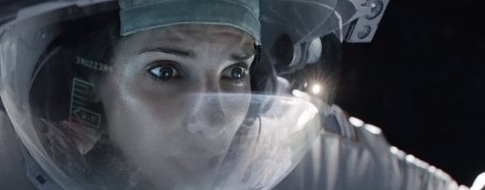
Look how distressed Sandra Bullock is, trying to glance into her crystal ball, straining to quantify how many Oscars her movie Gravity will win tomorrow.  I'm sporting the same look on my face as I publicly prognosticate winners for the first time since Jennifer Lawrence was in the Brownies.  But why not take a stab at it?  I've been spouting off on every other angle of the Academy Awards this year: diagnosing the narrowing field of "top" competitors for The Advocate; debunking popular myths about the Oscars and their biases in The Washington Post; and discussing some favorites among this year's nominees and some formative Oscar moments with Der Spiegel, though if Sie kein Deutsche sprechen, you won't be able to read it.  What I have not done anywhere, in any language, is forecast who is winning or fess up to my own choices.  So many of my favorite people are sticking their necks out.  So, as Charles Busch belts out in Die, Mommie, Die! - widely regarded as a near-miss for a Best Picture nod in 2003 - "Why not me?"

Best Visual Effects
Gravity will stomp all over its competitors, making it the sixth Best Picture nominee in a row to cop the prize (after Benjamin Button, Avatar, Inception, Hugo, and Life of Pi, just so you don't have to look it up).  You may take this streak as proof of the Academy's growth over the years—since even within my lifetime as an Oscar queen "effects movies" were often persona non grata in Best Picture—or all you may see is an industry increasingly compelled toward digital extravaganzas. Either way, Gravity would probably mop the floor even with the five past winners I just named, much less with the competitors it has to vanquish here... which in a way is too bad, because there's a lot to say for the invigorating spectacles and sleek execution of several sequences in Star Trek and Iron Man 3.  I was less taken with the effects work in The Lone Ranger (yes, even as regards that train crash), and The Hobbit: The Desolation of Smaug was one of a handful of Oscar nominees I missed in theaters. Will: Gravity  Should: Gravity  Hey, Where's The Great Gatsby, which owes the bulk of its locations, color schemes, camera movements, and memorably debauched extras to digital intervention

Best Makeup and Hairstyling
From an impressively strong field we slide over to an annoyingly weak one. Dallas Buyers Club will probably win on default, since voters tend to gravitate to Best Picture nominees unless there's a stirring reason not to.  Jackass Presents: Bad Grandpa is many things, but not that.  (Actually, Bad Grandpa on its best day is only a couple of things, which disappointed me, since I thought the first Jackass movie was a hoot.  Especially seeing it in a Detroit shopping mall, with people flashing laser sights on the screen midfilm.)  The Lone Ranger has the more-is-more thing nailed down, and a lot of graphically arresting cosmetics have been lovingly applied to actors like Barry Pepper and Helena Bonham Carter.  Still, AMPAS has recently rejected some ostentatious contenders who would have been shoo-ins in the Rick Baker era (The Time Machine, Norbit, Hellboy II) when a more broadly admired film presents itself as an option (Frida, La Vie en rose, and Benjamin Button in those cases).  I think it might have been nice if more of the Buyers Club's subscribers had looked visibly ill.  I would love to see a bruising throwdown between those who insist that Johnny Depp's bird-stapled-to-his-head "Native American" is the year's most horrifying faux-archetype and those who proffer Jared Leto's eyebrowless transwoman for the same distinction.  But failing that battle, and following the canny publicizing of Dallas's breathtakingly low budget, Adruitha Lee and Robin Mathews ought to get own their chance to say "All right, all right, all right!" or possibly even speak about Neptune. Will: Dallas Buyers Club  Should: Lone Ranger  Hey, Where's American Hustle, obviously, but also the lightly greyed hair of Llewyn Davis and the wax-museum quality of so many of his acquaintances.  Also, Cate Blanchett's Park Avenue blonde tresses in Blue Jasmine, which are turning into dark roots before her eyes, or ours at least.

Best Supporting Actor
On the subject of Dallas Buyers Club, I thought the movie was fantastic and Jared Leto pretty good the first time I saw them.  Upon revisiting a week or so ago, Dallas betrayed more stress marks, and Leto—by now vaulted from Casting Stunt That Paid Off to Prohibitive Favorite for the Oscar—still seems ...pretty good, without quite explaining what Rayon's doing in this script.  There are some pearl-clutching gestures and other frou-fra in the performance that make it seem stale, conceived more for an audience than from a character who's been built feet up, as they say in American Hustle.  And speaking of Hustle, Bradley Cooper has a large enough part in that movie that he's drawn fire for being a lead falsely slumming in this category.  Yet there are lots of ways to confront the question of who's really "supporting" in a film.  Leto's scenes are more limited, but every single one is handed to the character to be charismatic, or tragic, or funny, or all three, just like Angelina Jolie's and Jennifer Hudson's scenes were in their Oscar-winning vehicles. The movie arguably supports him more than the reverse. Cooper is on screen bunches but, like most of his Hustle castmates, acts an over-the-top character in a strong way and still doesn't seem like he's showboating, or depriving his co-stars of the cues they need to enrich their work.  He and Abdi are the Bests in Show in their movies without ever looking like they realize it.  Fassbender, like Leto, is cleverly playing a thesis that's been posited in the script in place of a real character: in one case, the AIDS patient with a wavering commitment to living, in the other, a slave-owner as one-man multiplex of grimy perversions.  Hill is ...uh, very good in 21 Jump Street and Moneyball.  I have no idea who he's playing in Wolf of Wall Street, no matter how hard he's working to keep the badminton birdie from landing. Will: Leto  Should: Cooper  Hey, Where's James Gandolfini, who didn't need an iota of gratuitous sentiment to merit a nod for his middle-aged romantic, so tentative yet brave, so relaxed yet staunchly principled.  Plus the usual surfeit of guys who got no promotion (Ben Mendelsohn in Place Beyond the Pines, David Oyelowo in The Butler) or who indulged in the sin of acting in non-American films (Yiftach Klein in Fill the Void, Peter Kazungu in Paradise: Love).

Read more »

Labels: , , , , , , , , , , , , , , ,

Saturday, February 04, 2012

Best of 2011: Original Score


BEST ORIGINAL SCORE
Drive (CLIFF MARTINEZ)
... for yet another score that slinks its way fully inside a shadowy, scintillating sound design, while sustaining the film's slick 80s-pop bent;

Extremely Loud & Incredibly Close (ALEXANDRE DESPLAT)
... for a typically melodic, large-orchestra composition that balances the city's dynamic breadth with the jangling solitude of the protagonist;;

Hanna (THE CHEMICAL BROTHERS)
... for gale forces of electronica, infusing action set-pieces with humor and excitement but alert, too, to Hanna's confusions and introspection;

Rango (HANS ZIMMER)
... for calling up Zimmer's often-mislaid sense of humor, in zesty cahoots with the film's crooked shapes, loopy dialogue, and goofball oddities;

Tinker Tailor Soldier Spy (ALBERTO IGLESIAS)
... for exploiting Iglesias' gifts for beauty and menace, using un-British musical idioms that cast global shadows inside this English labyrinth;

Runners-Up: In a weak year for this category, especially since I couldn't muster full enthusiasm for Ludovic Bource's peppy melodies for The Artist, Dario Marianelli sounding a shade too much like he's "doing Dario Marianelli" in Jane Eyre, and Howard Shore's low broods beneath A Dangerous Method, I'm cutting off the runners-up at three: one more hat-tip to Alberto Iglesias, paired again with frequent collaborator Pedro Almodóvar on his spindly, sidewinding, darkly translucent mystery-thriller The Skin I Live In; a salute to Trent Reznor and Atticus Ross, who do not equal their triumph with The Social Network in The Girl with the Dragon Tattoo but are certainly crucial to the film's rough, sleek, if slightly uneven textures; and a round of applause to Michael Giacchino for proving himself once again as a key participant in the Bad Robot repertory, giving Mission: Impossible - Ghost Protocol vim, vigor, humor, and bounce, without seeming intimidated at all by Lalo Schifrin.

Films I Hated to Skip Before Posting: Cold Weather

Labels: , , , , , , , ,

Friday, July 29, 2011

Ultimate Pop Song Tournament #6

This Rock Warriors field has been rough, and I found each of these four calls especially difficult to make. Okay, three of the four. Two of the four. Still. I see you all are holding your tongues in these comment sections, but I trust you are saving up your energy to go vote. Don't be skipping those discussion threads at the Critical Condition, because everyone writing in is hilarious.

Also, this is my last full Tournament-related entry on the blog, since I already wrote the capsules for the 16 songs competing under the Groove Thang umbrella. You can read those blurbs here, here, here, and here, and trust that I voted for Beyoncé, Missy, Nelly, Jay-Z and Alicia (though I wish I could keep both entrants in Game 28 and squash 27), Michael, Salt 'n' Pepa, Prince, and Eminem.


Rock Warriors, Game 21 (Vote Here)
"Edge of Seventeen" (Stevie Nicks) vs. "Take Me Home Tonight" (Eddie Money with Ronnie Spector)

These songs are both so iconic that they have both been re-purposed as movie titles. I love them so much that I bought a ticket to Edge of Seventeen purely out of fondness for Stevie (though it turned out to be a good flick, too), and I almost bought a ticket to Take Me Home Tonight, which is really saying something, purely out of fondness for What Ronnie Say. I would not change a thing about either song, which is all the more wonderful because, objectively speaking, they could both use some work, trimming down Stevie's white-witch Gesamtkunstwerk and ordering a rewrite on Eddie's marble-mouthed verses. But I'm telling you, I'd be mad at anyone administered any of these changes. In the same way you don't change Barbra's face or close the gap in Madonna's teeth, you don't mess with "Edge" or Eddie, which work triumphantly, albeit in opposite ways. "Take Me Home Tonight" packs a thrill of pure distillation: it all boils down repeatedly, and brilliantly, to the gusto of the title phrase and the pop power of the orchestration underneath it. If that's not enough, you get hit even harder with Ronnie's invitation to be her little baby. The whole song soars on just those elements, which isn't to say the rest is worthless, but that it can stand to be worthless because the money-shots are so bonafide. I actually like the shaggy way Eddie sings, all thick-tongued and jowly and not caring how unsexy he is. He's not unlike Winnie-the-Pooh on a randy night in the Hundred Acre Wood, where all the honey's been switched out for Budweiser, drunk straight from the pot. Put otherwise, this is the rock song that Norm from Cheers would come up with, but Norm had needs, too, and he ought to have a song. Good for him that the one he got is this fantastic.

If Eddie aces the bite-sized nuggets that can canonize a whole tune, Stevie proves an astonishingly artful mistress of total dilation, letting "Edge of Seventeen" go on and on past the point of structure, although that hummingbird guitar riff underneath the whole thing provides quite a sturdy scaffold. This song has about eleven bridges, and every one of them has got rocking veins and thrumming arteries. The narrative seems both specific and a little bit dada. Certainly the imagery of abandoned hallways and changing/unchanging seas and white-winged doves means a little more to Stevie than it does to us, but she does more than put it over. She's singing like a woman in a rock trance, and she manages to slip us the same mickey that's obviously got her hallucinating some crazy stuff. "Edge of Seventeen" is a journey. Pack your blackberry-colored crêpe and your Stonehenge jewelry. Every time this bus hits a new pit stop, I vote for it again. Eddie won't care. He's already having the night of his life.


Rock Warriors, Game 22 (Vote Here)
"Livin' on a Prayer" (Bon Jovi) vs. "Crazy" (Gnarls Barkley)

No one has yet released a movie called Livin' on a Prayer, which is too bad, because I would absolutely attend it, especially if it were about Tommy, Gina, his six-string, her job at the diner, how they've got each other, and how that's a lot. Improbably enough, the movie to which it is stitched in my mind is the Paltrow/Ruffalo stinkeroo View from the Top, an epochally vapid air-hostess comedy where a few chords of "Livin' on a Prayer" ring out over one scene; for some reason, I recall an escalator. The implication is that the filmmakers perceived Bon Jovi to be part and parcel of the joyfully threadbare kitsch that is View from the Top's barrel-scraping métier. But I remember everyone in the theater, by which I mean all nine of us, immediately singing along with JBJ, and I remember thinking, "This song is art that only trash filmmakers would confuse with their own garbage."

I gather this is an unfashionable statement. I gather I am supposed to be embarrassed of how fantastic an album I think Slippery When Wet is, especially if you relieve it of any nonsense obligation to qualify as "hard rock." Megadeth is right down the aisle if that's what you're after. Also Gwar. But in the meantime, "Wanted Dead or Alive," "Never Say Goodbye," "You Give Love a Bad Name": that's a lot of jewels on one disc, if you ask me, and the fraternal affection circulating between Jon's singing and Richie's guitar-playing made for a welcome spectacle of 80s rock heroes openly relishing each other's camaraderie, instead of everyone lunging to out-thrust and out-pick and out-macho each other, often to unintentionally hilarious effect (Poison, Slaughter, Britny Fox, what have you). Trust me, I'm as surprised as you are that a song can possibly overcome the early stain that affixes to "Livin' on a Prayer" with that bizarre Waa-oo Waa-oo Waa-oo-oo-oo opening, as though Bon Jovi has ripped some Uruk-Hai out of the soil of Jersey City and speared them into singing along. But Tommy and Gina's affair is rivaled only by Jack and Diane's as the most gratifyingly narrated and the most tenderly evoked anywhere in amped-out 80s rock. Rooting for them and rooting for the song become indistinguishable, even before the final, key-vaulting, indescribably ecstatic chorus. Sorry, Gnarls Barkley. "Crazy" is a funky platypus of a disco-novelty-hip-hop track, featuring excellent, passive-aggressive use of the phrase "Bless your soul." But you haven't got a you-know-what of nabbing my vote.


Rock Warriors, Game 23 (Vote Here)
"Here I Go Again" (Whitesnake) vs. "Mr. Brightside" (The Killers)

David Coverdale sings with the aural equivalent of bedroom eyes, so it's a real thrill when that low, post-coital tenor of his gets so steadily roused to action and exuberant apostrophe over the course of "Here I Go Again." Among the many elating moments in The Fighter were the two or three seconds of Mark Wahlberg pulling up to the curb at Amy Adams' house, or maybe his ex-wife's, and switching off the engine after a few beats of this heroic ode to changing your own course. I suddenly feel sad that my 10-year-old self thought the "hair metal" era was so full of intimidating alpha males who would probably beat me up if they ever met me. Whatever posturing was required of them, and I'm sure many of them enjoyed the hell out of that, it's hard to imagine a less thuggish, more emotionally open lyric than "I'm just another heart in need of rescue / Waiting on love's sweet charity." Coverdale puts no distance between himself and the sentiment, and if you're not watching him glare at you from underneath that perpetually-tilted forehead, and you aren't confronted with the blatant objectification of Tawny Kitaen in the famous give-that-car-a-lapdance video, it is tempting to call the emotional candor of this song—the "I Will Survive"ness of it all—positively feminine. I've been hooked on it for 25 years, so as much as I love "Mr. Brightside," and as much of a sucker as I am for a good, dirty rhyme-scheme fakeout ("And my stomach is sick... And she's touching his chest, now"), it's only had a few years to catch up. Is it a more elaborate, more ambitious, more sophisticated and rangy song? Indubitably. Can I vote for it? No. Is this love, that I'm feeling, is this the love, that I've been searching for, for Whitesnake? Yes.


Rock Warriors, Game 24 (Vote Here)
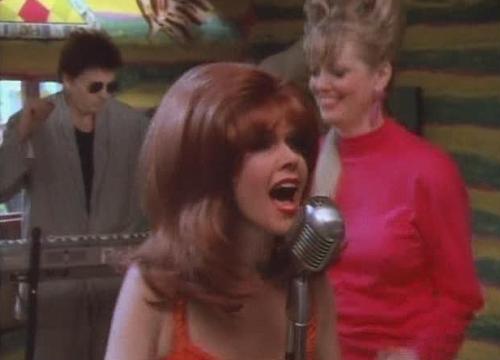
"Don't Stop Believin'" (Journey) vs. "Love Shack" (The B-52s)

It has finally come to pass, after 24 standoffs: I simply refuse to choose. The first and second and third times I saw Monster in a theater, I knew that "Don't Stop Believin'" would be indelibly etched into my pop imagination. Even apart from its perfect, heartbreaking appropriation in the final moments of the story of Aileen Wuornos—in a movie that delivered about ten times over on my initial expectations—I realized that I had underestimated the song even more drastically than that. Journey had always seemed like a joke to me, primarily known as a band that was always taking up what I considered to be someone else's slot on the jukebox at Pizza Hut. (Boy Meets Girl's, Anita Baker's, Karyn White's... I showed up to the Hut with a stack of quarters and a frequently-disrupted itinerary.) Where Bon Jovi's or Whitesnake's surprising, bare-faced emotionalism seemed unexpected and endearing, Steve Perry's seemed grandiloquent, even cheesy. Was it age as much as a note-perfect reintroduction in narrative context that turned me around on "Don't Stop Believin'"? I now can't get enough of Perry's patently unfaked empathy with the girl in his song, or of the gorgeous, reverberating piano that sounds like a church-organ made of silver-plated glass, or of the early guitar riff that accelerates and accelerates like the lights you see from a fast-sailing train. Every member of the band, from writing to recording, has done the requisite work so that ending a chorus with "Ohhh-oh-OOOOHHHHH!!!!" doesn't seem like a lame cop-out but a calling forth of fully-churned feelings that you cannot express in any other way. I'm a weeper at this song, and I refuse to feel bad about it.

But that doesn't mean I can turn my back on my youth-shaping B-52's, whom I initially cottoned to through their eco-conscious, race-through-the-woods music video for "Channel Z." If you can believe it, some numbskull at the record company, or maybe someone too fun-loving to give much thought to these kinds of decisions, had saved up "Love Shack" as the second single released from the Cosmic Thing album, but what a single it is: rambunctious, bright as magic markers, giggly as love, shiny as gin. It's made up of such crazy parts, organized and protracted in such krazy-quilt patterns, that despite the lingering traces of verse-chorus-verse, it feels as much as anything like a Romper Room riff on "Edge of Seventeen." What do you think it was like when Cindy and Kate first realized how ideal they sounded in harmony, and that neither of them could think of an ad lib too crazy for the other? What was it like when they told Fred, "Of course we know you're gay, you fussy queen, let's day-unce!"? What was Keith Strickland thinking, keeping so quiet while he jammed so handsomely on that twangy guitar, and while everyone else regularly lost their minds, in a good way? The Love Shack seems like even more fun than the Shortbus Salon, and with any luck, the Small Town Girl and the Streetlight People will find their way to it one day. I'll be there to toast them with some umbrella'd cocktail, possibly fermented out back, cutting a rug with whomever wants to, refusing to choose among them.

Labels: , ,

Thursday, July 28, 2011

Ultimate Pop Song Tournament #5

We now enter the Rock Warriors quadrant of the tournament bracket, a land of guitar gods, hard-drivers, and unrepentant freaky-deakies, pushing the envelope of radio. Occasionally all at the same time.


Rock Warriors, Game 17 (Vote Here)
"Sweet Child o' Mine" (Guns 'n' Roses) vs. "Bullet with Butterfly Wings" (Smashing Pumpkins)

I could say nice things about "Bullet with Butterfly Wings," especially about the tense, slow reveal of the opening movements. Other compliments deserve to be paid about the production and the musicianship, and in general, I'm a big Pumpkins fan, but I just hate the high-school lit-mag caterwaul of that chorus, and Corgan sells it way too shrilly, seeming much too self-satisfied with the epigram he's cooked up. A much weaker song than "Sweet Child o' Mine" would be enough to take it down on my end, but this is no pyrrhic victory, since I'm as tickled and floored by the whole Appetite for Destruction album now as I was 20+ years ago when it first dropped. This is a very sweet song wrapped in barbed wires. You feel them grazing the surface of Axl's voice and in the way Slash's guitar, in and out of the virtuoso solos, seems ready to pounce with even greater force, knocking out a Winger or a Warrant with one swipe of its giant paw. I know this was the Best Hard Rock Performance Goes To Jethro Tull era, but the fact that "Sweet Child" got no Grammy nominations despite one of the most accomplished vocals and one of the most tuneful, limber, unpredictable constructions of any #1 hit of its decade is... well, people, it's a real problem.


Rock Warriors, Game 18 (Vote Here)
"Rolling in the Deep" (Adele) vs. "Dog Days Are Over" (Florence + the Machine)

Full confession: I had never heard "Dog Days Are Over" before Mark and Joe nominated it, and subsequent comments at Mark's site have implied this is a bizarre omission, and that you'd possibly have to be dead to have avoided it. My deadness to contemporary pop has become a truly sad thing, though even I have been swept up in the Adele tidal wave of late. Beyond just being dead, you might need to have never been born to avoid confronting "Rolling in the Deep" these days, and how sad that would be for you: the song has an exciting, muscular gambol to it, deliciously figured in the Jurassic Park quaking of the water glasses in the video. I love the girl-group refrains threaded into the pre-chorus verse, even if I can't quite make out what they're saying, and Adele's ability to carry her voice to its biggest proportions without losing her hold on tone or feeling is pretty majestic. That I'm not voting for it comes down mostly to the fact that the song and the vocal arrangement could stand just a tad more variety from couplet to couplet. Eventually, I'd like to follow Adele through the crazy figure-eights and the hairpin turns of a song like "Dog Days Are Over," a blissfully invigorating Indy 500 ride that starts out all Brooklyn Consignment Shop Ukulele, heads upstate for some happy clapping in a field, and then rockets to the ozone with nearly deranged exhilaration, the kind that implies both a summit of genuine release and a sense of protesting too much. Both singers get A+ grades for keeping perfectly, powerfully in sync with where their songs need them to go, but where Adele hammers out concentric drumbeats in the air, Florence puts on an entire Fourth of July show, robust in color and dazzle without descending into messiness. Mark, Joe, your check is in the mail. Thanks for this one!


Rock Warriors, Game 19 (Vote Here)
"You Oughta Know" (Alanis Morissette) vs. "Sober" (Pink)

I spent some time resisting Morissette during the whole Jagged Little Pill year, because it seemed like her bridling energy had an embarrassing lack of finesse, and a production and PR machine that both goaded her to be rough and rushed to administer dishonest coats of polish. It's a nervy album that certainly gets under your skin, impressively able to survive its patchier aspects and its airtight packaging to the public. Still, all the monomaniacal and frequently stupid media coverage ("Oh my God, girls are getting so angry!") kept draining attention away from the major artistic feats like PJ Harvey's To Bring You My Love and Joan Osborne's Relish that were repeatedly shoved, both incongruously and inauspiciously, into supporting paragraphs and footnotes in Alanis-heavy articles. It took me a while to get over that and really enjoy the song, but even as I say that, I am confronted by the clear memory of being caught by my stone-faced Bulgarian college roommate while I was kind of – how would you put this? – dervishing to "You Oughta Know." Definitely feeling the fervor. As time passes, it's easier to see that the over-reaches in some of the writing and the vocals aren't just flaws in the song but integral parts of what makes it so transfixing, almost like a jagged little pill. And then there are lyrics that never needed any apology, like the deliciously deadpan "I'm not quite as well" and the insolent sneer of "I hate to bug you in the middle of dinner."

The song still is its moment in so many ways, so I'm voting for it despite my suspicion that the magnificent "Sober" is a quote-unquote better song, which is made all the more clear by Mark's brilliant endorsement in Comment #4 of his own blog entry. Pink seemed to epitomize the flash in the pan when she first dropped, and then her Mae West face, punchy sense of humor, and ability to gene-splice pop hooks and rock refrains really came into their own. She has only gotten more formidable, such that now she's like a new generation's Joan Jett, a little more fun but still unpredictable, capable of anthems and character songs, both of which "Sober" is. Phenomenal video, too. And my 61-year-old mother has repeatedly been caught, not only by me, answering the phone with Pink albums blasting so loud in the background that she didn't answer till the fourth ring and has to leave you for a second to go turn down the stereo. Which I love. Hey, did I mess this vote up?


Rock Warriors, Game 20 (Vote Here)
"Smells Like Teen Spirit" (Nirvana) vs. "Hey Ya!" (Outkast)

Like "You Oughta Know," these are two already-immortal staples that I have kept at arm's length in certain ways except when I'm actually listening to them. At that point, the unique undeniability of each exerts its stupendous power. When I'm in a Nirvana mood, it's almost always for In Utero rather than Nevermind, and I probably like "Lithium" and "Come As You Are" as much as "Teen Spirit." I'd trade 'em all in for almost anything on Live Through This, and now you see what happens: confront me with "Smells Like Teen Spirit," one of the most bracing and centrifugal songs in the last 30 years of pop, and I somehow end up distracted. I don't know why that is. But I love that filthy guitar, and those two twangy notes that keep rising above the din like the gleam of a skylight. I admire the sulphurous tone of the lyrics and the instrumentation, perfectly brought to visual life by the video. I've always understood the song to allege the scariness of a boxed-in, impatient, depoliticized teen generation that feels stupid and contagious and is only living to be entertained; go figure that it became the rallying-cry of that very generation, although how could it not with those chords and that much momentum? I like how all these years and countless tributes later, the song still feels elusive, like it's hiding something about the way it feels and what it's got on it's mind, even though Kurt is screaming all of it out in big, throat-scarring block letters. It just goes for a little more and preserves a bit more allure than "Hey Ya!" does, which is genius, bouncy, idiom-blending, tailfeather-shaking radio funk for a nutty, life-sustaining planet. And when I put it like that, I think, how am I not voting for this? But here's the kicker. Even if I prefer other Nirvana songs, once "Smells Like Teen Spirit" is spinning, I'm totally swept up in it. Whereas even when I'm Snoopy-dancing to "Hey Ya!" the thought is never fully out of my mind that, man, "Ms. Jackson" is an epic achievement.

Labels: , ,

Wednesday, July 27, 2011

Ultimate Pop Song Tournament #4

Here we finish out the Deep Feelings quadrant, although as with the Joy Bombs (see previous entries), you still have plenty of time to vote. In what follows, I commit to two votes that defy everything I once thought I knew about myself.


Deep Feelings, Game 13 (Vote Here)
"Nothing Compares 2 U" (Sinéad O'Connor) vs. "I Will Always Love You" (Whitney Houston)

At this point, I can't even tell what more people detest: Sinéad's anti-establishment antics or Whitney's much-imputed travesty of Dolly Parton's fond, reflective, softer-spoken lament. People get riled up about both, which from my perspective is too bad, because I think Sinéad really wanted to start some earnest discussions and wasn't only calling inflammatory attention to herself, and because Whitney sang the bejeezus out of that song in a way that unquestionably transforms its meaning and register, which I think is what a cover is supposed to do. "I Will Always Love You" '92 will never win a Lifetime Achievement Award for subtle work with the lyric, but it's not without its own shadings, like the gratifying shimmer of stank in Whitney's phrasing of "Please - don't cry." Unlike Dolly the Magnanimous, Whitney will probably permit your train-hopping ass to shed a tear for this break-up, and even if she wails better than you do, who wants to mourn alone? Still, half an instant later there's a genuine lump in Whitney's throat on "We both know," which is the closest this big-hearted belter is going to come to admitting this relationship wasn't meant to last, and that it might not have been his fault at all, it might have been her.

The song's stock in trade is obviously the unfettered bombast of total adoration, surely heightened at the prospect of watching the beloved walk away, and glowing with the narcissistic fluorescence of making what you know is a dazzling show of your own sorrow. Well, that's all one stock in trade. The other is the strength and power of those pure notes, the mighty vibrato, the bravely a cappella beginning, the river of real grief that flows into the second repetition of the chorus. It's a bit much, but if your thing is Degas, don't hit the Rothko exhibit, okay? My mama almost had to whup me for playing this song from sunrise to sunset for a few months that winter, and in deference to that memory, I'm sticking by it, even though Sinéad works miracles (take that, Pope!) with Prince's spare, subtly affected lyric. I love when she gets pissed that this dearly departed guy has set such an impossible standard; she practically spits out the line about all the other boys she could put her arms around, as though that will help. Both of Sinéad's first two albums are chock full of wonders, and this is only ninth or tenth on the list of songs I steadily go back to, which is the best tribute I can pay to her. Short of actually voting for her.


Deep Feelings, Game 14 (Vote Here)
"We Belong" (Pat Benatar) vs. "Lost in Your Eyes" (Debbie Gibson)

I admit that with all the songs I have been forced by circumstance not to vote for, I find it hard to tick the box next to either of these. Granted, they're terrific songs, and they both capture something essential about their performers: Benatar's flintiness, even when she's verging weirdly on lullaby territory in the verses, and Gibson's earnestness, as evident in the abstinence-commercial recreations of the video as in the clean, lovely, self-authored music and lyric. I still think "Love Is a Battlefield" eats "We Belong" for lunch, and Gibson's talent as a songwriter and her attraction to more complex states of feeling are more evident on the lower-charting ballad "No More Rhyme" from the same album. I'm voting for Benatar, because the cadences of the song are so halting and strange, and she's a gutsy, engaging enough singer to be able to squish her rock-concert impulses inside the wispiness of the arrangement between choruses. Whoever decided to spike the song considerably with that walloping drumbeat was a genius. The song's a bit of an oddity, which gratifies, and Benatar's charisma is more unusual, which at this moment appeals to me more than Gibson's limpid good-girl love letter.

But you cannot ever report this to the 7th-grade version of myself, who bought Debbie's cassettes seconds after they came out, read her autobiography (!) repeatedly, dreamed of going to Vassar because that's where her sisters all went, and thumped a lot of Tiffany fans on the head with our favorite stand-by, "Well, Debbie writes her own stuff!" The 7th-grade version of myself would hit the current version of myself with a giant Trapper Keeper for what I'm about to do... and that's saying nothing of how borderline-grating Debbie's upper register often seems to me now, enough so to make you pine for the fascinating, throaty, disconcertingly wise-sounding alto that Tiffany brings to "All This Time" and "Could've Been" and "Danny." Now I feel that all of my loyalties are spiraling into shapes I no longer recognize, so I'm moving on to...


Deep Feelings, Game 15 (Vote Here)
"Running Up That Hill (A Deal with God)" (Kate Bush) vs. "Losing My Religion" (R.E.M.)

I guess you can be in the corner and also in the spotlight, especially if you are an ambivalent celebrity, about to be promoted to mega-celebrity on the back of the very song where you voice your own burgeoning agnosticism about music, a lifetime calling that suddenly comes stitched to so much money and out-of-body obligation. Perhaps for reasons that aren't good enough, that's what I've always understood "Losing My Religion" to be about. Michael Stipe is saying too much about his reluctance to be our alt-rock god and also not quite saying enough to really be straightforward (read: abrasive, bad for business) about it. It's an engrossing, utterly unusual track, especially for pop radio, with adventurous instrumentation, an exciting, whitewater momentum, and an ending I've always liked, as though the frenetic mandolin just fainted and the music box just wound down.

And that, said Forrest, is all I have to say 'bout that, because next to "Running Up That Hill," even a song as deft and commanding as "Losing My Religion" looks like a pile of cotton socks. You want to talk about religion and really mean religion, even if you also mean something else? You want to talk about exciting production, making the drum machine feel like the most avant-garde apparatus you could possibly get your wood-sprite hands on? You want to talk about barreling momentum, frightening earnestness, openly sexual reverie, and the whole cadre of Miltonian devils who start shrieking like a hydra-headed army before that last repetition of the chorus? You want to Exchange the Experience? I think you know what I mean. Plenty of people make deals with the devil, especially in the world of popular entertainment, but few get up the gumption to lay down terms with God. And what are those terms? What is the deal? The song distills overweening, headstrong, libido-led willfulness to a scary essence, but a will to what, exactly? To figure that out, you have to diagram and parse, like the reader of a Dickinson poem, but first you'll have to stop dancing. And given the tones and rhythm of the song, it's probably a dance that you and your partner would much rather continue.


Deep Feelings, Game 16 (Vote Here)
"Don't You (Forget About Me)" (Simple Minds) vs. "What Have I Done To Deserve This?" (Pet Shop Boys with Dusty Springfield)

"Don't You (Forget About Me)" has been my lifelong answer when people ask, What is an example of a perfect 80s pop song, and sometimes just, What is a perfect pop song? That unbelievable energy! That first ten seconds, with the Transylvanian echoes and the glistering surges of electro-pop instrumentation! That winking, conspiratorial edge in the singer's voice, as though he already knows, and you know, and he knows you know, that you won't forget him. The high notes of the Casio faux-organ are bright enough to make everyone happy, even if they aren't already thinking about the cereal sandwich and the dandruff-art in The Breakfast Club, which would make anyone happy. But the song has a real brooding energy going, too, like a bat wing that keeps flapping past. I adore that short lyric where the singer ticks off the lover's favorite defenses ("Vanity, insecurity") with the haughty concision of a Nabokov sentence ("Picnic, lightning"). I just love the whole song, and unbelievably enough, I can see all five members of the Breakfast Club itself playing it on their Walkmans. "Don't You (Forget About Me)" remains the Roger Federer of 80s pop songs. It is indisputably the best.

So why does it always lose to Rafael Nadal, by which I mean, why does it seem so clear to me that I love "What Have I Done to Deserve This?" even more? Both have that gift for winning you completely in the first five seconds, but there's a sleeker drama to how the Pet Shop Boys pull that off, with all the brass and the racquetball percussion promising a roof-raiser of a song while those three tiny and repeating phrases, those seven high notes, suggest a thin line of something quieter, more internal, and genuinely upset within the song. That upset is only going to grow, although so is the surrounding storm. "You always wanted a lover / I only wanted a job" is a hilariously witty opening, and a pretty tough impasse for two lovers to get past. "I always worked for my living" is a tough, cryptic rejoinder even if it isn't being sung by Dusty Springfield in her trademark register of husky withholding. The song's dramatic in about five different ways, everything from bouncy to brooding, just like the Simple Minds song, but whereas "Don't You" finds its phenomenal groove early on and then continues to work it, the music and the narrative of "What Have I Done to Deserve This?" build to an escalating crisis, epitomized in the Boys' deepening, relentless, robotic repetitions and Dusty's ardent expostulations, when this ongoing argument hasn't reduced her to gasping for air. Both lovers seem genuinely flummoxed at what they have done to deserve this. I also don't know what I have done to deserve this, but in the best way, and I will forever be thankful.

Labels: , ,

Tuesday, July 26, 2011

Ultimate Pop Song Tournament #3

Headquarters and ballot boxes still over here. Here are my votes on the latest rounds.


Deep Feelings, Game 9 (Vote Here)
"Alone" (Heart) vs. "I'd Do Anything for Love (But I Won't Do That)" (Meat Loaf)

I know some fans of Heart never got comfortable with their swerve away from the hard-charging guitars of "Barracuda" and the exquisite rock-radio of "Magic Man," but if you're going to put your eggs in the basket of power-ballad pop, this is absolutely the way to do it. Crystal clear lyrics don't need verbal complexity when Ann Wilson can pour it all into the phrasing: is she moaning in ecstasy at an optimistic dream of holding him tight, or is she luxuriating in codependent masochism? Does it turn her on to suffer? Possibly both, but the sheer strength of the vocal takes this woman as far from pathetic as she can get. The pleading is so voluptuously earnest you sort of want the guy to show up after all, even if the spectacle of this gal's abandonment is so blow-back-your-hair formidable that you hate to call a halt to it. Other versions by voices as big have lacked bite, or any sense of personality, and without the clammy but tremendous excessiveness of a woman who loves way too much, who's almost predatory in her loneliness ("How do I get you alone"?), this can become just empty belting. Though you can understand the appeal of the song to other wailers, listening to covers by Celine Dion and Carrie Underwood has been like watching a Bette Davis role taken over by Susan Hayward and then by Reese Witherspoon. I'll take the original, thanks, and I'll take it forever ... even over the addictive hugeness, the barreling emotion, and the bravely back-loaded lyric of the Meat Loaf track. I love that song, but if "Alone" died, I would take a bus for an hour just to leave a flower at its grave.


Deep Feelings, Game 10 (Vote Here)
"Total Eclipse of the Heart" (Bonnie Tyler) vs. "Time After Time" (Cyndi Lauper)

Jesus, there are some big-ass songs in these brackets. One is tempted to vote for "Time After Time," as if one needed any additional prompting, just to show some respect for the artistry of the intimate ache. Has anyone ever put that over as beautifully as Lauper does here? Except maybe Lauper herself, in "True Colors," where she sounds almost as beat-up and careworn as the person she is ostensibly assuaging? Lauper makes every song better, but I cannot vote against "Total Eclipse of the Heart," because it would be like voting against the Pyramids, or voting against the Pacific Ocean. It's monumental, and though you wouldn't necessarily want Bonnie Tyler singing every song you threw at her, she has the right loud-to-quiet range, the right power, the right huskiness, and the right go-for-broke attitude to shoulder this gargantuan load. Every decision that needed to be made to keep the song from sinking under its own weight has been expertly made, including the decision to play to its own deeply appealing cheesiness around the edges (those lightning crashes?). With Tyler howling out "And I need you now tonight" with such rock-Tosca conviction, the track can afford to call its own bluff just an eensy bit. I think "Total Eclipse" is illegal in China because they're worried it will crack the Great Wall.


Deep Feelings, Game 11 (Vote Here)
"Viva La Vida" (Coldplay) vs. "Voices Carry" ('Til Tuesday)

For me, this vote comes down to production and how it can improve or impinge upon a fundamentally strong song. "Voices Carry" benefits from Mann's customary lyrical prowess. The relationship she describes seems even more starkly troubled as it continues, even though the tune itself gets louder and more effusive, and the whole thing is so scrumptiously easy to swallow. These are hardly demerits, yet I've always thought the intricacy in Mann's lyric is swallowed a little by a synth-heavy and overloud mix. Beyond the blunting of nuance, even the basic gist of the song suffers a little. I've met two people at two different times of my life who have misrecognized the title phrase as "This Is Scary." By contrast, the gossamer grandiosity of "Viva La Vida" is the key to the song's success. The colossal braggadocio of the lyrics and the kaleidoscope of audio textures maintain a fragile, unlikely lightness, like the whole song could blow away in a dandelion wind. This serves the central theme of evanescence, the conceit of a narrating persona who is saying goodbye to an era when he "ruled the world," whatever that means to him. Further than that, and without getting maudlin or lamely facetious, the majestic but wispy atmosphere suggests that he might never have ruled the world, that it's all a romantic dream, making the song more ironically rich and more beautiful at the same time.


Deep Feelings, Game 12 (Vote Here)
"Fast Car" (Tracy Chapman) vs. "Not Ready To Make Nice" (Dixie Chicks)

Two extraordinary achievements, and you won't catch me gainsaying anything about "Not Ready to Make Nice." Not the simple but gorgeous harmonics, not the pointed but measured lyric, not the accomplished vocal, soaring but steely, with the occasional tug at the throat or quiver near the top, proving that Maines does feel hurt by what she's singing about, although she's even more angry and unrepentant than she is injured. Even harder than standing up to current leadership in pop music is taking a stand against your own (former) fans, and not only do the Chicks negotiate this expertly, they do it without too much or too little bravado, making sure that they craft a song and not just a sandwich board. Other presidents whom they presumably prefer could take a few notes about graceful eloquence that nonetheless pulls no punches. If it were any song but "Fast Car"...

But it is "Fast Car," which is even rarer and more precious in the orchid grove of pop, a sober indictment of present realities that lets a persona and a situation speak quietly and brilliantly for themselves. Compare the blunter sloganeering of laudable album-mates like "Talking 'Bout a Revolution" or "Across the Lines" and the more bone-chillingly modest, more desperately sad craftsmanship of "Fast Car" proves even more sublime: piquant, detailed storytelling combined with a totally warranted rut of repeating choruses. The dream of escape is almost as sorrowful as the certainty of more of the same. The whole song is gorgeously paced, produced, and plucked, and Chapman's indelible vocal is just the right quarter-inch away from a mumble. That said, it's a surprisingly pliable lyric. I've been fascinated forever with the girl in this song, and I like singing it in different ways, making her more bullying or more plaintive, giving her ideas about that "deal" she's maybe willing to make, making her angrier or more self-pitying about having quit school. Is she competing with other girls she thinks this guy will take instead? Is she a wallflower in the shelter who took this big risk of opening her mouth this one time? She's already a different girl if you stress the second rather than, as Chapman does, the first word of the line "We'll move out of the shelter." And then there are the well-hidden subtleties built into the song, like the fact that the up-tempo chorus is always narrated in past-tense. This isn't a stop-motion portrait of a plan that had a hail-mary chance; it's a dispassionate recollection of yet another letdown that's already played out from the moment the song starts... unless the girl had been in the car before. In that case, she's not remembering the time they skipped town, but some earlier, world-opening moment when she felt, maybe for the first time, that she was someone, or could be someone, and that feeling is the reason why she built up the futile, heartbreaking gumption to ask for one more ride, to somewhere further away.

You can dig around "Fast Car" forever and still find more in it, though I'm not surprised no major artist has yet worked up the steel to attempt a cover. Who could ever forget Chapman, and who would want to compete with her?

Labels: , ,

Ultimate Pop Song Tournament #2

Here's a rundown of what I'm talking about. Otherwise, read on, and vote away!


Joy Bombs, Game 5 (Vote Here)
"Bad Romance" (Lady Gaga) vs. "9 to 5" (Dolly Parton)

"Bad Romance" is exciting from the moment the electronic cloud bank under the opening beats start spiraling immediately into a tornado cloud of perverse, portentous determination. The first round of monosyllabic dada (Ra-ra, ah-ah-ah...), when the music all but recedes, are like the telltale droplets of what's coming, and then the thunderclap hits. It's all extravagant, righteous, loins-on-fire neediness from that point forward, and I find it pretty damn irresistible, even when the lyrics are straining a little hard. I'm stunned that I'm not voting for it at least in the first round, but beyond my huge soft spot for Dolly Parton's pert lyrical acumen and her endless shadings of compassionate emotion, I love when pop takes a break from being about love, falling out of love, or getting jiggy in a club, without going all "Another Day in Paradise" on us. "9 to 5" is a vibrant, cubicle-shaking pick-me-up that we all need, often five times a week, and it uses the music as well as the lyrics to lead you through the daily cycle from wake-up to punch-out. Only this day is different. It's Bring Your Fabulous To Work Day.


Joy Bombs, Game 6 (Vote Here)
"Flashdance (What a Feeling)" (Irene Cara) vs. "Groove Is in the Heart" (Deee-Lite)

As with "Bad Romance," "Flashdance" just seems like a song for which I would automatically pull the lever, at least in the first damn round. Having both welded and danced, I can absolutely verify the greater joys of the second vs. the first, but even if you don't have Jennifer Beals and her day job in mind, "Flashdance" is one of the greatest, most steadily surging odes to the pure release of letting go with your own body, whether or not you're dancing with anybody. And Cara! She got paid $180 for this vocal, and she's breathing fire anyway, ratcheting up from first to third to fifth gear with perfect timing. Still, I'm swayed by the fact that while "Flashdance" is a perfect, perfect realization of a certain kind of song we know, "Groove Is in the Heart" is a perfect realization of a song we barely knew could exist. Deee-lite has all the ragtag, pass-the-baton looseness of Sheryl Crow's Tuesday Night Music Club, but this is a crazier, doper, more lava-lampy, more adventurous, and more purely joyful Music Club. Everybody gets in on the jam session, and even though the track changes colors and registers more often than a karma chameleon (ahem...), it all hangs together as an integrated piece, slide whistle and all. You can practically hear the platform shoes and smell the wigs.


Joy Bombs, Game 7 (Vote Here)
"Karma Chameleon" (Culture Club) vs. "Straight Up" (Paula Abdul)

A Tale of Two Hot Messes. George, wipe your nose. Paula, seriously, it's not even 11am. The clinic cannot keep turning a blind eye to these serial infractions, but I understand you deposited so much cash such a long time ago in your Pop Deity account that you basically get to draw on that as long as you want in order to pay your Crazy Bills. Paula always sounded like she was singing inside a Pepsi can, probably Diet Pepsi, maybe even Diet RC, but unlike the wonderfully bubble-gummy singles that followed from Forever Your Girl, "Straight Up" splashes some Ketel One into the cola, which I'm pretty sure is how Paula likes it. She's still hot for this boy, but she's more than a little fed up, and the combo of lust and impatience is set at an ideal register of rat-a-tat-tat-tat. Still, I'm voting from the same convictions as above: there are a lot of Paulas singing a lot of "Straight Up"s in a lot of studios every month, and almost none of them are as fetching, but how many "Karma Chameleon"s is anyone writing, producing with such feather-light melancholy, and singing with such casual, gently bruised sensitivity? The lyric makes emotional sense even if the precise syntax is tough to work out, and the two-line bridge (Every day is like survival / You're my lover, not my rival), eminently worth repeating, is a pinnacle among bridges, like what Carly Simon and Andrew Marvell would write together and then hand to an almost-crossdesser to sing with full, perfect, un-heavy understanding. (I had never seen the video to "Karma Chameleon" and I love how eye-catching but also how lackadaisical it is, with George up there on that mound like the opium-smoking caterpillar in Lewis Carroll.)


Joy Bombs, Game 8 (Vote Here)
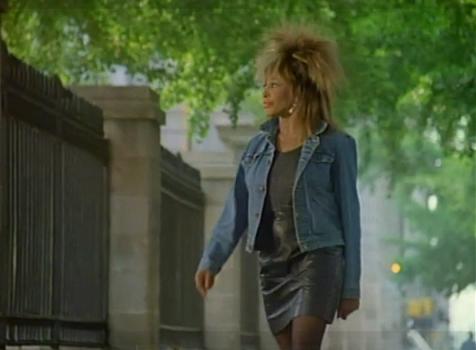
"Since U Been Gone" (Kelly Clarkson) vs. "What's Love Got To Do With It?" (Tina Turner)

So, we're four for four in these match-ups insofar as I think every single song deserved to advance to the next round, and would have, on my ballot, if they were paired off against something different. Mark already offered a brilliant distillation of what's so special about "Since U Been Gone," and loud, brassy, chip-on-your-shoulder singalongs don't get better than this. The mood is so contagious you get swept right up in it even if you've never ended a relationship feeling remotely this way (as I, thank goodness, have not). But still, we are talking about Tina Damn Turner, people. If anybody could ever have sung "Since U Been Gone" with righteous authority, albeit with a less than ideal match of voice to arrangement, it's Tina. She wrote the book about breathing for the first time.

In this instantly and indefatigably iconic song, she has so moved on from that stage and is sailing in murkier waters, insisting on her right for pure physical pleasure while resisting the tug of the love she is feeling. The resistance feels real, muscular, unmistakably wise to the dangers: unlike a lot of songs built on this sentiment, you really don't know which side of her instincts is going to win, though it's clear in either case that Tina is going to win. The song is like an audio equivalent of a black eye that's just barely healed, only listening doesn't make you feel bad, because Tina takes seriously that she's as aroused as she is alert. And speaking of The Hall of Fame of Bridge Verses! Does it "scare her to feel this way" because she's frightened of feeling emotionally attached, or frightened of allowing herself not to feel emotionally attached? This is a completely frank song that is also rich in mystery, as early as the first five seconds. Right here, they ought to have retired the jersey for Tough As Nails But Still Vulnerable But Still Tough But Still Vulnerable.

Extra points for that moment when the uppity alto sax tries to cut in early for its solo, and Tina puts it on blast with one husky Mega Yearn. She lets the sax do its thing after that, but we know who is Queen Bee, as if we didn't already. Fierce, hon.

Oops, this is my stop! Getting off the train. Go vote, folks!

Labels: , ,

Monday, July 25, 2011

Ultimate Pop Song Tournament #1

Mark Blankenship of The Critical Condition asked me, of all people, to help nominate the songs in his prodigious Ultimate Pop Song Tournament, in which readers vote on the very best pop song to chart in the Billboard Top 40 between 1981, when "9 to 5" peaked at #1, and 2011, which has so far been owned by Adele. Only one track per artist was deemed eligible, which was already murder for artists like Michael Jackson, Madonna, and Prince... and, if you're me, for the Eurythmics, Salt 'n' Pepa, George Michael, Notorious B.I.G., Cyndi Lauper, and Stevie Nicks, too. How do you choose between "Shoop" and "Push It," "Edge of Seventeen" and "Stand Back," "Hypnotize" and "Juicy" and "One More Chance"? Weep, Orpheus, o'er these inhuman predicaments.

Furthermore, Mark, Joe Reid, and I had to agree on the song's intrinsic appeal as well as its influence on the artist's career, or on popular musical culture in general, and sometimes on pop culture as a whole. Which means these aren't necessarily our votes for "the best" songs nor for the "most popular," but somewhere in the middle—maybe bridging the two. Trust me that 64 songs sounds like a lot until you start making the list, and then (gah!) you start making the cuts. It was all so civil and so much fun that I have every confidence that Mark, Joe, and I could slash government spending and raise the debt ceiling in just a couple of days. Still, there was a little blood on the floor, and each of us snuck out of the nominating court a few times to shed a few tears in a bucket, as though the others wouldn't notice. Police, Bangles: I tried. Britney, a-ha, Fugees: they tried. Everybody calm down.

The four best things about the outcome are that we didn't forget about anything, took into account every single Top 40 hit in existence, have utterly irreproachable taste, and made absolutely no mistakes. Mark has asked us not to invoke any runners-up or any personal pets we would have loved to promote, out of respect for the 64 absolutely inarguable choices that we wound up with. This is killing me a little inside, as I would love to share a list of "B-Sides" I compiled that are not runners-up or preferred choices so much as they are a personal list of favorite Top 40 tracks by 64 different acts than the ones in the tournament, paired off with the competing songs that I consider their closest cousins. We'll see if we can work on him.
Meanwhile, I notice that Joe is sharing his votes in the published match-ups, and I figure that's a game at which I can join him. Follow along, and by all means, go vote in the rotating series of open races. Enjoy Mark's zesty defenses of the nominated tunes in the "Joy Bomb" and "Deep Feeling" derbies. Once we turn to the "Rock Warrior" contenders, Joe will take over on blurb-writing, and I'll be making the pitches for all the "Groove Thangs." The fun lasts through August.


Joy Bombs, Game 1 (Vote Here)
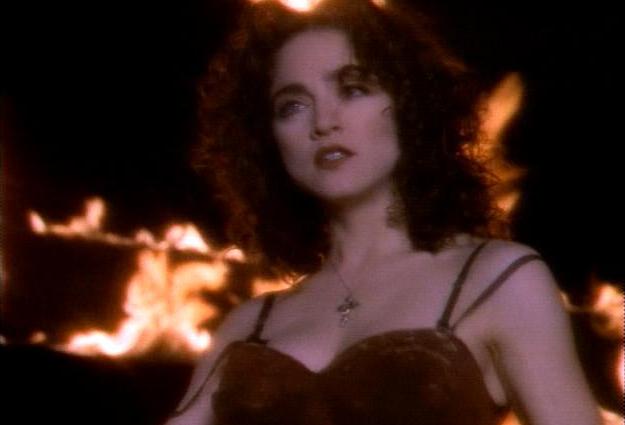
"Like a Prayer" (Madonna) vs. "Higher Love" (Steve Winwood)

I like "Higher Love" enough that I'm pretty sure I was the one who initially added it to the ballot. I love it even though I can barely understand Steve Winwood when he sings. If you read his lyrics, he clearly spends a lot of time on them, but then they come out sounding like a lot of disarticulated vowels. Trying to sing along always leads to outright catastrophe; I end up sounding like some kind of aphasic Dutchman. Doesn't matter, though, when the song combines different pop-musical idioms as energetically and with the melodic gusto of "Higher Love," which obviously gets elevated by Chaka Khan's late-erupting drawling out of the word "braaaang."

But still, and much more succinctly: "Like a Prayer" is "Like a Prayer," and Madonna is Madonna. The deck is just way too stacked. Obviously, my vote is pre-claimed for this song for at least the next few brackets.

(As a side note, a disturbing balkanization of opinion has broken out over the issue of whether the album track was made even more sublime or grossly vandalized by the electronic interference of the now-standard Immaculate Collection remix. I am a firm partisan of the original mix, but again, if Madonna fans can achieve entente around an issue this combustible, there is no reason why the U.S. Congress can't strike a deal about debts. Perspective, people.)


Joy Bombs, Game 2 (Vote Here)
"Tubthumping" (Chumbawamba) vs. "Don't You Want Me" (Human League)

Much more fairly matched competitors, and I initially found it hard to skip checking the box next to Chumbawamba's bolshy, roustabout, bar-side anthem. But I'm a sucker for a pop song with a strong narrative line, and Human League's breakout hit is stocked with a barbed and detailed story between two he-said, she-said speakers. Still, it's so bouncy and slick you can close your ears to their squabbling and just drift on the shimmery sheen of the production.


Joy Bombs, Game 3 (Vote Here)
"Sweet Dreams (Are Made of This)" (Eurythmics) vs. "Freedom '90" (George Michael)

I expected "Sweet Dreams" to be one of the dozen songs that slid onto the final ballot with no friction whatsoever, proving that one man's axiom is another man's like-but-don't-love. As it is, internal campaigning was definitely required. I'm not even saying it's the Eurythmics' best chart hit ("Missionary Man" is spikier fun, "Here Comes the Rain Again" at least as haunting), but this song is so iconic that everyone in the Western World recognizes it inside of five seconds, and it still fills the dance floor if you pop it in, despite not really doing a lot. Two rudimentary couplets, a basically repetitive arrangement, some disembodied melisma, but the whole thing is so immeasurably charismatic. George Michael is a genius songsmith ("Kissing a Fool" is a perfect emblem of unmatchable pop-song craft), and "Freedom '90" is a tasty, spirited, energetically evolving track that doesn't feel nearly as long as it is, but I just can't go there over Annie's imperious alto and Dave's authoritative synth.


Joy Bombs, Game 4 (Vote Here)
"I Want It That Way" (Backstreet Boys) vs. "Heaven Is a Place on Earth" (Belinda Carlisle)

I can relate to people who swoon over the creamy rises and falls of the melodies and harmonies of the Backstreet track, and the elegant way all five singers are able to seize different parts of the lead vocal for themselves without the song feeling fractured. The structural and sonic coherence of the whole is so immaculate that it almost doesn't matter that the lyric is often generic (fire rhymes with desire!) and often totally impenetrable (who wants what like what?). A high-point for modern boy-banding, but I don't think it holds a candle to the pure, ebullient candor of "Heaven Is a Place on Earth," which expresses a sentiment just as bubble-headed as, say, Katrina and the Waves' "Walking on Sunshine" and is filtered through just as limited a voice. But the voice doesn't feel limited, because the eponymous slogan is so earnestly sung, in registers both dreamy and subtly carnal. The sentiment is perfectly scaled to the register of open-hearted pop, and the production takes Carlisle right to the edge of her growliest convictions without overstepping ("rrrrrAND we're spinnin' with the stars above!"). The background vocals are mixed to sound like fellow feelers, not insulation for a modest chanteuse. The Diane Keaton-directed video is a bit of a laugh—why is Belinda trapped in that Caligari corner, and why is she trying to make out with it? But even the visual nonsense of the trotting girls in their joyless Zorro masks feels infectious and bright in the context of this song. An easy vote from me.

Labels: , , ,