Friday, June 13, 2008

Let Them Eat Birthday Cake!

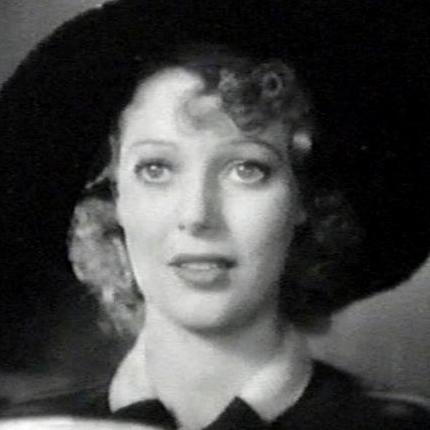
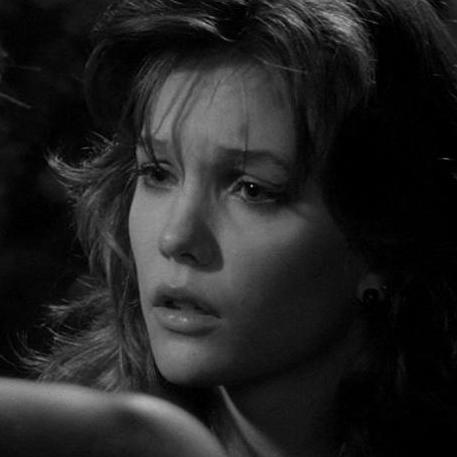
Back in effect, y'all. I still have some spring-quarter papers and projects to assess and then my final grades to tabulate and submit, but this website is eager to spring back to life. I meant to get an early start one week ago, to commemorate Nathaniel's birthday—even though certain snakes in the grass have recently informed me that too many of my recent posts are all about Nathaniel. But, I just survived yet another apartment move, and though nothing (amazingly!) was broken or lost, my internet connection was scuttled until about 48 hours ago. So here, better late than never, is the latest addition to the Best Actress pages. Far be it from me to imply how old Nathaniel just turned, but let's just say that I have selected 1938 as a fitting year of tribute—and all the more fitting because we saw White Banners for the first time together in my Hartford apartment, we both love Bette Davis, and we both really love Norma Shearer, earning her sixth and final Best Actress nomination for Marie Antoinette.

Bette copped the Oscar, but to learn who wins my vote, you'll have to click here. The usual poll has already been supplied to determine who you think should have won from Oscar's list, but I'm playing it a bit coy about my own favorite performances from that year, which is also slowing down the other two polls. I rented a lot of 1938 movies in preparation for this Nathaniel-a-thon, and despite wind or rain or sleet or U-Haul or AT&T, I intend to finish out my viewing list... or at least get a little closer. So, tune back in for my own 1938 Dream Team, and some remarks about Luise Rainer, Irene Dunne, Joan Crawford, Katharine Hepburn x 2, Margaret Sullavan Redux, Sally Eilers, Claudette Colbert, Barbara Stanwyck, and several other ladies who were bright lights in '38! (And it's never too late to wish Nathaniel a happy birthday!)

Labels: , , ,
Thursday, May 22, 2008

FlickPicker in the Dark

Are you an academic? Does your school run on the quarter system? Is work raining from the sky every day? Yesterday, I thought all I had to worry about were my two classes to teach (about Children of Men and the egregiously out-of-print The Portrait of a Lady, so no complaints there), and the two stacks of essays I had to grade and return, and the senior theses I needed to read and write reports about, and the 25-page report I have to write for Friday, and the separate public talks I have to write and give next Wednesday and Thursday, and the packing of my apartment that needs to be finished by next week in order to move on May 31... Who knew I would leave the office with a new talk to write for next Friday, and another batch of prize-contender essays to judge (and write reports about), and a new batch of late-breaking admissions files to read (and write reports about)? Everyone who has ever wondered what your professors do when they aren't teaching or answering (or not answering) e-mails, or everyone who hopes to be a professor and wonders what that's like: smell the roses!

At least I love my job. (Cue Emily Blunt: "I love my job... I love my job...")

But, I must say, till the quarter's over in early June, it's still going to be slow going at this blog, which means I haven't gotten to say anything about my annual springtime obsession, the Cannes Film Festival, presided over this year with a steely glare and a messy haircut by my life partner. I am addicted to all the news flowing from the Croisette. As ever, the mainline for buzz, news, and early reviews is GreenCine Daily, which has assembled this index to all the Cannes-related articles, most of them updated as the days pass and more responses trickle in. Sounds like my gal Lucrecia and my buddy James hit a few snags, and Steven and Clint prompted responses all over the board, too. (No one even knows what Clint's movie is called anymore, or how Steven's will be released.) I'm a lot more interested in that Israeli animated doc than I had thought I'd be, and Arnaud Desplechin hit a home-run with every critic and audience member I've read, but I can't say it sounds like Sean's kind of thing. (I'm guessing it's headed for a Director or Screenplay citation, or maybe a Jury Prize, even if it's the movie lots of people like the best. See Volver, etc.) I'd be a little frustrated if the Dardennes copped another trophy, though their film sounds quite good (surprise!); I've somehow never seen a Jia Zhangke film; and I'm somewhere between indifferent to openly mistrustful of Walter Salles, Nuri Bilge Ceylan, and mob movies. Out of the Competition, I'm most excited about the triumphant Terence Davies film, this coruscating film about Liberian child soldiers, and the Carax segment of the odd-sounding Tokyo!. And I love that the trailer for the upcoming Spike Lee Joint, Miracle at St. Anna, apparently wowed a lot of people.

You can use this schedule to see what's still coming up in Competition; I'm probably most eager to hear about the Kaufman and the Cantet at this point. Since I haven't seen any of it or been able to write more thorough posts as we go along, I can at least direct you back to two full reviews of two of my all-time favorite Palme winners, and shorter reviews of two others.

There's MUCH more to say, too. I still need to follow up on my exploits and juror deliberations at the Indianapolis Film Festival, which I promise I will not pass over; it'll just be a sort of Film Comment-style dossier on a festival that's a month or two in the past by press time. But I won't forget. I wanted to offer a sweet, properly worshipful elegy for the retired Modern Fabulousity, and a delirious description of getting to join Goatdog as he screened the first of only ten Best Picture nominees he has left to see from Oscar's entire back-catalogue. We both feel confident that things'll only get better from here. I was tagged for this book meme that I still haven't answered, I have the Best of 2007 to finish and the Favorites Countdown to resume, and more Best Actress races to judge and performers to profile. Keep your ear to the ground, dear reader, and pray for mid-June, when I Shall Be Released. And Relocated. And Resplendent in All Things Movie.

Photos © 2000 Zentropa Entertainment/Fine Line Features; © 2008 Aqua Films/El Deseo; and © 1967 20th Century Fox Film Corporation

Labels: , , , , , ,

Tuesday, March 25, 2008

Who's Afraid of Best Actress 1966?

Both polls for the 1997 Best Actress race have been landslides on behalf of my own pick, Helena Bonham Carter. Which is lovely, if a mite unsuspenseful—and I'm guessing that outcome won't change too much in the polling for my latest group, the leading ladies of 1966. Liz Taylor, absent but at least out of surgery on Oscar night, had nothing to worry about in that year's race and I'm confident that she won't here, either. Feel free to prove me wrong—I know there are staunch fans of A Man and a Woman fans out there—but she's superb in Woolf, and though the other four films were all popular hits with major prizes under their belts, none of them have the enduring visibility of Taylor's vehicle.

To keep things interesting, then, I've added a third question to this round of polling, which will become a fixture whenever I delve into a long-ago year where I haven't seen as many films or performances as I have from the recent vintages. Decide my fate, reader. Chart my course. Be the wind beneath my actress-loving wings. What performance from Oscar's eligibility field would you support as my next pit-stop on the 1966 trail? Hana Brejchová's in a Czech New Wave hit and Best Foreign-Language Film nominee (and thus a generic sibling of Ida Kaminská's film and an also-ran to A Man and a Woman's Oscar win)? 1965 nominee Elizabeth Hartman in very early Coppola? Fellini and Herzog favorite Claudia Cardinale in the American west? Late starlet-period Jane Fonda? A Criterion-certified masterpiece by Carl-Theodor Dreyer or late-arriving Chabrol, or outsider icon Tuesday Weld in a proto-Heathers, or Godard muse and wife Anna Karina, or Lauren Bacall scoping out Paul Newman? The cross-cultural stars of a very early Merchant-Ivory? Maybe you prefer Frankenheimer weirdness or Tony Richardson hit-and-missness, or you feel like putting me through Shelley Winters or the stunted-camera time-capsule The Group, with its eight female leads? Which ever way you're leaning, read up on Oscar's own priority list and then let your voice be heard! And if your implicit vote is "other," arrest me with your alternative options in the Comments. (N.B. Since I've promised to provide these direction-seeking polls in all the years where I am under-versed, I've put one up for 1932, also.)

(By the way, speaking of big female ensembles, a quick plug for the 1966 John Ford doozy 7 Women, especially for you Paradise Road fans who spoke up in the '97 discussion. 7 Women, Ford's last film, presents a palpably perverse Christian mission that now has a Mongol warrior to worry about, all of which gives prim autocrat Margaret Leighton some fascinating context for her trembling-neurotic routine. Sue Lyon finally gets to play the good girl instead of the fantasy or the sexpot, and Anne Bancroft gets her Johnny Guitar on as a butch expatriate doctor willing to go a long, long way—and I don't just mean to China—for the good of civilization. And she's a Ford character, so she's not even sure she likes civilization! Pretty non-stop intensity for 87 minutes, give or take its lapses in judgment and cultural sensitivity, and a literally killer ending to boot.)

Labels: , , ,

Monday, March 17, 2008

Best Actress 1997: In Semi-Defense of Helen Hunt

I can't think of another recent Oscar winner who is held in the kind of opprobrium that Helen Hunt is for scooping the 1997 Best Actress prize. I think a lot of people would give Gwyneth Paltrow and Roberto Benigni three trophies apiece if it meant they could subtract Hunt's, and it's true that her subsequent film career hasn't done much (i.e., anything) to quell the naysayers who wondered how the Oscars had just turned into the Emmys. But I thought she was pretty terrific at the time, and I still do, even though I would have voted for another actress ahead of her. Taking Jack's Oscar away for that strange, discombobulated film would suit me just fine, but that's a different discussion for a different site. (N.B. I goofed and forgot to upload the revised version of my overall 1997 ballot, linked from the actress page, before I posted last night. Apologies to Billy Connolly and James Cameron.)

For now, read on... and don't forget to vote in the poll, halfway down the page! (Yep, there are polls for every year from 1998 to 2007, too, and for 1931-32, for those of you who missed 'em last time you visited the Best Actress Archive.)

Labels: ,

Friday, February 29, 2008

Goodbye, Oscar. Hello, Ladies!

(NOTE: In a fit of democratic inspiration, I have added poll interfaces to all of the yearly profile pages. Let me know who, among Oscar's batch, should have won and who, among my favorites, you like the most.)

For those of you who have asked, I know that I still have my 2007 Honorees to complete, including some home skillets and mighty hearts coming up in that Best Ensemble announcement that's been languishing for some time now. I will complete this work. But today, as we say goodbye to Oscar month, while also making a rare Leap into the future, I figure it's about time to doff the dustcover and unveil the BEST ACTRESS SPECIAL SECTION that I've been engineering for the past couple of months on my main website, Nick's Flick Picks. Fans of this site tend to share its obsession (my obsession) with leading ladies in general, and with Best Actress in particular. Remember this post? One of my biggest comment-grabbers ever, and in a circuitous way, a semi-inspiration for StinkyLulu's Supporting Actress Smackdowns.

Now, you can read smackdowns with myself, in the cleanest sense, about all the Best Actress years, though of course I'm building them up as I go along:


As of now, you'll see profiles of the last ten years, as well as the 1931-32 year as a hint of what things sound like when we dig deeper into the past. Note, too, my anti-AMPAS preferential rankings of my own favorite leading-lady performances of each given year—plus, in all the recent years, quick ballots for my favorites in all the Picture, Director, and Acting races.

There's more! The Best Actress Special Section includes a Ranking Page of all of Oscar's winners, plus a listing by decade of my favorite losers, and a round-up of all the nominees I have yet to see (65 to go at this point, in this category). You'll also find a convenient table of Side by Side Comparisons of Oscar's champ, my favorite of his nominees, and my own championed performance from that year (using Oscar eligibility years). Dig around that page and you'll find a secret link with an extra column for all you Oscar the Grouches out there.


The part of the site that is still under the most construction is the Who's Who and FAQs Section, once and future home to brief personal profiles of all the nominees, grouped according to the scale of their success with Oscar and, in some cases, their level of overall fame. Currently, you'll only find full write-ups for Katharine Hepburn (a Pet, or someone with multiple wins and/or at least four Best Actress nominations) and for Cate Blanchett (a Slum Queen, or a Best Actress nominee whose only victories have arrived in the Supporting category). Crib your rental suggestions and take solace or offense at my feelings about these women and their performances.

And once you've done all that, e-mail me to ask new FAQs or stump for which years or actresses you hope to see profiled (I won't always get to it right away, but I'll remember the request) or tell me how beautifully all of this has been laid out and how you already can't live without this new section. Finally use the new "Women" link beside my profile picture on this blog as a quick way to check for updates in this quadrant of the website. Long live Best Actress, and now that Oscar has passed and the new year has officially begun, happy 2008! (And let me thank, in alphabetical order, Goatdog, John, Nathaniel, StinkyLulu, and Tim R. for their formatting and content suggestions while I was architecting this new space. To mix queer Bravo metaphors: my own Fab Five of Tim Gunns!)

Labels: ,

Wednesday, January 02, 2008

The Leading Ladies of 2007

Happy '08! I hope everyone had a great New Year's Day, my favorite day in the entire year to play it cool, keep things close to home, hang out on the futon and on the phone—and hence, no blogging yesterday. But, there will be copious entries soon enough, with end-of-year best lists to compile, and a major birthday to celebrate. (And no, I'm not talking about Todd's 47th today, though I should be — bon anniversaire, mon cher!)

Moviewise, I've got two heavy hitters blowing into the Windy City this weekend—critical darling There Will Be Blood and well-reviewed documentary The Price of Sugar, an Oscar semifinalist. Basically, I'm waiting on these titles and Persepolis (opening on Jan. 11), plus some last-minute rentals like Offside and The Namesake, before my theatrical survey of 2007 will be complete enough to draft my annual Honorees. Errant 11th-hour releases like The Great Debaters, The Kite Runner, and the is-it-out-or-not? Grace Is Gone also have outside shots in at least one category, but they're a tad less pressing.

So what does every movie on my Still To Be Seen itinerary have in common? Not a single one of them has a female lead... well, give or take Hilary Swank in P.S. I Love You and little Dakota Blue Richards in The Golden Compass, neither of whom looks remotely prepossessing in the trailers, and I'll probably pass on both movies anyway. All of which makes Best Actress (and isn't this fortuitous?) the one category for which I can already posit a semifinalist list. And what a list it is! Anybody here would have qualified for my final five in '01, '03, or '05, and given how many of them are solid Oscar hopefuls, I'm expecting an Academy shortlist that trounces last year's admirable derby of Cruz, Dench, Mirren, Streep, and Winslet. Here are the fourteen glorious contenders:

JULIETTE BINOCHE in Flight of the Red Balloon
NIKKI BLONSKY in Hairspray
JULIE CHRISTIE in Away from Her
MARION COTILLARD in La Vie en rose
KATE DICKIE in Red Road
CATHERINE FROT in The Page Turner
ANGELINA JOLIE in A Mighty Heart
LAURA LINNEY in Jindabyne
LAURA LINNEY in The Savages
ANAMARIA MARINCA in 4 Months, 3 Weeks, and 2 Days
ELLEN PAGE in Juno
PARKER POSEY in Broken English
PARKER POSEY in Fay Grim
TANG WEI in Lust, Caution

If that list isn't stupendous enough, consider that I've already elected against work as strong as Nina Hoss' in Yella, Amy Adams' in Enchanted, Marina Hands' in Lady Chatterley, Ashley Judd's in Bug, Luisa Williams' in Day Night Day Night, Julie Delpy's in 2 Days in Paris, Christina Ricci's in Black Snake Moan, Mirjana Karanović's in Grbavica: The Land of My Dreams, and Amber Tamblyn and Tilda Swinton's muted but interesting pas-de-deux in Stephanie Daley.

Other people would have advocated for Nicole Kidman in Margot at the Wedding, but I just didn't find much modulation or depth in her admirably sour exterior; or Keira Knightley in Atonement, but her vocal work drove me batty and she didn't find a way into the character that I felt or believed, though the script is certainly not her friend in pursuing that venture; or Isabelle Huppert in Private Property, refreshingly casual and direct as a discontented mother but abandoned by the script before she's broached any deeper territory; or Jodie Foster in The Brave One, nailing Erica's tough carapace but pretending to be in a smarter movie than she's in (plus she takes that unsalvageable ending even further over the top than it's already going); or Halle Berry in Things We Lost in the Fire, who mostly shows how much better she'd be in Monster's Ball now than she was six years ago, with an artfully restrained and shaded but still rather limited performance; or the much-beloved Carice van Houten in Black Book, but I found her to be more of a pose-striker and an agreeable, flexible participant in Verhoeven's flamboyant mise-en-scène than a particularly whipsmart or engaging performer. (She also, for all of her virtues, made Ellis/Rachel a bit of a wash as a spy: how many sidelong fretful glances and nervous fingers and anxious over-the-shoulder looks is a disguised Jewish spy at war with the Nazis really supposed to allow herself? Tang Wei knew better than this little minx.)

The above were at least runners-up. Katherine Heigl in Knocked Up, Vittoria Mezzogiorna in Love in the Time of Cholera, Markéta Irglová in Once, and Belén Rueda in The Orphanage never excited me all that much. Cate Blanchett was almost as bored as I was during Elizabeth: Full Throttle. Don't even get me started on Helena Bonham Carter, as blank and superficial in her acting of Sweeney Todd as she is patently deficient in her singing; or Molly Shannon in Year of the Dog, disappointingly inadequate to her movie's difficult tone and to all of her close-ups; or Keri Russell, exuding the same lockstep mediocrity and lack of real ideas or feelings as is the rest of Waitress; or Asia Argento, who won lots of fans at Cannes but broods her way through The Last Mistress in a series of increasingly dull grimaces and off-putting bits of naughty-bobcat improvs; or Marianne Faithfull in Irina Palm, well-buzzed on the festival circuit but pitifully stiff and inert in an underconceived part.

So, with all of that said: my list of 14 semi-champions will be whittled down to five later this week, as we kick off the 2007 Nick's Flick Picks Honorees. In truth, four of them are already locked for inclusion, four are confirmed also-rans, and the other six are competing for that fifth spot on the final list... so go ahead and state your cases for your favorites! Plus, we've got 19 other categories to sort through, and even more to say about actresses of the past as well as the present. But you'll have to stay tuned for those tidbits. Enjoy '08, vote Democratic, and keep coming back!

Labels: , , , , , , , , , , ,

Monday, August 06, 2007

Best Actress Update: 5 More Down, 70 to Go

The theme this time is: Great Ladies of History

Ingrid Bergman in Joan of Arc (1948) ★ ★ ★ ★ ★
(Lost to Jane Wyman in Johnny Belinda)
I have been consciously postponing Joan of Arc for a while now; you can smell the elephantiasis and the box-office desperation from a mile away. Joan of Arc is the sort of movie that was made so that it could be promoted, and somehow, even though Bergman won a Tony onstage in this role, her casting in the film seems calibrated more toward PR than dramatic plausibility. Her first scenes are uniquely uncomfortable, with the 5'10", 33-year-old actress failing to seem much like a willowy, agonized teenager living under her father's thumb and runneled with sublime ecstasy and terror after hearing her "voices." Happily, Bergman's performance becomes more emotionally credible and more technically proficient the nearer we get to Joan's imprisonment and martyrdom, even though the movie gets stodgier and more pedestrian. Falconetti's shadow threatens at all points to swat her off the screen, and she has a hard time raising a sword with authority, but the solidity of her face and her persona, which sometimes leads to flat-footed performances (see The Bells of St. Mary's), somehow redeem Joan of Arc from being overly wispy and sentimental about its heroine. I found myself rooting for the performance even when it wasn't working; she's missing three stars by a hair.

Lynn Fontanne in The Guardsman (1932) ★ ★ ★ ★
(Lost to Helen Hayes in The Sin of Madelon Claudet)
A stretch for the "Great Ladies of History" theme, since Fontanne's impersonation of Queen Elizabeth I (playing the same Maxwell Anderson script, in fact, that generated Bette Davis' turn in The Private Lives of Elizabeth and Essex) is limited to the first scene of this unusual comedy. It's a tribute to Fontanne's talent, and consonant with her legendary status in the theater, and crucial to the plot to boot, that Fontanne is so succinctly fascinating in this one scene: look at how strangely but expressively she slumps on her throne at the close. But from there, as the curtain comes down on Elizabeth the Queen, The Guardsman really takes off, as Fontanne and Alfred Lunt, married superstars of the 20th-century stage, play married superstars of the 20th-century stage who love to trade barbs about who's the better performer. She's stunned by his chauvinistic assumption of his own superiority; he's horrified to be thought of as anything less than genius, and also nervous about his wife's wandering eye. From there follows a series of farcical impersonations, uncertain realizations, and some remarkably tart pre-Code innuendo. The plot, however light, is too much fun to spoil, but to whatever extent The Guardsman draws us into a comparative evaluation of these performers, Fontanne trumps her clever but hammy hubby. Her remarkable spectrum of acerbic laughs and wry interjections, complemented by inspired gestures and smart, sexy line deliveries, keep this dated material remarkably fresh. She still acts like a doyenne of the stage, with little sense of interacting specifically with a camera, but she's not "stagy," exactly, and though she never played another film role, one surmises that she could have done great things with Kay Francis' part in the same year's majestically saucy Trouble in Paradise, or with lots of Irene Dunne or Jean Arthur-type roles in future years. A foreigner to the screen, not 100% at home, but delightful nonetheless.

Greer Garson in Madame Curie (1943) ★ ★ ★ ★
(Lost to Jennifer Jones in The Song of Bernadette)
In the wake of Mrs. Miniver and Random Harvest, Greer Garson was so popular that she probably could have gotten nominated for anything. Omitting her would be like holding a Best Muffin contest and leaving out Blueberry. Unfortunately, this nom, her fourth in five years (with two more to come in 1944 and 1945), travesties both the award and the actress. Like Johnny Depp in Finding Neverland, Garson in Madame Curie follows a career peak with a frustrating nonentity of a performance. Though she admirably declines to coast on simple typecasting—Marie Curie, bookish and muted, permits none of the ginger amiability of her previous performances—the role, for that very reason, requires Garson to abandon everything enticing about her screen persona and leave us with a pretty drab husk of an impersonation, placeholding instead of performing. The film, directed by Random Harvest steward Meryvn LeRoy, is frankly less interested in character or audience connection than in the humility of the brilliant Curies and their long tribulations amid spartan, sometimes squalid working conditions: a safe message for a WW2 audience living on rations, but not a foundation for auspicious drama. The only memorable scenes linger because of camerawork or smart manipulations of offscreen space. Garson is an inevitability rather than an asset—the public's favorite actress playing the world's most famous female scientist—and though she doesn't crash to earth the way stiff, stodgy Walter Pidgeon does, there's almost no life to her: the last thing you expect to say about Garson onscreen.

Vanessa Redgrave in Mary, Queen of Scots (1971) ★ ★ ★ ★ ★
(Lost to Jane Fonda in Klute)
For quite a long time into Mary, Queen of Scots, Vanessa Redgrave is an unmitigated disaster. She overdoes her usual mannerisms of the gaping smile and the twinkling eyes, making herself cloying and foolish instead of ethereal and incandescent. Her line readings often border on the laughable, when they don't stumble right into the laughable, and she's so thoroughly bested by the sharp, sexy, epicurean, and forceful Glenda Jackson as Queen Elizabeth that Mary, Queen of Scots arrives as something of an annoying afterthought in what is putatively her own movie. What saves the performance, and the film, are the two direct confrontations between Redgrave and Jackson. Even here, Redgrave hasn't thought herself all the way through the character the way Jackson has, and she's still guilty of racing through lines and character beats that she might have handled more slowly. Still, her fury, jealousy, exhaustion, and unlikely self-beatification are tartly communicated, and her sparring with Jackson in their first, secret rendezvous in the forest describes a terrific arc from false friendship to heated rivalry to shrewd, reciprocal assessments. In a better year, Redgrave wouldn't be anywhere near this list, but she saves herself from outright embarrassment and yields some surprisingly memorable moments in this silly soap-operatizing of royal history.

Janet Suzman in Nicholas and Alexandra (1971) ★ ★ ★ ★
(Lost to Jane Fonda in Klute)
Like Redgrave, Suzman transmits the impression that she is a much more interesting actor than her drab performance in this bloated film would have one believe, yet one is disinclined to make too many excuses for her Czarina Alexandra. True, in some impressive early scenes, her aloof, nearly agoraphobic take on the character strikes a welcome note of mystery in a superficial and almost comically inflated drama, the kind where Czar Nicholas (Michael Jayston) comforts his screaming child in the night with the words, "Oh, you're just dreaming about the assassination of Archduke Ferdinand!" Barely half an hour into the film, however, Suzman gets stuck in the cluttered background of the film, fretting and doting over her frail heir, and enlisting unreasonably as a disciple of Rasputin (Tom Baker, one short skip away from Monty Python). Her reticence passes from interesting to unilluminating, and one ends the film knowing nothing about her, and barely caring to know.

The Pick of This Litter: No suspense here: Lynn Fontanne is the only gal in this batch who has any business appearing on a ballot. Still, hers isn't just a relative victory, compared to a weak group of peers; she's a treat and a revelation, and I happily recommend the film, right down to its joyously teasing final shot (which is all about Fontanne).

(Images © 1948 RKO Radio/Sierra Pictures, reproduced from CineMasterpieces.com; © 1931 MGM/© 1998 MGM Home Video, reproduced from the IMDb; © 1943 MGM Studios, reproduced from Internet Movie Poster Awards; © 1971 Universal Pictures, reproduced from the IMDb; and © 1971 Columbia Pictures, reproduced from the IMDb)

Labels: , , , , , , ,

Wednesday, April 18, 2007

New: DVD Spotlight

One new feature of my revised website is a weekly "Spotlight Review" of a film on DVD, where I showcase a full review of a film available on DVD. These choices may be selected for their topical relevance to recent news, or because I've recently revisited the film, or because the filmmakers or actors have another film in current release, or simply because I feel like sharing some love (or venting some opprobrium). Last week, I linked to my review of The Devil Wears Prada, since it was the last DVD review I composed before the site entered its winter hibernation; I also couldn't help stumping for Silkwood, to showcase the difference between good Meryl and great Meryl. Now, in its second week, the Spotlight shines, if that's quite the right word, on Freedom Writers, a good-hearted but gummy-headed 2007 release starring an eager but awkward Hilary Swank. Freedom Writers bows this week on DVD.

Photo © 2007 Paramount Pictures/MTV Films

Labels: , , ,

Monday, April 16, 2007

Best Actress Update: 5 More Down, 75 to Go

Jane Alexander in Testament (1983) ★ ★ ★ ★ ★
(Lost to Shirley MacLaine in Terms of Endearment)
The major disappointment of this batch is Jane Alexander's proficient but doomed work in Testament. When I say "doomed," I don't mean the plot of this post-apocalyptic family drama so much as the flat, slipshod direction that zombifies most of the cast, bungles all the edits, and refuses any trace of style. It's clear that the script is aiming for a ground-level view of massive cataclysm; occasionally, a terse vignette like that of a mother sewing up a dead child's body in her own bedroom curtains is allowed to do its chillingly intimate work. Much more often, though, Testament botches its aspirations toward subtlety with moist speeches, heavy symbolism, and scenes that push way too hard to underline director Lynne Littman's clunky interpretations of the patchy script. Within that context, Alexander saves what scenes she can, and her sour, haunted watchfulness is an interesting, unsentimental basis for the character when the director lets her get away with it. But in other moments, even Alexander is sunk by false theatricality (a stagy search for a teddy bear, an unpersuasive collapse into despair followed by an overly rhetorical kiss), and neither the dialogue nor the filmmaking supplies her with the tools to create a sustained, interesting performance. I know a lot of people love Testament, and love Alexander in it, but I have to demur on both counts. Fellow nominee Meryl Streep in Silkwood runs circles around her for multifaceted revelation of character and for conjuring the pure terror of nuclear contamination.

Greer Garson in Blossoms in the Dust (1941) ★ ★ ★ ★ ★
(Lost to Joan Fontaine in Suspicion)
In her first of several teamings with director Mervyn LeRoy, and at the outset of a remarkable string of five consecutive Best Actress nods, Garson plays Edna Gladney, a Midwestern debutante who becomes a champion of orphans (though she hates the word!) and "illegitimate" children (though she hates the word!) in Fort Worth, Texas. As so often, there is something so precious and safe about Garson's radiant refinement—her gleaming smiles, her flaming red hair, her accent incongruously posh by way of Wisconsin—that one feels a bit duped in praising or enjoying her work, as though one has fallen for a crashingly obvious marketing ploy. But radiant she is, and particularly once the script catches up with her age, her emotional generosity, ease of movement, and expressive face and voice go an incredibly long way toward selling the treacly script. She also interacts beautifully with Felix Bressart, a gem as a loyal and wisecracking pediatrician, and on the few occasions when Blossoms allows Edna a moment of unsavory affect (envy, annoyance, self-pity), Garson's smart enough to underline it and spry enough to win us right back.

Susan Hayward in My Foolish Heart (1949) ★ ★ ★ ★ ★
(Lost to Olivia de Havilland in The Heiress)
Hayward, predictably, is at her best as the taunting alcoholic we meet in the suburban frame story, slurring out some delicious dialogue without too much focus-pulling or fussy mannerism. (Some of the choicest bits include "Who said, 'To forgive is divine'? Probably not somebody I'd care to meet, anyway" and, on the subject of jealous husbands, "They want to think you've spent your whole life vomiting every time a boy came near you.") Still, the very ordinariness that grounds Hayward's work whenever she plays an addict or a rager (which was often) works against her when she's cast as a co-ed, a romantic dreamer, or the very kind of average gal she very much looks to be. She's trapped by unimaginative casting in a thin role throughout much of My Foolish Heart's extended flashback narrative, made worse by Mark Robson's stolid direction, which shares none of Hayward's enthusiasm for the character's darker shadings. Thus, we're only interested when she's nursing a cocktail or cozying up to a witty father (a terrific Robert Keith) who shows, as they say, a little too much friendly interest in his daughter.

Carol Kane in Hester Street (1975) ★ ★ ★ ★ ★
(Lost to Louise Fletcher in One Flew over the Cuckoo's Nest)
Two things can happen in years when Oscar faces a paucity of obvious choices: either the voters challenge themselves to nominate strong work in the kinds of movies and roles they would usually avoid (Keisha Castle-Hughes in Whale Rider, Samantha Morton in In America) or they pad the field with serviceable but unremarkable efforts that achieve little for Oscar besides filling the five-wide quota (Miranda Richardson in Tom & Viv, Susan Sarandon in The Client). Carol Kane's nod, garnered in a year so thin that former winners filed a protest, somehow falls on both sides of this fence. On the one hand, it's lovely to see Oscar pay such headlining attention to a modest, stylistically distinctive, culturally specific tale about Jewish immigrants and forced assimilation, even if nothing in Hester Street, only partially by design, accedes much beyond the thematic or narrative sophistication of The Jazz Singer. Kane isn't the helium-voiced, helium-minded daff we've come to know. She's lonesome, panicked, and finally angry, and she delivers almost her entire performance in Yiddish, to boot. However, she's also a bit overstated in her tremulousness, and she doesn't find much in her character beyond what is asked by the mannered direction and the quaint, predictable screenplay. Like her fellow nominee Glenda Jackson in Hedda, Kane stitches some smart, powerful moments into a somewhat routine performance, in a movie that vacillates between trying too hard and not trying enough.

Barbara Stanwyck in Stella Dallas (1937) ★ ★ ★ ★
(Lost to Luise Rainer in The Good Earth)
What is it about Barbara Stanwyck that makes every one of her superb performances something of a surprise, no matter how many of them she gives? That low, husky voice, that downturned mouth, the narrow eyes, the nearly immobile features of her improbable face, the Brooklyn-bred, working-class butchness that pervaded her whole persona—all of these imply typecasting limitations that simply prove irrelevant to her greatest work, ranging all the way from film noir to screwball comedy to Westerns to melodramas to social realism to thrillers to B-movie macabre. Here, her flinty toughness offers an ideal through-line beneath her engaging, cackly impatience as Stella Martin, then her marital ambivalence as Stella Dallas, and finally her nimble balancing of the dear and the grotesque as one of Hollywood's most famously self-sacrificing mothers...though there's also a mean streak, a brutal cunning, and an obliviousness to Stanwyck's Stella that tend to vanish from popular memories of the character. Laserlike with her smart, forceful gestures and insinuations, keeping the movie alive even when the direction is flat, and interacting exquisitely with all of her co-stars, Stanwyck hits one of her highest peaks.

The Pick of This Litter: You can practically pull out the scenes that got Alexander, Hayward, and Kane nominated, the last two in very dubious years for the category, but none of their performances dig deeply enough, largely because the films won't allow it. Before we feel too sorry for them, though, let's realize that Stella Dallas is no slam-dunk on the page except that Barbara Stanwyck makes the sauciness, the humor, the resentment, the intelligence, and the idiocies of her character so vivid and so bizarrely credible.

(Images © 1983 Paramount Pictures, reproduced from MovieGoods.com; © 1941 MGM Pictures, reproduced from FilmPosters.com; © 1949 Samuel Goldwyn Co./RKO Radio Pictures, reproduced from Carteles de Cine; © 1975 Midwest Films/Home Vision Entertainment, reproduced from Rotten Tomatoes; © 1937 Samuel Goldwyn Co., reproduced, oddly enough, from Stuff Kids Like)

Labels: , , , , , , , ,

Monday, February 05, 2007

Best of 2006: Lead Actress


Predictably enough, I had even more than usual to say about my five Best Actress candidates. Amazingly, the only one of them who got any real awards-season play was Luminita Gheorghiu, whom the LAFC crowned as their Best Supporting Actress, earning my love but also stealing my damn thunder. It's a tremendous performance, but I feel sure that it's a lead. Agree or disagree, Lazarescu fans? And who's shocked (or pleased, or not, or indifferent) that, after a year of me flapping my mouth about Clean, Cheung didn't make the final five? I must admit, the picture wasn't everything I remembered it to be when I returned to it last week, though it's still mighty good.

Labels: ,

Sunday, August 20, 2006

Best Actress Update: 5 More Down, 80 to Go

Greer Garson in Sunrise at Campobello (1960) ★ ★ ★ ★ ★
(Lost to Elizabeth Taylor in Butterfield 8)
Cast here as a youngish Eleanor Roosevelt, Garson starts her performance on some bizarre and off-putting notes, quite literally: her version of Eleanor's fluty, fruity Old New York accent may well be expert mimicry, but like Jennifer Jason Leigh's take on Dorothy Parker, it's too mannered and outlandish to work as drama. It doesn't help that the script wheedles her for a Big Crying Scene (though Garson's unflamboyant build-up almost makes it work) or that it can't quite decide whether to canonize Eleanor or domesticate her (if you'll believe it, Eleanor sits for the climactic scene while FDR stands). The translucent likeability that anchors Garson's best work can't shine through in this fusty project, but she's still the most watchable actor on-screen, and she mines some persuasively intimate and character-revealing moments, as when she settles down silently in a chair and exchanges a silent, articulate smile with her newly afflicted husband.

Jennifer Jones in Love Letters (1945) ★ ★ ★ ★
(Lost to Joan Crawford in Mildred Pierce)
For an actress with such an appealing veneer, plus an impressive quintet of Oscar nods, Jones sure doesn't come across very well in most of her anointed performances. Her vulgarity as a half-Mexican vixen in Duel in the Sun is at least more tactlessly fascinating than her obedient restraint as a lovelorn half-Chinese doctor in Love Is a Many-Splendored Thing, but this matching set of ethnic caricatures is still pretty embarrassing. Then there's Love Letters, where she plays a 100%-English amnesiac who falls in love with Joseph Cotten, not realizing that she's been in love with him before, but only via a wartime exchange of love letters that he ghost-wrote on behalf of a lousy comrade. The script, by Ayn Rand of all people, is both ridiculous and interesting for all its convolutions. Sadly, aside from Dieterle's timid direction, Jones is the worst thing in it, going unnervingly wild-eyed to communicate both her lapses in memory and her romantic passions, and skating by on some very thin, cosmetic approaches to a potentially layered character.

Sophia Loren in Marriage Italian Style (1964) ★ ★ ★ ★ ★
(Lost to Julie Andrews in Mary Poppins)
The film and the performance get off to a worrisome start: as former hooker Loren wanes on her deathbed, her heart of gold at last giving out, aging playboy and longtime client Marcello Mastroianni ponders all the times he promised his love but ignored her pleas for marriage and respectability. Loren is timelessly fetching as she strides down a Neapolitan street in the film's most famous shot; still, it's all a little tawdry and clichéd, like Malèna played for casual laughs. Everything brightens considerably, though, when Loren "miraculously" revives, revealing her own duplicitous agendas, and she elevates the movie's second half into a tasty, energetic, and admirably humane comedy. She's sexy, clever, and funny, as three-dimensional in her personality as in her formidable physique. Loren won an Oscar three years previously for the sturm and drang of De Sica's Two Women, but here she shows more art and more charm—call her Irene Dunne Italian Style.

Marsha Mason in Chapter Two (1979) ★ ★ ★ ★ ★
(Lost to Sally Field in Norma Rae)
Like Garson in Campobello, Mason is largely constrained by her vehicle, which casts her as the more interesting half of a romantic couple, only to relegate her into fawning subservience. Yes, Neil Simon writes her a big, cathartic monologue where she shakes the rafters with her proclamations of self-worth, but Mason is actually much better at humanizing the endless one-liners, allowing us to hear a plausible character instead of the steady, recycled voice of the self-regarding playwright. Even at that, she cut deeper and found more variations in Only When I Laugh, and she was funnier in the better-defined situations of The Goodbye Girl. This is a Glenda Jackson-in-A Touch of Class nomination, applauding Mason for a deft, considered presence in a rom-com part that a lesser actress might have phoned in. At least she didn't win like Jackson did; in fact, if 1979 had generated more solid contenders, I doubt she'd have qualified at all.

Luise Rainer in The Great Ziegfeld (1936) ★ ★ ★ ★ ★
(Winner)
To respond to the two most common talking-points around this Oscared performance: yes, I think Anna Held is a crucial enough role with enough screen time to count as a leading performance, but no, I don't think that her famous, last-act telephone call to the Great Ziegfeld himself—congratulating him on his second marriage while bursting into tears of regret—is really all that special. Throughout, Rainer ratchets up the antic stage business and vocal affectations, landing somewhere between overripe comedy and overly emphatic imitation of the real Anna Held (who, to be fair, apparently did cut a fluttery, slightly outlandish figure). Ultimately, Rainer's approach kept me on the surface of the character instead of drawing me into her thoughts and feelings; the exception that proved the rule was her calmest scene, an encounter with Ziegfeld's lovely, young, and boozy new mistress, where Rainer underplays her moment of realization, her sorrow, her jealousy, and her frank pity for the latest fling who thinks she's a keeper.

The Pick of This Litter: An easy win for Sophia Loren, not just because her work is so vivacious and well-rounded (brava, signora!), but because Garson, Jones, and Mason have all been manifestly better in other nominated performances than they are in these. The big disappointment for me is Rainer, by whom I'd expected to be wowed. Normally, you don't come out of nowhere, defy your third billing, and defeat Carole Lombard and newly widowed MGM queen Norma Shearer if you don't have some serious chops. Maybe it's just a taste thing. I did, at least, like her better in The Good Earth (but she shouldn't have won for that, either).

(Images © 1960 Warner Bros. Pictures, reproduced from MoviePoster.com; © 1964 Compagnia Cinematografica Champion, reproduced from this Italian blog; and © 1936 MGM, reproduced from the Ravin' Maven.)

Labels: , , , , , ,

Wednesday, August 09, 2006

Savoring a Sure Thing

As I keep marching forward through Oscar nominees of the past, I am occasionally regretting that I splurged so early on so much good stuff and left a steaming pile of Greatest Show on Earths and Great Santinis to contend with in my future. "Great," needless to say, is a false promise in both instances. I'm also wading through a lot of interesting mediocrities like Birdman of Alcatraz and—here we go again!—The Great Ziegfeld, for which I've written short reviews.

Every now and then, though, it restores my faith to return to a known goodie from Oscar's past that I haven't seen in a long while, and which I'm now bound to appreciate with a different critical eye. A perfect case in point is Silkwood, Mike Nichols' superb and humane dramatization of the life of Karen Silkwood, a nuclear-plant employee who died in a very cryptic auto-crash, just as she was preparing to expose her company's most lethal and reckless abuses against their workers. I've written a long review of the film which I hope you'll read and enjoy, but let me add what an awe-inducing treat it is to see Meryl Streep working at her level best with a top-drawer script and director. Sure she was the best thing in A Prairie Home Companion and among the best in The Devil Wears Prada, but her genius in those movies lay in her savvy, lively approaches to the parts, neither of which permitted a truly satiating characterization. Also, she was so conspicuously better than most of what surrounded her in both films that she was almost an unwitting liability, calling a sizable bluff of two enjoyable larks that could have been much, much better. Still, Silkwood, the first of her many and fruitful collaborations with Mike Nichols—my loving tribute to their subsequent Postcards from the Edge is here—requires no caveats for anyone involved, before or behind the camera. It's a better, fuller, more ambitious movie than it needed to be, and a great palliative, albeit a depressing one, in a summer full of films that are several shades slimmer than they promised to be.

(Image © 1983 ABC Films, reproduced from the Internet Movie Poster Awards site.)

Labels: , ,

Sunday, July 30, 2006

Best Actress Update: 5 More Down, 85 to Go

Claudette Colbert in Private Worlds (1935) ★ ★ ★ ★ ★
(Lost to Bette Davis in Dangerous)
Precious few actresses of the early sound era were as blithely comfortable before the camera as Claudette Colbert, especially while radiating such innate intelligence and good humor. Her consummate, seemingly unflappable professionalism makes her a smooth match for her role in Private Worlds as a gifted psychiatrist, winning the confidence of patients and colleagues as well as the audience, even as Charles Boyer's chauvinist hospital director can't quite adjust to the notion of a female doctor. The script sputters a little among its various tones and subplots, and one has the feeling that major moments in Colbert's characterization have been dropped, either in the writing or editing stages. Still, she keeps every scene believable, and like supporting players Joan Bennett and Helen Vinson, she thrives under the directorial hand of Gregory La Cava, whose later success with 1937's Stage Door proved how gifted he was at balancing a wide range of fully plausible women within the same film.

Bessie Love in The Broadway Melody (1929) ★ ★ ★ ★ ★
(Lost to Mary Pickford in Coquette)
Bessie Love's starring performance in 1929's Best Picture winner gets off to a pretty rough start. Her stiff discomfort as a vaudevillian performer plagues the picture, given that her showstopping "talents" and those of Anita Page as her sister comprise the driving conceit of the story. Their musical numbers never improve, even when the screenplay suggests that they are supposed to, but as the emotional threads of the piece take center stage, Bessie piquantly conveys her distress over Anita's gallavanting, as well as her gradual realization that her lover prefers the other sister. Her best moments verge on the maudlin without quite collapsing into it, and the very idea of a singing-and-dancing backstage musical was so brand spanking new in 1929 that you forgive a few growing pains in the film and the performances.

Geraldine Page in Summer and Smoke (1961) ★ ★ ★ ★
(Lost to Sophia Loren in Two Women)
The good news first: Page's wild mannerisms and almost feral conviction perfectly suited her for her next Tennessee Williams project, the 1962 adaptation of Sweet Bird of Youth, where she duly plays a wild and feral exhibitionist who only thinks she's a recluse. Unfortunately, everything that clicked for Page as Sweet Bird's Alexandra Del Lago makes her grotesquely wrong for Summer and Smoke's epicene Alma Winemiller, who is scripted as a much more delicate creature, even in her most id-driven moments. Instead, Page fusses and snorts through a grandiloquent version of "repression" that is very much the conceit of a struggling actress and a flawed, tricky script—but not at all the stuff of life. Blythe Danner came much closer to the mark in a televised 1976 version of The Eccentricities of a Nightingale, Williams' apt revision of the almost self-parodic Summer and Smoke. Evidently, Danner recognized that misplaced softness and measured affectation can be plenty abrasive, as the story insists, without veering anywhere near a caricature. By contrast, Page strangles every line and moment, finally tarnishing Williams' reputation as well as her own.

Rosalind Russell in My Sister Eileen (1942) ★ ★ ★ ★ ★
(Lost to Greer Garson in Mrs. Miniver)
Here's another actress who never gets truly comfortable in her role, thus enervating the audience she is supposed to entertain. The trouble is, Russell looks as though she thinks she's nailing it: for someone who balanced star showmanship and ensemble relations so sublimely in His Girl Friday, Russell could be astonishingly callous toward her fellow players in other movies, and My Sister Eileen catches out her arrogance several times too often. She slings out punchlines and waits for the laughs to circulate, usually while shifting her weight distractingly from one foot to another, or rolling her eyes, or tugging repeatedly at her costume. She waits to speak instead of listening, probably failing to notice that young Janet Blair is showing much more finesse in the sillier but trickier part of Eileen. Russell's physical overstatements almost kill the conga scene that would become so central to Wonderful Town, the 1953 musical derived from the same source material. Still, at least Russell can sell a gag when she's under control and staying in the moment, and her reactions to New York City's urban indignities are often charming. She's too funny to be bad, exactly, but she's too haughty in this part to be legimitately good.

Norma Shearer in The Barretts of Wimpole Street (1934) ★ ★ ★ ★ ★
(Lost to Claudette Colbert in It Happened One Night)
A very pleasant surprise—the kind of performance that snaps you back to attention, even after you think you've got a performer and a genre pegged. No one could accuse Shearer of being the most technically skilled actress, and "serious" projects like this one often froze her up a little, even as MGM banked her reputation on them through most of the '30s. Still, she has clearly connected to the role of Elizabeth Barrett Browning, and the basis of her performance is not dull adulation for a great lady and her words, but rather Elizabeth's active skepticism about her controlling, almost lascivious father. More and more aware of how dangerously he hems her in, Shearer's Elizabeth wrestles with the confusing stakes of being caught amongst an illness, a parent, and a lover. She lets Fredric March bounce around as Robert Browning without slackening her own performance, and her climactic flight from the Barrett abode works terrifically, mostly because Shearer has so clearly, gradually telegraphed Elizabeth's rational and emotional divorce from her father's influence. Hardly a turn for the all-time trophy case, but both the performance and the movie are more richly shaded than I expected.

The Pick of This Litter: Basically, it's between Colbert and Shearer, both of whom had already won by the time they assumed these roles, and both of whom have been better elsewhere. I'll give the slight edge to Norma Shearer since Barretts hinges powerfully on her work, right at the same moment when Private Worlds starts spinning into a handful of opposed directions.

(Images © 1935 Paramount Pictures, reproduced from FilmPosters.com; © 1961 Paramount Pictures, reproduced from the Animation Station; and © 1934 MGM, reproduced from FilmPosters.com.)

Labels: , , , , , , , , ,

Best Actress Update: 5 More Down, 90 to Go

Jean Arthur in The More the Merrier (1943) ★ ★ ★ ★
(Lost to Jennifer Jones in The Song of Bernadette)
Arthur was almost always the best thing in her movies, except when they were as all-around exceptional as Mr. Smith Goes to Washington. Mysteriously, the Academy ignored her sterling, smart, and infectious work in all those Capra vehicles that they rewarded so lavishly in other categories. The More the Merrier earned Arthur, arguably the ablest comedienne in classic Hollywood, her solitary nod. That's a shame, but the performance isn't: the script errs on the thin side, but Arthur's rising and falling inflections and inimitable timing anchor this comedy of human character, and she's a perfect match for George Stevens' sophisticated but unpretentious direction. She also projects a palpable lust for Joel McCrea's Joe Carter, as well as the dismay of a peppy professional who knows she is selling her personal life short with a stuffed shirt like Charles J. Pendergast. Altogether deserving of a prize, either as a career tribute or on this performance's own terms.

Gladys George in Valiant Is the Word for Carrie (1936) ★ ★ ★ ★ ★
(Lost to Luise Rainer in The Great Ziegfeld)
Precious little works in this movie, a strained and moralizing literary adaptation. Several of the surrounding performances are rock-bottom, the direction is sluggish and unshaped, and the second hour's enormous gaps of time and logic are hustled right through as if nothing is amiss. Still, Gladys George adds an impressively mature, knowing presence in the starring role of a small-town prostitute who is clearly preferable to the gossips and bigots around her, and who is further redeemed by the young orphans she adopts into her care. George has a throaty, suggestive voice reminiscent of Blythe Danner or Kathleen Turner, and she modulates her bearing and even her appearance in concise but articulate ways as the character evolves. She's awfully hemmed in by an increasingly listless screenplay, but apparently the picture was a hit, and based on the strength of her work, you wish she'd gotten more good breaks. (Attentive renters can catch her in The Best Years of Our Lives or as Madame DuBarry in the 1938 Marie Antoinette—or, according to IMDb, in The Maltese Falcon, though I must confess I don't remember her in it. And speaking of IMDb, here's a wild curio: Jean Arthur's birth name was Gladys Georgianna Greene!)

Bette Midler in The Rose (1979) ★ ★ ★ ★ ★
(Lost to Sally Field in Norma Rae)
As an actress, Midler shares a certain off-putting quality with Billy Crystal: even when she's working at her best, she seems to demand our approval, almost impolitely; at the same time, she seems to confuse some of her more grating qualities with her better ones, and as she hustles from Big Acting to Big Singing to Big Speeches, she can really exhaust you. Nonetheless, for all of its attention-grabby textures and character concepts, The Rose is a laudably severe depiction of an erratic rock star's reckless immolation. Though you can see very clearly how Midler is building the performance—straining her voice, winning us back with her wide smile, zonking out in her druggie scenes—she has energy and tremendous push, and she keeps a clichéd character breathing for two solid hours. She doesn't try to steal moments from co-stars as good as Alan Bates and Frederic Forrest, and at crucial times, as when she stumbles into a drag revue starring a doppleganger of herself, her goosey verve and relentless drive are exactly what the movie needs, maybe even what the movies need.

Merle Oberon in The Dark Angel (1935) ★ ★ ★ ★ ★
(Lost to Bette Davis in Dangerous)
What use was Merle Oberon, really? Her face has a hard, flat quality onscreen that seems to repel the audience's identification, and she seems insufficiently open to the actors around her. She's a disastrously unappealing Cathy in William Wyler's overrated Wuthering Heights, and even in films where she ekes out some passable moments—as in Wyler's These Three, or in this hoary melodrama about war's disruption of romantic destinies—I always feel like many other actresses could do just as well, maybe better. I'll give her this: Oberon is touching when she's finally reunited with the blind lover she has thought dead for many years after WWI. (Yes, it's that kind of movie.) She makes us eager to see and gauge her character's reactions, but then, she has a typically excellent Fredric March performance to work from. An easy scratch-off in a six-way 1935 race that already had one nominee too many.

Valerie Perrine in Lenny (1974) ★ ★ ★ ★
(Lost to Ellen Burstyn in Alice Doesn't Live Here Anymore)
I have already devoted a whole separate post to Perrine's dexterous avoidance of leering stereotype in her role as Lenny Bruce's stripper-lover. Based on Julian Barry's uneven script, drawn from his own play, it's almost hard to imagine that Honey Bruce could possibly have been as interesting or engaging in real life as Perrine makes her here, and it's hard to think of another actress who would have taken such a relaxed approach to the same part: sexy in ways both conventional and not, and wise without being rigid or deifying. Among many other virtues, Perrine's work stands out for recalling European figures like Anna Karina or Monica Vitti, who generated erotic heat simply by looking so comfortable and creative on screen.

The Pick of This Litter: Oberon is the only washout in a roundup of truly memorable and distinctive performances, but Jean Arthur still takes the cake for being such a total person onscreen while keeping all the comic machinery humming, and injecting almost all of the melancholy subtext that bubbles beneath the film.

(Images © 1943 Columbia Pictures, reproduced from Goatdog's review; © 1979 20th Century Fox, reproduced from this French DVD site; and © 1935 Samuel Goldwyn Co./United Artists, reproduced from the Movie Poster Shop.)

Labels: , , , ,

Best Actress Update: Counting Down by Fives

A few months ago, I wrote this update when I watched my 288th Best Actess nominee, meaning that I had exactly 100 nominees left to investigate in that category. I thought now might be a good time to catch you up on the 15 contenders I've since crossed off my list, urging you all toward the best of the lot. Plus, since Supporting Actress Sundays has turned into such an energizing treat, I've grouped these fifteen gals in brackets of five, determined by the order in which I watched them, and I've rated them along the same five-star system that StinkyLulu uses for our Smackdowns. Enjoy!

(This from Derek, as I prepare to write yet another Oscar-themed blog entry: "Is Best Actress, like, its own sexual orientation?" I haven't thought of a way, or a reason, to disagree with this.)

#96-100
Greta Garbo in Ninotchka (1939) ★ ★ ★ ★
(Lost to Vivien Leigh in Gone With the Wind)
Utterly beguiling. I'd halfway expected to feel like Garbo was being goaded along by Lubitsch and the studio bosses, given how the "Garbo Laughs" premise was such an instant, easy sell. Happily, if anything, she keeps the movie going even when the script and the supporting cast hit a few ruts. Her poker face is somehow a different creation from the familiar, enigmatic mask of her romances and dramas, but her eruption into laughter in the famous café scene with Melvyn Douglas is perfectly timed and pitched. Great line deliveries, too. The movie doesn't allow the performance to grow or deepen as much as it might, but it's still a totally fetching piece of work.

Greer Garson in Mrs. Miniver (1942) ★ ★ ★ ★ ★
(Winner)
Previously, I only knew Garson from her sweet but minor love-interest turn in Goodbye, Mr. Chips and from her spry, sensitive, and charismatic performance in Random Harvest, made the same year as Mrs. Miniver. Her appeal on screen is never to be underestimated, and given how doggedly the Miniver script means to endear us to the character, it's impressive that Garson humanizes and particularizes her. She seizes opportunities like the spendthrift purchase of a silly hat to make Kay Miniver a little more approachable, and she works smartly and generously with all of her co-stars. Still, the notes of tactful pluckiness and unpretentious nobility don't stretch her all that much, and she isn't covering the amount of ground or plumbing quite so deeply as the best nominees and winners do.

Shirley MacLaine in Some Came Running (1958) ★ ★ ★ ★
(Lost to Susan Hayward in I Want To Live!)
When we first meet her on a long bus-ride with Frank Sinatra, MacLaine's character comes across as a pretty standard-issue "free spirit," and it's hard to fix exactly why she hops off with him, uninvited, in his home town. From there, this lengthy, deceptively simple drama will keep MacLaine's character waiting in the wings, and she holds out beautifully until her brilliant closing moments: once everyone else has tied their love-lives into intransigent knots, Ginnie figures it might finally be her turn. Actress and character seize their chances in perfect synch. MacLaine's lovely in her frank prostration before Martha Hyer, and she's truly sympathetic in the film's unexpected finale. All in all, she unearths the human being inside a Kooky Sprite.

Rosalind Russell in Auntie Mame (1958) ★ ★ ★ ★ ★
(Lost to Susan Hayward in I Want To Live!)
A bull terrier among actresses, Roz is perpetually prone to driving a solid character approach right into the ground. In the early chapters of Mame, especially in the delightful opening soirée, she is grand and fabulous, with gleeful, impeccable comic timing on simple lines like "Knowledge is power." By the end, though—like the film, and in some ways because of the film—she pounds down on all the same keys for far too long. I ended the movie quite eager to escape her rigidly "eccentric" guardianship, especially since she keeps Mame from really learning anything or evolving while the decades swim by.

Teresa Wright in The Pride of the Yankees (1942) ★ ★ ★ ★ ★
(Lost to Greer Garson in Mrs. Miniver)
I'm all for actresses having stellar breakout years, and Teresa Wright is such an instantly likeable performer—charming and lovable, while always communicating a sincere thoughtfulness—that I hate to begrudge her anything. She even goes far toward redeeming the "meet cute." Still, this is a supporting performance that, like everything else in Pride of the Yankees, is relentlessly keyed to reflect further glory unto Gary Cooper's Lou Gehrig. It goes down easy but lacks weight and insight, virtually by design.

The Pick of This Litter: Greta Garbo wins for showing us so many untapped facets and potentials in a persona we thought we knew so well. Her Ninotchka is several rungs above the stunt casting it could have been... though MacLaine's careful, delicate managing of another "type" is nearly as impressive.

Images © 1942 MGM, reproduced from this Japanese fan site; © 1939 MGM, reproduced from this Spanish-language Bela Lugosi fan site; © 1958 MGM, reproduced from this Lyonnaise movie site; and © 1942 Samuel Goldwyn Co./RKO Radio, reproduced from Modern Art Reproductions.

Labels: , , , , , , , ,