Friday, July 03, 2015

The Fifties for 2015


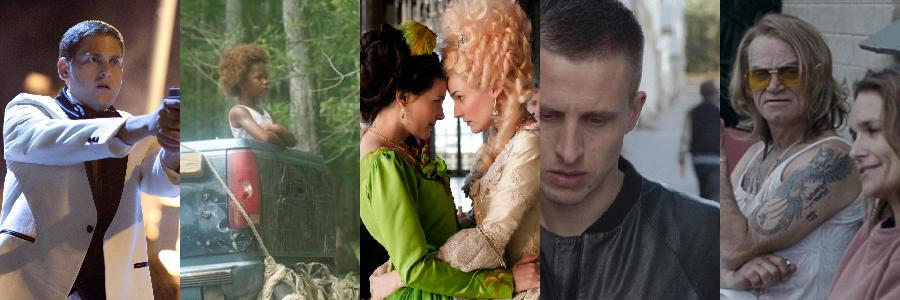
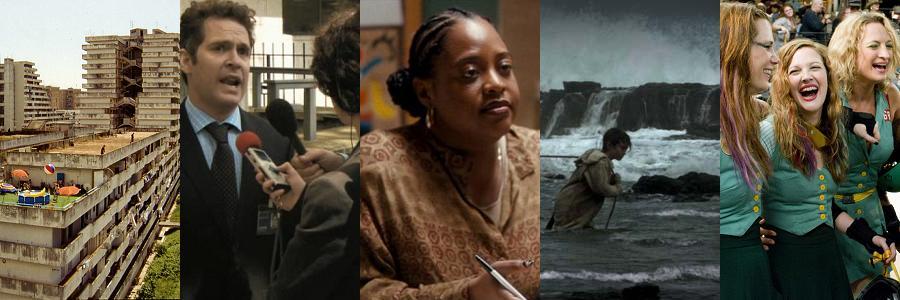
I'm back with one of my most popular features: The Fifties, honoring the year's best filmmaking achievements among the first 50 U.S. releases I saw in 2015.  I think this is the earliest I've ever hit this numerical milestone; it's nice to be drafting this post on July 2, at the exact midpoint of the year.  Many of the films I'm honoring are either still in theaters or newly available on DVD and streaming services, so I hope you'll investigate any titles you've missed.  And, as ever, please suggest your own favorites in the comments, especially if you suspect I've missed the film.

I've gobbled up so many movies post-graduation—ten features in five days, after seeing only three in theaters during the previous two months—that I hustled all the way to a tally of 56 before I could catch my breath. Amy, The Look of Silence, Phoenix, and Tom at the Farm have not technically opened yet, and I'll only believe the last one's planned release when I see it. I'll sideline these for now, which means Tom's Lise Roy, Amy's impressive sound mix, Phoenix's mishandled but interesting script, and just about every stunning aspect of The Look of Silence (easily one of the year's best films, towering over all of the other documentaries I've seen) won't get recognized below.

Otherwise, the eligible movies were '71, About Elly, Amour fou, Blackbird, Blackhat, Boy Meets Girl, Clouds of Sils Maria, Dope, The Duke of Burgundy, Eastern Boys, Eden, Ex Machina, Far from Men, Far from the Madding Crowd, Fifty Shades of Grey, Futuro Beach, Gerontophilia, Gett: The Trial of Viviane Amsalem, Girlhood, Heaven Knows What, The Hunting Ground, Inside Out, Insidious: Chapter 3, It Follows, It's All So Quiet, Jauja, Joy of Man's Desiring, Jurassic World, The Last Five Years, Li'l Quinquin, Love & Mercy, Mad Max: Fury Road, Madame Bovary, Magic Mike XXL, Maps to the Stars, Me and Earl and the Dying Girl, Of Horses and Men, The Overnight, Paddington, A Pigeon Sat on a Branch Reflecting on Existence, Play, The Princess of France, Serena, Spy, Testament of Youth, Timbuktu, The Tribe, When Evening Falls on Bucharest, While We're Young, White God, Wild Tales, and The Wolfpack.  And the nominees are...


BEST PICTURE
Girlhood (rent it!), tough-minded but affecting coming-of-age ensemble drama
It Follows (DVD in July), an ingenious and brilliantly executed horror yarn
Li'l Quinquin (rent it!), Bruno Dumont's amazingly effective foray into comedy
Mad Max: Fury Road (in theaters), tense, implacable, and baroquely conceived
Timbuktu (rent it!), a quietly confident and increasingly tense social document
The Tribe (in theaters), come for all-signing conceit, stay for potent storytelling

Also: I followed Oscar's lead and drew a contour line around the choices that most excite me, though the wonderful Eastern Boys, Pigeon Sat on a Branch..., Eden, Princess of France, and Jauja are all closely clustered just beneath this sextet, and The Look of Silence would unquestionably appear if it had opened yet.


Read more »

Labels: , , , , , , , , , , , , , , , ,

Thursday, December 11, 2014

Sometimes an Unimaginable Nomination

Today, the screenplay for The Imitation Game has reaped a Golden Globe nomination—one of five for the film, bestowed by the same taste-makers who famously yukked all the way through Salmon Fishing in the Yemen and The Tourist.  On this auspicious occasion, I set aside the The Imitation Game's revisions of history, its pedestrian style, its confusing structure, its weakly differentiated supporting characters, its indiscernible grasp of the machineries and thought processes at its core, its patently improbable Eurekas (what if they're all talking about Hitler??!), and its obnoxious re-closeting of Alan Turing, and I celebrate instead its poetry.  Sometimes it is the screenplays that nobody could imagine that produce the most unimaginable lines, and repeat them unimaginably often, eliciting levels of praise that were never to be imagined.

Since this already-indelible locution is apparently but one gleaming face of a multi-karat screenplay, an example to hold up to the rest of the industry, I thought I would convince any doubters out there by proving just how deftly that unimaginable line speaks for or summarizes some of the other films that just received their own invites to the Golden Globe derby.  Surely their own screenwriters couldn't have put things better themselves...

Gone Girl: "Dear Diary, Sometimes it's the husband you imagined a little more of who's got something coming he never could have imagined."

Force Majeure: "Sometimes it's the husbands you imagined more of who do the thing you never could have imagined but no, I didn't imagine it!"

Foxcatcher: "Sometimes it's the philatelist Mommy imagined nothing of who's the only one who imagined anything of you, you ungrateful ape."

Birdman, or Sometimes It's the Celebrities of Whom One Imagines Nothing Who Do the Play that No One Can Imagine and that Might Be Imaginary.

Whiplash: "Sometimes it's the jazz drummers no one imagines anything of who just POUND AWAY! and forget that art is also about imagination."

Interstellar: "Sometimes the things we can barely imagine, Murph, are more real than we imagined. But a ghost? You're imagining that. D'oh!"

Boyhood: "Sometimes the kid whom no one imagines anything in particular of grows up and just, I dunno, just wait and see what happens, man?"

Big Hero 6: "Sometimes you have to imagine a distant future to see things you've never imagined, like convenient, personalized health care."

... and of course ...
"Sometimes it is the people no one imagines anything of who do the things that no one can imagine." – Joan Clarke. And Cheryl Strayed.

Labels: , , ,

Friday, August 01, 2014

The Fifties 2014: Supporting Actress, Cinematography, Original Screenplay, Art Direction


SUPPORTING ACTRESS

JOE'S PICKS:

Patricia Arquette, Boyhood: Because shouldering an entire alternate perspective isn't easy, and she sells her big moments.

Jillian Bell, 22 Jump Street: For going all Rebel Wilson on this shit, stealing the entire movie, and probably booking herself about six further gigs.

Emily Blunt, Edge of Tomorrow: For handling the tricky balance of both subject and object at once. Parcels herself out incredibly smartly.

Gaby Hoffmann, Obvious Child: For continuing the Hoffmannassaince with a whole bunch of new colors and a quiet confidence of someone who can steal scenes without really trying to steal scenes.

Tilda Swinton, Snowpiercer: For getting on a tricky wavelength and going for it, like she always does, and succeeding, like she pretty much always does. And some spillover goodwill for Only Lovers Left Alive, sure, yes.

Runners Up: Krysten Ritter, Veronica Mars; Mia Wasikowska, Only Lovers Left Alive; Melanie Lynskey, Happy Christmas; Kathy Bates, Tammy

Read more »

Labels: , , , , , , , , , , , ,

Friday, July 25, 2014

The Fifties 2014: Supporting Actor, Original Score, Adapted Screenplay


SUPPORTING ACTOR

NICK'S PICKS:

Carlo Cecchi, Honey (Miele): Because even if the film hints what he might be up to, the actor keeps you guessing, not just about what but about why.

Patrick d'Assumçao, Stranger by the Lake: Because he doesn't pity his character and pulls focus from all those penises, deepening the movie.

Jeff Goldblum, Le Week-end: Because even if we've seen this acerbic maybe-asshole from Goldblum before, he's especially spry and funny here.

Tom Hiddleston, Unrelated: For keeping within a limited spectrum, never getting fully attached to Anna but leaning toward and away from her.

Jake Lacy, Obvious Child: For playing a more vanilla guy than the genre or the lead usually invite but convincing us he's a happy accident.

Honorable Mentions: Joe Mantello, The Normal Heart, made for cable; Ethan Hawke, Boyhood, missed my cutoff
Runners Up: Àlex Brendemühl, The German Doctor; Ronen Rubinstein, It Felt Like Love; Johan Leysen, Young & Beautiful; James Corden, Begin Again

On the Radar: Sam Shepard, Cold in July; Don Johnson, Cold in July; Adam Levine, Begin Again

Read more »

Labels: , , , , , , , ,

Saturday, March 01, 2014

Oscar 2013: Predictions, Preferences


All feature-film categories now complete!

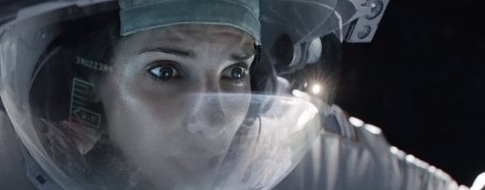
Look how distressed Sandra Bullock is, trying to glance into her crystal ball, straining to quantify how many Oscars her movie Gravity will win tomorrow.  I'm sporting the same look on my face as I publicly prognosticate winners for the first time since Jennifer Lawrence was in the Brownies.  But why not take a stab at it?  I've been spouting off on every other angle of the Academy Awards this year: diagnosing the narrowing field of "top" competitors for The Advocate; debunking popular myths about the Oscars and their biases in The Washington Post; and discussing some favorites among this year's nominees and some formative Oscar moments with Der Spiegel, though if Sie kein Deutsche sprechen, you won't be able to read it.  What I have not done anywhere, in any language, is forecast who is winning or fess up to my own choices.  So many of my favorite people are sticking their necks out.  So, as Charles Busch belts out in Die, Mommie, Die! - widely regarded as a near-miss for a Best Picture nod in 2003 - "Why not me?"

Best Visual Effects
Gravity will stomp all over its competitors, making it the sixth Best Picture nominee in a row to cop the prize (after Benjamin Button, Avatar, Inception, Hugo, and Life of Pi, just so you don't have to look it up).  You may take this streak as proof of the Academy's growth over the years—since even within my lifetime as an Oscar queen "effects movies" were often persona non grata in Best Picture—or all you may see is an industry increasingly compelled toward digital extravaganzas. Either way, Gravity would probably mop the floor even with the five past winners I just named, much less with the competitors it has to vanquish here... which in a way is too bad, because there's a lot to say for the invigorating spectacles and sleek execution of several sequences in Star Trek and Iron Man 3.  I was less taken with the effects work in The Lone Ranger (yes, even as regards that train crash), and The Hobbit: The Desolation of Smaug was one of a handful of Oscar nominees I missed in theaters. Will: Gravity  Should: Gravity  Hey, Where's The Great Gatsby, which owes the bulk of its locations, color schemes, camera movements, and memorably debauched extras to digital intervention

Best Makeup and Hairstyling
From an impressively strong field we slide over to an annoyingly weak one. Dallas Buyers Club will probably win on default, since voters tend to gravitate to Best Picture nominees unless there's a stirring reason not to.  Jackass Presents: Bad Grandpa is many things, but not that.  (Actually, Bad Grandpa on its best day is only a couple of things, which disappointed me, since I thought the first Jackass movie was a hoot.  Especially seeing it in a Detroit shopping mall, with people flashing laser sights on the screen midfilm.)  The Lone Ranger has the more-is-more thing nailed down, and a lot of graphically arresting cosmetics have been lovingly applied to actors like Barry Pepper and Helena Bonham Carter.  Still, AMPAS has recently rejected some ostentatious contenders who would have been shoo-ins in the Rick Baker era (The Time Machine, Norbit, Hellboy II) when a more broadly admired film presents itself as an option (Frida, La Vie en rose, and Benjamin Button in those cases).  I think it might have been nice if more of the Buyers Club's subscribers had looked visibly ill.  I would love to see a bruising throwdown between those who insist that Johnny Depp's bird-stapled-to-his-head "Native American" is the year's most horrifying faux-archetype and those who proffer Jared Leto's eyebrowless transwoman for the same distinction.  But failing that battle, and following the canny publicizing of Dallas's breathtakingly low budget, Adruitha Lee and Robin Mathews ought to get own their chance to say "All right, all right, all right!" or possibly even speak about Neptune. Will: Dallas Buyers Club  Should: Lone Ranger  Hey, Where's American Hustle, obviously, but also the lightly greyed hair of Llewyn Davis and the wax-museum quality of so many of his acquaintances.  Also, Cate Blanchett's Park Avenue blonde tresses in Blue Jasmine, which are turning into dark roots before her eyes, or ours at least.

Best Supporting Actor
On the subject of Dallas Buyers Club, I thought the movie was fantastic and Jared Leto pretty good the first time I saw them.  Upon revisiting a week or so ago, Dallas betrayed more stress marks, and Leto—by now vaulted from Casting Stunt That Paid Off to Prohibitive Favorite for the Oscar—still seems ...pretty good, without quite explaining what Rayon's doing in this script.  There are some pearl-clutching gestures and other frou-fra in the performance that make it seem stale, conceived more for an audience than from a character who's been built feet up, as they say in American Hustle.  And speaking of Hustle, Bradley Cooper has a large enough part in that movie that he's drawn fire for being a lead falsely slumming in this category.  Yet there are lots of ways to confront the question of who's really "supporting" in a film.  Leto's scenes are more limited, but every single one is handed to the character to be charismatic, or tragic, or funny, or all three, just like Angelina Jolie's and Jennifer Hudson's scenes were in their Oscar-winning vehicles. The movie arguably supports him more than the reverse. Cooper is on screen bunches but, like most of his Hustle castmates, acts an over-the-top character in a strong way and still doesn't seem like he's showboating, or depriving his co-stars of the cues they need to enrich their work.  He and Abdi are the Bests in Show in their movies without ever looking like they realize it.  Fassbender, like Leto, is cleverly playing a thesis that's been posited in the script in place of a real character: in one case, the AIDS patient with a wavering commitment to living, in the other, a slave-owner as one-man multiplex of grimy perversions.  Hill is ...uh, very good in 21 Jump Street and Moneyball.  I have no idea who he's playing in Wolf of Wall Street, no matter how hard he's working to keep the badminton birdie from landing. Will: Leto  Should: Cooper  Hey, Where's James Gandolfini, who didn't need an iota of gratuitous sentiment to merit a nod for his middle-aged romantic, so tentative yet brave, so relaxed yet staunchly principled.  Plus the usual surfeit of guys who got no promotion (Ben Mendelsohn in Place Beyond the Pines, David Oyelowo in The Butler) or who indulged in the sin of acting in non-American films (Yiftach Klein in Fill the Void, Peter Kazungu in Paradise: Love).

Read more »

Labels: , , , , , , , , , , , , , , ,

Monday, October 08, 2012

The Fifties for 2012: Best Screenplays

The writing categories almost always seem weakest to me at the 50 mark, and this year's no real exception.  Don't get me wrong: lots of really good work here. But maybe not enough great work.  Bring it on, fall season!


Best Original Screenplay
Whit Stillman for Damsels in Distress, for wit, for giving arcs to the few characters who need them without short-sheeting others, and for making every scene equally major or minor;

Patrick Wang for In the Family, for supplying backstory in deliberate steps, intriguing but just shy of coy, and for scripting big drama at modest volume, at Southern speed;

Reid Carolin for Magic Mike, for flexibility, spryness, and tone, putting solid muscle on the bones of that old cliché, "It's messy and multi-sided, just like real life";

Wes Anderson and Roman Coppola for Moonrise Kingdom, for setting up two molecules, one with kids who seem eager to be adults, one with adults who seem like kids, and figuring out how to bond them; and

Ercan Kesal, Ebru Ceylan, and Nuri Bilge Ceylan for Once Upon a Time in Anatolia, for a patient structure that slips inside many heads, working as a tense procedural and a study of the motives and mechanics of storytelling.

Honorable mentions to Alice Rohrwacher for the unusual and incisive coming-of-age in Corpo Celeste; and to Seth MacFarlane for the potty-mouth of a million funny colors in Ted, but also for a take on perpetual male adolescence that really works.  Honorable mentions to the honorable mentions include Athina Rachel Tsangari for trusting her odd instincts and generating unforeseen payoffs in Attenberg; Paul Thomas Anderson for his bold experimenting with unfilled mosaic in The Master, Jennifer Westfeldt for conceiving a great premise and good lines in Friends with Kids, even if her sense of an ending is still pretty off; and Vanessa Taylor for the bracing honesty of the best scenes in Hope Springs, shining through a directing job that I suspect flatters and short-sells her script in different ways.


Best Adapted Screenplay
Michael Bacall and Jonah Hill for 21 Jump Street, for its almost unnerving ability to clear four hurdles that fell almost everyone: Action-Comedy, High School, Dubious Remake, Bro-y Dick Jokes;

Lucy Alibar and Benh Zeitlin for Beasts of the Southern Wild, for vast, oracular ambition that still feels rooted in a six-year-old's mindset, and for avoiding the arc into disaster we've come to expect;

Benoît Jacquot and Gilles Taurand for Farewell, My Queen, for all the trigonometry of who's obsessed with what or with whom, for keeping the queen at bay, and for apt semi-veiling of palace protocol;

Joachim Trier and Eskil Vogt for Oslo, August 31st, for its most detailed and most even-handed scenes, like the addict's confession of suicidal thoughts and his meeting with his sister's partner; and

Shaun Grant and Justin Kurzel for The Snowtown Murders, for handling half-hour arcs in mere minutes, snaring us in the winch of missing what's happening, and in the trap of thinking we could escape.

Honorable mentions in this division are limited to Tracy Letts's adroit refitting of his own play Killer Joe, which just passes the smell test of is-this-art-or-is-this-sleaze, and keeps adding layers literally till the last edit; and Nick Cave's script for The Blandest Title in the World, which tries too hard with some characters (Pearce) and too little with others (Wasikowska, Chastain), but even in its substantially re-edited form works as a good evening yarn.

Labels: , , , ,

Tuesday, February 07, 2012

Best of 2011: Adapted Screenplay


BEST ADAPTED SCREENPLAY
Higher Ground (CAROLYN BRIGGS & TIM METCALFE)
... for taking so many perspectives seriously, and framing a woman's relation to faith in a manageable structure without tidying it up too much;

Jane Eyre (MOIRA BUFFINI)
... for seeming neither cowed by a classic novel nor headstrong about unnecessary changes, managing a deft balance of creativity and due respect;

Moneyball (STEVEN ZAILLIAN & AARON SORKIN)
... for sliding nimbly between scenes the way a dealer shuffles cards, without sacrificing momentum or vivid characterization or emotional hooks;

Tinker Tailor Soldier Spy (BRIDGET O'CONNOR & PETER STRAUGHAN)
... for wrestling a mazelike novel into an inevitably semi-opaque film, graced with piquant, peculiar notes that make the shadows more intriguing;

Uncle Boonmee Who Can Recall His Past Lives (APICHATPONG WEERASETHAKUL)
... for appropriating the odd, fanciful memoir of a Buddhist monk, infusing it with his own concerns, and leading us places no one else would go.

In the Land of Ambiguous Categorization: I'm never a fan of Adapted Screenplay nominations going to filmmakers who fertilized their own short films and cultivated them to feature length, so I'm glad that Dee Rees and Focus Features stuck to their guns and campaigned for Pariah as an original script. Still, rightly or wrongly, folks have won Oscars in the Adapted derby for succeeding less well than Rees does in this regard. If you don't know the original short, I'll just say that once upon a time, Pariah built to a central conflict over a prop that Alike literally tosses in the trash in this new version. The full-length movie is not a superficial padding of the initial scenario but a genuine expansion and, in graceful ways, a deepening and a transformation. Parental dynamics have shifted and new characters amplify the humor, the romance, and the tension. Being able to gauge and revise her material this deftly makes Rees not just a director to watch (which she is) but a writer worth keeping an eye on.

Runners-Up: Another short-ish list in a year where the heat favored the original scripts, I have to hand it to George Clooney, Grant Heslov, and Beau Willimon for giving Willimon's play the extra oomph and narrative it needed to hold the screen in The Ides of March; Richard Curtis and Lee Hall for re-proportioning War Horse to make optimal room for Spielberg's contributions, and for limiting the bathos to much less than it might have been; to Christopher Hampton for moving some scenes around and trimming some others so that A Dangerous Method mostly feels tighter and less obvious than it did as a play; to Pedro Almodóvar for serving himself a finale that weeps and sings in The Skin I Live In, even if every subplot and temporal swerve doesn't serve the whole as well as it could; to Hossein Amini for seeing a movie in the thin narrative of Drive and writing the sleek, racing-striped, intermittently flavorful script that invited Refn's exercise in style; and to Denis Villeneuve for translating Wajdi Mouawad's Incendies in ways that don't efface the fussy unevenness of the source but aptly crystallize its strongest passages, making a fair, ambitious, sporadically effective stab at Socratic grandeur.

Labels: , , , , , ,

Sunday, September 18, 2011

The Fifties for 2011: Images and Words

Here I continue my yearly enterprise of isolating the achievements I admire most from amidst the first 50 films I viewed from this calendar year of U.S. releases.

Please be advised, by the way, that Tim Robey and Joe Reid have both gifted us their parallel lists, Joe conveniently at the 50-mark as well, and Tim so far past it I wonder if he can remember it. Also, several commenters have got enticing lists to share. Keep reading around!


Best Cinematography
Stéphanie Weber-Biron for Heartbeats, because even if Dolan borrows most of his ideas, his films move gorgeously between swoony, heightened sensuality and deftly deoxygenated dolors;

Pavel Kostomarov for How I Ended This Summer, because faces and framings evince mystery, tension, and texture, landscape evades cheap pathetic fallacies, and Arctic glow is soft but spooky;

Adriano Goldman for Jane Eyre, because all the bounced light sources serve key themes, and moody lensing has a metaphysical severity that echoes Jane's tough, devout outlook;

Chris Blauvelt for Meek's Cutoff, because the palette's dusty austerity and the inspired boxiness of the Academy framing make these dioramas both antique and transcendent of era; and

Emmanuel Lubezki for The Tree of Life, because as in operatic music, Malick's camera is characterization and worldview, a free-indirect means for exploring souls without being of them.

Honorable mentions in alphabetical order by film title to Peter Zeitlinger for Cave of Forgotten Dreams, an atypically uneven but still exciting Alwin Küchler for Hanna, Kim Hyun Seok for Poetry, Reinhold Vorschneider for The Robber, who would have shared the citation with his hard-working camera operators, and the team of Yukontorn Mingmongkon and Sayombhu Mukdeeprom for Uncle Boonmee Who Can Recall His Past Lives. Maybe Boonmee should be in for Heartbeats? I'll live with it.


Best Screenplay
Mike Mills for Beginners, because a long chain of short, taciturn, yet revealing scenes can be harder to write but richer to discover than three acts of heavy dialogue;

Abbas Kiarostami for Certified Copy, because Kiarostami has not previously disclosed a knack for probing reality and illusion with such finesse or such stirring emotional depths;

Moira Buffini for Jane Eyre, because not since the mid-90s glories of Hossein Amini has anyone stayed so true to a landmark novel while so aptly condensing and taking risks;

Lee Chang-dong for Poetry, because a few stock scenes and meandering passages are a worthy tariff for such probing and delicate characterization, such breadth of mystery; and

Alexandru Baciu, Răzvan Rădulescu, and Radu Muntean for Tuesday, After Christmas, because to hold shots so rewardingly and lift performances to such heights, you need to start from an acute anatomy of intimacy and its failures.

Honorable mentions to John Logan, Gore Verbinski, and James Ward Byrkit for Rango. The year's funniest movie so far, The Trip, is too heavily improvised to count here, and apparently too much so to even credit a screenplay.

Labels: , , , ,

Friday, August 27, 2010

The Fifties for 2010: Best Screenplays

Otherwise known as Attack of the Writer-Directors, though at least the adapters tend to employ a buddy.

For Original Screenplay...


David Michôd for Animal Kingdom, for pulling out consistent surprises about who does what, who dies when, and who about-faces, yet emotion and vision outweigh shock value;

Giorgos Lanthimos for Dogtooth, who under-exploits certain threads (the misapplied words) but achieves a doomed, tragicomic synthesis from what seems like a loose structure;

Maren Ade for Everyone Else, who parses relations so finely and knows her characters so well that she conveys as many planes of tension as there are people in each scene;

Noah Baumbach and Jennifer Jason Leigh for Greenberg, who avoid stagnation despite a protagonist whom everyone justifiably repudiates and a co-lead who both baffles and elicits our sympathy; and

Michael Arndt, John Lasseter, Andrew Stanton, and Lee Unkrich for Toy Story 3, who don't just work around 2's tied-up finale but turn resuscitation itself into a blessing and curse: greater ecstasies, graver reckonings.

Honorable mentions to Bong Joon-ho and Park Eun-kyo for the crazy, purple melodrama of Mother. Christopher Nolan deserves mention for the ambitions and imagination of Inception, as do Lisa Cholodenko and Stuart Blumberg for the humor, warmth, and fraught relationships in The Kids Are All Right, even if both scripts wind up selling themselves short. Their peaks surpassed those of Frédéric Mermoud and Pascal Arnold for Accomplices and Mia Hansen-Løve for The Father of My Children, although those two were more lived-in and consistent, and in many ways more involving.

For Adapted Screenplay...


Robert Harris and Roman Polanski for The Ghost Writer, who can't avert late-film diminishing returns, but who concoct ingenious scenarios of tension, both when Ewan acts savvy and when he doesn't;

Dean DeBlois and Chris Sanders for How To Train Your Dragon, who capture a playful euphoria and the sensitive intuitions between two lonely kids, scaly and not; climax problems, but foot reveal is deft;

Thomas Bidegain and Jacques Audiard for A Prophet, whose carceral coming-of-age ends much as you'd expect, but the scenes along the way bristle and thrill: the hidden razor, the blazing ghost;

Alex Reval and Laurent Herbiet for Wild Grass, who give Resnais great ingredients to spice: not the opposed realities of early works, but characters who feel incompatible with themselves; and

Debra Granik and Anne Rosellini for Winter's Bone, who don't balk at the mythic structures or mannered dialogue, but who ground their story in a vivid envelope of noir, gallows humor and all.

Honorable mentions are few, when I already feel lukewarm about Wild Grass. John Requa and Glenn Ficarra came close to displacing it, if only I Love You Phillip Morris felt less gimmicky, and let the unexpected character relationships really drive the plot more than a saturating impulse to tickle and shock us. Plus, the film might never open. The Secret in Their Eyes is too soapy and over-conceived and Green Zone too naïvely wish-fulfilling to rate here.

Labels: , ,

Tuesday, August 24, 2010

2009 Honorees: Screenplays

As usual, one category is full of contenders, the other struggles to keep pace. Meanwhile, the writing remains the thing I most often wish I could fix in a movie. As well as the only filmmaking task that I think I could feasibly accomplish. Hmmmm...

For Original Screenplay...


Andrew Bujalski for Beeswax, for building such rich ties among the three principals, for unfolding their relations gradually, and for so many sharp, anecdotal scenes;

Tony Gilroy for Duplicity, whose inability to lure an audience to his clever, zesty, intricate, and deliciously rewatchable espionage comedy was a great shame of 2009;

Sebastián Silva and Pedro Peirano for The Maid, who make the maid's jealousy both funny and scary, her fainting spells alarming yet dubious, and the last half-hour moving but schmaltz-free;

Adam Elliot for Mary and Max, for writing such outlandish but endearing speeches and characters that a third-act sag doesn't matter, especially at the bittersweet finale; and

Alessandro Camon and Oren Moverman for The Messenger, for filling an inevitably sad story with tentative warmth and concise human details, proving the viability of adult drama in Hollywood.

Extremely honorable mentions to four scripts that made strong plays for the Mary and Max and Messenger spots and on different days might appear in their places: Jean-Pierre and Luc Dardenne for the fraught and layered scenario of Lorna's Silence, with its risky swerve into dark fable; Mark Boal for The Hurt Locker, composing taut set-pieces but leaving room for rich characters and finely etched local details; Anna Boden and Ryan Fleck for Sugar, who evoke the experience of a perplexed immigrant to America with piquancy, compassion, and wonderfully specific context, and who snatch back a gutsy, honest ending from the encroachment of cliché in the second act; and Olivier Assayas for Summer Hours, whose "O baleful mortgage of the heritage of France!" premise could easily have rubbed me the wrong way, but for the light hand, the insights, and the push-pull sense of family that he brings to it.

Further honorable mentions to Greg Mottola for Adventureland, Jane Campion for Bright Star, Bahareh Azimi and Ramin Bahrani for Goodbye Solo, Nancy Meyers for making It's Complicated really funny, the quartet of Erick Zonca, Aude Py, Camilla Natta, and Michael Collins for Julia, and Quentin Tarantino for the delicious parts of Inglourious Basterds, which is to say, the parts that aren't sadistic, twitty, slow, or total cheats to attain an ending.

For Adapted Screenplay...


Maurizio Braucci, Ugo Chiti, Gianni Di Gregorio, Matteo Garrone, Massimo Gaudioso, and Roberto Saviani for Gomorrah, who distill the Mob in a new way, not as a scary pyramid of imposing figures, but as a viral contagion that has spread through everything;

Armando Iannucci, Jesse Armstrong, Simon Blackwell, and Tony Roche for In the Loop, who give a dozen characters their comic due, with ace plotting and dialogue ("anti-war shag"), but stay duly forlorn about the world stage;

Geoffrey Fletcher for Precious, who avoids a strict emphasis many would have drawn around Precious, Mary, and Blu, and keeps it a piece about the fortitude of young women;

Dave Eggers and Spike Jonze for Where the Wild Things Are, who start with a book you could transcribe on the back of a pasta box, imposing a workable plot and devising an array of distinct characters; and

Shauna Cross for Whip It, who works so adroitly with her clutch of old saws (rebelling girl, disapproving mom, dead-end town, lame boyfriend) and gets 'em all rolling.

Honorable mentions to Wes Anderson and Noah Baumbach for the memorable family dynamics of Fantastic Mr. Fox, even if I still have a hard time living in Anderson's dollhouses; to Susannah Grant for the carefully composed characters and growing tensions of The Soloist; and to Henry Selick for the alternate universes and scrappy kid's point of view in Coraline.

I wish I were a bit more excited about these adaptations, or about what I suspect is the greater potential of the Woman in Berlin script, muffled by slightly pedestrian direction; or about the good bits in the District 9 scenario, despite some fuzziness in the whole premise and the utter, bizarre collapse of the dropped documentary conceit. (Do I keep harping on that?) It's tempting to consider 35 Shots of Rum and Julia as adaptations of Ozu and Cassavetes, which they sort of are, or Bright Star as an adaptation of Keats, which it sort of is, but even by the reduced standards of fantasy-baseball Oscar blogging, one aims for integrity.

Labels: , ,