Friday, May 27, 2016

Cannes '96, Expert Witness #3: Noah Tsika

Following my wide-ranging survey of Cannes '96 with Hélène Zylberait and my Lone Star-focused exchange with John Alba Cutler, my third Expert Witness conversation is with Noah Tsika, an Assistant Professor of Film and Media Studies at Queens College, CUNY, where he specializes in historical, political, economic, and representational aspects of West African film and video.  You can (and should!) get your fullest exposure to this dimension of Noah's work in his book Nollywood Stars: Media and Migration in West Africa and the Diaspora, which debuted just over a year ago from Indiana University Press.  The book is a great, accessible, multi-sided assessment of celebrity, performance, narrative, circulation, and distribution in relation to a huge, Nigeria-based film culture with a mind-boggling and under-reported global reach.

Still, to say Noah "specializes" in any one thing feels like a misnomer, given his eclectic pursuits as a media scholar and his seeming awareness of every movie ever made.  You might know his work from the short study of Gods and Monsters he published in Arsenal's Queer Film Classic series a while back, or from his contributions to anthologies about African sci-fi and genre fiction, or Brokeback Mountain, or 21st-century film criticism. I am desperately anticipating his next book, Pink 2.0, due out this October, about digital queer cinema. (Feel free to pre-order it!)  Soon, we will feature together in a collection of feminist essays on each of Todd Haynes's movies, where Noah's attentions will focus on my beloved Dottie Gets Spanked. Noah's Twitter feed is the best place to enjoy his diverse and funny reflections on new releases as they bow, on the wide-ranging classes he teaches, on the latest exploits and milestones of African films and their headliners, and on important political causes, including those that directly affect his institution and its students.

I was most eager to engage Noah about Flora Gomes's Tree of Blood, a joint production of Portugal and Guinea-Bissau and a rare West African feature to grace the Main Competition at Cannes. Gomes's name and work were new to me through this #Cannes96 exercise (and perfect evidence of why I undertake these projects) but Noah, as ever, has been tracking this filmmaker for a while.  Some of our exchange centered around this title, but in perfect tribute to my discussion partner, the talk spreads to race and racism on film, environmentalism, Robert Altman, misogynist archetypes, festival politics, places to see all-but-buried African features, and other topics far and wide...

ND: By the first week of Cannes '96, the three big stories were already Secrets & Lies, Fargo, and Breaking the Waves, and they maintained that status for the remainder.  So first, I'm polling everybody: had you been on the jury, which of those three would you have championed for the Palme? What do you most love or admire about it?

NT: In 1996, Secrets & Lies was the one for me—and I suspect that it still is. I like to think of it as a film about passing, and I've taught it alongside such works as Basil Dearden's Sapphire (1959) and Imitation of Life (both the 1934 and the 1959 versions, directed by John M. Stahl and Douglas Sirk, respectively). Secrets & Lies upends the conventions of this particular subgenre, if you can even call it that. The film is about poor white people who struggle with their proximity to Blackness—who, in various ways, have attempted to pass as isolated, even hermetic, in their whiteness—and an affluent, tremendously accomplished Black woman who is utterly unperturbed by her own "difference." The performances are gorgeous. Brenda Blethyn is, despite what detractors might say, thoroughly in character with her histrionics. It's a dazzling turn: the Cannes jury got Best Actress exactly right, and Blethyn should have won the Oscar, too. Marianne Jean-Baptiste is wonderful, as is Timothy Spall, but young Claire Rushbrook is simply astonishing. Her displays of anger and resentment always terrify me. Secrets & Lies has a truly great ending, with Blethyn's character offering a lovely little benediction. The film is hardly "cinematic" in the conventional sense, but I love its dingy, downright televisual style. It looks like a home movie, which is apt, I think.

Are you a fan of the other two in that group, or was this a pretty easy decision for you?

My parents took me to see Fargo the day it opened in Maine. I remember thrilling to its opening text; the words "true story" and "respect for the dead" so impressed me that I immediately stiffened my back, steeling myself for a Very Important Film. The austerity of the images, starting with a car approaching the screen amid all that snow, along with the urgency of Carter Burwell's remarkable score, made me believe that this would be a life-changing experience. (My mother must have had a similar response; she leaned toward me and whispered, "You'll probably want to write about this one.") But something about the film—its comic tone, its stylized acting, its repetitive linguistic play—disappointed me tremendously. It was only later, watching the film on television, that I began to enjoy it. The constant parodies must have made it less strange. In just a few months, Marge had become a pervasive object of impersonation, and I suddenly felt profoundly comfortable with Fargo. It had been transformed, for me, into a kind of collectively produced folk art.

Read more »

Labels: , , , , , , , , , , , ,

Friday, July 03, 2015

The Fifties for 2015


I'm back with one of my most popular features: The Fifties, honoring the year's best filmmaking achievements among the first 50 U.S. releases I saw in 2015.  I think this is the earliest I've ever hit this numerical milestone; it's nice to be drafting this post on July 2, at the exact midpoint of the year.  Many of the films I'm honoring are either still in theaters or newly available on DVD and streaming services, so I hope you'll investigate any titles you've missed.  And, as ever, please suggest your own favorites in the comments, especially if you suspect I've missed the film.

I've gobbled up so many movies post-graduation—ten features in five days, after seeing only three in theaters during the previous two months—that I hustled all the way to a tally of 56 before I could catch my breath. Amy, The Look of Silence, Phoenix, and Tom at the Farm have not technically opened yet, and I'll only believe the last one's planned release when I see it. I'll sideline these for now, which means Tom's Lise Roy, Amy's impressive sound mix, Phoenix's mishandled but interesting script, and just about every stunning aspect of The Look of Silence (easily one of the year's best films, towering over all of the other documentaries I've seen) won't get recognized below.

Otherwise, the eligible movies were '71, About Elly, Amour fou, Blackbird, Blackhat, Boy Meets Girl, Clouds of Sils Maria, Dope, The Duke of Burgundy, Eastern Boys, Eden, Ex Machina, Far from Men, Far from the Madding Crowd, Fifty Shades of Grey, Futuro Beach, Gerontophilia, Gett: The Trial of Viviane Amsalem, Girlhood, Heaven Knows What, The Hunting Ground, Inside Out, Insidious: Chapter 3, It Follows, It's All So Quiet, Jauja, Joy of Man's Desiring, Jurassic World, The Last Five Years, Li'l Quinquin, Love & Mercy, Mad Max: Fury Road, Madame Bovary, Magic Mike XXL, Maps to the Stars, Me and Earl and the Dying Girl, Of Horses and Men, The Overnight, Paddington, A Pigeon Sat on a Branch Reflecting on Existence, Play, The Princess of France, Serena, Spy, Testament of Youth, Timbuktu, The Tribe, When Evening Falls on Bucharest, While We're Young, White God, Wild Tales, and The Wolfpack.  And the nominees are...


BEST PICTURE
Girlhood (rent it!), tough-minded but affecting coming-of-age ensemble drama
It Follows (DVD in July), an ingenious and brilliantly executed horror yarn
Li'l Quinquin (rent it!), Bruno Dumont's amazingly effective foray into comedy
Mad Max: Fury Road (in theaters), tense, implacable, and baroquely conceived
Timbuktu (rent it!), a quietly confident and increasingly tense social document
The Tribe (in theaters), come for all-signing conceit, stay for potent storytelling

Also: I followed Oscar's lead and drew a contour line around the choices that most excite me, though the wonderful Eastern Boys, Pigeon Sat on a Branch..., Eden, Princess of France, and Jauja are all closely clustered just beneath this sextet, and The Look of Silence would unquestionably appear if it had opened yet.


Read more »

Labels: , , , , , , , , , , , , , , , ,

Saturday, May 23, 2015

Cannes 1995: Day 7: May 23


Nasty Love, Italy, dir. Mario Martone

It is on to-day, honey. The hits keep getting bigger!  Four of the Competition titles from the last 48 hours have handily eclipsed the rest of the field, but today's discoveries are invigorating in a different way than yesterday's because they were so much less heralded. Mario Martone, highly regarded in Italy but barely known outside of it—he's competed for the Golden Lion four times, and swept the Donatello awards a few years back with his prestige literary adaptation We Believed—wowed me more or less from out of nowhere with the directorial verve of Nasty Love, simultaneously steely and luscious, sexy and sad. Many of the most conspicuous directorial signatures of Cannes '95 have been high-handed or humorless; Martone figures out how to impress and entertain at once. No slight on sobriety, though, when it's done with the odd, immaculate mannerism of Terence Davies's The Neon Bible, though I'm suspicious I may have responded better to this one than at least a couple of my peers. All that, plus L'enfant noir is an uncommonly beautiful West African coming-of-age tale, and Safe is one of the definitive movies of the decade. Hard to swing a better day at a festival than this.

Read more »

Labels: , , , , , , , , , , , , ,

Friday, May 22, 2015

Cannes 1995: Day 6: May 22


Land and Freedom, UK, dir. Ken Loach

And now we're finally talking. Ken Loach and Hou Hsiao-hsien serve up the meatiest, chewiest Palme contenders so far, and without pushing too far outside their stylistic comfort zones, they make some of the most forceful work in either of their filmographies. Regrettable, maybe, that Kids stole a lot of the media attention, but in the context of Cannes, it proved something less of a sensation than its makers and distributors might have hoped. Meanwhile, Chris Newby premiered some British cinema as dissimilar as you could imagine to Land and Freedom, except perhaps in its ethic of unanticipated affinities and identifications across difference, and Iranian master Mohsen Makhmalbaf furnished one of the most austere but committed of several films overtly commemorating the 100th anniversary of the medium...

Read more »

Labels: , , , , , , , ,

Monday, May 18, 2015

Cannes 1995: Day 2: May 18


Sharaku, Japan, dir. Masahiro Shinoda

The Main Competition offerings today were determinedly more esoteric than the opening-night film. Souleymane Cissé's Waati was the only one of 24 Palme contenders that eluded me entirely, MIA even from this box-set of that renowned Malian director's work. I did locate the day's other Main Competition title via the website SamuraiDVD, even though it isn't a samurai film. (Technicalities.) Still, even once it's in your hand, Sharaku is such a tough nut to crack that U.S. distribution never happened.  That doesn't mean I was unseduced...

Updated: For even richer thoughts on many of the films listed below, head over to the first Jury Roundtable, where we all go into more detail about our reactions.
Read more »

Labels: , , , , , , ,

Thursday, August 15, 2013

Hit Me With Your Best Shot: The Color Purple


I read Alice Walker's The Color Purple for the first time in the backseat of a car during Spring Break of my junior year of high school, while my parents drove me from Virginia to New Jersey to start looking at colleges.  I would say, "By the end of the book I was audibly crying," except that would imply I wasn't already crying at several earlier stages.  As soon as I finished the book, I read it again, and then I read Damage by Josephine Hart (!), and then Girl, Interrupted by Susanna Kaysen, and then The Color Purple again, and I cried again.  After well over a thousand miles of driving up and down and around the northeast (thanks, Mom and Dad!), I had a new favorite novel.  The cheap, tan, pulpy paper became somewhat damp from the stickiness of car travel and the saltiness of teenaged tears.  You can still make out the giveaway waviness in a few pages of my copy, which I bought for that trip in 1994 and still keep in my office.

The image above might be my favorite from the film, not remotely dulled for me by its ubiquitous reproductions (in slightly stylized form) as the poster image for the movie and the cover art for my paperback.  There is so much here: an elegantly simple device to communicate the passage of time; a distinctive but unfilled outline, heralding the imminent arrival within the frame of a new, debuting, but instantly iconic actress; a gesture to the Old Southern art of cut-paper silhouettes, evoked as gently here as it is brutally, dazzlingly reprised in the art of Kara Walker; an echo of prior images when Celie's and Nettie's candlelit shadows played pat-a-cake on two walls of a bedroom, such that we instantly grasp adult Celie's Bible and other books as her next-best-thing substitute for a vanished and deeply-missed sister; the rough, milled texture of the wallpaper, connoting the texture of those pages Celie is turning; and an indelible, two-ply image of reading itself as both a lonely activity and a life-saving rescue.  The low contrast and other qualities of the light here make the image unmistakably sad, even if you don't know the context.  At the same time, the shot is just warm enough—softer and more tender than the harsh, lapidary colors sneaking through the curtains at left—that you also sense the intimacy of the scene.  You'd imagine that, having read five books during a week of car travel, or three books a total of five times, that I must not have been much of a talker.  In fact I was, especially with my equally garrulous parents, but they knew I loved to read and had no problem leaving me to it even in the tight space of a four-door.  What they thought about hearing me cry with my nose in a novel I have no idea; I can't remember if I talked to them about what I was reading.  But I do recall, with fondness and wistfulness, that sense of feeling totally alone when I was reading, even when the people I loved most in the world were eighteen inches away.  This shot is a perfect index for that kind of feeling.  "I'd like to thank everyone in this book for coming," Alice Walker writes on her never-bettered dedication page, and for hours of reading The Color Purple, Celie and Mister and Shug and Nettie and Sofia and Squeak and the rest were the only people I recognized around me.

Read more »

Labels: , , , , , , , ,

Wednesday, July 10, 2013

Hit Me With Your Best Shot: Dead Ringers

Even in my most productive weeks, in ten of my most productive weeks, I cannot compete with Nathaniel R's indefatigable productivity. If you know Nathaniel, you know he is always fretting that his site traffic will collapse, or seeking ways to give his readers more more more. He is so extraordinarily generous, it makes me tired just thinking about it, which is why you should donate.

Most recently, he has been laboring even harder than I have to make sure you know about my new book, The Desiring-Image: Gilles Deleuze and Contemporary Queer Cinema, which I started working on within a year of meeting Nathaniel in 2002.  Already he published this interview I got to do with top-flight film critic Tim Brayton about the book's ideas, its contexts, and what I hope people might get from it (which was a joy to do).  Today he is hosting a new installment of his delicious Hit Me With Your Best Shot series that is also designed to plug the book by showcasing the subject of its first chapter, David Cronenberg's Dead Ringers, an eerie film noir in crimson and blue, chrome and rue, starring two twin brothers as each other's homme fatal.

I'm delighted to see what his other contributors select as their favorite shot in this deliriously gorgeous movie, shot by Peter Suschitzky, the same cinematographer who lends chic, subtle macabre to all of Cronenberg's pictures.  Suschitzky also gave us the fluorescent slash of light sabers in The Empire Strikes Back, the farcical flatness of Mars Attacks!, and the scary, rock-and-roll martyrology of Peter Watkins' Privilege, a clear and underseen precursor to the film that closes my book, Todd Haynes's Velvet Goldmine.  I suppose I'm being predictable by picking a shot that already illustrates my chapter on Dead Ringers.  But since photo captions in academic books typically keep to a bare minimum, I thought I'd say a little more about why I selected it, and what I find more generally artful about the shot, and why I relish as gruesome and disquieting a film as Dead Ringers, and what you might hear if you dip into conversation with The Desiring-Image.


These are the gynecological tools that Beverly Mantle designs for operating on "mutant women."  They wheel into this shot from just out of frame, staggering the eye with their horrid shapes while flattering it with their texture and detail, and with the precise, elegant framing Suschitzky achieves even from this spontaneously-arriving element.  The plot logic behind these implements is even more revolting than their fanged, spindly appearance: at this point the drugged-up and heartbroken Beverly believes that all women's bodies exist in a state of grievous mutation, which only he can assess and emend, using these devices.  Soon enough, we will learn that Beverly perceives himself and his own twin brother to be mutants, and will "operate" on Elliot accordingly.  No points for guessing that this goes badly.  Cyril and Stewart Marcus, the New York gynecologists whose true story inspired Dead Ringers, did not in fact smelt such alien technologies, though they did die together under mysterious circumstances, and one of them did leap atop a female surgery patient in a narcotic haze to huff her anesthesia, as Beverly does soon enough in this scene.  If you want to know more about the Marcuses, read the "Dead Ringers" chapter of this book, and feel bad for Rosenbaum that he gets no credit of any kind in Cronenberg's film.

My book is about queer cinema from the late 1980s to the present, and its biggest goal is to define that rubric so that it doesn't only or even primarily equate to "gay and lesbian film."  Instead, I want the phrase to suggest an expansive, debatable, fluctuating range of movies that use story, style, and structure to throw their audiences out of easy assumptions about what any desire is, how it works, who feels it, via what promptings, how abruptly it might shapeshift, and how cinema helps create it.  I wrote two chapters on Cronenberg because he's more or less our poet laureate of shape-shifting bodies and weird sexualities, though Dead Ringers marked something new for him in the wake of Rabid, Scanners, The Fly, and their ilk: rather than douse us in the plasma and viscera of bodily change, Dead Ringers uses uncanny atmospherics, brooding performances, and objects like these tools to imply total overhauls in desire and embodiment.  As the best horror movies know, and some of the most erotic movies do as well, what we imagine for ourselves is often scarier and sexier than images can show us.  Beverly's tools are unnerving, then, because they force you to conceive of the body they would fit: an ingenious cinematic trick, though not one that every viewer will want to try at home.

Read more »

Labels: , , , , , , ,

Sunday, October 09, 2011

See the World through Rainbow-Colored Glasses... Especially on Tuesday!


I know a lot of you movie-heads in Chicago will be trying to hit the new and prodigious-sounding Nuri Bilge Ceylan film on its Tuesday night screening at CIFF. But if you've noticed that screening is already sold out—or if a three-hour Turkish police procedural lit almost entirely by automotive headlights in the pitch-darkness of a rural plain sounds to you like what Justin Vivian Bond would call "a real weenie-shrinker"—then all the more reason to stop by Sidetrack on Halsted this Tuesday night for the kickoff event of Queer Vision, a new program co-sponsored by the popular watering hole and by Chicago's Queer Film Society.

If you've ever been to Sidetrack, there's a 28% chance that you stumbled into Showtune Nights on Sunday or Monday, where the bar broadcasts famous Broadway numbers, Tony performances, clips from movie musicals, and inspired diva turns, and the whole joint sings along, brilliantly, uproariously, and open-heartedly. The Queer Film Society thought a similar blend of cultural history, community, and liquored-up conviviality ought to be possible using clips of some of our favorite movies. Our fearless president Richard Knight—who gives a fuller sense of the QFS, the Queer Vision project, and the expansive range of "queer cinema" in this RedEye interview—has labored with some industrious collaborators to curate a whole range of clips: the fabulous, the hummable, the historic, the barely-seen, the hilarious, the sexy, the romantic, and the overlaps therein.

Please come. Admission is a $10 donation to QFS, which works hard all year long to plan advanced screenings of Hollywood, independent, and international movies of specific interest to queer audiences. This is how LGBT Chicagoans saw A Single Man, Nine, The September Issue, Howl, Quearborn & Perversion, and a bunch of others weeks before anyone else, and in cahoots with a huge theater of people to whom these movies really meant something. The group also lobbies with publicists and distributors to try to secure theatrical playdates for some titles that would otherwise pass us by entirely in the increasingly stressed-out market of commercial exhibition. We also do educational and outreach work around the city whenever possible, such as hosting those sold-out screenings of Chicago-set queer films of recent decades that played in the Cultural Center this past spring, followed by post-film Q&As that we organized and emceed.

It's a great cause, and with your $10 comes a complimentary cocktail, so Mary, lay down that Hamilton. Make this first outing a hit, and we'll be able to reprise regularly, in the good graces of the stellar folks and all-around nice guys who manage Sidetrack. Look forward to seeing you there!

Labels: , , ,

Friday, July 08, 2011

Cannes 1986: More Big Guns


I'm posting this entry as a place to leave comments about The Sacrifice, a film I suspect many of you have seen. My review is posted here, as is another review of Ménage (Tenue de soirée), a polyamorous French farce with lots of nasty edges. Michel Blanc scooped up half of the Best Actor gong for Ménage, and The Sacrifice made off with prizes from the Ecumenical Jury and the International Critics, a special citation for Sven Nykvist's majestic cinematography, and the Grand Jury Prize that is colloquially known as the runner-up prize for the Palme. These are key films for this year's festival, and whether or not you've seen the films recently, or even at all, I hope you'll enjoy the pieces and/or track down the movies. I'd love to hear what you think.

Enjoy the weekend, and with any luck, Tarkovsky aside, the world won't end yet! Though the ads for Zookeeper do make you wonder...

Labels: , , , , , , , ,

Wednesday, August 11, 2010

Hit Me With Your Best Shot: Angels in America

I struggle with the HBO adaptation of Angels in America because the play means a lot to me, and especially given all the money that was clearly made available to this project, I wish it were a richer, more thoughtful production. Perestroika in particular brims with missed opportunities, though the heavy re-writing only further proves that Kushner has never quite settled on a design for that half of the play (though chaos is clearly an indispensable element). I can see that Nichols and his designers have played up the "staginess" of several interiors so as to keep the project rooted in a sense of theatricality, but a lot of the cinematic embellishments and CGI effects feel too slick and two-dimensional, when the play clearly benefits from as much tangibility as you can bring to it. I'd love to see what John Greyson or Robert Lepage or somebody might have done with the material. Still, it's hard to imagine a really bad production, and this one certainly isn't, because the core text is just so provocative, ambitious, imaginatively drawn, and beautifully written.


I'm picking this image less as the "best" than as a kind of emblem for my feelings. I'm not sure Angels needed this new scene that Kushner wrote for Perestroika, and it feels like a somewhat desperate opening-out of the physical space. I'm not a huge fan of natural location photography with a project like this anyway, since the whole text is constructed as a series of artificial problems and conceits laid over the very real nightmares of our history and our current reality. The beach here feels so ...domesticated, in a play that thrives on fantasy and fire. At the same time, I do appreciate the dynamic of this scene, not just because you see Joe Pitt getting recklessly invested in a relationship he barely understands—and at the same time you're feeling Louis Ironson starting to pull out of it—but because Angels in America is always telling us that denuding ourselves does not pare us down to essentials but in fact exposes our complexities. That in opening yourself to the world of sexuality you inevitably create a storm of debris, big or small, and that somebody else will have to pick it all up, now or later.

From a visual standpoint, in a miniseries that takes playful but earnest care to consider all the characters' potential relations to the angelic, I like how the foamy line of surf hits Patrick Wilson's body just where a tufted set of wings might go. The story, the dialogue, and the bulk of the shots make this Joe's scene, which is fine with me, since I think Wilson gives the best performance in the cast, in the play's most potentially opaque role. But visually, as Joe begins to strip down, we also recognize that it's really Louis's turn to wrestle, Jacob-like, with the naked angel—whatever an "angel" might mean to Louis, or to us, at this point in the piece. The shot and the scene are like a cold parallel to Emma Thompson's magnificent arrivals to Louis's HIV-infected boyfriend, Prior. Joe looms above with a kind of majesty that Wilson's body, the best one that a court of appeals lawyer ever had, only reinforces. Louis, like Prior, crouches below in a panic. This Louis-as-Prior doubling, despite the annoying fact of how the miniseries rejects a lot of the other doublings that the playscript demands, only intensifies insofar as this gray, cruddy beach with the jagged stumps at the shoreline and the capsized hulk on the horizon is like a downscale, mundane precursor of the chilly, magnificent wreck called Heaven that Prior is soon to visit.

If anything, though, it is Joe who is the hapless, Prior-like innocent in this relationship, and Louis who is the flighty, schizophrenic, Angelic agent/invader who likes to think he is a victim. In fairness, Louis does suffer. But nonetheless, the brief, visual confusion of roles in this shot strongly implies that this relationship won't work out.

So, a lot of resonant stuff going on in this otherwise simple shot, though it still feels like the viewer and the play have to do a lot of their own thinking to keep the image and the movie interesting. HBO's vision of Angels is nothing if not concepty but it barely if ever registers as intellectual, a category that the play fully embraces but which Nichols' movie avoids like a kind of ...virus? That's my reaction in a nutshell to this made-for-TV Angels, which I always feel like I'm either overestimating or underestimating. If Patrick's just taking off his clothes in a last-ditch attempt to convert me to the cause, what can I do about that? Let him try.

P.S. I would like to add a few more runner-up shots. Like Nathaniel, I am totally in love with Jeffrey Wright's physical vocabulary as Belize, whom he plays very differently than he did in his Tony-winning take on the same character for Broadway. I like this shot not only because Belize just cracks me up with all his heavy-lidded, low-volume, but prissily catlike gestures, but because I always wonder how much Wright might have felt like Belize, trapped in a play that pretends to have a lot to say about race (and, like Louis, it occasionally does have something to say) but delivers a lot less than it promises. Does Wright ever wish he could just signal the waitress, grab his check, and get outta there? It'd be Belize's best option for finding a private life or an orgasm, since even Hannah Pitt beats him to both. (Also, love those Ann Roth costumes.)


I'm including these three shots of Emma Thompson—the we-get-it, she's-a-religious-icon halo shot, the worthy showstopper that ends Part One, and the Goth-queen hurricane she whips up in Part Two—because even though I felt while watching Angels that Emma could have been more confident with her character work (outside of her marvelously dykey, warm but gruff take on Nurse Emily), I think the piece ultimately benefits from her balls-to-the-wall spirit of exaggeration and risk. You'd not have imagined Margaret Schlegel doing this, and if you fast-forward through Angels instead of actually watching it, she seems like the biggest incentive for a re-watch. I'll certainly take her any day over Mary-Louise Parker, who can always find new opportunities for empty, adenoidal "irony" in virtually any part. The entire HBO version misses Harper so badly, from script to performance, that it's too sad to dwell on.


And lastly, since it's one of the few shots that suggests what Angels might look like with a Tarkovskian sense of cold, stately, unreassuring divinity blowing through it, I'll admit that this shot triggers fantasies of what a totally different film might have looked like. I'm more reconciled to this version than I'm sounding in this post, but I like it best when it prompts celestial visions of other, more persuasively millennial approaches.

Labels: , , , , , ,

Thursday, June 24, 2010

R.I.P. Marc McKerrow

The most searching and inspiring conversations I have ever enjoyed with a filmmaker I had with Kimberly Reed, the director of the extraordinary, autobiographical documentary Prodigal Sons. I still think that film is the best commercial release of 2010 so far, but coextensive with its narrative and aesthetic virtues is an extraordinary act of tricky, lucid, personal compassion from a sister to a brother. Marc McKerrow, Kimberly Reed's brother, never had an easy life. It only got harder, partly for reasons he might have tried harder to control, but largely for reasons exceeding his control, and which surely caused him more grief than they did anyone else.

Prodigal Sons was a watershed experience for me at last year's Nashville Film Festival and has moved audiences and impressed critics in Canada, Greece, Denmark, Finland, Iceland, Ireland, and so many other places, as well as the U.S. Long before I spent a weekend hosting Kim at Northwestern, I was already bewildered by the smattering of reviews that worried whether Prodigal Sons is over-crowded with subject matter, or whether it's ultimately exploitative in depicting Marc's struggles with mental illness, his consequent swings of temper, his longing for his birth parents whom he was never to meet, and his acute case of sibling rivalry. From where I was sitting, the beautifully judged density of the narrative is one of the movie's cardinal virtues, since too many films, fiction and nonfiction, seem so cowed into dulling the edges of difficult stories, or taking infinite snapshots of one side of a character while never taking the initiative to walk around for different angles, or to think, hard, about to whom and to what that character relates. And the danger of exploitation strikes me as precisely what Prodigal Sons avoids through such a rounded, principled, but compassionate vantage on Marc—a vantage, moreover, that puts the filmmaker up for review as fully as it does her struggling brother.

When Kim visited Northwestern last winter, she said that no one was a bigger fan of Prodigal Sons than Marc. For anyone to whom this reads like a typical sound-bite of promotional cant, I watched her fulfilling Marc's standing request that she call him before or after and sometimes during every single festival screening of Prodigal Sons she attended—and she attended a lot. Marc's former wife, whom you meet in the film, attended a recent screening at the Spokane International Film Festival, near the home she shared with Marc: as apt a tribute as I can imagine to the fullness and fairness of the characterization, short of her own continued, private support of Marc through his ordeals. If you have seen the film, which has begun airing on the Sundance Channel and will appear on DVD this month, or if you saw Kim's hour-long interview with Oprah Winfrey in February, you know that behind this meditative, deft, free-thinking, and full-hearted movie is a family of unusual resilience and attachment, even or especially in the face of unusual tests.

Motivating all of these words is the news that Marc passed away unexpectedly on Friday. Only three days later, Prodigal Sons screened for the first time on Sundance, thereby reaching what is certain to be its largest, least predictable audience. The film is suddenly his legacy in a poignantly literal way, which I expect will only make it a more wrenching but also a more stirring and memorable viewing experience. Tributes to Marc and condolences to the family have already begun proliferating on the film's Facebook page; a new foundation in his name, to raise awareness and funding related to brain injury and mental illness, will soon go online here and here. I encourage you to donate what you can, even if it's just a few moments of your time to read and learn, or a private thought for the McKerrows and for other people who negotiate these sorts of challenges.

I have found it difficult to pay tribute to Marc without sounding like I'm shilling for the movie. I don't know how to avoid that danger when I not only feel so strongly about Prodigal Sons, but after all, it's the aperture through which my life came to be changed by my exposure to Marc and to his whole family's story. From any proximity, intimate or distant, blood-tied or wholly anonymous, he comes across as not an easy person to get next to. At the same time, Prodigal Sons makes clear that Marc had an ability to be very open and kind, very big of heart, and that he believed in family in ways not everyone allows themselves to do anymore. In conversation, Kim amplified what is already evident in the movie: Prodigal Sons was her way of reaching out to a sibling who had always posed problems for her. Well before the seeds of the film were even planted, Marc had surprised Kim with a request that she help him write his autobiography. In many ways the film was his pet and his idea, despite a few viewers' misapprehensions that he is somehow secondary or precariously positioned with respect to Kim's own narrative. Though Marc's life only got tougher from where the movie leaves off, brother and sister only became more and more bonded.

Now, in the wake of his death, I am only more moved to see Prodigal Sons as a beautiful, sobering testimony—provoking of thought as well as feeling—that there are so many ways to reach out and mend fences where they are broken, or even to reiterate your love for people who are well aware of it. During what is surely a terrible time for the McKerrow family, I hope they find some solace in the fact that they collectively—Marc included—reached out to each other before it could easily have been too late. Clearly the story is more complicated than that, and it's important to recognize, even having spent time with Kim, that I have only an extremely mediated awareness of who the McKerrows are and what all they have been through together. But I'm keeping them even closer in my thoughts than I already have in the year and a half since I first saw Prodigal Sons, and I hope some of you might do the same.

Four days after Marc passed, and the morning after the movie's premiere to a nationwide audience on cable TV, this rare double rainbow appeared in the sky over the McKerrows' hometown of Helena, Montana. Interpret as you will. Poetic license can be a great ally in moments of introspection.

Labels: , , , ,

Monday, February 15, 2010

Monday Reviews: XXY

I have more quick reviews to add from all the back-catalog renting and revival-house haunting I've been doing lately, as well as a whole mess of unfinished business from 2009 to catch up on. (And if the phrase "a whole mess" in relation to "2009" conjures up the immediate association of The Lovely Bones... yes, I finally saw it, and yes, it's as jaw-droppingly, peculiarly awful as everyone short of Kris Tapley has already attested.)

For now, to prove that I'm not dead, I'm just tossing up the one full review I've actually finished in the last week, for Lucía Puenzo's flawed but promising debut drama XXY (2007), about an intersexed pre-teen in Argentina whose parents may or may not be planning a genital-correction surgery. Alex, the central character, may or may not have intuited this looming possibility; Alvaro, the son of the couple who have just been invited so abruptly to the seaside home of Alex's parents, may or may not feel erotic attractions toward Alex, and he may or may not understand those desires, either before, during, or after he acts upon them.

XXY, reviewed here, was one of the movies I recently listed as enticing titles from the just-finished decade that I wished I had caught at the time. Of course I harbor big dreams of searching out all the movies I cataloged in that "Backwards & Forwards" series, and of course this blog is nothing if not a repository of big dreams. I am reminded, all the time, of my first visit to the home of a very famous professor for whom I was a research assistant in college. She had a room in the top floor of her house where she had installed some old choral risers she'd found in a flea market, so she could arrange her little heaps of paper corresponding to all of her unfinished, barely commenced, or never-quite-begun projects and look at them all with pride, whether or not she ever managed to do anything with them. She called this room her Study of Lost Causes.

I have not yet buckled to internal pressure toward renaming this blog exactly that, and hopefully, as the weeks go by, I'll feel even less reason to give into that temptation. Keep hope alive!

Labels: , , , , ,

Saturday, October 24, 2009

A Good 'Man' Is Hard to Find

Still catching up on some backlogs of work that I amassed while hitting CIFF so heavily over the last two weeks. I've got lots more movies to tell you about and hope you'll keep checking in. But since so many commenters and off-board e-mailers keep writing to ask what went down so badly between me and those "Man" movies, I'll say very, very, very briefly:

A Serious Man is certainly "well made" from any number of angles, often literally, since a major raison d'être of the film is to remind us of how eccentric, hard-edged, but unsettlingly articulate a cinematographer Roger Deakins can be. But "hard-edged" doesn't even scratch the surface, and what an implacable, obnoxious, yet weirdly insubstantial surface it is. A Serious Man raises several "interesting questions," more perhaps about the Coens than about its own characters. Moreover, for me, the film furnished a summary case of the brothers underscoring, avoiding, protracting, and cretinizing all the wrong stuff, at tremendous cost to those questions and perspectives the film pretends to animate. It was unrecognizable to me as a human experience, and feels belabored in a heaping handful of ways without ever clarifying why the writer-directors were going to so much trouble, since they don't seem to exorcise any ghosts from their pasts (much less erode the present-day chips on their shoulders) so much as they exaggerate scenarios and bestialize, narcotize, or trivialize their characters until, finally, the protagonist's spiritual quandary entailed much more of an ordeal for me than it seemed to even for him.

But at least it's an interesting failure, and if it didn't bespeak such lurid shortcomings of compassion and point of view, I might grade it higher. Whereas A Single Man just seems badly made, egregiously clichéd in astonishingly dated ways, and incapable of generating a solid idea for why it's even attempting the sensuous, woozy Wongisms that it's so nakedly trying for (without, for my money, coming anywhere close to them). Firth is fine, but hardly the powerhouse we've been hearing about; Mickey Rourke deserves a good cry if A Single Man makes off with this year's Best Actor Oscar, though I suppose Firth has earned some kind of Good Sport award for consenting to the most jaw-droppingly asinine conversation scenes imaginable with Nicholas Hoult, in a hopelessly shallow turn as an admiring student and self-styled Emissary for the Living. (Spoilerish:) If you always enjoyed the dodgy finale of American Beauty, you'll enjoy it even more when you get to watch it again here, especially if you find yourself hoping for just a bit more morbidification of sexuality and desire, and some even more outlandishly misplaced paeans to the status quo and to a mushy, secularized model of human predestination. And this time, the film itself gets to be the killer! All that, plus some of the most risible university pedagogy since Babs nattered on about courtly love (and, later, prime numbers!) in The Mirror Has Two Faces, which is more maladroit and less sophisticated on the whole than A Single Man, but only by an unexpectedly and tragically small margin.

Labels: , ,

Wednesday, October 14, 2009

CIFF 09: Give Me Your Hand, plus an Extra Helping of Gay

Sticking more or less to my sequence of screenings means my next review is for the movie that has so far made the vaguest impression on me, good or bad, through the festival so far, give or take Mexico's Academy entrant Backyard. I'm talking about the French drama Give Me Your Hand, starring two twin brothers who are easy to look at but harder to feel much about. I don't know if my pulse exceeded 100/60 at any point while I watched the movie or wrote this review, but I hope you'll enjoy it anyway.

Particularly now that Give Me Your Hand has fulfilled its cycle of CIFF screenings, and if you're hankering for some gay cinema that better earns that designation, I hope you'll consider the documentary Quearborn & Perversion: An Early History of Lesbian & Gay Chicago, programmed for just two bookings at the luminously old-fashioned Music Box Theatre on Sunday, October 18, and Tuesday, October 20. The filmmaker, Ron Pajak, developed the project with funding from the Chicago History Museum, which continues to be a tremendous benefactor to our city's LGBT community. I am experiencing a rare bout of regret for pouncing on CIFF like a jacked-up kangaroo from the instant the Festival tickets went on sale last month, since I'm obligated to an unmissable life event on Tuesday night and a scarcely less missable film on Sunday. Happily, I'm lucky enough to have one more chance to see this fantastic-looking, eye-opening, richly researched documentary, but that's only because of Ron's generosity with screeners. You, on the other hand, should file out to the Music Box to find out how much more there is to Queer Chicago than singing at Sidetrack and breakfast at Big Chicks, not that I'm knocking 'em. But let's learn a little, shall we, and let's give Ron a hand.

Give Me Your Hand ended its three-screening run at CIFF on Tuesday 10/13. It recently played the Quad Cinema in New York City and may crop up at similarly esoteric and gay-friendly arthouses near you—even if it requires a real gusto for quick-trigger labeling to read this film as "gay."

Labels: , , , , , ,

Monday, September 21, 2009

QFS: Desperate Living

Chicagoans! Don't forget the screening of John Waters's Desperate Living taking place tonight at the Center on Halsted! Admission is free, but the Queer Film Society, which I told you about before, suggests a donation of $5, and I know you are good for at least that much. You're getting John Waters, a live audience, DVD giveaways, and, doubtless, a whole candy shop of bon mots, in and out of the film. So, come out! (And come out to the movie!)

Labels: , , ,

Thursday, September 10, 2009

Announcing the Queer Film Society

I am delighted to help spread the word about Chicago's new Queer Film Society, an organization founded earlier this year by Richard Knight of the Windy City Times and Knight at the Movies. Richard and fellow members Hank Sartin of Time Out Chicago, Gregg Shapiro of Chicago Free Press, and Jonathan Lewis and Charlie Shoquist of Gay Chicago felt that local film culture and its audiences would appreciate and benefit from an ongoing network of conversations, screenings, and events that placed queer-targeted releases and queer-appropriated classics in a privileged spotlight, opening up the depth, the history, and the merriment of sexuality and LGBT livelihood as they overlap with cinema. In fact, though the organization is starting and based in Chicago, it has its heart set on bigger, more widely inclusive goals. From the website:

Recognizing the diversity of identities and perspectives that comprise its membership, QFS is committed to showcasing vital films from equally vital, and sometimes widely varied, vantage points. From mainstream to underground and from artist to audience, a distinct and communal sensibility informs the lesbian, gay, bisexual and transgendered (LGBT) cinema experience.

The QFS website endeavors to be a global gathering spot for the reviews and film writing of its membership and other LGBT film critics, historians, artists, and scholars.

The Chicago chapter of the QFS, home base of the Society, endeavors to create a variety of entertaining and educational cinema experiences for both QFS members and Friends of the QFS and hopes, through such events, to inspire the creation of QFS chapters in other cities.


If you live in Chicago, you can already be enjoying these hosted screenings at our beloved Center on Halsted, a QFS co-sponsor: next up are Barbarella on Monday night, and John Waters' Desperate Living the following Monday, the 21st. (I'm already geared up for that one!) QFS will also sponsor events this year at both the Chicago International Film Festival in October and the LGBT Reeling Film Festival in November.

I have recently joined as a sixth member, so watch this space, including the newly dedicated plot on my sidebar, for continued updates about QFS activities. But even more immediately, here are four things you can do to support the Society as it gets on its feet:

• Show your support and add yourself to the mailing list by signing up here as a Friend of the Society, which makes you eligible for several free advance-screenings of queer-targeted movies that are already being orchestrated through the rest of the fall, including the one I saw last night of the Vogue/Anna Wintour documentary The September Issue. Even if you do not live locally but plan to check out the site, or if you wonder about opening your own branch, or if you simply think it's a good thing for QFS to exist and proliferate, become a Friend! It is crucial to developing the organization, persuading distributors, securing venues, and building up $$$.

Attend our events, and tell or bring your friends. Early shows of community support are especially vital, while we're attracting sponsorships and negotiating with studios for exclusive screenings, which have already started to happen.

• If your background and interests suggest that you might be a good fit to join QFS as a full member, or to introduce or respond at a screening, or to host an event in a venue where you have some sway, or to write up QFS in a public forum where you have a voice, etc., etc., please be in touch, either with me or with the current officers on the website. Given the age-old trends of gendered and racial chauvinism in film criticism, we are especially interested in diversifying our membership and hearing from queer film critics, writers, teachers, and professionals who can help remind our audiences that Queer ≠ Gay + White + Male.

• Don't freak out that I mentioned $$$. I don't have a lot of it, either, especially with how depleted people are these days and how many emergencies and justice campaigns are in need of our support. But you'd be surprised how little can be a big help to a non-profit arts initiative like this. What you'd spend on a movie ticket and a pail of Goobers would be a much appreciated boon to QFS. Again, if you're feeling generous (and I hope you are!), be in touch with me or with the current officers.

Labels: , ,

Thursday, May 14, 2009

Buy the Book: Fifty Key American Films

While I collect my thoughts about the best of last year's performances by leading actresses, while I try to figure out why I was so stultified and put off by the Star Trek movie that everone seems to love, and while I subliminally urge you at all hours of the day to get thee hence toward Julia (reviewed here) and Sin Nombre, by far the grandest achievements currently showing on American movie screens, I shall less subliminally urge you to purchase a copy of Fifty Key American Films, a new book from Routledge Press that gathers together short essays by a variety of scholars on an unusual mélange of movies that proved pivotal, in one way or another, to film history in the U.S.A. The twist for these essays was that contributors were asked to sketch some of the broad strokes about what makes these films important and compelling, but also suggest some new directions that scholarship and thought about these movies might pursue.
Do I have anything personally invested in you buying and enjoying this book? How funny you should ask! I wrote the meditations on Dorothy Arzner's The Wild Party, Pixar's The Incredibles, and Ang Lee's Brokeback Mountain, the last two emerging as the chronologically latest films collected in the volume. Other contributors chime in about The Birth of a Nation, Sunrise, Freaks, Modern Times, Cat People, The Searchers, The Misfits, West Side Story, Night of the Living Dead, Sweet Sweetback's Baadasssss Song, Taxi Driver, Blade Runner, Aliens, Daughters of the Dust, Short Cuts, Dead Man, and Se7en. For the full list of titles, you'll have to buy the book—which is easier to do in Britain, since Amazon.co.uk is happy to sell an actual book rather than the Kindle-only edition available on Amazon.com. If you want to buy the book stateside, even though I am all about Amazon.co.uk, you might also consider a direct purchase from the publisher.

Here are three short samples from my pieces, if they serve to drum up any extra interest:

On The Wild Party:
"The Wild Party was a sizeable hit for Arzner and for actress Clara Bow, a major star making her first appearance in a sound film. [Judith] Mayne reminds us how much the Paramount bosses must have trusted Arzner to enlist her as the shepherd for Bow’s transition into talking pictures. Yet what a frisky and peculiar picture The Wild Party is, showcasing Bow and protecting Paramount's investment without straining for "event" status. Compare The Wild Party to Sam Taylor's Coquette (1929), the bathetic and maladroit vehicle that ushered Mary Pickford into the sound era during the same year, and The Wild Party's spry energy and democratic embrace of multiple characters and subplots is all the more obvious. The film begins not with a bang or a sigh but with a giggle: Arzner's coterie of excitable co-eds titter off-screen while we behold a "Winston '30" pennant. The film immediately proposes school pride as a recognized value while simultaneously challenging such pride with generous doses of pent-up energy and jovial iconoclasm. Making excuses for her studious roommate and best friend Helen, [Bow's] Stella exclaims, "Someone’s gotta work around here—we don’t!" The Wild Party in fact keeps us guessing whether anyone else at Winston works, and whether they should, and at what."

On The Incredibles:
"Fans and critics alike invariably cited Bob's perturbed pronouncement that "they keep creating new ways to celebrate mediocrity." The archvillain, Syndrome, raises the stakes of this lament, weaving the recurrent Pixar anxiety about dubious commodities into his full-frontal assault on the gifted and talented: "When I'm old and I've had my fun, I'll sell my inventions so that everyone can have powers! Everyone can be super! And when everyone's 'super,' no one is!".... The trajectory of Dash, who intuits this same contradiction earlier in the film, challenges a pure-exceptionalist reading of The Incredibles. His family simultaneously cheers, micromanages, and confuses him on his way to the silver medal, and in his last line in the movie, indeed the last line spoken by any Incredible, he admits to his beaming Dad and Mom, "I didn't know what the heck you wanted me to do!" At this instant, the Underminer, the last in the movie's series of villains, crashes through the asphalt of the stadium parking lot. As the Parrs apply their superhero masks, the movie lays their images over the Underminer's stentorian threats: "I hereby declare war on peace and happiness! Soon all will tremble before me!" Does the family’s collective recommitment, then, to their extraordinary abilities entail its own kind of "war on peace and happiness," the very sort of pandemonium which prompted the outlawing of superheroes in the prologue? Is the superfamily as threatening to social order as the outcast or resurgent antagonist? In that sense, do the Underminer's endowments of evil genius and wit ("I am always beneath you, but nothing is beneath me!") invite comparison with the Incredibles' gifts for public crusading? The dizzying layers of nuance embedded across the film—right through these final, paradoxical tropes of violent eruption and reclaimed identity, ironized here as masked identity—trouble the stakes of exceptional self-realization, even as the movie appears to promote that principle."

On Brokeback Mountain:
"Brokeback Mountain is something old and something new, a threnody for outlawed ideals and felled amour, for Western grandeur and sublime loneliness, so romantic (indeed, Romantic) in its images and so elemental in its montage that D.W. Griffith could, with one momentous exception, have made it. That the eulogized lovers of this American pastoral are two male sheep-herders, Ennis del Mar (Heath Ledger) and Jack Twist (Jake Gyllenhaal), patently distinguishes Brokeback Mountain as a contemporary artifact. Then again, after more than a century of American cinema, the idea of homosexuality as an impossible love, an impossible life, particularly beneath the wide-brimmed hats and cerulean skies of the mythologized West, feels trans-historically familiar, a pure form of what the popular cinema has never embraced. By giving rich, spectacular life to such a romance, while maintaining the rule of a tragic trajectory—even today, few closets brim with as many skeletons as the celluloid closet does—Brokeback Mountain rehearses Platonic visions of majestic nature, of the aloof rancher and solitary rider, of the passion least likely to survive the political and thematic mandates of American movies, even as the film rejects the platonic in its small-p connotations of sexless disavowal. The film tells an old story (star-crossed lovers) in a new idiom ("gay cowboys"), or else a new story (men in loving bliss with men) in an old idiom (tombs and tears).
      "Thus this film, with its penchant for aphorism and its unexpected preoccupation with hetero marriage and bridal desires, is also something borrowed and something blue. Borrowed, yes, from the pages of Annie Proulx’s short story, softening her robust evocations of poverty and her hardscrabble spondees ("sleep-clogged," "broke-dick," "clothes-pole," "dick-clipped") with shimmering landscapes and gliding edits, but also from the long lines of antique weepies and queer doomsdays that prepare American film audiences for this otherwise sui generis drama. "Blue" not just in its resplendent vistas and sun-dappled lakes—"boneless blue" in Proulx’s words, another Big Eden in the lingo of modern gay film—but also, increasingly, in its emotional temperature and acoustic moods."

Labels: , , , , ,

Thursday, April 23, 2009

Nashville Film Festival 2009: Live Action Shorts, Part 2

Let's call these the "bronze medalists," numbers 8 through 10 on my list of the best short films I've seen while on duty here in Nashville:

#10: Round Trip (Ida y vuelta) - trailer
(11 min., USA/Spain; IMDB)
Eloy Azorín, the doomed son from All About My Mother, and the always welcome María Conchita Alonso propel this short, tough narrative in which they play a mother and son flying into the United States for a family wedding about which Alonso, at least, is none too excited. Trouble quickly brews from an unexpected direction, but in contrast to several festival shorts where ideological tensions between nations and cultures or between the power class and the most vulnerable subjects led to stilted or overstated drama, Round Trip keeps a vise-grip on nuanced character development. The ending arrives just a few narrative beats before I hoped it would, and the film doesn't excel conspicuously in any particular area of formal craftsmanship, but it's taut, persuasive, and well-acted, and it doesn't boil down to any takeaway moral.

#9: The Watch (El Reloj)
(15 min., Argentina; IMDB)
Almost conversely to David Martín-Porras' Round Trip, Marco Berger's The Watch resists the urge to crystallize an event and instead wends a purposefully coy, smirking path around an event that isn't happening, at least as far as we can tell. At the outset of the film, teenaged soccer player Juan Pablo (Nahuel Viale) appears successfully to cruise a handsome fellow athlete named Javier (Ariel Nuñez Di Croce) while they await a city bus that never arrives. The guys wind up at Juan Pablo's house, with Javier somewhat busily impersonating someone who has no idea where any of this is headed. What they find inside the house, beyond the dirty pink walls and a general dishevelment, is Juan Pablo's almost comically inert and narcotically dazed cousin, watching TV in his undies. Whether he's cognizant of the boys' libidinal errand marks another opacity in the film; Javier works hard to notice yet appear not to notice the cousin groping himself beneath his shorts while he lounges at the refrigerator door and sucks some yogurt off his finger. The Watch plays a little like Trick as directed by Harmony Korine: it's grotty and constipated, but it's winking beneath all the grub. The titular conceit about the watch doesn't quite come through, and the deliberately disjointed editing goes a bit above and beyond the call of confusing motives and rhythms. It's a wry, willful piece, mostly charming if subliminally a bit sad, and though a certain kind of audience expectation will be roundly thwarted, there's certainly an erotic charge to the film; it's just inextricable from a teasing joke.

#8: The Pig (Grisen)
(23 min., Denmark; IMDB)
Continuing our series of opposite tempers, Denmark's Oscar-nominated The Pig is as sweetly bourgeois and audience-flattering as The Watch is resistant to most forms of comfiness. You couldn't call The Pig subtle or unmechanical in the way it eases the audience into its grouchy-cute story about an elderly white surgery patient who grows swiftly attached to a painting in his recovery ward—and then protests mightily when the Muslim family of his convalescent roommate rejects the painting as subtly offensive. One of The Pig's many self-insulations from ruffling anyone's feathers is that this contest of wills is projected almost entirely onto the (broadly acted) children and relatives of the patients, clearing the way for Asbjørn and Aslam to achieve their own rapprochement once the ward clears out. All of this feels much more formulaic in retrospect, but the proficient set-up and plummy, winking tone are quite charming in the moment, and many films have pandered much, much more than this on their way to gratifying the generous range of audiences that The Pig leaves itself open to. The hero of the piece is production designer Mette Lindberg; whether she found or commissioned the porcine portrait of the title (and the improvised sketch of same that figures later in the comic accumulation), they are as beguilingly insipid as they possibly could be. The painting alone, of a pig leaping incongruously off a pier into a tree-lined lake, scores the movie's best joke, about how the most absurd objects can sometimes elicit profound emotional investments, even (or especially) when they're the only thing to cathect in a sterile environment at an uncomfortable time.

Labels: , , , , , , ,

Friday, December 12, 2008

Toddie Gets Listed

We've done a Campion short, so why not a Haynes? In fact, why not two?

Labels: , , , ,

Monday, December 01, 2008

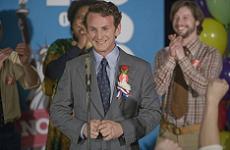
Milk: The Seven-Word Review™

™ed because this is completely Nathaniel's idea, and I'm completely stealing it out of equal parts time pressure, admiration, and covetousness. (I know, I know, thou shalt not...) So, here goes:

Liked tremendously. Didn't love. Improves. Brolin! Sean!

I just wrote a P.S. to about Sean but I deleted it because of dignity, professional reputation, etc.

Labels: , ,