Wednesday, June 01, 2016

Cannes '96, Expert Witness #7: Amir Soltani

I'm guessing many people reading have had the experience at least once of meeting someone in person whom you first admired and got to know over the internet.  At this point, it amazes me how many of the important friendships in my life unfolded this way.  One of these #blessed storylines in my life—though I wish we got to see each other more often, and not just while cramming in four-to-six movies per day at TIFF—led me to Amir Soltani, a film critic, festival programmer, public lecturer, and podcaster based in Toronto (none of which is even his day job!).  Everyone you meet, not just the people you knew first on the web, should turn out to be as kind and intelligent and reflective and big-hearted as Amir.  I first met him through his guest columns at The Film Experience and then started lurking at his own blog (newly relocated to this amazingly swank and impressive site).  I was really chuffed when he invited me to have a conversation with him and Tina Hassannia about Jafar Panahi at their Hello Cinema headquarters.  And I was so proud of and happy for Amir when he and some friends pulled off the first and sure-to-be-annual CineIran Film Festival at Toronto's Lightbox last November.

Like everyone I've spoken to about Cannes '96, Amir is an eager and catholic moviegoer with eclectic favorites.  Also, as with everyone else, his tastes sometimes converge with and sometimes depart from mine. This was never clearer to me than last year, when he was one of my most industrious co-conspirators in the Cannes '95 project that preceded and motivated this year's undertaking.  I miss having Amir's daily opinions about every movie we're both watching, so I couldn't help polling him about this year's roster.  Of course I wanted to know his thoughts about the one major Iranian entry in Cannes '96, but also about the other films floating around the festival.  I was curious, too, how his own latter-day experience as a festival coordinator might have changed his orientation toward the movies...

ND: One more round with my standard opening: Secrets & Lies, Fargo, and Breaking the Waves were the early and persistent favorites for the Palme in 1996. Where do your loyalties lie within this distinguished trio?

AS: It's quite rare that the definitive films from any given year's festival emerge so quickly and manage to remain the most acclaimed and widely discussed films so many years on. That this has happened with the above trio only speaks to their quality. Breaking the Waves is my least favourite of the three, though in fairness, it is also the one I haven't seen in the longest while. Perhaps my opinion of it also suffers from my hotand cold relationship with Lars von Trier, who is always making it difficult for me to go back and revisit his older works. On the other hand, Fargo is one of the most re-watchable films of all time. Is it the warm presence of Frances McDormand or the endearing naïveté of William H. Macy that makes such a cold, bloody film so inviting? The Coens have remained two of America's most singular and provocative voices in the two decades since, but they've rarely matched the narrative precision, emotional depth, and quirky humor of this masterpiece.

That being said, I think the jury made the correct call. I don't have the words to describe quite how much I treasure Secrets & Lies, a film that reduces me to a puddle of tears every time I watch it. The conceit of the story might sound too melodramatic and its characters too ordinary on paper, but the final result is a transcendent, personal experience. You can feel the bittersweet history of that photo studio, and breathe the suffocating air of that new house, and cry for all the lost time in that diner.

I can't help wondering if you, as a Torontonian, have thoughts about Cronenberg's Crash and particularly about the chilly, indelible way it frames your adopted home city.

Toronto is usually a substitute on screen for other urban American settings, so to see the city represent itself in films that cross over to the rest of the world is a delight. It also makes Crash doubly terrifying for me. Having driven on those roads at high speeds myself many times, to witness the crash and subsequent chases on the same streets is frightening. In general, a Cronenberg joint is the last place I'd like to imagine myself inhabiting. As for the film itself, I've been notoriously averse to the cinema of this Canadian giant, with the two notable exceptions of The Fly and Dead Ringers. Crash is neither as daring nor as entertaining as those films, and its air of edginess never quite feels authentic to me.

Read more »

Labels: , , , , , , , , , , , , ,

Sunday, May 29, 2016

Cannes '96, Expert Witnesses #4 and #5: Joe Reid and Nathaniel Rogers

At this point, what's left to say to my loyal readers about Joe Reid, multi-platform pop culture profiler extraordinaire, or Nathaniel Rogers, host of the internet's giddiest, freshest, most personally stamped, and most succulent movie blog?  Nathaniel and Joe are fellow cinephiles and dear friends, frequent festival companions and podcasting partners, and easily two of my favorite people anywhere with whom to discuss any movie, any time, from any place.  We hit Skype most Sunday mornings at 9am EST to record a conversation about new releases or old favorites.  A couple weeks ago, they indulged me with an hour-long conversation synced to my #Cannes96 project, which gradually dilates out to a broader conversation about movies we love from 1996 as a whole.  Rather than transcribe the conversation, I'll just encourage you to listen to this exchange with two chaps who express themselves excitedly and unpretentiously while taking in a vast and endless spectrum of movies, from high art to superhero hash.  Along the way, more or less in order, you'll hear us confront my usual conversation starter—"Are you a Waves breaker, a Friend of Marge, or a Keeper of Secrets & Lies?"—and then move on to all of the following...

* rumored Cannes jury squabbles in 1996, especially related to Crash

* brilliant Palme also-rans like Too Late and Goodbye, South, Goodbye

* the sole indignity among the prizes conferred by Francis Ford Coppola's jury

* Nathaniel's memories of seeing Ridicule and Temptress Moon in theaters

* brief but collective enthusiasm for Irma Vep, I Shot Andy Warhol, and Girl 6

* Nathaniel's love of "Peter Greenaway," his pet name for Ewan McGregor's penis

* news of the only movie that Monty Clift, Nathaniel's cat, ever watched in full

* a comparison of snail sex in Microcosmos and abject human sex in Lars von Trier

* Joe leading the charge of praise for Trainspotting, metonymically linked to MTV

* Joe's sense that Flirting with Disaster reflects an earlier, better David O. Russell

* questions about A Self-Made Hero, which link back to Hélène's comments

* raptures about Lone Star, echoing John's, and Nathaniel's thoughts on Sayles

* my valentine to an underdog comic crowd-pleaser hiding inside the lineup

* Joe's and Nathaniel's differently vivid stories of first colliding with Crash

* our short, spontaneous lists of favorites from '96 that more folks should rent

That last conversation wends in varying degrees of detail through The Birdcage, Bound, Emma, Everyone Says I Love You, Jerry Maguire, The Long Kiss Goodnight, The Nutty Professor, The Portrait of a Lady, Swingers, and William Shakespeare's Romeo + Juliet.  I thought I said something about Big Night, too, but maybe that got cut for time.  The last two words of the exchange are "beautiful thing," which should have been an allusion to that quietly fabulous gay teen romance from '96 but refers in context to... a quite different love story that involves total speculation on my part.

Thanks, meanwhile, to Joe and Nathaniel, those two beautiful things.  And stay tuned, readers, for a few more Expert Witness columns from other friends and comrades in cinema!

Labels: , , , , , , , , , , ,

Sunday, November 22, 2015

Nick's Flick Picks: The Force Awakens


What are those guys doing in Claire Denis's Beau travail? Has anyone ever figured that out?  My guess is that, after many years of assuming that my website would never get its act together, they have just found out there are long-postponed updates to the Top 100 listings, where I've recently celebrated Hiroshima mon amour, The Wages of Fear, and The Third Man, and to the Favorites countdown, where I've shared some of the backstory that led to my late-breaking ardor for Beau travail and Naked Lunch, both of which survived cool first impressions to become personal pets and central frames of reference for my book, The Desiring-Image.  (I've also, incidentally, re-programmed both features to ditch the cumbersome frames, streamline the html, and make for easier viewing on tablets as well as laptops. Hope that's all working on your end.)

I'm drafting another essay for work, and as usually happens when writing juices flow in one part of my life, they start moving in others as well. I've already written the next entries on both countdowns, so maybe I can keep some momentum going through the holidays. Some of you have been waiting on these for ten years!  Hope you'll share your thoughts about these posts and others soon to follow.

Subsequent entries added to Favorites: Crash, Walking and Talking, Eyes Wide Shut, Opening Night, Blonde Venus
Subsequent entries added to Top 100: Under the Sun of Satan

Labels: , , , , , , , ,

Wednesday, July 10, 2013

Hit Me With Your Best Shot: Dead Ringers

Even in my most productive weeks, in ten of my most productive weeks, I cannot compete with Nathaniel R's indefatigable productivity. If you know Nathaniel, you know he is always fretting that his site traffic will collapse, or seeking ways to give his readers more more more. He is so extraordinarily generous, it makes me tired just thinking about it, which is why you should donate.

Most recently, he has been laboring even harder than I have to make sure you know about my new book, The Desiring-Image: Gilles Deleuze and Contemporary Queer Cinema, which I started working on within a year of meeting Nathaniel in 2002.  Already he published this interview I got to do with top-flight film critic Tim Brayton about the book's ideas, its contexts, and what I hope people might get from it (which was a joy to do).  Today he is hosting a new installment of his delicious Hit Me With Your Best Shot series that is also designed to plug the book by showcasing the subject of its first chapter, David Cronenberg's Dead Ringers, an eerie film noir in crimson and blue, chrome and rue, starring two twin brothers as each other's homme fatal.

I'm delighted to see what his other contributors select as their favorite shot in this deliriously gorgeous movie, shot by Peter Suschitzky, the same cinematographer who lends chic, subtle macabre to all of Cronenberg's pictures.  Suschitzky also gave us the fluorescent slash of light sabers in The Empire Strikes Back, the farcical flatness of Mars Attacks!, and the scary, rock-and-roll martyrology of Peter Watkins' Privilege, a clear and underseen precursor to the film that closes my book, Todd Haynes's Velvet Goldmine.  I suppose I'm being predictable by picking a shot that already illustrates my chapter on Dead Ringers.  But since photo captions in academic books typically keep to a bare minimum, I thought I'd say a little more about why I selected it, and what I find more generally artful about the shot, and why I relish as gruesome and disquieting a film as Dead Ringers, and what you might hear if you dip into conversation with The Desiring-Image.


These are the gynecological tools that Beverly Mantle designs for operating on "mutant women."  They wheel into this shot from just out of frame, staggering the eye with their horrid shapes while flattering it with their texture and detail, and with the precise, elegant framing Suschitzky achieves even from this spontaneously-arriving element.  The plot logic behind these implements is even more revolting than their fanged, spindly appearance: at this point the drugged-up and heartbroken Beverly believes that all women's bodies exist in a state of grievous mutation, which only he can assess and emend, using these devices.  Soon enough, we will learn that Beverly perceives himself and his own twin brother to be mutants, and will "operate" on Elliot accordingly.  No points for guessing that this goes badly.  Cyril and Stewart Marcus, the New York gynecologists whose true story inspired Dead Ringers, did not in fact smelt such alien technologies, though they did die together under mysterious circumstances, and one of them did leap atop a female surgery patient in a narcotic haze to huff her anesthesia, as Beverly does soon enough in this scene.  If you want to know more about the Marcuses, read the "Dead Ringers" chapter of this book, and feel bad for Rosenbaum that he gets no credit of any kind in Cronenberg's film.

My book is about queer cinema from the late 1980s to the present, and its biggest goal is to define that rubric so that it doesn't only or even primarily equate to "gay and lesbian film."  Instead, I want the phrase to suggest an expansive, debatable, fluctuating range of movies that use story, style, and structure to throw their audiences out of easy assumptions about what any desire is, how it works, who feels it, via what promptings, how abruptly it might shapeshift, and how cinema helps create it.  I wrote two chapters on Cronenberg because he's more or less our poet laureate of shape-shifting bodies and weird sexualities, though Dead Ringers marked something new for him in the wake of Rabid, Scanners, The Fly, and their ilk: rather than douse us in the plasma and viscera of bodily change, Dead Ringers uses uncanny atmospherics, brooding performances, and objects like these tools to imply total overhauls in desire and embodiment.  As the best horror movies know, and some of the most erotic movies do as well, what we imagine for ourselves is often scarier and sexier than images can show us.  Beverly's tools are unnerving, then, because they force you to conceive of the body they would fit: an ingenious cinematic trick, though not one that every viewer will want to try at home.

Read more »

Labels: , , , , , , ,

Monday, December 05, 2011

Eyes on the Critics' Prize: Dead Ringers

The other day I was chatting with my pal and yours Joe Reid about how exciting the annual critics' prizes can be, especially when the voters feel cleared to ignore the publicist-stamped and buzz-backed contenders in a given vintage and to venture off the prix-fixe menu. This doesn't mean that critics' organizations should be obligated to avoid the worthiest among the Oscar frontrunners, only that it is disheartening—and increasingly frequent—that many of these groups seem disinclined to entertain the possibility. If you're a paid critic or, one way or another, a moneyed cinephile (the situation I project, sight perpetually unseen, onto most members of the National Board of Review), there is simply no way that you don't see, for example, five better performances by women in second- or third-tier roles than Shailene Woodley's in The Descendants. Not to pick on Shailene, who does as much as anyone to try to make that beached whale float, if not actually swim. But also: come on. That's a lot of movies in a lot of genres from a lot of countries to comb through just to find one gal who can seem convincingly drunk while throwing shit over a fence, and then Stick Up For Dad when the script decides, quite abruptly, that the time has come.

Then again, the coverage of the critics' prizes is often so indistinguishable from a guessing-game about who will win the Oscar that you cannot easily fault the balloters for playing right into the hands of that discourse. Pundits, subsequent voters, and PR flaks pay much closer attention to them than the public at large does, and periodical editors seem determined to package the story this way, rather than running the kind of press that might encourage us to consider, say, the National Society of Film Critics as a body on the order of the Pulitzer or Booker juries: a body whose approval is an accolade in itself, which I'm certain is how many recipients perceive it, and not as a stepping stone to some later, very different, peer-administered prize. Voting critics, finding themselves in this climate, inspire me whenever they try to launch a Marcia Gay Harden or a Jeremy Renner or a Pan's Labyrinth or a Gosford Park or a Fernanda Montenegro—a plausible longshot, but a longshot nonetheless—further into the hunt for Academy Awards. This seems like an apt, exciting use of their professional pulpit, though it's at least as exciting when they rally around a Luminita Gheorghiu, a Lupe Ontiveros, a Bill Nighy, or a William H. Macy (circa 1998, not 1996), not so much daring AMPAS to follow their lead as demonstrating some measure of indifference. These choices feel inexplicable except as honest responses to the self-presenting virtues of the hundreds of movies that critics see in a year, and as showcases of the integrity of a critic's labor and purview. (Or maybe it's the only way to get a nutter of a Montenegro disciple or someone mad for Vlad Ivanov to end the filibuster? If so, don't tell me.)

In any case, I'm interested in knowing what someone who spends the whole year watching hundreds of movies really thought was the best—someone whose tastes have been ratified by readers and editors, even if I don't always agree with her or him, or with those readers and editors. I don't just want to think of these verdicts as irreducibly uncertain tea-leaves or even as self-consciously activist interventions into the Oscar narrative. They should have more standing in themselves than I feel they are often given.

So, following this mammoth intro, Joe and I thought we might post a couple short pieces this season that fondly recall some moments when one of the voting groups we care about most (NSFC, Los Angeles, New York, Boston, or even that dotty old dowager, the NBR) lent their imprimatur to some really distinctive choice that meant something to us, or wound up meaning something substantial to the fortunes of the recipient. AMPAS didn't bite in any of these cases, and we don't care. Or at least, the point of this exercise is not to blow raspberries at Oscar, whom we'll never divorce, for better or worse, no matter how much he abuses us, and regardless of how many good things we got goin' on the side. (After The King's Speech, though, and Tom Hooper specifically, I'm very tempted to adopt separate residences, and file our taxes independently. Thank God I never took Oscar's name, though I prefer it to mine.) The point is rather to toss bouquets to the LAFCA, or the NYFCC, or whomever endorsed the work in question—sometimes creating the very prompt that led us to see the movie, and thereby facilitating a really moving encounter with an interesting piece of work.

These entries will be brief; the details are boring, but Joe and I are both having to spend a lot of extra energy on work these days and away from the movies we wish we could write about, read about, and talk about a little more. This is a small, stop-and-start contribution to awards season we can afford to make, and hopefully a welcome aperitif to other, more number-crunchy, more crystal ball-obsessed coverage. If you haven't seen the movies, or didn't realize they had won something big, check 'em out!

For example, if you haven't seen David Cronenberg's Dead Ringers, and especially if your cinephilia was born in the era of A History of Violence and Eastern Promises, then you should really run, not walk, to pick up the DVD wherever you can still buy a DVD anymore. Dead Ringers got strong but divided reviews when it premiered in 1988. The Fly, which had done excellent box-office in 1986, and whose star, Jeff Goldblum, might have scooped some critics' prizes of his own if Bob Hoskins hadn't claimed them all that year, had at least primed mass-market critics to start extending Cronenberg new benefits of the doubt. Still, I think it helped Dead Ringers's case even more at year's end that 1988 was such a diffuse vintage in terms of critical consensus. Of the five groups I listed above (NSFC, NYFC, LAFC, BSFC, NBR), all five picked a different Best Picture, all five picked a different Best Director, and only two of them opted for the same movie in both categories. Furthermore, only two of the films (Accidental Tourist in New York, Mississippi Burning for the National Board of Review) and only one of the directors (Parker, for Mississippi) was slated at Oscar time. None won.

Within that climate of atomized opinions, it helps for a film to nail a tough, highwire task—the broodily philosophical eroticism of Unbearable Lightness of Being, the hilariously philosophical eroticism of Bull Durham, the, uh, unnervingly philosophical eroticism of Dead Ringers—in a way that galvanizes a self-selecting but implacably committed fan base. That's what seemed to happen for the Cronenberg movie. Jeremy Irons's unshowily showy double-performance as the doomed gynecologists Beverly and Elliot Mantle had earned standout notices even in reviews that seemed uncomfortable with the film. Maybe it was no surprise that at least one group (the NYFC) would sing his praises, though this was still nervy territory for a group that had opted for upscale comedies or semi-comedies, all of them unmistakable as Oscar Pictures, for their Best Film prize in five out of six years from 1983-1988. Irons was so conscious of the boost in pedigree, reputation, and (best of all) creative opportunity that he gleaned from Dead Ringers and its critical laurels that, unusually, he thanked Cronenberg ("...and some of you may understand why...") in his speech when he later won his Oscar for another movie.

Irons's win was a great critics-prize moment, but I feel even more indebted to the Los Angeles crowd for gold-starring Cronenberg's disquietingly sleek, hypnotic, technically virtuosic, scarlet-and-chrome direction as well as the distinctively strong impression that Geneviève Bujold makes in the crucial role of Claire Niveau, a part that could easily have been played as a misogynistic freakshow, a histrionic addict, or a disembodied "everyone's addicted to something" placeholder within the script's thematic architecture. Bujold takes a woman who could be boiled right down to a grotesque high concept—a pill-popping actress and bondage enthusiast whose mutated, three-chambered uterus is an object of horror and fascination for the Irons characters—and she makes her mordantly intelligent, frankly self-confident, and incongruously "normal" without being boring for a single second. She never seems like she's not doing something for her scenes, whether inserting an unexpected pause or offering a smile when you expect a grimace or playing a confrontation as a seduction, and yet she never ever feels like she's acting for a camera. She suggests a filthy mind, a fond self-image, and a feminine practicality all at the same time, with zero signs of strain. She also puts as human a face on Cronenbergian mutation, in the unexpected register of wry understatement, as Goldblum more flamboyantly does in The Fly, in the (context-appropriate) register of operatic tragicomedy.

The arc and reception climate around Cronenberg's career shifted after Dead Ringers, but it shifted even more palpably after these prizes for Dead Ringers. At the box-office, the film had been neither a hit nor a miss on release, relative to its production cost. With respect to its genre, though, whatever you'd say its "genre" is, and with respect to its pair of admired but hardly bankable leads, and with respect to a filmography whose back-page titles included They Came from Within and Rabid, its awards haul was an absolute bonanza. The last 20 years of Cronenberg's career, if you ask me, turn as much on the pivot of December 1988 as on any other single moment. This is as perfect a case as I can think of of the critics on two coasts voting for no discernible agenda beyond their sense of what work most merited a trophy, and in calling out achievement for what it is—not for how plausibly they could vend that achievement to AMPAS or to the HFPA. In so doing, they effectively certified the film for a lot of connoisseurial audiences, in and out of "the industry," who would have ignored the slightly Guignol marketing and the skin-crawling storyline. The risk they took would have been very similar within a comparable career tone and timeline—and in valorizing spiky creativity and sudden transcendence of cult-driven status—to some group anointing Fincher, Norton, and Bonham Carter for Fight Club in '99, which of course no one seems to have even thought about doing. If that's a more historically accessible example for you, and you know what it would have meant to set aside a sprawling field of "safe" pictures as well as exciting experiments in 1999 to endorse David Fincher's schizophrenic demi-ode to pugilistic nihilism and to masculinity eating itself alive, then you've got the flavor of what the NYFC and LAFC did in '88.
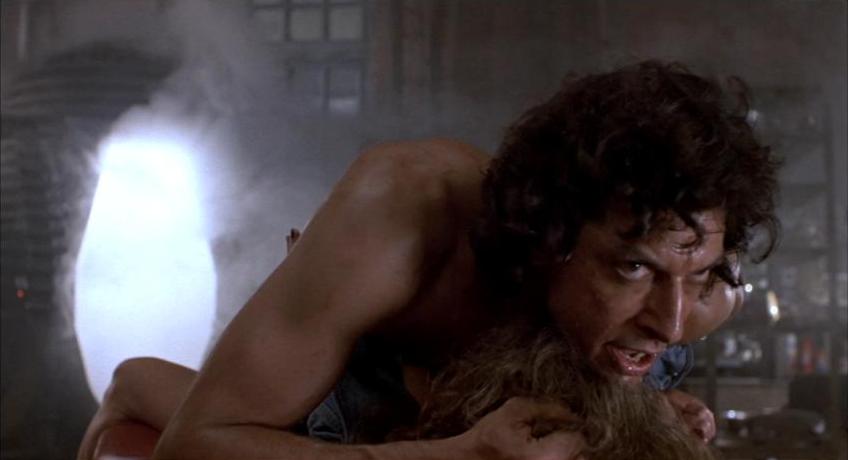
You can't expect such prescience every time a critics' group meets, much less can you expect a validation of your own tastes, which of course this series is certain to flatter. Still, the Dead Ringers prizes in 1988 managed the gorgeous hat-trick—the three-chambered glory, if you will—of being perfect choices in the present, a bold endorsement of a filmmaker with a highly idiosyncratic past, and a direct propagation of his increasingly interesting future, built to an unusual degree off the boost the critics gave him and continued to give him. (The gongs for Naked Lunch in 1991, especially from the National Society and the New York crowd, were hard-won, delicious, and perhaps even more surprising, given the sturdiness of competition and the rococo uncanniness of Naked Lunch.) If that's not a perfect summation of year-end voting bodies at their absolute best, then it's at least a perfect summation of why they interest me so much... and why I have my fingers crossed for December 11, when the Boston and Los Angeles crowds both weigh in. Give us change we can believe in, dames and fellas, and any Cronenbergian film critics sporting your own self-evolved genders! Go ahead, win the future!

Labels: , , , , , , , ,

Friday, July 08, 2011

Talking Robocop to Death


I guess you never know when you'll be watching a DVD and suddenly see yourself in it? No, I mean literally.

I recently purchased Oscilloscope's handsome disc of Yony Leyser's intriguing, star-filled documentary William S. Burroughs: A Man Within. I was jazzed to note that among its Special Features, the disc includes some footage from a party that the filmmakers convened in Chicago in 2009, in order to celebrate the 50th birthday of Naked Lunch and, if I recall correctly, to collect donations toward the completion of the film. Possibly because I know the camera operator, my impromptu conversation with Peter Weller—star of David Cronenberg's movie of Naked Lunch and one of our hosts for the evening—was preserved for posterity. Thanks to who knows who else, you can see it for a few flashes on the disc. Mercifully, you can't actually hear any of the exchange, so I can assure myself I was not being obsequious or failing to make any sense whatsoever. No one can prove otherwise!

I look very excited telling "Bill Lee" all about my book chapter about the film of Naked Lunch, assuring him that I have no interest in claiming Burroughs as some kind of gay literary hero or figurehead, which he assured me the man would have hated. He was very adamant about this. If you haven't seen Naked Lunch, or even if you have, I think the film is more interesting for its unique strategies of abstracting sexuality away from comfortably hetero or homo coordinates, though this hardly endeared the film to gay press or to scholars of queer cinema. Weller himself is completing a dissertation in Italian art and literature at UCLA, so we had a few moments of relating and commiserating about academic writing, revision, and advising. A fun 10 minutes, and I'm surprised and glad to see it played back at me, for all of five seconds.

Do you like how the photo evidence suggests how hard I was bringing the Limp Wristed Realness? It's hard to know whether I was about to say "Deleuze," "Cronenberg," or "Chanté." All are likely.

Labels: ,

Thursday, December 04, 2008

Two F's that Deserve A's

As if it wasn't clear enough in the 1980s that you needed to be careful where you poked around, here's a desecrated body and a vengeful one-night stand to keep you celibate and terrified forever. But of course, if that's all they were, they wouldn't be personal favorites...


And while we're moving up the ladder, plugging holes at a steady clip, and while we're already talking about relationships that you wouldn't want to emulate at home, here's another two-fer, in the 48th spot:


All four are horror movies, really. There's something in here for everyone's nightmares, and though I don't worry about turning into a fly or having an affair, I do hope I don't grow up to be one of those professors who looks up at 50 and has no idea where her life has gone, and whether she actively pushed it away. Another Woman: a horror movie for the tenure track.

Lastly, if you're wondering, there aren't many more of these joint entries left to go. I have forced myself the higher I climb to make up my own damn mind. And also, I mentioned in the Adam's Rib entry that Katharine Hepburn, Nicole Kidman, and Julianne Moore are the best-represented actors on this list, with four titles apiece. Woody Allen and David Cronenberg are the leading directors, also with four apiece, including the movies indexed in this entry. Keep all this in mind as you guess your way toward #1...

Labels: , , , , , ,

Tuesday, September 25, 2007

C Sick

For a week or two now, I've been rejoicing at the prospect of all these Fall movies opening, looking forward to each release with aplomb and a positive predisposition, especially after that late-August and early-September run where I got a big, inspiring lift from almost every trip I took to the cinema: from the acerbic but energetic 2 Days in Paris to the engrossing and nearly profound Deep Water to the urgent and astute No End in Sight to the shrewdly discomfiting and illuminating Day Night Day Night to the clever and inordinately entertaining King of Kong, which I paid to see twice, sparking a contagious audience ovation both times before the thing was even finished.

But speaking of "finished," everything since then has just been so....blah. I feel how monotonous my updates must seem, trapped in this "C" range I can't get out of. So this is just an open letter of good intent: I will be thrilled, as soon as the opportunity presents itself, to credit a movie a little higher, even to tread into B or B– territory for something that won't shake anybody's world but at least delivers craftily or consistently or stylishly on a solid story or rewarding theme. But so far, I just can't do it. Superbad begins with a delicious credit sequence and 20 solid minutes of ornately uproarious dialogue, well-delivered by Jonah Hill and Michael Cera, but the belly-laughs turn precipitously to belly-flops once this extraordinarily crappy-looking movie gives itself over for way, way too long to twin plots that aren't interesting and don't work: procuring booze against overfamiliar and arbitrary obstacles, and noodling around with two unfunny cops who never once stake a claim as actual characters. There's a little pick-up toward the end, partly because Martha MacIsaac and especially Emma Stone are so ingratiating (if sadly underutilized and underconceptualized) as the objects of obscure teenage desire, but that long, turgid middle section throws a big, beer-gutted shadow over the whole enterprise. Not superbad, but prettybad, and superdisappointing. C–

3:10 to Yuma and In the Valley of Elah were probably always destined for aesthetic conservatism and middlebrow limitations in theme, but there is no reason for their narratives and character studies to have veered so badly off course. Both films feature strong lead performances, from Russell Crowe in Yuma, and from an arresting but restrained Tommy Lee Jones and an appropriately disillusioned Charlize Theron in Elah. The unusual, intriguing musical score in Yuma and the ragged, enigmatic swatches of embedded video in Elah deserve credit for tugging smartly against the boilerplate plot dynamics and visual lifelessness of both movies. This problem is most aggravating (and surprising) in Yuma, which doesn't even try to draw meaning, vitality, or even a pretty postcard image from the engulfing desert, instead hemming its actors into sallow, unflattering, and relentless close-ups. Worse, Yuma never gets near, much less inside, the head of Christian Bale's protagonist (his blank perf doesn't help), which makes it even harder to understand why Crowe, who rightly thinks he's playing a wily and incorrigible villain, seems only too willing to put Bale's needs and priorities above his own in sequence after sequence, especially the listlessly edited climax. For its part, Elah doesn't just bungle the "mystery" aspects of its script but almost sadistically works against them, leaking tension the way a bullet-blasted tire loses air, threading second-tier characters in and out at random, and selecting a culprit for its head-scratching crime virtually at a whim (despite the character's impressive alibis and lack of persuasive motivation). Elah has to know this resolution doesn't work, and that it lethally neutralizes the whole movie by extension, because Haggis barely films it; we overhear that a shockeroo confession has taken place between scenes, one of many signs that Elah's cutting-room floor is swampier than a trash compactor on the Death Star. Both films: C–

After watching all these men try to score babes and settle scores, I thought a long-delayed trip to the worrisome Becoming Jane might at least offer a refreshing idiomatic contrast. Sadly, the story is as thin as I had heard, the production design and costumes are all exactly what you'd expect, and the presumed link between creative genius and diaristic transcription of one's own experience is a jaw-dropper of an ingrained insult to the film's subject. Say this for Jane, though: unlike the above films, the movie actually improves from a wobbly beginning, as director Julian Jarrold does an unexpectedly sturdy job of evoking the visual coldness and dispassionate hardness of the world in which Jane Austen (or at least this movie's Jane Austen) wrote her incandescent but never entirely optimistic fictions. If the basic story cheapens the author and her gifts, and James McAvoy never seems like a great love (instead of, say, a scrappy playmate), the color palette and orchestration of light temper the rampant romanticization and nostalgic sanctification rather nicely. Now someone just has to teach that cinematographer not to scalp the actors. C

The early-fall documentaries have been as problematic as the fiction films. In the Shadow of the Moon has scored some very generous critical notices, but compared to the urgency and the discursive sophistication of something like No End in Sight—which doesn't just evoke a more timely concern but presents a genuinely fresh take on the war as a massive crisis of Iraqi unemployment and systematic disenfranchisement—In the Shadow of the Moon just turns the camera on while nine retired astronauts offer interesting but unsurprising recollections about their trips into space ("It was really something! It changed my life!"). Neither their level of introspection nor the composited stock footage of lunar landings and cosmic panoramas adds anything new to one's understanding of the space program or to one's most automatic and time-honored visual iconographies. The men relive their memories without the film doing anything to make them our own, much less give us anything substantial to chew on or reconsider. The independently produced Helvetica has a fresher, more surprising subject—the history of a typeface, specifically, this one, which anyone who has filed U.S. tax forms or taken a New York City subway will instantly identify. The world of type designers and graphic artists proves colorful and intriguing for the first 20 minutes, and for that same duration, the film makes a solid case for the ubiquity but also the flexibility of Helvetica script. Unfortunately, someone convinced director Gary Hustwit to make a feature instead of an extended short, which means that Helvetica spirals into ever more redundant interviews with less and less eloquent designers of less and less apparent pedigree. The visual collages of signs and public text aren't always discernibly in Helvetica, to say nothing of ridiculous filler images of sidewalk crowds, coffee cups, and old LP covers. The film tries to play its subject from as many angles as the graphic-design world has tried to play Helvetica, with the analogous result of overexposure and exhausted interest, and the added sin of leaving key questions unanswered and more promising inroads untraveled. Both films: C
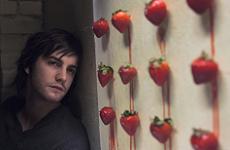
Amidst all of these surging C's, I wonder if I'm being slightly harder than I need to be on Neil Jordan's The Brave One and Julie Taymor's Across the Universe. The former at least accommodates some daring camera angles and taut sequences near its beginning, as well as some welcome attempts to trouble the stylistic mandates of realism; the latter yields four or five genuinely stirring images (strawberries nailed to a canvas, bone-white women and ceramic masks floating like genocide victims in gray water), and Taymor at least wants to push cinematic depth of field and risk extremes of figuration and superimposition in ways that James Mangold and Paul Haggis, more comfortably ensconced in the Hollywood system, will never even consider. But, for all that—well, the movies suck. A lot. Precisely as he did in In Dreams, Jordan fails utterly to set rational boundaries around his fairy-tale idioms in The Brave One, winding up with a totally indigestible mix of the overblown, the sadistic, and the unpersuasive. Meanwhile, the script ties itself in contortionist's knots to find ways of jerry-rigging, excusing, and abstracting the Jodie Foster character's outlandish acts of mercenary violence. The actress herself is lost somewhere between repeating all the established tropes of her woman-besieged subgenre and wallowing like some reckless exhibitionist amidst the seamy iconographies of her own troubled star persona: gun-wielding assassins, publicity-shy celebrity, homoerotic clinches with a teenage hooker, butch haircuts, veiled "is she or isn't she" innuendos. You leave the film feeling sorry for Foster but also angry at her, baffled at Neil Jordan, and helpless to explain why actors as good as Terrence Howard, Naveen Andrews, and Mary Steenburgen can't find a movie that cares remotely about their characters. Across the Universe is less ethically offensive than The Brave One, and for a movie that does almost nothing right, I was surprised at how easy this one was to spend 131 minutes with, hoping that Taymor's capricious visions would actually cohere into something, if only in her next film. As far as this one goes, what can I say? The singing is awful, the songs are shoehorned into generic and disconnected contexts, none of the characters have more than a single facet, entire transitions are palpably missing (how about those steamboat crossings?), and the politics are so ludicrously simplified and self-contradictory they make Rent look like Brecht. Is love all you need, or not? Hard to say, and even harder to sing. Plus, just like The Brave One, Across the Universe has nothing to say to, for, or about black people, but doggone if it can't stop panning to and over them, reminding us that They are Wise™, and also picturesque and sonorous when they grieve. Though this grief sometimes takes the discordant and stupidly opportunistic form of gospel choirs singing "Let It Be." Which still isn't as bad as brand-new acquaintances singing "A Little Help from My Friends" or bewildered-looking actors who a) sing "Dear Prudence" to a girl, named Prudence!, in a locked bathroom, b) float through a thinly Photoshoppy spacetime continuum while doing same, and c) exchange patronizing winks and smiles because Prudence is a total lesbian...which allows Across the Universe to add one more item on its rainbow-brite List of Totally Deep Themes. Both films: D+

And so now I'm left with the best but also the most frustrating of all of these September releases, David Cronenberg's Eastern Promises. Cronenberg's London is more consistent and credible than Jordan's New York City, but Eastern Promises keeps holding itself back from really thinking or feeling its way through the city, opting for anodyne interiors rather than building on the potential of its unique take on London locations. Like The Brave One and Across the Universe, Eastern Promises is dogged at portraying for us a world of ethnic and cultural life that it doesn't seem to know anything about, so that the hoariest clichés of music, dialogue, vocal affectation, and sinister connotation are enlisted to form the movie's amalgamated "Russianness." Steve Knight's shaky script needs Naomi Watts' Anna to find the diary that catalyzes the plot but then never thinks of a single other reason for her to be in the movie, much less to be the second lead. Unsatisfied by Vincent Cassel's heavily insinuated desire for Viggo Mortensen's steely, reticent chauffeur, Knight writes an overstated episode where Cassel forces Mortensen to strip and have sex with a prostitute right where he can observe—thus constituting the most patently absurd scenario of pathetically lurid and dramatically implausible homoerotic longing since Judi Dench danced appallingly in Cate Blanchett's living room. Cinematographer Peter Suschitzky and composer Howard Score admirably resist repeating their earlier triumphs with Cronenberg, but they both seem to take the new film's edgy/scruffy aesthetic to an ill-advised extreme of crudeness and cliché, and the big finale is as artificial and warped as the one in The Brave One (well, almost).

Still, the reviews have largely been raves. I concede that Mortensen is excellent: he is terse, slithery, intellectually potent, and physically articulate, and best of all, he is morally illegible in a way that often feels remarkably fresh in such a genre-bound entertainment. Unlike Cronenberg (although certainly with Cronenberg's intensive assistance), he has fully risen to the challenge of assaying unworthy material and justifying how a real artist can perceive and realize the potential in a heap of empty contrivance. But the bathhouse interlude you've heard so much about disrupts the style and flow of the piece much too drastically—it's the only scene where Cronenberg comes alive, but his priorities are perplexing and the tonal register, especially regarding the exaggerated violence, is off—and I left the film wondering what to make of that barbershop prologue, wondering whether the dead girl's voiceovers from her diary were exactly necessary, wondering why you'd introduce a huge plot twist ten minutes from the end of your picture and then do nothing at all with this new information, and wondering what in the hell an "eastern promise" could possibly be. Cronenberg always deserves a second shot, and maybe I have underrated Eastern Promises because it so drastically refuses to take shape as any of the multiple movies I would have liked it to be. But my second trip to Spider in 2002 only affirmed that a hamstrung Cronenberg movie still feels hamstrung on the second go-round, and I'm increasingly suspicious that this Promise simply isn't kept. A C+ isn't out of the question, but then I remember that teenaged-screenwriter device of the traumatic miscarriage, and the underlit hospital and the crunchy quality of the curbside London light, and the oogah-boogah way in which the movie keeps trying to scare us with the words "Vory v Zakone", and Armin Mueller-Stahl's way-too-long pause before the words "a diary?", and the creaky coincidence of the right nurse passing the right gurney in the right corridor at the right time, and that animatronic infant, and I wind up back at C.

Labels: , , , , , , ,

Wednesday, March 15, 2006

Best Ides Ever

Sure I'm still moling my way through the piles of letters of recommendation and papers that need grading on my desk and in my apartment... but BUT, at least so far, March 15 is kicking its bad karmic habit:

1) My students can really write, and they have interesting ideas! Yay!

2) David Cronenberg, one of my absolute favorite directors, turns 63 today. I've been interested in his movies since being seriously freaked out by my uncle's VHS copy of Dead Ringers when I was 13. I have loved them since seeing Crash in the theater in 1997, and trying to convince my friend Bill that it was terrific. Dead Ringers, Crash, Naked Lunch, The Brood, and The Fly are all enormous favorites, as is eXistenZ, which seems finally to be building the vociferous cult following it always deserved. I wasn't totally wild about about Cronenberg's last two movies, Spider and the new-to-DVD A History of Violence, despite their stunning and controlled technical realizations. Then again, lots of people think these are his peak works, and that's one of my favorite things about the DPC: he's a totally different director in the eyes of almost everybody, and his work is always exciting.

3) Tim R's countdown of his personal canon hits an excitingly distinctive K2 today, with the Everest announcement to follow shortly. (If you've been tracking, you already know what it is.) More on this list later, but it's already my favorite canon out there, and the Comments sections have been a blast.

4) I'm being taken out to a free dinner by a colleague—one of those situations where she thinks she owes me, and I absolutely disagree, but I couldn't talk her out of it, and hey, why not gnosh?

5) It's been a great teaching week: Paris Is Burning. Billy Budd. Eve Sedgwick. Beau travail. Marat/Sade. Antonin Artaud. Jean Genet. Bliss, all of it. (If occasionally funky or scary-ass bliss.)

Last but certainly not least...

6) Today was D(elivery)-Day for Girl Scout Cookies in our department, c/o the daughter of our beloved office assistant. Is there anyone alive who doesn't effervesce at the sight of Girl Scout Cookies? Is there anything you can't tell from a person based on their preferred delectable? For all of you caloric astrologers, I am a Do-Si-Do man myself, with a house in Thin Mint, and strong Rising Signs in Tagalong and Trefoil. Seriously, putting a sleeve of Do-Si-Do's in front of me is like putting dust bunnies in front of a vacuum hose. Of course, I've probably spoiled my appetite for my free dinner. But that's not bad, as far as Ides go.

Now back to this grading, before my students quite justifiably tie me to the mast.

Labels:

Tuesday, November 08, 2005

Picked Flick #77: The Brood

David Cronenberg's The Brood debuted in 1979, the same year as Robert Benton's box-office smash and Oscar darling Kramer vs. Kramer. Though his film beat Benton's into theaters by several months, Cronenberg has often cited The Brood as his own horrified rebuke at the domesticated middle-class gauziness of Kramer, having himself recently emerged from a caustic divorce and custody battle. The Brood/Kramer showdown, forever rooted in their own irreconcilable differences, offers as stark a dichotomy as the more infamous Do the Right Thing/Driving Miss Daisy square-off at the end of the following decade: same issue, same medium, different galaxies. And though such is not always the way, the indie films sure come out smelling like roses in these comparisons.

The throbbing knot of angry frustration that so thrillingly crystallizes The Brood—it is by several degrees the most focused and accomplished entry in Cronenberg's pre-Videodrome filmography—is also the explicit subject of the movie, where it is nonetheless aligned with monstrosity and the will to murder. On the one hand, divorced dad Frank Carveth is comfily outfitted with a placid demeanor as well as primary custody of his young daughter Candace. Frank tells Candy's teacher that his wife Nola "married me for my sanity, hoping it would rub off on her," and everything about the film implicitly defends his claim, from Art Hindle's collected performance to the preponderance of screen time afforded him by Cronenberg's script. By contrast, Samantha Eggar's Nola is a raving harpy, an absent mama, and a slave to psycho-clinical trends, having given herself over to the experimental regimen of "Psychoplasmics" founded by Dr. Hal Raglan, an unsettling figure who impersonates his own clients' most bitter antagonists in long role-playing sessions, until the patient's unleashed fury is literalized as nodes, rashes, or pustules on the surface of his or her skin. The Brood doesn't delve deeply into the internal operations or even the grounding logic of the Psychoplasmics enterprise; like the Cathode Ray Mission or the Black Meat factory in later Cronenberg films, this posthuman phenomenon titillates with the idea rather than the mechanics of somatic transformation. It is, however, the conceptual heart of the picture, however shrouded in mystery—a state of affairs that is underlined by The Brood's taut, pervasive emphasis on oblique framings and offscreen space. Cronenberg's contempt for Nola is as clear as his fellow-feeling with her cooler, calmer husband, and yet her operatic rage and her willingness to push her body and mind to new limits of being are what animate the picture, literally yielding its prime agents of horror, and conferring narrative possibility onto the static canvas of the director's own palpable anger. You can't watch The Brood without sensing its exorcising function in the life of its maker. The emotional strata of the film, no less than its tense images and grisly set-pieces, no less than Dr. Raglan's dissertation or Nola Carveth's otherworldly and abject progeny, embody "The Shape of Rage."

So I love The Brood for flaunting its metaphorical referents, yet still complicating the presumed roles of hero and villain with its undisguisable awe at the potency and intricacy of what Nola's ferocity brings into being. Guaranteeing that the movie isn't just Cronenberg's triumph, The Brood is also his first important collaboration with deft cinematographer Mark Irwin, who subtended his career throughout the formative period leading up to and including The Fly. Composer Howard Shore and art director Carol Spier, each holding those jobs for only the second time in their careers, also begin their auspicious and still-evolving teamwork with Cronenberg on this picture. The work of these artists, together with Samantha Eggar's ferocious conviction as Nola and the generally capable performances all around, impart unto The Brood that singular air of a terrific genre exercise that also foreshadows stranger, deeper, and more complicated triumphs lying over the horizon—several of them further up on this list, in fact. It's an exciting film, as regards both aesthetic merit and entertainment value, and it holds up beautifully even in retrospect. Three years after The Brood, Alan Parker's white-hot and perfectly judged drama Shoot the Moon did at least prove that a commercial film with a prestige cast (Albert Finney, Diane Keaton) could peel the skin off the question of divorce, but Cronenberg's foray into the terrain remains seminal. (Click here for the full list of Nick's Picked Flicks.)

Labels: , ,

Sunday, May 22, 2005

Cannes Post-Script

Okay, I wasn't done on the Cannes beat. Right now, in the two non-profit theaters in Ithaca, two of last year's Cannes victors—Hirokazu Kore-eda's Nobody Knows (Best Actor) and Agnès Jaoui's Look at Me/Comme une image (Best Screenplay)—are just now making their local premieres. So it may not behoove me to get too excited about the prospect of seeing this year's slate of contenders anytime soon. Still, Cannes is nothing if not appetizing for the future, and these were the films from this year's crop that I am most eagerly anticipating at an arthouse near me:

TIER 1
#1 A History of Violence David Cronenberg is one of my absolute favorite directors, as well as the subject of my first dissertation chapter—the chapter on which, incidentally, I completed my final revisions today. (Yay!) Any new Cronenberg movie is enough to get me excited, but especially when the reports are so bewildering. Even the bullishly intrepid Mike D'Angelo couldn't quite decide on a number rating for this one. If it's as weirdly discomfiting—and therefore as compulsively watchable—as Dead Ringers or Naked Lunch, color me ecstatic. (IMDb Page)

#2 Manderlay "Most anticipated" movies are not the same as the ones I expect to be good, and I must say I have some serious skepticism about this project. I enjoyed Dogville quite a bit, and I've found that it holds up to repeat viewings, but it seemed to me like more of a one-off than a solid premise for a trilogy. Still, whenever anyone's got anything to say about race, class oppression, the history of slavery, etc., I'm hooked, even if what they have to say is nonsense. Topics covered + Lars' history = I'm ready to pay attention. (IMDb Page)

#3 Hidden/Caché My experience with Haneke is a little scattershot: I've only seen Funny Games, The Piano Teacher, and Time of the Wolf, which made my Top Ten list last year when it opened Stateside. (The Piano Teacher would have done the same if 2002 hadn't been such a superlative movie year.) The reviews for this film were exceptional, I love a solid formalist thriller, and French-Algerian relations are another one of those subjects for which I have a standing weakness. Which reminds me, is anyone ever going to swing a US release for Tony Gatlif's Exils, the French-Algerian drama that won Best Director at last year's Cannes? At least Caché already has US distribution in place. (IMDb Page)

#4 The Wayward Cloud This one has been building huge buzz since Berlin, and I can only live so much longer without having seen any of Tsai Ming-liang's movies. They sound right up my "Weird" alley, with a camp/homoerotic bent (always a plus). And look what happened when I went searching for a photo: I found this image of what is, indeed, a man either caressing a woman's vagina with a watermelon, or possibly trying to insert it. Whaa? Color me intrigued. Incidentally, The Wayward Cloud was only in the "Market" section of Cannes, not in any of the official programs, but Mike D'Angelo and others still wrote it up, and I'm still stoked. Which reminds me: what am I going to do next year without Cornell cinema?? (IMDb Page)

#5 The Child/L'Enfant Any film that won the Palme d'Or would have a leg up on my viewing list, but my interest in the Dardennes' work has been steadily growing. Thus far, I've only seen Rosetta; their last picture, The Son, was a critical favorite around the world, but it played for two seconds in Ithaca, while I was out of town and then took its good time coming to DVD. So I'm actually eager to see any of the Dardennes' recent work, up to and including this latest. I love filmmakers who can squeeze a lot of affect out of a seemingly simple aesthetic, which is different than squeezing a lot of affect out of a fussily "simple" aesthetic, as with most of the Dogme films. (IMDb Page)

#6 Match Point Remi Adefarasin! Say it three times fast, 'cuz he's the genius cinematographer behind the ice blues of Onegin, the inky shadows of the palace in Elizabeth, and the high-society chilliness of The House of Mirth. Now, he's working for Woody, who, say what you will about his lack of a stable aesthetic, at least works with some interesting D.P.s. And Remi showed he knows how to light Scarlett Johansson in this winter's beguiling In Good Company. And, if all the reports are true, it seems that Woody remembered how to write. Say that it's so! (IMDb Page)

#7 Don't Come Knocking I will see any movie where Jessica Lange plays a long-lost flame, and that's lucky for me, because there were two of them at Cannes. I am particularly excited about Don't Come Knocking because, like Lange herself (maybe my favorite American actress), writer-star Sam Shepard and director Wim Wenders are such mercurial talents. Sometimes they just... stall. And other times they generate something really interesting, like the last Shepard-Wenders collabo, Paris, Texas. I didn't love that film, and there's a self-romanticizing streak in both men's work that can spoil even a good thing, but I'm still intrigued by what this movie's got to offer. (IMDb Page)

TIER 2
#8 Three Times As I wrote earlier, Hou Hsiao-hsien's appeal kind of eludes me. I did think A Time to Live, a Time to Die was lovely and involving, especially in the final sequences. Maybe I was just tired, but I remember The Puppetmaster being quite a slog, and I usually love long, quiet movies. Millennium Mambo had me for a while until that film, too, seemed to get stuck in an endless rut of gossamer mood accents. But I'm always hoping I'll come around, because so many people see so much in Hou's work, so if Three Times ever makes it to an American theater—with Hou, you can never take that for granted—I, for one, will show up. And I'll try. I'll at least take three bites before I decide I don't like it. (IMDb Page for Hou Hsiao-hsien)

#9 Down in the Valley Some interesting reviews are building behind this film, which none of the critics seem to describe quite the same way, and whose secrets they seem to be glad to preserve. Hmmmm. Edward Norton and I have been seeing other people for a few years now. Am I the only one who thought he started sending out this weird Self-Importance vibe, right around the time he started turning in the same performance in film after film? Even in 25th Hour, a film I really liked (and apparently he did, too), he seemed bored and uninspired to me. If this film restores the Edward I loved, I'm prepared to take him back. Also, I'm getting these nasty, risky, Blood Simple sensations from reading the write-ups, and if that's a fair comparison, it's a good, good thing. Oh, and Ellen Burstyn's in this, too. Yay! (IMDb Page)

#10 Battle in Heaven/Batalla en el cielo Also known as, when bad reviews create unwittingly good buzz. I kept reading that this project was way too self-consciously arty, full of gratuitous and overly explicit sex, recycling the same old shit about modern anomie and the spiritual emptiness of existence, and marred by director pretension. In other words, it got the reviews that Pola X and L'Humanité got at Cannes '99, and demonlover and Irréversible got at Cannes '02. I loved three of those, and thought L'Humanité was just fine (sorry, Manders). So, as these rotten-tomato reviews piled up, my stomach started growling. (IMDb Page)

#11 Broken Flowers By all rights, this film should be higher on this list. If Jessica Lange isn't my favorite actress, Tilda Swinton is, and they are both in this movie. [This is the sound of Nick's head exploding.] Plus Sharon Stone and Julie Delpy, two good eggs, and Frances Conroy, who I'd been writing off until her sharp work as Kate Hepburn's snootily progressive mama in The Aviator. But one of my qualms is named Coffee & Cigarettes, Jim Jarmusch's last picture, which somehow thought that 11 arch vignettes about people who are bored with each other would be something besides arch and boring. And my other qualm is called Bill Murray, who has somehow found his way onto the Tom Hanks fast-track as Our New Beloved Actor. Yeah, Murray was great in Lost in Translation, but when people I trusted started plugging his "brilliant" work in The Life Aquatic, I felt like the schmo who's trying really hard to see the Virgin Mary face in the pancake syrup. It just ain't there, man. I'll be there on opening weekend, but more Ghost Dog and less Rushmore would be a good recipe for pleasing me. (IMDb Page)

#12 The Three Burials of Melquiades Estrada I figured this would be the Life and Death of Peter Sellers of this year's festival, especially since it got slotted into the same, ignominious last-day press screening. But reviews were kind, I'm a Barry Pepper fan, and the project sounds like it's going for that whole Cormac McCarthy revisionist-border-mythology thing. I got a little churlish about the prose in All the Pretty Horses but had to confess after I finished it that the book had a soul, and a memorable kick. If Jones' movie has one or both, more power to him. (IMDb Page)

If anyone is wondering about some conspicuous absences, I am only half-excited about Last Days, even though it seems like a better subject for Gus Van Sant's recent aesthetic (ya know, kinda formalist, kinda gauzy) than either Gerry or Elephant provided. The French thriller Lemming sounded interesting, especially with Charlotte Rampling and Laurent Lucas in the cast, but Caché sounds much more inventive and much more topical. Atom Egoyan pretty much lanced my mid-90s interest in his films with the grueling duo of Felicia's Journey and Ararat. If I ever get around to his earlier films I have on tape (Calendar and Family Viewing), I might get piqued again, but if indeed that happens, Where the Truth Lies doesn't seem like the kind of film I'd want as a follow-up. And the Jury Prize notwithstanding, Shanghai Dreams sounds like the sort of wistful, overly stylized Chinese cinema that tends to bore me to tears (see: Springtime in a Small Town, Zhou Yu's Train, etc.)

Labels: , , , , , , ,

Wednesday, March 23, 2005

Six Minutes in Heaven

Dang, y'all, it's not that kind of blog!

Q: What to watch when you are working hard and pressed for time, but nonetheless crave a full, complete movie-movie experience?

A: Short films, especially those commissioned as anniversary Preludes for the 25th Toronto International Film Festival, back in 2000ki. The festival organizers asked ten of Canada's top filmmakers to make original six-minute short films to play as prologues to the official screenings, and some of these gems are available now on DVD.


Of the two I watched tonight, Guy Maddin's The Heart of the World is the mind-blower everyone said it was, a comic, faux-silent surrealist fantasia about two brothers, a mortician and a Jesus impersonator, who are rivals for the love of a bewitching geologist who correctly prognosticates a seismic eruption at the earth's core—i.e., an imminent breaking of the world's heart. The doomsday atmosphere on earth (equal parts orgies and revivalism), the competition betwixt the brothers to win Anna's hand, and the lurid intercession of an East European industrialist are the major plot strands...and did I mention that all of this gets covered, wittily and elaborately, in only six minutes? The two frame enlargements are a paltry tribute to the film's stunning and often hilarious visual opulence, and the whole thing works beautifully as an allegory of the birth of chauvinist cinema conventions. One-of-a-kind, and scaled just right for Maddin—if, like me, you were a little over-tired by The Saddest Music in the World or Cowards Bend the Knee. Rent the DVD from GreenCine, which, as per usual, has all the wacko artistic hook-up that Netflix can't handle. On that disc, you'll get Maddin's features Twilight of the Ice Nymphs and Archangel as well; given how much I liked The Heart of the World, I'll hope to give these two flicks a spin, too.


Though David Cronenberg is usually much more by cup of tea than Maddin is, his contribution to the Preludes, called Camera, is a bit more labored, but it isn't without interest to Cronenberg fans or to fans of crusty old men fulminating in their living rooms. Camera is easier to find than The Heart of the World, since it's included as a bonus feature on the Criterion two-disc set of Cronenberg's visionary Videodrome, which you can (and should) buy for 33% off plus free shipping at the nifty website DeepDiscountDVD.com. Check out all those other special features on the Videodrome set, too, including James Woods and Deborah Harry on a commentary track. Fuck, but Videodrome is an amazing movie; what Cronenberg sees lurking at the heart of the world is even sicker than what Maddin does, but you should still find out for yourself.

All photos © 2000 Toronto International Film Festival, Inc.

Labels: ,

Saturday, March 05, 2005

The Following Previews Have Not Been Rated

Post-Oscar, and faced with the dross of most January-April releases (The Pacifier??), it can start to feel like no movie is ever going to be good again. Thank goodness for the following 25, which are my biggest mouth-waterers for the coming months of 2005:

  1. The New World
    The Thin Red Line is the best English-language movie of the last ten years (that is, since Todd Haynes' Safe). Malick has made three masterpieces in three tries; he's the only filmmaker I can think of, from any period or culture, who can say that. Colin Farrell and the John Smith/Pocahontas narrative in general wouldn't necessarily get my heart leaping, but this artist is impossible not to trust. And the trailer gave me goosebumps I can still feel.

  2. The Holy Girl/La Niña Santa
    No one has confirmed that this movie will be released this year, but after racking up some rapturous reviews at last year's Cannes, it seems like the right time. I'm always rooting for breakout female directors, especially from abroad, and Lucrecia Martel of Argentina already has an ardent following after two movies. The Almodóvar brothers in the producers' chairs and the hilarious Theremin version of Carmen on the soundtrack augur for something weird and likable; the still photos remind me of Buñuel or Campion, and that's a huge turn-on.

  3. Yes
    Joan Allen anchoring a movie by landmark feminist/formalist director Sally Potter (Orlando, Thriller), about a middle-aged woman's passionate sexual affair with a Lebanese exile, all rendered in iambic pentameter. I have always had nerdy tendencies, but films like this I just can't wait to see. Joan!

  4. All the King's Men
    Robert Penn Warren's novel (read it!!) is so good that even after a well-above-par screen adaptation in 1949, I am eager to see a second take, and with the year's best cast for an American film—Sean Penn as Willie Stark, Jude Law as Jack Burden, Patricia Clarkson as Sadie Burke, Kate Winslet, Anthony Hopkins, Mark Ruffalo, and James Gandolfini—lines should start forming now. Prestige screenwriter Steven Zaillian has proven to be a great director in both Searching for Bobby Fischer and A Civil Action, guiding more strong casts through complex stories, rendered with unexpected visual sophistication. Bring it, Steve. Set the Louisiana Capitol a'burnin'.

  5. A History of Violence
    David Cronenberg is one of my favorite directors, bar none, although Spider didn't grab me the way a lot of his others have. This tale could be even more conventional, with grizzled men avenging their daughters (or something), but this auteur always commands attention, and Ed Harris and Viggo Mortensen oughta help.

  6. Manderlay
    Dogville didn't floor me across the board, though certain sequences, performances, and aspects were extraordinary. And I'm still a Dancer in the Dark disciple; in fact, even when I'm not into a Von Trier picture (see Zentropa or The Five Obstructions), I'm still piqued. So bring on this ante-bellum parable of American self-betrayal and fling modesty and artistic humility once more out the window, shall we? Payoffs could be major.

  7. Savage Grace
    I can't tell whether the rumors that Clive Owen has been ousted from the cast are true; I hope they aren't. But there's plenty else going for this fact-based murder story set in '72: the return of New Queer Cinema director and mentor Tom Kalin (Swoon), another producing effort from the producer I most admire, Christine Vachon (Safe), and Julianne Moore working again in the post-New Queer niche where she's done her absolute best work. Shivers!

  8. The Dying Gaul
    Could easily be one of those movies that only exists to indulge its tony cast, and friends at festivals haven't been raving, but when egghead sex symbols (and real-life sweethearts) Campbell Scott and Patricia Clarkson get together for a drama where they both bed Peter Sarsgaard as well as each other, you're not gonna dim my enthusiasm that easily.

  9. Woman Is the Future of Man
    Of the recent Korean hits still making their way to these shores, this romantic comedy-drama that rocked the Cannes and New York Film Festivals in '04 is highest on my list. Close behind is Oldboy, which is rumored to be horrifically violent but formally impressive.

  10. Howl's Moving Castle
    I'm not hearing that Howl's is the equal of Miyazaki's last film, Spirited Away, but I'm hearing that it comes close. Close would be enough: I haven't responded to a single other animé feature in any significant way, but Miyazaki may have the stuff to make me a believer.

  11. 2046
    For some reason, I'm nervous that I'm not going to like this. I'm getting tired of the way Wong Kar-wai cultivates this rebel-hero persona with his perpetually delayed movies and sunglasses-only personal style, and I'm not as hyper-susceptible to either Tony Leung or Zhang Ziyi as some. Still, fetching actors in William Chang's swooning production designs (he's the one member of the Wong team who never, ever slips) offer plenty to be gassed about. And my hunch could easily be wrong.

  12. Clean
    After Irma Vep and demonlover, it would be foolish not to be an Olivier Assayas fan. And Maggie Cheung: does this woman have more pure star charisma than any actress since Garbo, or is it just me? You can just sit and stare at her face, and infer all kinds of potential movies based on a single expression. And yet she's also a terrific actress, with a meaty part to play. Gimme, please.

  13. Syriana
    Buzz around Hollywood for years has held that this long-completed screenplay marked a real attempt to characterize American-Middle Eastern relations and military frictions in mature detail, with genuine depth of character and political scope. Is that really possible, especially for a movie produced now? I certainly hope it is. I'm 10x more excited for this than for Sam Mendes' Gulf War film Jarhead, but I'm pulling for both of them to really have some ideas in their rucksacks.

  14. Sin City
    I'm not generally one to get my knickers in a twist about comic-book or graphic-novel adaptations, but the trailers for Sin City are just too delicious for words (which, obviously, is exactly what screen images should be). For some reason, I'm not feeling this'll reveal itself as a Sky Captain-style tease; I'm banking on a genuine stylistic coup with some storytelling chops to back it up.

  15. Proof
    I didn't love the play, and I still wish they'd cast Mary-Louise Parker, who instantly made herself synonymous with this role. But I'm a lover of American drama, which is so rarely done well (or done at all) on American screens, so I'm rooting for this. My man Alwin Küchler (Morvern Callar, Code 46, The Mother) is the lensman, so it might even look smart.

  16. Kings and Queen
    I actually don't know a ton or even an ounce about the plot of this French drama, but lotsa critics I trust singled it out at last fall's NYFF, and director Arnaud Desplechin is an up-and-comer I haven't sampled yet. I give credit to those recent American dramas that have chased tragic grandeur, but a lot of them haven't wound up with much to show for it. (The Human Stain was what the title promised, instead of what the book promised.) Let's hope the French know how to do it better.

  17. The Upside of Anger
    One of my straight-up Hollywood picks, and lookee, it's coming out in a week! Probably destined to be described as Joan Allen's stab at a Something's Gotta Give crossover hit, and who deserves it more? The trailer makes her look sensational (not just physically, but in terms of her performance), and it even augurs well for Kevin Costner, who may re-center his early gifts for comedy. The actresses playing Allen's daughters are a who's-who of the best teen girlz in the biz. I'm ready to buy my bucket-sized Coke and drink it all up. (Will Joan win the Golden Globe for Musical/Comedy? Between this and Yes and perhaps Off the Map is it Her Year?)

  18. Paint
    I like the Altman movies that hit big (Gosford Park), the ones that don't (The Company), and even the ones that actively annoy a lotta people (Dr. T and the Women), so whenever this redundant-sounding "exposé" of mean tempers and schemes in the art world bows, color me eager.

  19. The Fountain
    I had reservations about Pi and even more about Requiem for a Dream, but I still don't think we've seen Darren Aronofsky show his real stuff as a director: those two films felt like workshops toward what a true, integrated directorial vision will be like. The plot and tone of this one sound even more elliptical and challenging, and the cast is intriguing. Third time's the charm?

  20. The Ring Two
    Considering that I liked the first American Ring just fine but not extravagantly, I'm not sure why I'm so psyched about this. Wait, yes I am sure. The teaser trailer was terrifying, and the new, fuller-length preview is comparably so. Jesus, I'm nervous now just typing this. (That trailer for the similar-looking Dark Water is kind of a chiller, too.)

  21. Saraband
    Reports imply that Ingmar Bergman himself isn't fully pleased with his 30-years-later postdate on Scenes from a Marriage, and Bergman in DV sounds like a shame, but "A New Film from Ingmar Bergman" is a phrase you just can't brush off, whatever caveats are attached.

  22. The Constant Gardener
    City of God was good enough to make me wonder what else Brazilian director Fernando Meirelles has up his sleeve, and I'm ever hopeful that lead actor Ralph Fiennes will reignite his career, which was so exciting in the mid-90s. Here's hoping this is the right project with the right people at the right time.

  23. The Interpreter
    Director Sydney Pollack has been short-changing his talent for years, and maybe the trailer has already said it all...but doesn't that seem a little too obvious? Are there even more surprises in store? Even if not, isn't there already Sean Penn, Nicole Kidman, and Catherine Keener in a UN-set thriller with paranoid undercurrents, James Newton Howard on the soundtrack, and Darius Khondji handling the images? That'd be plenty, unless it all somehow gets garbled. We'll know soon enough.

  24. Brokeback Mountain
    Speaking of crossed fingers, I'd love to believe that this is going to work, but the literary self-seriousness of The Ice Storm (also directed by Ang Lee) really didn't work for me, I haven't cottoned to what I've read by Proulx, and the Heath Ledger/Jake Gyllenhaal love story seems destined to be watered-down. Still, if the studio (Focus) really nurtures it, if Rodrigo Prieto keeps up his streak of gorgeous-looking movies, and if the greenhorns in the cast discover unforeseen charisma, I'll be clapping loudest.

  25. Even Bigger Unknowns...
    Will Batman Begins be as solid a summer blockbuster as last year's Bourne Supremacy? Will Theo Angelopoulos find a US distributor for Trilogy: The Weeping Meadow? Will these two movies ever be jointly considered again? Is Thumbsucker a boring American indie or a hint of genuine new talent? (Either way, it's got Tilda Swinton.) Is Woody Allen really back with Melinda and Melinda? What else is looming that I don't know about, or that I'm forgetting? There's always more magic on the way than you realize.

Labels: , , , , , , , , , , ,