Sunday, May 29, 2016

Cannes '96, Expert Witnesses #4 and #5: Joe Reid and Nathaniel Rogers

At this point, what's left to say to my loyal readers about Joe Reid, multi-platform pop culture profiler extraordinaire, or Nathaniel Rogers, host of the internet's giddiest, freshest, most personally stamped, and most succulent movie blog?  Nathaniel and Joe are fellow cinephiles and dear friends, frequent festival companions and podcasting partners, and easily two of my favorite people anywhere with whom to discuss any movie, any time, from any place.  We hit Skype most Sunday mornings at 9am EST to record a conversation about new releases or old favorites.  A couple weeks ago, they indulged me with an hour-long conversation synced to my #Cannes96 project, which gradually dilates out to a broader conversation about movies we love from 1996 as a whole.  Rather than transcribe the conversation, I'll just encourage you to listen to this exchange with two chaps who express themselves excitedly and unpretentiously while taking in a vast and endless spectrum of movies, from high art to superhero hash.  Along the way, more or less in order, you'll hear us confront my usual conversation starter—"Are you a Waves breaker, a Friend of Marge, or a Keeper of Secrets & Lies?"—and then move on to all of the following...

* rumored Cannes jury squabbles in 1996, especially related to Crash

* brilliant Palme also-rans like Too Late and Goodbye, South, Goodbye

* the sole indignity among the prizes conferred by Francis Ford Coppola's jury

* Nathaniel's memories of seeing Ridicule and Temptress Moon in theaters

* brief but collective enthusiasm for Irma Vep, I Shot Andy Warhol, and Girl 6

* Nathaniel's love of "Peter Greenaway," his pet name for Ewan McGregor's penis

* news of the only movie that Monty Clift, Nathaniel's cat, ever watched in full

* a comparison of snail sex in Microcosmos and abject human sex in Lars von Trier

* Joe leading the charge of praise for Trainspotting, metonymically linked to MTV

* Joe's sense that Flirting with Disaster reflects an earlier, better David O. Russell

* questions about A Self-Made Hero, which link back to Hélène's comments

* raptures about Lone Star, echoing John's, and Nathaniel's thoughts on Sayles

* my valentine to an underdog comic crowd-pleaser hiding inside the lineup

* Joe's and Nathaniel's differently vivid stories of first colliding with Crash

* our short, spontaneous lists of favorites from '96 that more folks should rent

That last conversation wends in varying degrees of detail through The Birdcage, Bound, Emma, Everyone Says I Love You, Jerry Maguire, The Long Kiss Goodnight, The Nutty Professor, The Portrait of a Lady, Swingers, and William Shakespeare's Romeo + Juliet.  I thought I said something about Big Night, too, but maybe that got cut for time.  The last two words of the exchange are "beautiful thing," which should have been an allusion to that quietly fabulous gay teen romance from '96 but refers in context to... a quite different love story that involves total speculation on my part.

Thanks, meanwhile, to Joe and Nathaniel, those two beautiful things.  And stay tuned, readers, for a few more Expert Witness columns from other friends and comrades in cinema!

Labels: , , , , , , , , , , ,

Friday, July 03, 2015

The Fifties for 2015


I'm back with one of my most popular features: The Fifties, honoring the year's best filmmaking achievements among the first 50 U.S. releases I saw in 2015.  I think this is the earliest I've ever hit this numerical milestone; it's nice to be drafting this post on July 2, at the exact midpoint of the year.  Many of the films I'm honoring are either still in theaters or newly available on DVD and streaming services, so I hope you'll investigate any titles you've missed.  And, as ever, please suggest your own favorites in the comments, especially if you suspect I've missed the film.

I've gobbled up so many movies post-graduation—ten features in five days, after seeing only three in theaters during the previous two months—that I hustled all the way to a tally of 56 before I could catch my breath. Amy, The Look of Silence, Phoenix, and Tom at the Farm have not technically opened yet, and I'll only believe the last one's planned release when I see it. I'll sideline these for now, which means Tom's Lise Roy, Amy's impressive sound mix, Phoenix's mishandled but interesting script, and just about every stunning aspect of The Look of Silence (easily one of the year's best films, towering over all of the other documentaries I've seen) won't get recognized below.

Otherwise, the eligible movies were '71, About Elly, Amour fou, Blackbird, Blackhat, Boy Meets Girl, Clouds of Sils Maria, Dope, The Duke of Burgundy, Eastern Boys, Eden, Ex Machina, Far from Men, Far from the Madding Crowd, Fifty Shades of Grey, Futuro Beach, Gerontophilia, Gett: The Trial of Viviane Amsalem, Girlhood, Heaven Knows What, The Hunting Ground, Inside Out, Insidious: Chapter 3, It Follows, It's All So Quiet, Jauja, Joy of Man's Desiring, Jurassic World, The Last Five Years, Li'l Quinquin, Love & Mercy, Mad Max: Fury Road, Madame Bovary, Magic Mike XXL, Maps to the Stars, Me and Earl and the Dying Girl, Of Horses and Men, The Overnight, Paddington, A Pigeon Sat on a Branch Reflecting on Existence, Play, The Princess of France, Serena, Spy, Testament of Youth, Timbuktu, The Tribe, When Evening Falls on Bucharest, While We're Young, White God, Wild Tales, and The Wolfpack.  And the nominees are...


BEST PICTURE
Girlhood (rent it!), tough-minded but affecting coming-of-age ensemble drama
It Follows (DVD in July), an ingenious and brilliantly executed horror yarn
Li'l Quinquin (rent it!), Bruno Dumont's amazingly effective foray into comedy
Mad Max: Fury Road (in theaters), tense, implacable, and baroquely conceived
Timbuktu (rent it!), a quietly confident and increasingly tense social document
The Tribe (in theaters), come for all-signing conceit, stay for potent storytelling

Also: I followed Oscar's lead and drew a contour line around the choices that most excite me, though the wonderful Eastern Boys, Pigeon Sat on a Branch..., Eden, Princess of France, and Jauja are all closely clustered just beneath this sextet, and The Look of Silence would unquestionably appear if it had opened yet.


Read more »

Labels: , , , , , , , , , , , , , , , ,

Thursday, May 21, 2015

Cannes 1995: Day 5: May 21


Carrington, UK, dir. Christopher Hampton

What's going on?  It would be a significant overstatement to say Cannes 1995 wasn't giving us anything to enjoy or admire in its first 100 hours. Sharaku and Angels and Insects have real lingering power, The City of Lost Children at least offers grand spectacle, and the programming in Directors' Fortnight and Un Certain Regard picked up some of the Main Competition's slack. Carrington might be the high-water mark of the Competition thus far. One week later, the jury certainly held that view; give or take Sharaku, I'm inclined to agree with them. But as much as I've always liked Hampton's movie, it's a surprising apex, one-third of the way into the world's most auspicious film festival. Plenty of worthy rental choices below, but also a couple of indifferent doodles and must-avoids.

Updated: For even richer thoughts on many of the films listed below, head over to the first Jury Roundtable, where we all go into more detail about our reactions. 

Read more »

Labels: , , , , , , , ,

Wednesday, December 31, 2014

Best of 2014: In Salute of Collaboration, Pt. 3


Anna Kendrick, Melanie Lynskey, and Lena Dunham in Happy Christmas

(Catch up on what I'm doing here and here. And yes, I recognize that these are getting longer.)

21. Karidja Touré, Assa Sylla, Lindsay Karamoh, and Marietou Touré, Girlhood - The complaint writes itself and is practically rhetorical: "Why'd Boyhood get so much attention and Girlhood so little?" To be fair, Céline Sciamma's study of four Afro-French teenagers, and of one in particular, won't open in the U.S. until hopefully next year. At that point, many of my readers will have their best shot at nullifying this objection by buying lots of tickets and endlessly chatting up the movie.  Once that comes to pass, we can all admire first-timer Karidja Touré's artful projection of vibrancy and heartache in the lead role but also the sinuous rapport of all four actresses at the center of the film, playing characters who are often but not always lifelines for each other. The relations synthesize most gorgeously during their exuberant, full-length, indigo-lit sing-along to Rihanna's "Diamonds" but their spirit, as bruised and boisterous as the song, courses through the whole film. Sciamma taps into it deftly and created the context in which it could thrive, but she couldn't access it and we couldn't savor it if her actresses hadn't conjured it.

22. Everybody in Goodbye to All That - Maybe they really do make this kind of movie all the time in France, but it's nonetheless remarkable when an American filmmaker understands character this way: not just as a carefully sculpted centerpiece, dominating a table to which spectators and fellow actors dutifully pull up a seat, but as a porous environment, a weather system, a loosely bonded atomic cloud through which motives, desires, personalities, ideas, and situations pass and accumulate. That's how writer-director Angus MacLachlan approached Otto and how Paul Schneider plays him, with a relaxation and a sense of ongoing discovery rarely connoted by adjectives like "impeccable," which Schneider nonetheless deserves. So do the other members of the cast, most of whom are women. Melanie Lynskey's brave and angry wife, Ashley Hinshaw's friend with benefits, Anna Camp's hot-and-cold churchgirl, Heather Graham's simmering old flame, Audrey Scott's believably all-seeing daughter, and especially Heather Lawless's resilient free spirit: these are not just refractions of Otto, but permeable, evolving creations of their own, as Otto is, and at no cost to their dramatic coherence. Smaller parts rendered by Michael Chernus, Amy Sedaris, and national treasure Celia Weston are just as indelible. They don't just honor the personalities implied by the script.  They contribute to an idea about life that the script hopes to promulgate: that we're all making it up, co-creating, but hopefully not lying.  Men and women alike, they are all midwives to this insight, expert and utterly un-arrogant.

23. Anna Kendrick, Melanie Lynskey, and Lena Dunham, Happy Christmas - "He's only saying it because they're friends," some readers will grouse. "He's only saying it because we're friends," one particular person might be saying, with typical, self-effacing modesty. "Oh my god, for real," say actual spectators of Happy Christmas and Goodbye to All That, who know the truth. Lynskey is the only well-known actor I can also call a friend; the filming of Happy Christmas, not far from my home, was the occasion for finally spending real time with her.  But private sympathies aside, her project choices consistently incline toward ensemble pieces, and when we're all lucky, not just her, these are the effects. Happy Christmas gifts all its actors with roles that draw off past personas (Kendrick's chipper edge, Lynskey's dejection and carefully tended hope, Dunham's jovial listening and self-ironization) while nudging most of them into new territory (Kendrick's a mess, Lynskey's a mom, and I did say most of them).  For a certain kind of indie audience, this is an irresistible cast. The comfy scenes, including a hilarious post-credits stinger, where these three bat around ideas for the Lynskey character's next book have the punchy whiff of the actresses simultaneously creating and goofing off. But they aren't playing themselves, and this isn't all a joke: witness one of the film's best moments, where Kendrick's and Dunham's characters pose genuine queries to Lynskey's about motherhood; she is gratified but also made nervous by their too-quick glorification of her role and her choices.  Name the last movie where this many women asked this many rarely-broached questions and evoked such multi-dimensional investments and responses on all sides, spoken and not.

Read more »

Labels: , , , , , , , , ,

Friday, December 09, 2011

Eyes on the Critics' Prize: Under the Skin

I first learned about Carine Adler's Under the Skin from the trailer that showed at Boston's Coolidge Corner Theater, during an excursion to that venue in the spring of 1998. That timing means I was probably seeing Taste of Cherry, a move that made such profound artistic and intellectual impressions on me that I didn't expect to leave the cinema still haunted by a two-minute promo that played before the actual feature began.

U.S. ads for Under the Skin were full of breathless blurbs for its young, unknown star: "...and introducing international sensation Samantha Morton!" "Samantha Morton is extraordinary!" "A wild and heartbreaking actress!" This register of excitement has more recently attached to Sundance revelations like Jennifer Lawrence, Felicity Jones, and Elizabeth Olsen, but compared to the generously long theatrical runs that Martha Marcy... and Winter's Bone managed in high-traffic arthouses, Under the Skin was more of a Tyrannosaur, and maybe even less hyped than that. "International sensation" or not, you really had to be reading festival coverage or hitting well out-of-the-way cinemas to know about the movie, or to catch the preview-reel glimpses of its tiny but feral star, so instantly and intimidatingly charismatic, whether rattling at fences, strutting around in a fake fur four sizes too big, or firing off those wounded and terrible stares. The reviews that did circulate frequently compared her to recent-newbie Emily Watson, laying groundwork for Charlie Kaufman's straight-faced casting joke ten years later in Synecdoche, New York, but I remember thinking of Annie Lennox, circa "Beethoven (I Love To Listen To)."

The trailer for Under the Skin sells it, only somewhat misleadingly, as a triple-headliner in which Morton shares the screen with Claire Rushbrook, the rebarbative daughter of Brenda Blethyn's Cynthia in Secrets & Lies, and with British 60s icon Rita Tushingham, in a terrible wig that you're correct to peg as one of those huge, woolly insults that regularly gets added to the tremendous injury of chemotherapy. Tushingham, playing Morton's and Rushbrook's mother, is diagnosed with a tumor very early in the film and is dead inside of a quarter-hour, but some artfully unsettling edits obscure just how long the character has actually been ill, and how far any "treatments" have proceeded within her clearly doomed case. No matter how sudden her passing actually is, and no matter whether the wig is covering a head poisoned to baldness or just an unloved thatch of grays and whites, her daughters certainly receive the death as an absolute shock. Neither of them is recovering her breath quickly: Rushbrook's Rose because she is heavy with her first child and can't tolerate losing her own Mum just as she's about to share so many memories and seek so much advice, and Morton's Iris because as headstrong and bold a personality as she has already incubated for herself, she is clearly not ready to be a parentless girl.

Rushbrook, such a bitter pill in Secrets, is impressively comely and textured here as the pulled-together sibling, though she does not deny herself a few grandiloquent sulks and rages. Nonetheless, Under the Skin is unambiguously Morton's show. Narrative questions abound: when will Rose have her baby, and how much does Iris resent her settled domesticity—maybe even envy it, maybe even aspire to undo it? So shortly after confiding her near-virginity to her one close friend, is Iris freewheeling into a series of risky sexual encounters because this is what Iris would be doing anyway at her age and station, or because she is seeking voluptuous solace for the loss of her mum? If so, what is up with that? Or is her curiosity about her sister's body—a reaction flavored with wonder, tedium, and active disdain—making her curious about whatever her body might be capable of withstanding, or enjoying, or choosing of its own accord?

Under the Skin is a warring-sisters-who-love-each-other drama, a randier Brit parallel to Georgia, complete with closing song. Concurrently, it is a grief drama as well as an erotic adventure laced with danger, pleasure, and humiliation, refreshingly centered in a female perspective that is neither censorious of libidinal urges nor blind to their risks and ramifications. More than any of these things, Under the Skin is a collage of moods and textures, often turning on a dime: a sisterly rapprochement that suddenly tears off a bigger scab than the one it just healed, a mundane living-room bicker interrupted by some loopy and attention-seeking charades, a sexual enthrallment, physically embodied and inwardly narrated, which is simultaneously cross-cut with the blasting of a coffin in a crematorium oven. The movie gets away with almost all of it, even this last provocation, without seeming pretentious, tasteless, or desperate to shake you. Prototypical scenes involve Morton's Iris duking it out with a random passerby over the use of a payphone, Iris assaulting Rose at a train station and then rebuffing a Samaritan for intruding into their intimate scuffle, and Iris learning the hard way, in an impressively uninterrupted shot, that the slightly boring boyfriend she has recently shunned is not just dawdling around, waiting on her return. Often enough, it's Morton's electricity that lends fire or frizz to a mundane encounter. Then again, she's just as capable of lowering the temperature on a baity bit of screenwriting by underplaying in that sphinxlike way of hers, or by retreating into one of her icy, dilated silences.

In one episode, tonally daring without getting off on sensationalism, Iris attracts a one night stand who's more brutish with her than she seems to have expected or asked for. As she giggles through his rough seductions, it's unclear whether she is marshaling humor to normalize and disavow something she wishes weren't happening, or if she is genuinely finding this coercive-submissive bit more titillating than she would have thought. That she's wearing Mom's chemo wig and her matronly, garish coats and dresses as she picks these men and takes them home only adds more mystique to the psychology of what Iris is up to, and to the number of facets Morton is able to explore as she holds Iris up for us and turns her in the movie's prismatic light. Morton seems like a more intuitive than technical actress, yet she has that Kazan-style knack for appearing to observe the character and to be her at the same time. She's both a critical reader of Iris and an almost worryingly wholescale possessor of her body, both highlighting and erasing her own labors as an actress the way Gena Rowlands used to do, despite a wholly different repertoire of movements and mannerisms.

I didn't actually see Under the Skin for another five or six years after I learned about it, by which time Morvern Callar had become enough of a personal religion that it was high time to catch up on past Mortoniana. These remain the two movies in Morton's career that place her most squarely front and center, luring us with her otherworldly blend of emotional nakedness and unnerving impenetrability. They would make for quite a double feature, particularly since they share some aesthetic motifs as well: images and lines of dialogue repeated as structuring motifs, totemically recurring snatches of music, a fascination with placing Morton's mercurial visage under color-filtered club spots, freezing street lamps, and sere fluorescent side-lights. She's once again playing a character who reveals herself through behavior rather than dialogue, though the behavior seems to be surprising her almost as much as it is us. And Iris, unlike Morvern, doesn't imagine for a moment she needs to leave Britain to "get away"; she's looking for the secret city inside the city where she already lives, and skulking around the forbidden cities inside her mind and her body, too. I doubt it would even occur to her to go anywhere. Morton, stiff-necked and yet constantly darting her eyes and swiveling her gaze, plays Iris as someone with almost zero peripheral vision. She really drinks in whatever's in front of or behind her, yet she barely considers anything that might be away from her. This makes the loss of her mother all the more confounding, to the point where Iris imagines she is still around, and lies to her sister (and possibly to herself) about what she's done with her ashes.

Stylistically, as its title signals, Under the Skin does not don the kind of cool mask that Morvern does. If the Ramsay film plays 300 variations on Morton's face, Carine Adler's film (as remarkable a debut for the writer-director as for her actress) is at least as preoccupied with her body. Adler lets lengthy scenes play out as medium- and long-distance sequence shots, in which Morton is sometimes as tense as steel cording and sometimes as furious as a lynx. Sometimes she luxuriates in languid reveries, though in the biggest departure from Morvern, she's quite chatty, a pip at parties, and a passive-aggressive pest. If Morvern has the glistening surfaces and thrumming, viscous undertows of a record like PJ Harvey's To Bring You My Love, then Under the Skin is more of a Rid of Me, maybe even a 4-Track Demos, both in the sense that it's got high-voltage hooks and bracing aspects that stand fully on their own merits and in the sense that it simultaneously portends even greater, more daring, more elliptical triumphs to come.

Sadly, those subsequent triumphs have not arrived for Adler the way they have for her newly minted star. Despite the Boston Society of Film Critics anointing her as their extremely inspired choice for Best New Director in 1998, Adler has never released a second feature—though I think I read recently that she is working on one. (Ring a bell, anyone?) The same group selected Morton as their Best Actress, in a year when Fernanda Montenegro and Ally Sheedy scooped the lion's share of these prizes—and when critics proved entirely resistant to the Blanchett-vs.-Paltrow duel that dominated the Oscar chatter. In recognizing Morton, the Beantown crowd proved remarkably prescient about a performer who would soon enough be wowing audiences in Jesus' Son, Sweet and Lowdown, Minority Report, and Morvern Callar. They also managed to cast an even stronger vote for shoestring cinema and artisanal programming than their peer groups, although Central Station and High Art were hardly megaplex bookings.

Under the Skin was Morton's Hunger. Though she managed to be everywhere within three years' time, much like her exact contemporary Michael Fassbender has managed to be (and in a similarly broad spectrum of parts), the Boston writers earned their bragging rights, at least among the North American critical establishment, for spotting her first and in foreseeing where she was headed. Though it took me a while to catch up, I so appreciated the tip-off. To sustain the analogy, I am still eager to see Carine Adler's Shame, though in a way, that's exactly what Under the Skin already is. In any event, if I'm now paying forward to you the brilliant recommendation I inherited from Boston's gutsiest exhibitors and then from their savviest critics, I'm delighted to do it.

P.S. A gracious thanks to DVD Beaver, my source for all the images I have reproduced for this article. If you're interested in buying a DVD, use a link from this site, and keep Gary Tooze doing what he does best!

P.P.S. If you enjoy this sort of performance-centered review, especially with an actress at its center, be sure to visit the special section devoted to the Best Actress Oscar at my main site... and expect new content over there after New Year's!

Previously in this series: Dead Ringers ('88) — Safe ('95)

Labels: , , , , ,

Saturday, November 26, 2011

Top 100 Films, or Reasons To Be Thankful


I've been adding to my revised Top 100 Films list again, offering 100 words apiece about each of the entries. To give the list some added value, each entry also contains some suggestions about where interested readers might find a scholarly or film-critical response that's well worth your time.

The first ten listings in the new format have promised a place to leave comments, and though some early conversation began in this ribbon-cutting entry, you're welcome to revive the conversation here. If you've got feelings to share about Annie Hall, Eternal Sunshine of the Spotless Mind, The Joyless Street, Letter from an Unknown Woman, Flesh, When Harry Met Sally..., In the Year of the Pig, Nostalghia, 2001: A Space Odyssey, or Riddles of the Sphinx, have at it!

Labels: , , , , , , , , , ,

Monday, July 04, 2011

Two Weeks in Another Town: 1986

It has become increasingly obvious that I won't be enjoying any big trips this summer, but there are always new methods for taking matters into your own hands. Needing a break from all of the high-intensity academic writing of the last year, and a different kind of break from the big Oscar projects, and inspired by all the fascinating coverage that came out of this year's Cannes Film Festival, I decided to take unusual advantage of working at a major research university and reassemble a Cannes Film Festival from the past for my own enjoyment. Some people like to restage Civil War battles or the Lewis & Clark Expedition, and I really can't speak to that, but if you want to resuscitate two weeks on the Croisette, here's what you do:

• Visit the official page for the year you have picked at the Cannes Film Festival website, remembering to click the "All Selections" tab since, as we re-learn every year, the main competition film are often rivaled in quality by the sidebar selections and other out-of-competition titles. This will also entail visiting the relevant sites for the Directors' Fortnight and the Critics' Week pages, since these programs aren't archived on the Cannes page. Polish up your own page devoted to the Cannes festival you are revisiting, making sure to expand the archive past the Palme competitors. Draw up your ranked preferences of which films you are most intent on seeing, as though preparing to buy tickets at any other festival. As happens in real life, you occasionally will have already seen some of the titles before this new festival begins, so it's fair to record what you think about those films already, even if you saw them eons ago and plan on re-screening them.

• Retrieve as many of the programmed films as you can get your hands on, through a combination of the public library system, the Interlibrary Loan office, MUBI, Odd Obsession, and Facets—since you still think other rental agencies besides Netflix deserve to have loyal (and local!) customers, and since a lot of what you're looking for may only be available on long out-of-print VHS tapes. Used media shops like Chicago's splendid, three-location Reckless Records may also come in handy here.
• Do your best to ascertain the order in which the Competition films debuted, because it's fun to simulate the particular sequence, contexts, and suggestive associations among different films that a Cannes journalist might have experienced at the time. This can be tricky, but some reading ability in French will help, since Le Monde is usually pretty diligent about reviewing these titles the day after each one premieres, and you can search their archive to find out when these columns appeared in print. If you pick a year before 1987, as I did, a lunch hour at the Microfiche station is the way to crack the case. Occasionally, you will find an article that actually lists the calendar for the whole upcoming festival, but you cannot count on this. You can cheat a little on the Out of Competition titles, since records here are blurrier, and they typically play more often and get reviewed in a less systematic fashion. Besides, you have to draw a line somewhere.

• For added historical context, read a little of the initial Cannes coverage in Le Monde, Figaro, the Guardian, the Telegraph, the New York Times, the Los Angeles Times, the Washington Post, and especially Film Comment to learn what was in the air, culturally and politically and cinematically, at the time your festival fired up. This always yields fascinating tidbits, and if you wind up getting a little advance sense of which films flew and which ones bombed, that's fine, because usually when you show up to a festival, you already have some sense of the buzz around certain titles, including the ones about which everyone stays oddly silent. Just take it as a bad sign if, without variation, you always wind up agreeing.

• Buy a small piccolo of champagne and a lot of coffee, wake up early in the mornings since you still have work to accomplish later in the day, and start your itinerary!

I decided to return to the 1986 Cannes Film Festival in honor of its 25th anniversary, which also happens to be the 25th anniversary of my beginning to see movies on my own and attending grown-up dramas with my parents. I hadn't seen a lot of the Competition selection before, although the actual Palme winner, Roland Joffé's The Mission, is maybe my least favorite recipient of this prestigious prize. Turns out this was both a popularly applauded and a viciously contested win, with rampant rumors of jury manipulation even before the festival opened. The scuttlebut: Gilles Jacob really wanted to premiere the movie, which Joffé and his ambitious producer David Putnam weren't finished editing; wags maintained that Jacob told Putnam, if you bring us the film, we'll tell the jury to feel very, very, very grateful for the opportunity.

In general, the Palme was seen as a two-way race between the picturesque pop of The Mission and the austere, differently picturesque, semi-penetrable spiritual agonies of Andrei Tarkovsky's The Sacrifice, which I've also seen though I don't remember it all that well. Both movies grabbed multiple prizes from different bodies beyond just the main jury, controversially chaired by the devoutly mainstream Sydney Pollack. The Ecumenical Jury and the FIPRESCI International critics gave their annual citations to Tarkovsky, while the Technical Grand Prize council, who often cited films by director rather than singling out individual craftsmen, bestowed their plaque on Joffé. Pollack's crew did what they could to distribute the wealth of prizes in other ways, partly by divvying up Best Actress and Best Actor to two performances apiece from different films—the only time that has happened in Cannes history. Still, 1986 is remembered as one of those two-racehorse years on the Croisette, sort of like the 1994 Oscars and, possibly, the 2010 Oscars. Note which side always comes out on top in these situations.

Aside from these two films plus Andrei Konchalovsky's Runaway Train and Neil Jordan's Mona Lisa—Oscar nominees and Golden Globe winners for Best Actor in 1985 and 1986, respectively—the main competition will all be new to me. This includes off-center work from Robert Altman, Martin Scorsese, Nagisa Ôshima, and Bruce Beresford; divisive outings from name directors to whom I've had at least some exposure, including André Téchiné, Margarethe von Trotta, Jim Jarmusch, and Franco Zeffirelli; and little-seen work by important figures whose movies I've never seen, including India's Mrinal Sen, Brazil's Arnaldo Jabor, France's Bertrand Blier, and Russia's Sergei Bondarchuk. The sidebar programs include Spike Lee's debut, the punk classic Sid and Nancy, the completion of a trilogy by Axel Corti and the beginning of one by Denys Arcand, a sexually provocative Tennessee Williams adaptation, rarely screened titles from Chantal Akerman and Amos Gitaï, a Carlos Saura dance film, and an Australian movie I've never heard of where Isabelle Huppert has a starring role as a blind woman. Plus, encore screenings of Hollywood favorites that hadn't yet opened in Europe (Hannah and Her Sisters, The Color Purple) and the big, four-film coming out party for a tremendously exciting Down Under talent named Jane Campion.
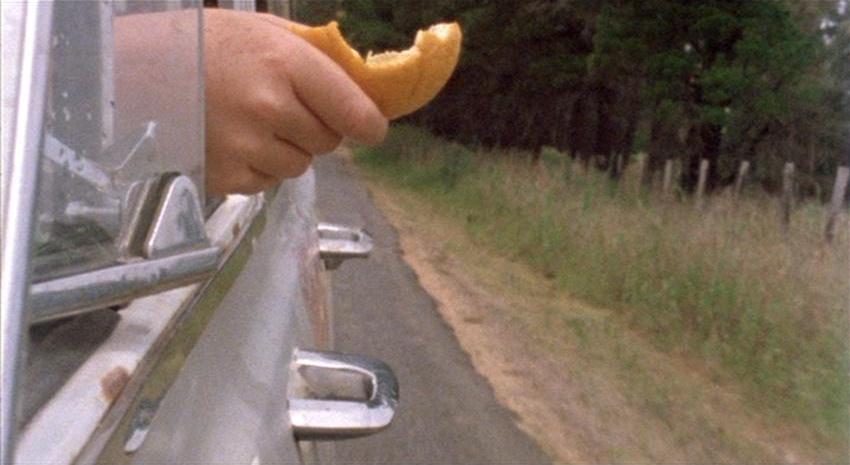
Campion won the Short Film competition for her peerless student film Peel, making her the first woman to win a Palme at any level of Cannes, seven years before she also became the first woman to win the Palme for feature films. Led by Mona Lisa, The Mission, and Sid and Nancy, I have read that the UK had more official selections in and out of the main derby than they ever had before. (Sid, the best reviewed of the lot, was relegated to Un Certain Regard.) Meanwhile, a single, Israeli-owned production company called Cannon Films, previously the industrial plant for such exquisite art works as Hot T-Shirts, Schizoid, and Exterminator 2, spent millions of bribes dollars becoming the first outfit to place three different and notably disparate titles in the Palme line-up: Runaway Train, Altman's Sam Shepard adaptation Fool for Love, and Zeffirelli's attempt to bring Verdi's all-singing Otello to the screen.

The biggest story at Cannes that year, proving that some things never change, is that the U.S. had recently commenced a major bombing campaign in Libya, which had already claimed the life of one of Muammar Qaddafi's children (although this report was later exposed to be false). Security was at maximum intensity at Cannes, which gleams just across the Mediterranean from Tripoli, and virtually all the American talent that had previously planned to support their films in person wound up canceling their visits: Scorsese, Spielberg, Shepard, Whoopi Goldberg, Rosanna Arquette, Walter Matthau, Jon Voight. The casually fearless Robert Altman, the more bullishly fearless Eric Roberts of Runaway Train, and Griffin Dunne, the heavily invested star and producer of Scorsese's After Hours, were the only Yanks to hit the Croisette. By all accounts, the paparazzi were pissed, though the jury wasn't impressed enough by the intrepidity of Altman, Roberts, or Dunne to give a prize to any of them (though Scorsese did win Best Director). Military ships patrolled the shoreline at all hours, as did a giant replicated galleon commissioned to advertise the Opening Night film, Roman Polanski's comic farrago Pirates, which I'm not ashamed to say I'll be skipping.

Among the 20 Palme entrants, I've been able to scrounge up all of them except for Raúl de la Torre's Argentinean political allegory Poor Butterfly; Marco Ferreri's I Love You, a story about a man who literally falls in love with a talking keychain, which was all but booed out of town; and Mohammed Lakhdar-Hamina's French-Algerian production The Last Image. The latter I am sorely disappointed to miss, since Lakhdar-Hamina's Chronicle of the Smoldering Years is one of my favorite Palme victors of the past, and certainly the least well-known of the really great ones. The only available DVD of Bondarchuk's Boris Godounov doesn't seem to have English subtitles, but it's also not clear how much dialogue it's got, so we'll see whether or not I can hang in there with it. It's a festival tradition to get punked by translations or the absence of needful translations, as it is also a festival translation to bail out when the going gets too tough.

Otherwise, stay tuned for some reviews soon. I plan on enjoying my two-week "trip" tremendously, and I hope you'll be along for the ride!

Labels: , , , , , , , , , , , , ,

Sunday, February 06, 2011

#9 of 2010: Lourdes

There are plenty of reasons why so many recent movies made about religion are studies in zealous extremism or, as we witnessed in the just-wrapped Sundance Film Festival, narratives about the ambivalent or downright scary pull of charismatic believers, marginal practices, creepy cults. Lourdes, despite resolutely avoiding the track of vilifying faith, may seem in its opening shot or in a roughly synopsized premise to be headed along the equally easy road of facetious send-up. Our first impression, from a camera somewhere in the high rafters of a dubious, marble-floored hotel restaurant, is of timid, hunched, variously incapacitated pilgrims gradually entering and taking their seats, before the head nun/chaperone runs dispassionately through the group itinerary for their visit to Lourdes, the legendary healing site. As the shot fills with people and the camera zooms closer, the kitschiest accoutrements of this trip (an end-of-week prize for Best Pilgrim!) stand in uncertain relation to the soft, sympathetic sincerity with which this nun, uncannily played by Elina Löwensohn, promises to her temporary wards a respite from their acute loneliness. The mutedness of the sound design, plus writer-director Jessica Hausner's gift for capturing the hush and austerity even in commercialized spaces, lend the scene an unexpected dignity; the Crayola shades of the costumes and the architectural pastiche of banquet hall and ski chalet encourage winking skepticism. The camera's refusal to cut, like the unfussy inscrutability of the performers, refuses to break this inchoate first impression into more revealing tonal clues. Nothing contextualizes the overlaid rendition of "Ave Maria," which will reprise later in the film, as a devout musical invocation or as a smirk at the commodified canning of spiritual expression. Is this pilgrimage for real or not, on the whole or in parts? And if so, which parts?
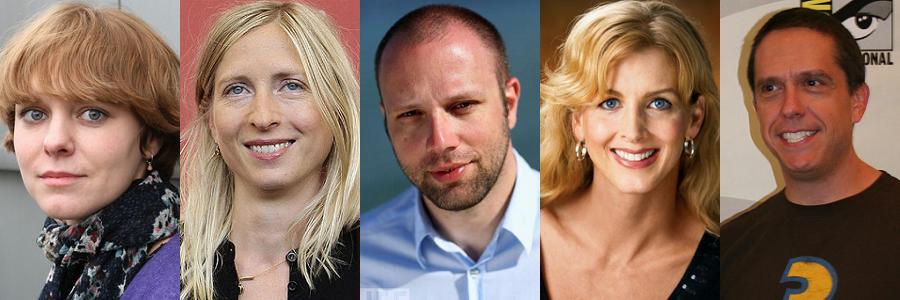
The withholding of judgment persists across Lourdes, which is comic, haunting, sweet, pious, unsettling, agnostic, and wholly deadpan at various moments. The scene structures, story arc, and style are so unusual that they ironically emit a strong sense of directorial point of view even as they inventively resist any sense of pinpointable editorial intervention. Our focal character, played by the charming, heroically opaque Sylvie Testud, is a young, wheelchair-bound woman who, early on, comments on the plastic, "touristy" aspects of this trip to Lourdes, where the minuscule possibility of a miracle is sold like a visit to Epcot Center, a Carnival Cruise, a steady engine for gift-shop apparel: I Prayed To Be Able To Walk, and All I Got Was This Lousy T-Shirt. But Testud's Christine makes this comment gently, in docile appreciation of the chance to get out, and the framing of spaces as well as ensuing events conspire to imply that something miraculous is happening, almost happens, or at least potentially could happen to Christine while at Lourdes. And why Christine? Löwensohn's chaperone, whether outraged at her unrewarded devotion or guilty about a private waver in her faith, seems incensed that Christine, not she, is the object of divine contact. The indolent, boy-crazy escort played by Léa Seydoux and the more intensely afflicted visitor played by Orsolya Tóth alternately stress the wry vulgarity and the humbling stakes of this place, this spell, whether of time or of magic.

Hausner, working in brilliantly cool cahoots with up-and-coming cinematographer Martin Gschlacht, keeps finding new locations, angles, and movements for her camera that simultaneously imply the very apex of capitalist banalization and the lurking potential of Spirit, of something ineffable. Embracing neither belief nor renunciation, Lourdes produces astonishing, dispassionate fusions of the two and an incredible range of gradations between them. What does it mean, either as the disabled pilgrim or the chaperoning nun, to visit Lourdes and imagine, much less expect, a touch from God's finger? What does it mean to come to Lourdes and not entertain that possibility? Is it holy or ridiculous, a joke or Very Much The Point, that the Spirit insinuates itself not in objects or intervals of sublime ecstasy but on drab day-trips, in restless queues, between the trapezoidal cafeteria trays? What finally happens in Lourdes and the questions or answers that the movie thereby prompts are generously, uncynically open to interpretation. But this is not a foggy, uncommitted exercise in run-of-the-mill ambiguity, nor does it turn on a brazen sensationalizing of body, society, and spirituality in the manner of Breaking the Waves. The exquisite, oblique manipulation of images, sounds, rhythms, and performance by which Lourdes evolves from scene to scene and by which it arrives at its finale offer its own grounds for an ardent belief in cinema—if not as a higher power then at least as a profound one.

Labels: , , ,

Wednesday, September 01, 2010

The Fifties for 2010: Best Supporting Actress

Five splendid supporting performances by women, four of them directed by women, and four of the actors essentially new to me with these performances, since I didn't pay much mind to Mia Wasikowska watching her dad get eaten by a super-sized alligator in Rogue, and I don't remember which headcase Dale Dickey played in the Changeling asylum. Two shortfalls of perspicacity, I'm sure.


Dale Dickey for Winter's Bone, who enters as a tough scene-stealer, then surprises by returning (and how, tossing coffee!), then keeps showing new sides of this tough bird;

Ann Guilbert for Please Give, because her director coaxes tart but not especially daring performances, and yet Guilbert gives odd, risky edges to her mean, ailing old bat;

Elina Löwensohn for Lourdes, who manages to underplay bitter resentment, quietly seething over her mothlike charge's strange epiphany, wondering why it bothers her so;

Mia Wasikowska for The Kids Are All Right, giving the film's subtlest and most consistent performance, radiating an annoyed sadness as she realizes that her family cannot be trusted; and

Jacki Weaver for Animal Kingdom, who looks like she knows she rocks, but fair enough when you forgo pyrotechnics, kill with kindness, and play the car-window scene so softly.

Can I just say, that's yet another lineup I'd be happy to preserve through the end of the year? Still, honorable mentions to Patricia Clarkson for using her voice and her intensity to swat Leo across the face in Shutter Island, coming remarkably close to bringing the film to life; to Alice de Lencquesaing for playing a girl both introspective and precocious in The Father of My Children, not unlike the one she played in Summer Hours, but nicely blurring the line between shell-shocked grief and adolescent preoccupation; and to Kierston Wareing, who is vivid enough as the blowzy good-time mom in Fish Tank that one wishes she had more opportunity to expand upon her lewd, cat-grinning, unreliable presence.

Labels: , , ,

Thursday, August 26, 2010

The Fifties for 2010: Best Director

So, re-entering the now: seasoned readers will know that every year, once I've crossed the threshold of seeing 50 commercial releases, I pause for a midterm progress report of bests in several categories, which doubles as a kind of For Your Consideration ad for achievements that I'm hoping other people will recall at year's end (or else hunt down, if they didn't see them the first time). I'm going to move in reverse order of the categories I just rehearsed from last year's Honorees. And so, without further ado...


(...although, if I can just add a little ado, can I say how exciting it is to see this list filled with five filmmakers ranging from their early 30s to their early 40s, none of whom has more than three features under her or his belt, two of whom got their first solo directing credits for these films, and three of whom are women? And I promise, I arrived at this list before considering any of that. It's a new day!)

Maren Ade for Everyone Else, since she proves the term "actor's director" needn't imply inattention to visuals and structure—but still, get a load of those performances;

Jessica Hausner for Lourdes, because she hovers between spoofing her subject and seeming spooked and humbled by it, while maintaining pristine, enigmatic formal control;

Giorgos Lanthimos for Dogtooth, for evoking more about petty tyranny and ignorant complicity by refusing to be literal, allowing himself humor, and trusting his originality;

Kimberly Reed for Prodigal Sons, for an 80-minute master class in imposing clear, forceful, and moving arcs onto complex and wholly intimate material, without losing nuances; and

Lee Unkrich for Toy Story 3, a playroom Preston Sturges who spins a rich central story about love and betrayal, couched amid sublime comic supports, pristinely concluded.

Extremely honorable mentions to Jacques Audiard for bringing his trademark blend of gritty realism and lightning verve to the prison tale A Prophet; to Bong Joon-ho for justifying Mother's wilder excesses by crystallizing his tones and intents so purely when it counts most; and to Andrea Arnold for sustaining the promise of Red Road in Fish Tank, which mirrors the Audiard in its blend of scrappy entrapment and fablic embellishments, and draws an ensemble of performances to die for. Those three runners-up would be full-time ballot contenders in a whole lotta years. I guess this year is shaping up okay? The only catch: Toy Story 3 is the only legitimately new film of 2010 anywhere among these eight.

Further honorable mentions to Roman Polanski for The Ghost Writer, Noah Baumbach for Greenberg, Mia Hansen-Løve for The Father of My Children, David Michôd for Animal Kingdom, and Frédéric Mermoud for Accomplices. The first, second, and fourth actually did bow on the world stage this year—albeit very early, at Sundance and Berlin!—so that's something.

Labels: , , , , ,

Wednesday, August 25, 2010

2009 Honorees: Directors

The last category where I'll be profiling Bests from last year, either because I didn't fall in love with a lot (non-festival documentaries were generally weak, and Score comes down to Duplicity, The Informant!, and not a lot else), or I'm having a hard time remembering (if I don't do Sound right away, I turn forgetful), or else it's just the same films crowding all the categories (viz. Beeswax, Duplicity, In the Loop, Summer Hours, and Whip It in Best Ensemble, with The Hurt Locker, The Maid, and others following up).

These Best Director picks won't come as much of a shock given the Top Ten List I published lo these many months ago, but it's still worth applauding from our seats for...


Roy Andersson for You, the Living, for working from a palette of theater, painting, and still photography without just dabbling; the ambivalence and wit feel shaped by cinema;

Kathryn Bigelow for The Hurt Locker, for conceiving a ruminative movie in long shot around Mackie, and a relentless one in close-up around Renner, and knowing how to mix them up;

Jean-Pierre & Luc Dardenne for Lorna's Silence, for equaling the elegance of L'Enfant but with richer, less abstract emotion; the finale's debatable, but all else clicks, and I like risks;

Jim Jarmusch for The Limits of Control, for taking a bold gamble on geometric, rhythmic, chromatic, and tonal abstraction; I was spellbound, and he rarely has that effect on me; and

Erick Zonca for Julia, for driving his film with the pedal-to-floor ferocity of an old sedan crashing across a policed border, yet every element is tightly managed.

Extremely honorable mentions to the warmth, spryness, and subtlety that Andrew Bujalski brings to Beeswax; to Sacha Gervasi's sensationally funny-sad shaping of material in Anvil! The Story of Anvil, which could have been played for jokes or banalities; to Olivier Assayas for the tenderness and finely edged toughness of Summer Hours, which implies a modern France while having the elegance and lovely remoteness of an object from the past; and to my constant muse and inspiration, the single reason I write about film today, Jane Campion, who showed again in Bright Star that there are many ways of exploring a period, communicating a love-bond, or evoking as fragile and internal an act as poetry on screen.

Further honorable mentions to Park Chan-wook for Thirst, Tony Gilroy for Duplicity, Drew Barrymore for Whip It!, Sebastián Silva for The Maid, Armando Iannucci for In the Loop, Cary Fukunaga for Sin Nombre, and Frederick Wiseman for La Danse. And speaking of established masters, I didn't love everything that Aleksandr Sokurov did with The Sun or Claire Denis did with 35 Shots of Rum, but no one else could or would have made those intriguing pictures, and at their best moments, who could match them?

Labels: , , ,

Thursday, June 24, 2010

R.I.P. Marc McKerrow

The most searching and inspiring conversations I have ever enjoyed with a filmmaker I had with Kimberly Reed, the director of the extraordinary, autobiographical documentary Prodigal Sons. I still think that film is the best commercial release of 2010 so far, but coextensive with its narrative and aesthetic virtues is an extraordinary act of tricky, lucid, personal compassion from a sister to a brother. Marc McKerrow, Kimberly Reed's brother, never had an easy life. It only got harder, partly for reasons he might have tried harder to control, but largely for reasons exceeding his control, and which surely caused him more grief than they did anyone else.

Prodigal Sons was a watershed experience for me at last year's Nashville Film Festival and has moved audiences and impressed critics in Canada, Greece, Denmark, Finland, Iceland, Ireland, and so many other places, as well as the U.S. Long before I spent a weekend hosting Kim at Northwestern, I was already bewildered by the smattering of reviews that worried whether Prodigal Sons is over-crowded with subject matter, or whether it's ultimately exploitative in depicting Marc's struggles with mental illness, his consequent swings of temper, his longing for his birth parents whom he was never to meet, and his acute case of sibling rivalry. From where I was sitting, the beautifully judged density of the narrative is one of the movie's cardinal virtues, since too many films, fiction and nonfiction, seem so cowed into dulling the edges of difficult stories, or taking infinite snapshots of one side of a character while never taking the initiative to walk around for different angles, or to think, hard, about to whom and to what that character relates. And the danger of exploitation strikes me as precisely what Prodigal Sons avoids through such a rounded, principled, but compassionate vantage on Marc—a vantage, moreover, that puts the filmmaker up for review as fully as it does her struggling brother.

When Kim visited Northwestern last winter, she said that no one was a bigger fan of Prodigal Sons than Marc. For anyone to whom this reads like a typical sound-bite of promotional cant, I watched her fulfilling Marc's standing request that she call him before or after and sometimes during every single festival screening of Prodigal Sons she attended—and she attended a lot. Marc's former wife, whom you meet in the film, attended a recent screening at the Spokane International Film Festival, near the home she shared with Marc: as apt a tribute as I can imagine to the fullness and fairness of the characterization, short of her own continued, private support of Marc through his ordeals. If you have seen the film, which has begun airing on the Sundance Channel and will appear on DVD this month, or if you saw Kim's hour-long interview with Oprah Winfrey in February, you know that behind this meditative, deft, free-thinking, and full-hearted movie is a family of unusual resilience and attachment, even or especially in the face of unusual tests.

Motivating all of these words is the news that Marc passed away unexpectedly on Friday. Only three days later, Prodigal Sons screened for the first time on Sundance, thereby reaching what is certain to be its largest, least predictable audience. The film is suddenly his legacy in a poignantly literal way, which I expect will only make it a more wrenching but also a more stirring and memorable viewing experience. Tributes to Marc and condolences to the family have already begun proliferating on the film's Facebook page; a new foundation in his name, to raise awareness and funding related to brain injury and mental illness, will soon go online here and here. I encourage you to donate what you can, even if it's just a few moments of your time to read and learn, or a private thought for the McKerrows and for other people who negotiate these sorts of challenges.

I have found it difficult to pay tribute to Marc without sounding like I'm shilling for the movie. I don't know how to avoid that danger when I not only feel so strongly about Prodigal Sons, but after all, it's the aperture through which my life came to be changed by my exposure to Marc and to his whole family's story. From any proximity, intimate or distant, blood-tied or wholly anonymous, he comes across as not an easy person to get next to. At the same time, Prodigal Sons makes clear that Marc had an ability to be very open and kind, very big of heart, and that he believed in family in ways not everyone allows themselves to do anymore. In conversation, Kim amplified what is already evident in the movie: Prodigal Sons was her way of reaching out to a sibling who had always posed problems for her. Well before the seeds of the film were even planted, Marc had surprised Kim with a request that she help him write his autobiography. In many ways the film was his pet and his idea, despite a few viewers' misapprehensions that he is somehow secondary or precariously positioned with respect to Kim's own narrative. Though Marc's life only got tougher from where the movie leaves off, brother and sister only became more and more bonded.

Now, in the wake of his death, I am only more moved to see Prodigal Sons as a beautiful, sobering testimony—provoking of thought as well as feeling—that there are so many ways to reach out and mend fences where they are broken, or even to reiterate your love for people who are well aware of it. During what is surely a terrible time for the McKerrow family, I hope they find some solace in the fact that they collectively—Marc included—reached out to each other before it could easily have been too late. Clearly the story is more complicated than that, and it's important to recognize, even having spent time with Kim, that I have only an extremely mediated awareness of who the McKerrows are and what all they have been through together. But I'm keeping them even closer in my thoughts than I already have in the year and a half since I first saw Prodigal Sons, and I hope some of you might do the same.

Four days after Marc passed, and the morning after the movie's premiere to a nationwide audience on cable TV, this rare double rainbow appeared in the sky over the McKerrows' hometown of Helena, Montana. Interpret as you will. Poetic license can be a great ally in moments of introspection.

Labels: , , , ,

Monday, February 15, 2010

Monday Reviews: XXY

I have more quick reviews to add from all the back-catalog renting and revival-house haunting I've been doing lately, as well as a whole mess of unfinished business from 2009 to catch up on. (And if the phrase "a whole mess" in relation to "2009" conjures up the immediate association of The Lovely Bones... yes, I finally saw it, and yes, it's as jaw-droppingly, peculiarly awful as everyone short of Kris Tapley has already attested.)

For now, to prove that I'm not dead, I'm just tossing up the one full review I've actually finished in the last week, for Lucía Puenzo's flawed but promising debut drama XXY (2007), about an intersexed pre-teen in Argentina whose parents may or may not be planning a genital-correction surgery. Alex, the central character, may or may not have intuited this looming possibility; Alvaro, the son of the couple who have just been invited so abruptly to the seaside home of Alex's parents, may or may not feel erotic attractions toward Alex, and he may or may not understand those desires, either before, during, or after he acts upon them.

XXY, reviewed here, was one of the movies I recently listed as enticing titles from the just-finished decade that I wished I had caught at the time. Of course I harbor big dreams of searching out all the movies I cataloged in that "Backwards & Forwards" series, and of course this blog is nothing if not a repository of big dreams. I am reminded, all the time, of my first visit to the home of a very famous professor for whom I was a research assistant in college. She had a room in the top floor of her house where she had installed some old choral risers she'd found in a flea market, so she could arrange her little heaps of paper corresponding to all of her unfinished, barely commenced, or never-quite-begun projects and look at them all with pride, whether or not she ever managed to do anything with them. She called this room her Study of Lost Causes.

I have not yet buckled to internal pressure toward renaming this blog exactly that, and hopefully, as the weeks go by, I'll feel even less reason to give into that temptation. Keep hope alive!

Labels: , , , , ,

Wednesday, October 07, 2009

CIFF 09: Kickoff, and Paranormal Activity


The Chicago International Film Festival kicks off tomorrow, and I could barely be more excited. How very kind of my windy metropolis to throw me a birthday bash every year, and this time to amplify that already transparent correlation by underscoring its own birthday: 145 films exhibited from 45 different countries to mark the festival's 45th year. Admittedly, I haven't bean-counted the program to make sure things really do stack up this elegantly. I am happy to be a sucker for the marketing staff and its pleasingly professed numerology.

I will not be attending the red-carpet opening-night gala screening of Motherhood, a comedy directed by Katherine Dieckmann, who got Paul Rudd looking so good in cold-weather clamming duds a few years back in Diggers. Even in this prodigiously exciting year for women directors, especially those who maintain artistic ambitions for commercial narrative film, regular readers know that I need even more incentives than that to watch Uma attempt comedy. Prime, sadly, is not as distant a memory for me as it might be for you. I did, however, marvel at this overheard conversation a few weeks ago at CIFF headquarters, as a staffer worked out some kinks in Uma's travel plans over the phone with some unseen agent:

Last name is "Thurman." First name "Uma." U-M-A. Yes, it's the actress... She's in movies. She was in Pulp Fiction... Do you see movies?... No, I don't think she was in that... Hmm-mm... Oh, yes, I think she was in My Super Ex-Girlfriend.

I'm not an Uma-phile, but she didn't deserve that. Thankfully for her, the festival is throwing a big show in her honor, endowing her with its Career Achievement Award. Meanwhile, I am reminded of what I almost always forget, which is how little the movies matter to a tremendous number of people. I even know some people like this, though I attempt to deny it, and goad them by inviting them along to things.

Anyway, failing any coverage of Motherhood, and slyly bridging from what I was just talking about into my festival pieces, I want to alert you to the one-time, Saturday-night CIFF screening of the increasingly-hyped but still elusive Paranormal Activity. As I promised in my first post about CIFF '09, I will almost entirely avoid imminent commercial releases within the CIFF program in lieu of filling you in on carryover hits from other festivals that I doubt you've been able to see yet, and some even more under-the-radar titles from around the world. So, as I commence with a full review of a title that I'm guessing will bloom into a fuller-scale, nationwide release sometime between now and Halloween, I urge you to seek out this movie, whether amid the Chicago Film Festival or in your own town, but not to anticipate many more CIFF dispatches that skew quite this commercial.

You'll know soon enough what you think, and what I think, about An Education and The Young Victoria and Antichrist (although, man, it hurt not to buy that ticket). For the next two weeks, I'll shine a light instead on less heralded films and filmmakers and on national cinemas from well beyond the beaten path of U.S. commerce. Admittedly, you'll be well within your rights to observe that Andrea Arnold and Bong Joon-ho and the rising tide of Romanian masters hardly amount to undiscovered talents or breaking news. But much of my docket should offer even fresher material to my readers than however I wind up responding to these relative celebrities of the cinephile world.

But first, we've got one nasty $%@# of a demonic malefactor to attend to...

Image © 2007 Blumhouse Productions, © 2009 Paramount Pictures. Paranormal Activity plays late in the evening on Saturday 10/10. Tickets will go fast, if they haven't already.

Labels: , , , ,

Tuesday, July 07, 2009

Films of the 00s: La Captive

I always enjoy when filmmakers betray their fascination with work by their peers, even when the lines of influence are as evident as they are from Kubrick to Akerman. It's a kick on a DVD supplement to hear this under-appreciated Belgian master compare her film La Captive, loosely adapted from Proustian example, to the widely rejected Eyes Wide Shut, and not principally because both movies rework early 20th-century literary conceits into the social and sexual idioms of nearly 100 years later. This La Captive certainly does, with just as much affinity for ironic anachronism as Kubrick betrays, and with a similar, powerful emphasis on the ways in which even shallow, diminished men control women, imagining they have absorbed them and known them fully. As in Eyes, which Akerman deliciously misremembers as a Richard Gere vehicle, the male lead in La Captive understands more and more that he has precious little hold on what the woman in his life thinks or does or feels, and if Akerman's film is a good bit slower and less baroquely daring than Kubrick's, fans of his film (and I know that a few haunt this site) may well be intrigued by hers. As added incentive, here's the start of my new review:

"Chantal Akerman's elegant and admirably committed updating of Proust disentangles the notion of the controlling, possessive lover from the commercially overworked figures of either the brutish Svengali, throwing his weight around along with his fists, or the imperious hedonist of either gender, wielding a charismatic erotic arrogance that pitifully abjects the lover who just can't seem to say no or cry foul. By contrast to these enduring types, the sexual captor in Akerman's movie is a pale, ageless, rabbit-eyed, neurasthenic male of the Ian Bostridge stripe, whose physical frailty ironically contrasts but hardly neutralizes the vigor of his proprietary impulses. His name is Simon Levy (Stanislas Merhar), and though he's too restless, mobile, attentive, and jealous to be a simp, he often makes comments despite his cream-complexioned youth that call to mind those aging, terminally incommoded women who nonetheless rule their respects roosts with barely contested authority in any number of 19th-century English novels. Bathing before a pane of frosted and beveled glass, on the other side of which his coveted lover Ariane (Sylvie Testud) also languishes in a tub, Simon rhapsodizes in his peculiar, semi-detached way about the visual, textural, and aromatic wonders of Ariane's body, her skin, her vagina—while nonetheless imploring her to give herself a good scrub. 'If it weren't for my allergy and all the pollen you bring in,' he says, 'I almost wish you'd never wash,' a line that would work as either a wry or a broad comic indictment of brattish, whey-livered romantics who guard, relish, but find themselves intimidated by the robust materiality of the women they idolize and thereby objectify..."

I hope you'll keep reading and at least consider renting!

Labels: , , , , ,

Saturday, July 04, 2009

Films of the 00s: American Psycho

This post was not intended as a flip rejoinder to Independence Day, though when I realized it had that potential implication, I can't say I rushed to defuse it. Make of this what you will!

I was initially mixed about Mary Harron's American Psycho, but it's a hard movie to forget or to shrug off. Ten years later, that much further into Harron's unusual career and well past Bale's arrival as a major star (though who knows if he'll stay that way, given his recent string of vehicles and performances), I am still mixed on Psycho in a way that's hard to parse. What's forceful and confident and strong in the movie is clenched so tightly to what's clichéd and imprecise and chaotic in it—at some moments more than others, but especially towards the end. Still, I'm more inclined now than I apparently was in 2000 to accentuate the positive in this strange and striking movie. Here's how my new review starts...

"As early as Little Women and The Portrait of a Lady, maybe even earlier, Christian Bale's face has always been a kind of parodistic exemplar of the word 'chiseled.' As Patrick Bateman in American Psycho, Bale famously mapped that adjective onto his whole body. If his sharp brow, ever-enviable cheekbones, and suddenly statuary muscles seem preternaturally planed and hewn, via a regimen of exercise and cosmetics to which an early sequence memorably introduces us, there is also an aspect of the severe, maybe even the fascistic about this Wall Street pirate's pursuit of his inner and outer Superman. Chiseling isn't just a metaphorical or an autoerotic activity for Patrick, who also likes to slice and carve people up, although the Guignol assaults and starkly photographed red-on-white bloodbaths in Mary Harron's movie were never its most interesting element..."

What is its most interesting element, at least according to me? I'll tell you if you keep reading...

But by the way, does anyone remember that Lions Gate promotional stunt where you could sign up to receive daily e-mails from "Patrick Bateman" leading up to the film's commercial release? File that under creepy oddities in the annals of film advertising...

Labels: , , ,

Tuesday, June 02, 2009

3 Hours and 21 Minutes of Good News

Very likely you have already noticed but the Criterion Collection has more than compensated for some recent lapses in taste with their announcement of a forthcoming deluxe edition of Jeanne Dielman, 23 Quai du Commerce, 1080 Bruxelles. What could be more delicious or deserving? I admit some nostalgia for director Chantal Akerman's insistence for so many years that Jeanne Dielman needs to be experienced in a movie theater, where its reframing of domestic labor and quotidian time is by far the most effective; there is no question that the impact of the film will be diminished somewhat, or at least profoundly altered, by screening it in a home format. And yet! If one thinks in proportions of filmic aesthetics and ambitions vis-à-vis mainstream cultural reputation, Jeanne Dielman, for all of its canonization in academic circles, would rank near the top of my list of landmark masterpieces that rarely get their public due. Anyone who's wondered what this film is doing so high up on my all-time best list will now have a much easier time of finding out. Huzzah to Criterion!

(If you dig Jeanne, don't deny yourself the treat of that 5-film Belgian DVD package that premiered a couple years ago and has, up till now, represented the only venue for screening Jeanne Dielman or, I think?, the other constituent Akerman titles on DVD. Les Rendez-vous d'Anna is another particular favorite of mine.)

Labels: , , , , , ,

Sunday, December 07, 2008

Strange Fruit

But in the best possible way. And it's the family that's strange, not the fruit. Actually, it's not the fruit or the family, it's the lusciously offbeat way they get filmed:


By the way, speaking of superior short films, my friend Jeff Middents has been leading his students at American University through a course in short films, which has required them all to contribute to a Short Films Blog. Each week, the students post about short films that satisfy a given rubric, often including embedded YouTube footage or other links to the films they're discussing as well as their own appraisals. As a two-time guest judge on the students' work, I've been really impressed by their insights and delighted to have a chance to see so many wide-ranging shorts. I hope you'll feel inclined to have a look—and if you're feeling so inclined, leave an admiring comment, and help Jeff's hardest-working students earn some extra credit. The week-long focus on award-winning shorts, including several Oscar winners, may be especially interesting to many of you; I particularly enjoyed the footage and the write-ups in the entries about Glas (entry by Drew Rosensweig) and Der Fuehrer's Face (entry by Lindsay Z.). Plus, as an ardent lover of The Danish Poet, I can't fail to mention Trinnyallica's spiffy reflections on that one.

To Jeff's students, if you're reading: great job! And since you're newly able to relish the art of the short film, here is Peel in its eight-minute entirety!

Labels: , , , , , ,

Wednesday, December 03, 2008

Thanks for the Memories, Jane!

December 3: To you, just a Wednesday, with perhaps a gleam of specialness for being Julianne Moore's birthday (very commendable of you to remember). But for me, the 15th anniversary of the first time I saw The Piano, alone, at a matinée screening across the street from my public high school in Fairfax, Virginia. Nothing was ever the same afterward, and it still isn't. A giant (tuning?) fork in my road. My "mind's voice," in Ada McGrath's terms, is still hugely influenced by this film.

So, please permit a day-long interruption in the Favorites entries while we celebrate 15 gorgeous and clickable images from my actual favorite movie ever made, which would certainly top the countdown if it weren't disqualified by also being one of the best movies ever made.


Labels: , , ,