Friday, July 15, 2011

Cannes 1986: Some Rough Patches


So far Nagisa Ôshima's Max, mon amour is my least favorite film in the Palme competition, and Ruy Guerra's Ópera do Malandro is my least favorite sidebar selection. You can see the reviews by clicking those links and gauge my progress with the festival so far. But even after hitting these two rough patches, I can promise there are better films looming on the review horizon. And besides, I wouldn't leave the 1986 Cannes Film Festival for anything. It's the only place I can find where no one is talking about Harry Potter.

Labels: , , , , , ,

Monday, February 15, 2010

Monday Reviews: XXY

I have more quick reviews to add from all the back-catalog renting and revival-house haunting I've been doing lately, as well as a whole mess of unfinished business from 2009 to catch up on. (And if the phrase "a whole mess" in relation to "2009" conjures up the immediate association of The Lovely Bones... yes, I finally saw it, and yes, it's as jaw-droppingly, peculiarly awful as everyone short of Kris Tapley has already attested.)
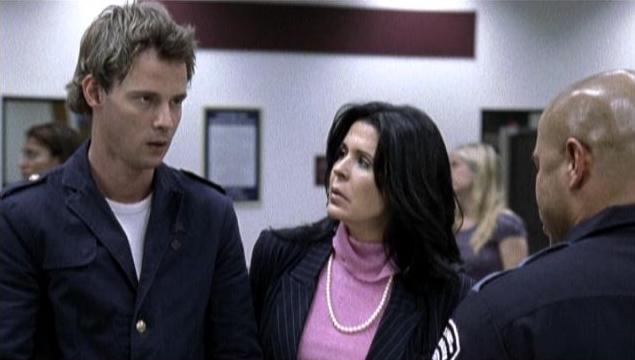
For now, to prove that I'm not dead, I'm just tossing up the one full review I've actually finished in the last week, for Lucía Puenzo's flawed but promising debut drama XXY (2007), about an intersexed pre-teen in Argentina whose parents may or may not be planning a genital-correction surgery. Alex, the central character, may or may not have intuited this looming possibility; Alvaro, the son of the couple who have just been invited so abruptly to the seaside home of Alex's parents, may or may not feel erotic attractions toward Alex, and he may or may not understand those desires, either before, during, or after he acts upon them.

XXY, reviewed here, was one of the movies I recently listed as enticing titles from the just-finished decade that I wished I had caught at the time. Of course I harbor big dreams of searching out all the movies I cataloged in that "Backwards & Forwards" series, and of course this blog is nothing if not a repository of big dreams. I am reminded, all the time, of my first visit to the home of a very famous professor for whom I was a research assistant in college. She had a room in the top floor of her house where she had installed some old choral risers she'd found in a flea market, so she could arrange her little heaps of paper corresponding to all of her unfinished, barely commenced, or never-quite-begun projects and look at them all with pride, whether or not she ever managed to do anything with them. She called this room her Study of Lost Causes.

I have not yet buckled to internal pressure toward renaming this blog exactly that, and hopefully, as the weeks go by, I'll feel even less reason to give into that temptation. Keep hope alive!

Labels: , , , , ,

Thursday, April 23, 2009

Nashville Film Festival 2009: Live Action Shorts, Part 2

Let's call these the "bronze medalists," numbers 8 through 10 on my list of the best short films I've seen while on duty here in Nashville:

#10: Round Trip (Ida y vuelta) - trailer
(11 min., USA/Spain; IMDB)
Eloy Azorín, the doomed son from All About My Mother, and the always welcome María Conchita Alonso propel this short, tough narrative in which they play a mother and son flying into the United States for a family wedding about which Alonso, at least, is none too excited. Trouble quickly brews from an unexpected direction, but in contrast to several festival shorts where ideological tensions between nations and cultures or between the power class and the most vulnerable subjects led to stilted or overstated drama, Round Trip keeps a vise-grip on nuanced character development. The ending arrives just a few narrative beats before I hoped it would, and the film doesn't excel conspicuously in any particular area of formal craftsmanship, but it's taut, persuasive, and well-acted, and it doesn't boil down to any takeaway moral.

#9: The Watch (El Reloj)
(15 min., Argentina; IMDB)
Almost conversely to David Martín-Porras' Round Trip, Marco Berger's The Watch resists the urge to crystallize an event and instead wends a purposefully coy, smirking path around an event that isn't happening, at least as far as we can tell. At the outset of the film, teenaged soccer player Juan Pablo (Nahuel Viale) appears successfully to cruise a handsome fellow athlete named Javier (Ariel Nuñez Di Croce) while they await a city bus that never arrives. The guys wind up at Juan Pablo's house, with Javier somewhat busily impersonating someone who has no idea where any of this is headed. What they find inside the house, beyond the dirty pink walls and a general dishevelment, is Juan Pablo's almost comically inert and narcotically dazed cousin, watching TV in his undies. Whether he's cognizant of the boys' libidinal errand marks another opacity in the film; Javier works hard to notice yet appear not to notice the cousin groping himself beneath his shorts while he lounges at the refrigerator door and sucks some yogurt off his finger. The Watch plays a little like Trick as directed by Harmony Korine: it's grotty and constipated, but it's winking beneath all the grub. The titular conceit about the watch doesn't quite come through, and the deliberately disjointed editing goes a bit above and beyond the call of confusing motives and rhythms. It's a wry, willful piece, mostly charming if subliminally a bit sad, and though a certain kind of audience expectation will be roundly thwarted, there's certainly an erotic charge to the film; it's just inextricable from a teasing joke.

#8: The Pig (Grisen)
(23 min., Denmark; IMDB)
Continuing our series of opposite tempers, Denmark's Oscar-nominated The Pig is as sweetly bourgeois and audience-flattering as The Watch is resistant to most forms of comfiness. You couldn't call The Pig subtle or unmechanical in the way it eases the audience into its grouchy-cute story about an elderly white surgery patient who grows swiftly attached to a painting in his recovery ward—and then protests mightily when the Muslim family of his convalescent roommate rejects the painting as subtly offensive. One of The Pig's many self-insulations from ruffling anyone's feathers is that this contest of wills is projected almost entirely onto the (broadly acted) children and relatives of the patients, clearing the way for Asbjørn and Aslam to achieve their own rapprochement once the ward clears out. All of this feels much more formulaic in retrospect, but the proficient set-up and plummy, winking tone are quite charming in the moment, and many films have pandered much, much more than this on their way to gratifying the generous range of audiences that The Pig leaves itself open to. The hero of the piece is production designer Mette Lindberg; whether she found or commissioned the porcine portrait of the title (and the improvised sketch of same that figures later in the comic accumulation), they are as beguilingly insipid as they possibly could be. The painting alone, of a pig leaping incongruously off a pier into a tree-lined lake, scores the movie's best joke, about how the most absurd objects can sometimes elicit profound emotional investments, even (or especially) when they're the only thing to cathect in a sterile environment at an uncomfortable time.

Labels: , , , , , , ,

Sunday, October 07, 2007

Chicago Film Festival: The Aerial

If Guy Maddin and Leo McCarey got together to remake Brazil, their efforts might yield something like Esteban Sapir's The Aerial, a jaunty errand into silent-era surrealism and anti-corporate allegory that should, by all rights, be too obvious in its points and too crammed with fancies to generate the level of charm and light-touch magic that it does. In The Aerial's universe—billed as "Once upon a time..." but inclined, too, toward the present and the prescient—a monolithic and mobster-defended television station has already committed a whole host of crimes against humanity: its leaders have literally revoked the voices of the world's citizens; they have eliminated rival media outlets; and they have saturated the grocery market with boxes of "TV Foods," basically sugar cookies topped with a lulling spiral of white frosting. Only one woman in the film's unnamed city has retained her own voice and the right to its exercise, but at the heavy prices of hooding her face, parading her body in sultry nightclub performances, and indenturing herself to the tyrannical and devil-tailed mastermind Mr. TV. This woman, simply named Voice, has a child, a boy born without eyes whose own vocal capacity is a desperately kept secret. Soon, the fate of this pair intertwines with that of an inventor, his young daughter, and his grandfather, who live and work in a TV repair shop. When the girl arrives to visit her blowzy, cigarette-smoking mother, she befriends the sightless son of Voice. When Voice herself is abducted by Mr. TV and his henchmen—on the way to an even grander, and weirder, scheme of world domination—the two children as well as the girl's reunited mom and pop trek into the snow-swept mountains to rehabilitate an old transmitter and basically culture-jam the villains to death and the slumbering, wordless population to life.

As you will already glean, the political line of The Aerial does not distinguish itself in nuance or depth, and Sapir is much softer on the question of whether silence is coerced or whether it is passively and hegemonically accepted. The almost-ending of the movie, which suspends and challenges the power dynamics and the prevailing apportionments of Good and Bad, would have offered a richer, more provocative conclusion than the one we actually get, however much The Aerial admits of its fairy-tale contours. Sapir also indulges in some appropriations of several sign systems—Communist, Nazi, Judaic, marital, domestic—that he cheekily but indubitably simplifies in pursuit of his homiletic agendas. But all of that said, The Aerial is patently an exercise in formal and stylistic brio, and in breathing witty, creative life into hard-leftist axioms. On these scores, the movie is a robust success. The antique, tungsten quality of the flickering light and the evocative, efficient editing achieve a splendid mixture of beauty and economy. The soundtrack is bright and unimpeachable—not just the warm, funny, inspired musical score but the ingenious instrumentation that also supplies all of the film's foley effects, including footsteps and gunshots. Sapir also has great fun throughout with the placement, phrasing, and materiality of his intertitles; characters are frequently spotted waving or shoving the text out of their way, or having the summary terms of entire emotional states scrawled right over their heads.

Best of all, the gusto with which Sapir reprises so many silent-era tropes while also flexing them for new expressive potentials rhymes perfectly with The Aerial's polemical support of creativity over convention, of under-exploited powers over institutionally regulated genres and boilerplates. Even as the movie assumes discordantly conservative notions of redemption through sentimentalized childhood and of the two-parent nuclear family as ethical building-block, the geometries and overlays and eccentricities of the film stoke the very imagination which Sapir's politics almost suppress. Compared to Maddin's frequently arch and esoteric approaches to the tropes of early cinema, Sapir shows a Pixar-ish loyalty to clear, clever, and spirited storytelling, over and above arcana and idiosyncracy for their own sakes. Thinner and less adventurous than first impressions imply, but a feast for the ear and the eye from start to finish. B

Photo © 2007 LadobleA

Labels: , , , , ,