Monday, February 15, 2010

Monday Reviews: XXY

I have more quick reviews to add from all the back-catalog renting and revival-house haunting I've been doing lately, as well as a whole mess of unfinished business from 2009 to catch up on. (And if the phrase "a whole mess" in relation to "2009" conjures up the immediate association of The Lovely Bones... yes, I finally saw it, and yes, it's as jaw-droppingly, peculiarly awful as everyone short of Kris Tapley has already attested.)

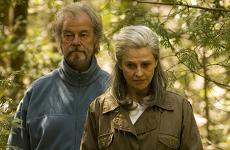
For now, to prove that I'm not dead, I'm just tossing up the one full review I've actually finished in the last week, for Lucía Puenzo's flawed but promising debut drama XXY (2007), about an intersexed pre-teen in Argentina whose parents may or may not be planning a genital-correction surgery. Alex, the central character, may or may not have intuited this looming possibility; Alvaro, the son of the couple who have just been invited so abruptly to the seaside home of Alex's parents, may or may not feel erotic attractions toward Alex, and he may or may not understand those desires, either before, during, or after he acts upon them.

XXY, reviewed here, was one of the movies I recently listed as enticing titles from the just-finished decade that I wished I had caught at the time. Of course I harbor big dreams of searching out all the movies I cataloged in that "Backwards & Forwards" series, and of course this blog is nothing if not a repository of big dreams. I am reminded, all the time, of my first visit to the home of a very famous professor for whom I was a research assistant in college. She had a room in the top floor of her house where she had installed some old choral risers she'd found in a flea market, so she could arrange her little heaps of paper corresponding to all of her unfinished, barely commenced, or never-quite-begun projects and look at them all with pride, whether or not she ever managed to do anything with them. She called this room her Study of Lost Causes.

I have not yet buckled to internal pressure toward renaming this blog exactly that, and hopefully, as the weeks go by, I'll feel even less reason to give into that temptation. Keep hope alive!

Labels: , , , , ,

Wednesday, January 02, 2008

The Leading Ladies of 2007

Happy '08! I hope everyone had a great New Year's Day, my favorite day in the entire year to play it cool, keep things close to home, hang out on the futon and on the phone—and hence, no blogging yesterday. But, there will be copious entries soon enough, with end-of-year best lists to compile, and a major birthday to celebrate. (And no, I'm not talking about Todd's 47th today, though I should be — bon anniversaire, mon cher!)

Moviewise, I've got two heavy hitters blowing into the Windy City this weekend—critical darling There Will Be Blood and well-reviewed documentary The Price of Sugar, an Oscar semifinalist. Basically, I'm waiting on these titles and Persepolis (opening on Jan. 11), plus some last-minute rentals like Offside and The Namesake, before my theatrical survey of 2007 will be complete enough to draft my annual Honorees. Errant 11th-hour releases like The Great Debaters, The Kite Runner, and the is-it-out-or-not? Grace Is Gone also have outside shots in at least one category, but they're a tad less pressing.

So what does every movie on my Still To Be Seen itinerary have in common? Not a single one of them has a female lead... well, give or take Hilary Swank in P.S. I Love You and little Dakota Blue Richards in The Golden Compass, neither of whom looks remotely prepossessing in the trailers, and I'll probably pass on both movies anyway. All of which makes Best Actress (and isn't this fortuitous?) the one category for which I can already posit a semifinalist list. And what a list it is! Anybody here would have qualified for my final five in '01, '03, or '05, and given how many of them are solid Oscar hopefuls, I'm expecting an Academy shortlist that trounces last year's admirable derby of Cruz, Dench, Mirren, Streep, and Winslet. Here are the fourteen glorious contenders:

JULIETTE BINOCHE in Flight of the Red Balloon
NIKKI BLONSKY in Hairspray
JULIE CHRISTIE in Away from Her
MARION COTILLARD in La Vie en rose
KATE DICKIE in Red Road
CATHERINE FROT in The Page Turner
ANGELINA JOLIE in A Mighty Heart
LAURA LINNEY in Jindabyne
LAURA LINNEY in The Savages
ANAMARIA MARINCA in 4 Months, 3 Weeks, and 2 Days
ELLEN PAGE in Juno
PARKER POSEY in Broken English
PARKER POSEY in Fay Grim
TANG WEI in Lust, Caution

If that list isn't stupendous enough, consider that I've already elected against work as strong as Nina Hoss' in Yella, Amy Adams' in Enchanted, Marina Hands' in Lady Chatterley, Ashley Judd's in Bug, Luisa Williams' in Day Night Day Night, Julie Delpy's in 2 Days in Paris, Christina Ricci's in Black Snake Moan, Mirjana Karanović's in Grbavica: The Land of My Dreams, and Amber Tamblyn and Tilda Swinton's muted but interesting pas-de-deux in Stephanie Daley.

Other people would have advocated for Nicole Kidman in Margot at the Wedding, but I just didn't find much modulation or depth in her admirably sour exterior; or Keira Knightley in Atonement, but her vocal work drove me batty and she didn't find a way into the character that I felt or believed, though the script is certainly not her friend in pursuing that venture; or Isabelle Huppert in Private Property, refreshingly casual and direct as a discontented mother but abandoned by the script before she's broached any deeper territory; or Jodie Foster in The Brave One, nailing Erica's tough carapace but pretending to be in a smarter movie than she's in (plus she takes that unsalvageable ending even further over the top than it's already going); or Halle Berry in Things We Lost in the Fire, who mostly shows how much better she'd be in Monster's Ball now than she was six years ago, with an artfully restrained and shaded but still rather limited performance; or the much-beloved Carice van Houten in Black Book, but I found her to be more of a pose-striker and an agreeable, flexible participant in Verhoeven's flamboyant mise-en-scène than a particularly whipsmart or engaging performer. (She also, for all of her virtues, made Ellis/Rachel a bit of a wash as a spy: how many sidelong fretful glances and nervous fingers and anxious over-the-shoulder looks is a disguised Jewish spy at war with the Nazis really supposed to allow herself? Tang Wei knew better than this little minx.)

The above were at least runners-up. Katherine Heigl in Knocked Up, Vittoria Mezzogiorna in Love in the Time of Cholera, Markéta Irglová in Once, and Belén Rueda in The Orphanage never excited me all that much. Cate Blanchett was almost as bored as I was during Elizabeth: Full Throttle. Don't even get me started on Helena Bonham Carter, as blank and superficial in her acting of Sweeney Todd as she is patently deficient in her singing; or Molly Shannon in Year of the Dog, disappointingly inadequate to her movie's difficult tone and to all of her close-ups; or Keri Russell, exuding the same lockstep mediocrity and lack of real ideas or feelings as is the rest of Waitress; or Asia Argento, who won lots of fans at Cannes but broods her way through The Last Mistress in a series of increasingly dull grimaces and off-putting bits of naughty-bobcat improvs; or Marianne Faithfull in Irina Palm, well-buzzed on the festival circuit but pitifully stiff and inert in an underconceived part.

So, with all of that said: my list of 14 semi-champions will be whittled down to five later this week, as we kick off the 2007 Nick's Flick Picks Honorees. In truth, four of them are already locked for inclusion, four are confirmed also-rans, and the other six are competing for that fifth spot on the final list... so go ahead and state your cases for your favorites! Plus, we've got 19 other categories to sort through, and even more to say about actresses of the past as well as the present. But you'll have to stay tuned for those tidbits. Enjoy '08, vote Democratic, and keep coming back!

Labels: , , , , , , , , , , ,

Tuesday, December 11, 2007

Away from Them

I can't believe I'm away from home and from e-mail when all the critics' awards are pouring in. Y'all do not need me to summarize who won what in New York, Los Angeles, and Boston, or what the National Board of Review had to say; Nathaniel and Gabriel have got that covered. So, taking a hint from my blog buddy Six Things, and acknowledging that I am currently poaching a wireless connection from a nearby business, I'll limit my reactions to the following:

1. Casey Affleck is a lead in The Assassination of Jesse James by the Coward Robert Ford. I thought he was good in the movie, if not quite great, but I'm not giving him any love for his NBR or San Fran wins as Best Supporting Actor, because The S**t Is Bananas.

1a. People: any movie can have two leads. Or more: think Closer. Or none: think I'm Not There. Critics: don't think like Oscar publicists, think like actors: if you landed Clive Owen's part in Closer or Casey Affleck's part in Assassination, you'd call home to Ma and say, "I got one of the lead roles!" Not, "I'm in this movie where I support Brad Pitt by being in the movie even more than he is, and having the whole final act to myself!" So, that's just a little bit about where I'm coming from. Anyway.

2. Speaking of Casey Affleck, he's an even less ambiguous lead in Gone Baby Gone, in which Amy Ryan gives a sporadically striking but very loud performance, and often emblematizes the movie's coarse attempts to "get at" a sub-working-class, drug-laced, South Boston world that the filmmakers don't know enough about. (They know Boston, fine, but not this Boston.) How she is turning into the Helen Mirren of 2007 and winning every prize in sight is beyond me.

2a. People: TILDA. SWINTON. Which part of this is confusing? Help us, National Society of Film Critics. You're our only hope.

3. The Broadcast Film Critics Association. This organization and its awards are best handled in the same way you would handle a horsefly: just stand still and ignore it and hopefully, eventually, it goes away. Every awards nut knows that the BFCA has even less merit as a group than any of its members has individually, and that's saying a lot. Why would we even address it? You have never seen, and will never see, any other mention of the BFCA on this site.

4. No End in Sight. So glad to see this turning into 2007's documentary to beat for the Oscar. Later, when I'm back on home turf, we will address the disappointment I feel about Oscar's qualifying shortlist of docs, but No End in Sight is on it. Rent it: not only a solid, well-packaged film, but the handiest two-hour condensation of U.S. "policy" and its grievous, successive errors in Iraq that I have seen, partially because No End spends as much time articulating a sociological picture of Iraq post-2001 as it does making predictable (if fully deserved) wails against key U.S. officials. I admit that I'm glad to see the Boston scribes endorse the deliciously fun Crazy Love (reviewed here), but No End in Sight is a sturdier choice.

5. The Slavophilia of the LAFC. Last year, some smooth-talker in that group had the genius idea of coronating my own Best Actress choice, Luminita Gheorghiu of The Death of Mr. Lazarescu, as their Best Supporting Actress. Even though, yes, she is a lead: see 1a. But I was so wowed by their adventurousness and lack of parochialism, I let it slide. This year, the same silver-tongued Cicero of the City of Angels persuaded her or his peers to rally behind the phenomenal and as-yet-unreleased 4 Months, 3 Weeks, and 2 Days: their Best Foreign-Language Film of the Year and also their choice for Best Supporting Actor, in the form of Vlad Ivanov's dismaying and thuggish abortionist. And Anamaria Marinca was the runner-up to the lovely and deserving Marion Cotillard for Best Actress. I've already been planning to throw release patterns to the wind and include 4 Months in my year-end festivities. I figure that what I see in '07 stays in '07. But it's nice to feel the LAFC has your back in a case like this. Which reminds me...

6. No Country for Old Men. Julie Christie. Javier Bardem. The script for The Savages. Ratatouille. Sidney Lumet and the rest of Before the Devil Knows You're Dead. They're all having great awards runs, and good on 'em. But don't expect to see any of them when the Nick's Flick Picks Honorees drop in early January. I'm not trying to make a point, y'all. I can be down with consensus: just ask Marion Cotillard. But the mix will be different when I'm cooking the batter. Who are your pets and dark horses that you're looking to laurel, even if no one else is going to?

Labels: , , , ,

Tuesday, November 27, 2007

I'm Not Finally There...

It only took me six days into its Chicago release, but I finally saw it, and I loved it. A or A–? Not sure yet. Certainly a few cuts and images don't work, and as much as it's a movie that seems to need all of its parts, I could have done without the whole Ledger/Gainsbourg track. But I also love that the movie is bigger than all of its elements, that it's edited with such unbelievable momentum, especially for a long film with such conceptual and intellectual designs, and that it borrows liberally from so many artforms (music, photography, painting, theater, sideshow) without ever once seeming like it could have worked as anything except a movie. Such formal vitality. Such directorial confidence. Clearly one of the year's best, and clearly more to follow (probably after a second viewing).

Oh, and for those of you still waiting, the answer to Saturday's riddle was actually #5. I love The Mist, in spite of and maybe even because of its lapses into stylistic and rhetorical and narrative egregiousness—because it's a top-flight B-movie that actually draws some fuel from its limitations of technique and finesse, and the images, atmospheres, and plot twists that do work are pretty great, including one of the year's most memorable endings. So I'll explain later why I prefer it to American Gangster, to Beowulf, to Margot at the Wedding, to The Savages, to Southland Tales, to Love in the Time of Cholera, even, I'm pretty sure, to No Country for Old Men.

But not to I'm Not There. So my secret's out at the very moment it becomes passé anyway. C'est la vie.

Photo © 2007 The Weinstein Company/Killer Films

Labels: ,

Sunday, November 04, 2007

There Will Be Movies. Margot at the Movies. Movies in the Time of Cholera. P.S. I Love Movies.

Daylight savings is upon us in the U.S., we're less than a month away from Thanksgiving, it's finally cold in Chicago, and I've just seen my 100th new release of the year—as it happened, the hilariously overripe and overlit "courtroom" "thriller" Fracture. Could've planned that better. Still: after taking 8½ months to see 50 movies, I managed to see 50 more in about six weeks, and only two of them were on DVD. Consider this a plug for having a day job that invites you, that requires you, that pays for you to keep pace with your hobbies and private manias. And now, the end is nigh. We only have so many tricks and treats in store before Movie Year 2007 has shown us all it's got to offer.

In the interest of suspense, with only two months to go before it's time for Ten Best lists, I won't update or emend the midterm progress report that I published at the end of the summer. I will, however, update my viewing agenda, shuffling the categories a bit and making room for winter- and spring-quarter titles that I'm scrambling to find on DVD. If something knocked your socks off in 2007 and I haven't already seen it or listed it here, please give it a plug in the comments section. Otherwise, this is the pool... and though my year-end awards aren't as comprehensive or as devoutly followed as some people's, I hope to keep you interested as we head into the mass hysteria and delicious gratuitousness of awards season!

MAIN COURSES
I'm Not There, There Will Be Blood, No Country for Old Men

SUCCULENT SIDE-DISHES
Redacted, Southland Tales, Margot at the Wedding, Youth without Youth, Persepolis, The Diving Bell and the Butterfly

SOLID NUTRITIONAL VALUE
Jimmy Carter: Man from Plains (missed it), Starting Out in the Evening, I Am Legend, Darfur Now (missed it), The Price of Sugar, Atonement, Juno, Sweeney Todd, Honeydripper, The Orphanage

SMELLS FUNNY, BUT I'LL TRY IT
American Gangster, Enchanted, Love in the Time of Cholera, Charlie Wilson's War, Lions for Lambs, The Kite Runner, The Mist, Grace Is Gone

VITAMIN SUPPLEMENTS (DVD)
Black Book, Ten Canoes, The Exterminating Angels, I Don't Want To Sleep Alone, Grbavica: The Land of My Dreams, 12:08 East of Bucharest, Offside, Private Property, God Grew Tired of Us, Broken English, The Namesake, Fay Grim, Days of Glory (Indigènes), Crazy Love, Paris, je t'aime

ONLY IF I'M NOT TOO FULL
The Great Debaters, For the Bible Tells Me So, The Golden Compass, P.S. I Love You (missed it), Walk Hard: The Dewey Cox Story, The Walker (missed it), The Lookout, The Simpsons Movie

POSSIBLE FORCE-FEEDINGS
Beowulf

Before anyone asks, my Atonement problem springs from having read the book a week or two ago and finding it emotionally unpersuasive and arrogantly technical: it struck me that McEwan was pawning some of his own limitations as a writer onto his characters, so that his tendencies toward aridity and schematics become their foibles instead of his—symptoms of the writing passing themselves off, sometimes interestingly and sometimes not, as subjects of analysis. He spins a good yarn, with some evocative set-pieces in a French barn and a war hospital; unfortunately, though the writing is best in these passages (and because he's Up to Something, there are reasons for this), I wish the prose and the narrative logic were as gripping in the first half of the novel, where its heart seems to lie (in more ways than one!). I'm quite curious how Joe Wright will bring off certain characters and narrative turns, but the high-romantic pitch suggested by the trailer seems worrisomely wrong. Mainly Movies, who harbors the same misgivings about the book, has registered a lukewarm-at-best response to the film. I'm nervous. But I'm also compulsive, so I'll certainly see it, and I wish I could do so right. now. And if Vanessa Redgrave can do for the epilogue what she did for the prologue of Howards End, I'll have gotten my money's worth.

Labels: ,

Wednesday, October 31, 2007

It's Halloween, and I'm Not Dead...

...I'm just haunting a different house than I usually do. The typically tireless Nathaniel is taking one of his seasonal siestas from his own blog, so I'm helping to pitch in during his absence. My particular task is to maintain his daily 20:07 feature, for which I have so far pulled images from The Descent, Children of Men, United 93, INLAND EMPIRE, and – in commemoration of StinkyLulu's recent 1940 Supporting Actress Smackdown, which you've hopefully already visited – Rebecca, The Uninvited, and The Grapes of Wrath.

More to come chez Nathaniel, and here at home, too. I can vouchsafe for now that late October has been something of a zombie brigade: movies that are mostly dead but not entirely so. Dan in Real Life hangs itself on an infantile story arc that somehow manages to feel abrupt even though there's nothing else going on for most of the other 98 minutes. At least the movie emanates a rare and engaging vibe of family bustle that nicely pulls against and whistles around the false beats of the story. Reservation Road kills off a child in its first ten minutes but has no better idea of how to recuperate from this crisis than do the parents of the kid in the story. A lot of middle-class agony and New England art direction ensue, and the ending is jaw-droppingly truncated, but that knotted-stomach feeling of committing a titanic error and knowing you won't (and shouldn't) get away with it is convincingly evoked—often enough to count for something, even if the movie's still not very good. Rendition can't decide who or what to be about, finally, and the large cast cycles listlessly in and out of a script that would feel dry and programmatic if it weren't so bizarrely oblique. The movie is not without interest, primarily due to its subject matter, but for some reason, director Gavin Hood (Tsotsi) has cast most of his actors and even some of his crew to play directly against their biggest strengths. This leaves Jake Gyllenhaal cramped and inexpressive, Meryl Streep embarrassingly vague and gormless, and redoubtable cinematographer Dion Beebe (Collateral, In the Cut) culpable for one of the year's most badly underlit movies. Sleuth is as bad as its box-office numbers, which are very, very bad. Director Kenneth Branagh treats the tacit banalities of Anthony Shaffer's play and Joseph L. Mankiewicz's sawdust-and-tinsel original film as though they were sleek subtexts just waiting to be jackhammered home. And I choose my metaphors deliberately. Determinedly diagonal in look without ever once achieving an "edge," the film marks the very definition of "pointless," except insofar as it confirms the overratedness of the play itself.

By far the nicest things I have to say are about Tony Kaye's Lake of Fire, a sprawling but evocative documentary about abortion in the United States that eschews deep historical contexts but still approaches the issue from a gratifying diversity of angles and positions; its strongest sequences, including the macabre aftermath of a second-trimester abortion and on-camera interviews with the future assassin of a doctor who performed abortions, rank among the year's most indelible moments. Speaking of indelible, Susanne Bier's Things We Lost in the Fire may not qualify on the whole, and if she doesn't stop shooting eyelashes and cheekbones in extreme close-up as arbitrary inserts, I'm going to perform a citizen's arrest. However, for all its basically conservative impulses, the movie bravely occupies some mysterious and illuminating emotional terrains of passive aggression, well-intended exploitation, and the appropriation of nearly defenseless people as prosthetic substitutes for dead lovers and friends. Holding this tricky emotional ecosystem together is Benicio Del Toro, in what looked to me like one of the year's very best performances. I've read that some critics think he's showboaty and unpersuasive, but I loved watching him hover away from rage, away from despair, away from sexual ardor, and away from loutishness—all of which the character as written seems to court. The actor locates himself instead within quieter, gentler, more paralyzed, and dare I say more subtle states of being. He's funny, tetchy, warm, uneasy, charismatic, non-judgmental, and nonetheless unreliable in some way that feels impolite to acknowledge. Male leads in "women's pictures" are a sadly neglected bunch, but Del Toro will make my year-end shortlist without breaking a sweat.

(Photos © 2006 StudioCanal/Asymmetrical Productions; © 2007 New Line Cinema/Anonymous Content; and © 2006 Anonymous Content/2007 ThinkFilm)

Labels: , , , ,

Friday, October 19, 2007

Intermission: Elizabeth: Full Throttle

The Chicago Film Festival ended on Wednesday, but I still have six or seven more reviews from that festival in the pipeline. I've been trying to knock them out in the order I saw them, which means that the superb 4 Months, 3 Weeks, and 2 Days, bound for my year-end Top 10 list, should rightfully be next. But I'm going to allow this stinker to cut in the line, because it was easier to get it out of my system right after I saw it, and it makes for lighter Friday reading. Enjoy!

The CGI Spanish Armada sinks into the CGI water. That's how this thing ends, or nearly so. Some cuts imply that Queen Elizabeth I (Cate Blanchett), unwigged, and therefore more thoughtful and somehow True, observes her country's victory from some sort of castle window, but not long before she seemed to be leading a CGI army on the southern coast of England, and in between she's found a lot of time to stand on her big map of Europe with her palms outstretched and all the royal fans turned on High. So I'm not sure where she actually is. I suspect that Elizabeth does not watch the Armada sink from her castle window, but that she telepathically absorbs their defeat as an Inner Message, in the same way Mariah banged out the words to "Reflections (Care Enough)" at her piano while her boyfriend, across town, wrote the music for the same song in Glitter. Elizabeth is Mariah, and Clive Owen, against every Newtonian law of Stardom Conservation, is somehow Max Beesley, swinging along riggings and diving into the green sea. A horse swims over top of him. Chagall, y'all. The movie has a bit more twisting and turning to do before it actually ends, with Elizabeth, the Virgin Queen, coddling a baby in her arms and fading into the glaring whiteness of failed irony. Then she stands on her map again and turns all the fans back on, but this time she fades to black. Some captions prove informative. I didn't write them down, because bringing along a notebook to Elizabeth: The Golden Age would be like bringing along a tape recorder to interview your dog. So, I can only paraphrase: The defeat of the Spanish Armada went down as one of the worst humiliations in Spanish naval history. Seems awfully qualified to me, in the manner of "the fall of the Bastille was one of the largest-scale destructions of a Parisian prison in French history." But there you go. Also: England, under Elizabeth's reign, entered a time of peace and prosperity. Which sounds an awful lot like...a golden age. Tristram Shandy-like, the movie ends just when it's caught itself up to its promised beginning, so perhaps, like Sterne's novel, Elizabeth: The Golden Age is a crafty metaphysical and rhetorical masterpiece, and its surface appearance as a jewel-toned, bovine, blender-edited, overdressed nightmare of a Wigstock festival is but a clever disguise.

But no, I'm pretty sure that the movie is ridiculous, and that among its endless list of wrong choices and confused agendas, it simply adopted the wrong title. There's a lot of that going around, but let's be generous. Let's close our eyes, think of England, and even though we wouldn't know the first thing about directing or producing or picking the proper lens, and even though we weren't around to feed the composer his Ritalin or to remind Abbie Cornish that she isn't playing a stoner in this movie, let's help where we can and endow Elizabeth: The Golden Age with the title it deserves. I have several suggestions. Click here to read the rest...

Photo © 2007 Universal Pictures/Working Title Films

Labels: , , ,

Tuesday, October 16, 2007

Chicago Film Festival: Michael Clayton

Michael Clayton is the fall season's most interesting and rewarding contradiction. Overplotted, and guilty of repeating the same backward-looping structure that writer-director Tony Gilroy just pulled off with greater ingenuity in The Bourne Ultimatum, but nonetheless commanding in its shape and refreshingly alert to how a real person usually experiences one crisis within a web of other crises: professional, ethical, domestic, and introspective. Inconsistently acted, but never poorly acted, and graced with several distilled examples of truly inspired performance. Handsome in look and pristine in texture, even if the movie's elegant sheen affiliates it with the high-gloss corporate aesthetic that the rest of the film seems designed to interrogate, even to criminalize. Thematically diffuse, especially when we're asked to take such a debonair star as an emblem of modern disillusionment, and even more so when the broad diseases of a culture get repackaged at the conclusion into a duel between two paragons of Honesty and Deceit. Paradoxes abound all over Michael Clayton and impress themselves on every level of my response to it. And yet, say whatever else you will, such pervasive, inchoate dispersal of such mutually permeating anxieties has rarely been evoked so tautly at the center of a post-9/11 Hollywood movie, and the multiplex needs more movies where life, work, morality, and debt comprise the constellation of adult experience, unimpinged upon by concessions to youth audiences and unameliorated by any whiff of romance. Enigmas and imbalances of power persist. Sex remains the furthest thing from the movie's mind. Time-honored structures of narrative wobble, even if the wobbling betrays no truly radical inclinations. Even the audience-friendly finale affords plenty of room for the putative victor to sink back into doubt and impotence and for the villain, or the offstage cadre of villains, to sprout new hydra-heads and think of new survival tricks. Credit watchers, we few and proud, are rewarded by this movie, which isn't over until the final blackout cut, when the hero's name, spookily rendered in the serifed idiom of the corporate business card, doesn't grace or complement Michael's image but actually snuffs it out. Click here to read the rest...

Photo © 2007 Section Eight/Warner Bros. Pictures

Labels: , , , ,

Friday, October 12, 2007

TGI(CF)F

For those of you following along at home, that's Thank God It's Friday and also Thank God It's the Chicago Film Festival, where the hits keep on coming. I'm still bright-eyed and bushy-tailed for all of these screenings, even when I've crammed five into a single day, and my schedule has mostly stayed consistent with my initial plans. The print for the tantalizing Dreams of Dust unfortunately never arrived, and life intervened to prohibit my attendance at Opium and Chicago 10 on Wednesday night, and to postpone my rendezvous with The Man from London from Thursday afternoon to Sunday night. I'll also have to bag my plans for The Banishment and One Hundred Nails next Tuesday for a work obligation—one of the very few disadvantages to hitting such a major film festival in one's own hometown, all of which are significantly outweighed by the advantages of sleeping in my own bed, eating my own food, and knowing all the quickest routes between the theaters.

The Festival staff compensated for the Dreams of Dust cancellation with a substitute ticket for the gay British thriller Surveillance on Tuesday night, so that will be my last screening appointment until the big Savages finale on Wednesday. Further and greater compensations have been furnished by the films I have actually seen, both within the Festival program and among the concurrent multiplex releases that I have squeezed in between commitments. I hope you've enjoyed the reviews so far, and I promise to keep turning them out, for Michael Clayton and Yella, two suspenseful dramas from the world of work, with more similarities than they superficially admit; for 4 Months, 3 Weeks, and 2 Days, the Romanian Palme d'Or winner that's every bit as galvanizing as you've already read elsewhere; for Taxi to the Dark Side, one of the year's most urgent and best-assembled documentaries; for Catherine Breillat's The Last Mistress, one of the program's few outright misfires, and not as interesting a misfire as one might rightfully expect from Breillat; for the engagingly sweet if undeniably thin Lars and the Real Girl; and for James Gray's We Own the Night, a Sony/Columbia release that mostly got drubbed at last spring's Cannes Film Festival. The short report, timed for its debut in wide release today, is that I loved We Own the Night, with its crystal-clear and classical form, its superb sound design, and its canny positioning of all the scenes you saw in the trailer into stages of the narrative where you won't expect them. Go out and catch it—give the movie that opening-weekend boost that it needs—and check back here in the next few days for a fuller tribute.

(And for all you dear souls who wrote earlier this week with birthday wishes—God bless you every one! Personal replies forthcoming when this delicious madness subsides...)

Labels: , ,

Chicago Film Festival: Stuck

Stuart Gordon's Stuck trumps even The Darjeeling Limited as the most prophetic title of the movie year so far, initially strutting around with a real, punchy amorality before bogging itself down into stalled, repetitive dramaturgy. The movie increasingly assumes the stance of a transfixed but inarticulate bystander to its own premise, rather than using that premise as an aperture into revelation of character, accumulation of suspense, or persuasive ethical reflection. The opening sequence, a long steadicam shot through a garishly lit nursing home, throbs with the first of several interpolated hip-hop tracks by DJ Honda—titled, naturally, "Get on Your Job"—thus tipping viewers off that even though Stuck was financed and filmed in Canada, this ain't Away from Her. This sequence soon finds American Beauty's Mena Suvari sporting dark cornrows and toting a tray of sick-looking jello as she smilingly administers to her patients. Despite her kind demeanor, the film obviously has darker thoughts in mind, and if the coiled rap and skulking camera weren't enough to signal a storm warning, even the quaaluded viewer will take note of the literally explosive title credit and the dispatch with which Suvari's nurse Brandi finds herself wiping up the nastiest pool of #2 incontinence in recent screen memory.

Nasty shit and the raw shock of having to clean it up is what Stuck is all about, and though subtlety of simile is never where director Stuart Gordon (Re-Animator) or screenwriter John Strysik set up shop, the movie barrels and bristles along through its first half-hour. Like the blazing first acts in one of Samuel Fuller's underbelly thrillers, like The Naked Kiss or Shock Corridor, Stuck draws potent energy and giddy overstatement from Suvari's germy and menial duties, from the scene where her smiling-piranha boss dangles a promotion in front of her to secure her "volunteering" for weekend labor, from the Ecstasy pills and alcohol that soon permeate the movie's system as well as her own, even from the low-fi cinematography with its steamy streets and tight orientation around faces and moving bodies. Meanwhile, the parallel montage patently forecasts a fateful encounter between, on the one hand, Brandi and her drug-dealing boyfriend Rashid (Russell Hornsby) and, on the other, middle-aged Tom (Stephen Rea), whose tense eviction from his apartment is itself interrupted by a violent, offscreen squabble upstairs, allowing him to abscond with a heap of his white-collar clothes before heading out into the nightscape of Providence, Rhode Island (actually Saint John, New Brunswick). In their last hours of leading separate lives, Tom and Brandi both narrowly avoid hitting or being hit by other cars on the road, which might read as an early symptom of Stuck's simplistic propensities if the movie weren't, at that point, absolutely thriving on the certain foreknowledge of its crisis and on a poetics of pure impact rather than an ethics of depth or an aesthetic of cleverness. The same principle redeems the episode where Tom, sadly ensconcing himself on a park bench for the evening, is approached by Sam (Lionel Mark Smith), a veteran and apparition of the foggy streets who rolls his clanking shopping cart in silhouette like the Ghost of Christmas Past. Smith's own powers of prediction ("I'll be seeing you again...") cannot be doubted, because Stuck has already shown itself to be the kind of movie where mystical street prophecies will be ratified by life, though the timing and nature of how Sam's vision comes true seems titillatingly up for grabs.

We don't have to wait long to find out. When Brandi, addled by narcotics and distracted by her cell phone, plows right into Tom as he crosses a seemingly empty street, the movie palpably clicks into place as the movie it wants to be, like a loaded barrel being snapped back into a gun. Soon enough, while two policemen who lack any peripheral vision whatsoever book old Sam for vagrancy, he espies Brandi's car careening through the streets with Tom's abdomen and legs still protruding from her windshield onto her front hood. The associated thrill for the audience is structural as well as visual: having already played the imminent card of a second exchange between Tom and Sam (albeit a one-sided one), the narrative horizon stands totally open. As one of Stuck's characters will shortly espouse, "Anybody can do anything to anyone at any time," and though he intends a moral as well as a practical pronouncement about The Way We Live Now, he also gives voice to the machinery of the script. Who will survive this grotesque incident? Who will intercede as savior, witness, accomplice, or undertaker? When, if at all, will Tom regain consciousness? When, if at all, will Brandi's Darwinian impulses to save herself and to doom her desecrated victim be countermanded by a higher moral calling? And why are the choreography of the accident itself and the relative proportion of Tom's headfirst penetration into the cab of Brandi's car so sloppily shot and carelessly edited? Click here to read the rest, including spoilers and reflections on a Q&A with the filmmakers...

Photo © 2007 Rigel Entertainment/Amicus Entertainment

Labels: , ,

Wednesday, October 10, 2007

Chicago Film Festival: Hallam Foe

David Mackenzie is back to some of his Young Adam tricks in Hallam Foe, and once again, the most riddlesome tricks of all are a) how he gets the movie to spring as excitingly as it does from a sketchy story with significant limitations, and b) why the movie fails to work a little better despite all the evident and encouraging talent involved. Hallam Foe orbits around the twin suns of Collision and Surveillance, as encapsulated in the opening sequence that starts with the title character (Jamie Bell) squatting in his treehouse to spy on his sister, who at that moment is taking an amorous roll in the glade with her boyfriend. After streaking himself up with some "barbarous" makeup and a makeshift headdress made of a badger hide, Hallam war-whoops his way down a pulley-and-cord contraption and crashes right into the humiliated lovers. The whole sequence, improbable in incident and choreography, serves primarily to acquaint us with Hallam Foe's bold and peculiar experiments in exaggerated reality. As befits a film about an incorrigible peeping tom, Hallam Foe is full of point-of-view shots and furtive, handheld pokes around corners and to the sides of various barriers. Just as markedly, however, but with much more distinctive formal panache, Mackenzie and cinematographer Giles Nuttgens (The Deep End) perpetually shuttle Hallam in and out of strong but strikingly different lighting schemes, soundscapes, and color patterns. Though these contrasts and effects occasionally spill into overstatement—trains that sound like entire artillery brigades, saturated colors and overexposed light to signal big emotional climaxes—Hallam Foe cannot be accused of concealing its investment in the dramatic heightening of sensation, the privileging of psychic logic and hormonal pulls over safer and more quotidian forms of "realistic" storytelling. Indeed, the film's evocation of Hallam's jumpy and inchoate overstimulation is its sustaining badge of craftsmanship and creative vivacity. Click here to read the rest...

Photo © 2007 Scottish Screen/Ingenious Film Partners

Labels: , , , , ,

Sunday, October 07, 2007

Chicago Film Festival: The Aerial

If Guy Maddin and Leo McCarey got together to remake Brazil, their efforts might yield something like Esteban Sapir's The Aerial, a jaunty errand into silent-era surrealism and anti-corporate allegory that should, by all rights, be too obvious in its points and too crammed with fancies to generate the level of charm and light-touch magic that it does. In The Aerial's universe—billed as "Once upon a time..." but inclined, too, toward the present and the prescient—a monolithic and mobster-defended television station has already committed a whole host of crimes against humanity: its leaders have literally revoked the voices of the world's citizens; they have eliminated rival media outlets; and they have saturated the grocery market with boxes of "TV Foods," basically sugar cookies topped with a lulling spiral of white frosting. Only one woman in the film's unnamed city has retained her own voice and the right to its exercise, but at the heavy prices of hooding her face, parading her body in sultry nightclub performances, and indenturing herself to the tyrannical and devil-tailed mastermind Mr. TV. This woman, simply named Voice, has a child, a boy born without eyes whose own vocal capacity is a desperately kept secret. Soon, the fate of this pair intertwines with that of an inventor, his young daughter, and his grandfather, who live and work in a TV repair shop. When the girl arrives to visit her blowzy, cigarette-smoking mother, she befriends the sightless son of Voice. When Voice herself is abducted by Mr. TV and his henchmen—on the way to an even grander, and weirder, scheme of world domination—the two children as well as the girl's reunited mom and pop trek into the snow-swept mountains to rehabilitate an old transmitter and basically culture-jam the villains to death and the slumbering, wordless population to life.

As you will already glean, the political line of The Aerial does not distinguish itself in nuance or depth, and Sapir is much softer on the question of whether silence is coerced or whether it is passively and hegemonically accepted. The almost-ending of the movie, which suspends and challenges the power dynamics and the prevailing apportionments of Good and Bad, would have offered a richer, more provocative conclusion than the one we actually get, however much The Aerial admits of its fairy-tale contours. Sapir also indulges in some appropriations of several sign systems—Communist, Nazi, Judaic, marital, domestic—that he cheekily but indubitably simplifies in pursuit of his homiletic agendas. But all of that said, The Aerial is patently an exercise in formal and stylistic brio, and in breathing witty, creative life into hard-leftist axioms. On these scores, the movie is a robust success. The antique, tungsten quality of the flickering light and the evocative, efficient editing achieve a splendid mixture of beauty and economy. The soundtrack is bright and unimpeachable—not just the warm, funny, inspired musical score but the ingenious instrumentation that also supplies all of the film's foley effects, including footsteps and gunshots. Sapir also has great fun throughout with the placement, phrasing, and materiality of his intertitles; characters are frequently spotted waving or shoving the text out of their way, or having the summary terms of entire emotional states scrawled right over their heads.

Best of all, the gusto with which Sapir reprises so many silent-era tropes while also flexing them for new expressive potentials rhymes perfectly with The Aerial's polemical support of creativity over convention, of under-exploited powers over institutionally regulated genres and boilerplates. Even as the movie assumes discordantly conservative notions of redemption through sentimentalized childhood and of the two-parent nuclear family as ethical building-block, the geometries and overlays and eccentricities of the film stoke the very imagination which Sapir's politics almost suppress. Compared to Maddin's frequently arch and esoteric approaches to the tropes of early cinema, Sapir shows a Pixar-ish loyalty to clear, clever, and spirited storytelling, over and above arcana and idiosyncracy for their own sakes. Thinner and less adventurous than first impressions imply, but a feast for the ear and the eye from start to finish. B

Photo © 2007 LadobleA

Labels: , , , , ,

Chicago Film Festival, Intermission: The Darjeeling Limited

I've had a few second thoughts about yesterday and have wondered if I ought to bump Control up to a B since the early sequences were so strong and the handling of the song score and concert performances so fresh and adept...but then I'm suspicious that I'm just enthusiastic about the music itself, which has caught in my brain all day, and which doesn't a movie make. Possible that I'll inflate the grade later, but not for now.

Meanwhile, speaking of music fans, the most courageous moves Wes Anderson makes in The Darjeeling Limited are to thwart his usual propensity toward wall-to-wall song scores and to throw the word Limited into the title of his film. Movie, know thyself! Anderson's last outing aboard The Life Aquatic with Steve Zissou encompassed bigger formal and tonal experiments than this one does, but unfortunately, some of his big stretches—the eruption of brutal violence, the shrill and fluty performance by repertory outsider Cate Blanchett—hindered that film more than they helped. The Darjeeling Limited, like The Life Aquatic, makes another leap in physical setting but neither aspires to nor achieves any real breakthroughs for Anderson's intensely specific and frustratingly dehumanizing style.

Nothing works in the plotline about three brothers half-attempting to solidify their fraternal bonds during a voyage to India, and worse than that, nothing seems designed to work. Anderson, his actors, and his two co-writers (including co-lead Jason Schwartzman) seem passingly aware of the arrogant, colonizing narcissism of the plotline, and both the foibles of the brothers and the pop exaggerations of plot, color, and camerawork invite us to make fun of the enterprise even as the movie undeniably invests itself in the brothers' compulsory neuroses and half-sketched backstories about a dead dad and a fugitive mom. "B) I want us to make this trip a spiritual journey and to seek the unknown and to learn from it," Owen Wilson itinerizes in his self-appointed capacity as docent and chaperone, and while the movie unmistakably underlines his naïve officiousness, Anderson is just as programmatic and just as annoyingly semi-serious about wanting the Brothers Whitman to grow toward each other and toward themselves through an astonishingly arrogant series of quasi-adventures: a railway fling with a cabin stewardess, an unforeseen involvement in the death of an Indian child, an unannounced arrival at the convent their mother now calls home, etc. As usual, Anderson takes on bigger character arcs and denser pre-histories than his flattening style and steady narrative clip are prepared or inclined to make good on. By extension, his actors become mannequins for banal forms of melancholy (mirthful as well as rueful) that are meant to compensate for but finally just advertise the thinness of their roles and, save for the best stretches of Royal Tenenbaums, the immunity to richer emotion that appear more and more inveterate to Anderson's filmmaking style. "You wanna read a short story I wrote in France?" Jason Schwartzman's character asks his brothers over lunch, beneath and within which you can hear Anderson asking his audience, "You wanna see a movie I started rough-drafting when I was in India?"

The real shame here is that The Darjeeling Limited could have suited and also challenged Anderson's formal and affective idioms so much better, and indeed shows the potential of doing so through the first 20 or 30 minutes. As always, the fine-tuned and filigreed sets and the textured, rectilinear, fluorescent production design are ocular pleasures, but the natty uniforms and delicious wallpapers aboard the Darjeeling Limited train—self-conscious as they already are—also implicitly connote the fetishistic cocoon of comfort and pleasure in which the Whitman boys encase themselves while they only pretend to intersect with a far-removed and, as we know, a greatly suffering culture. Imagine, then, what might have happened, visually and cinematographically, when the Whitmans jettisoned this dollhouse perimeter of Colorforms fantasy and Louis Vuitton comfort and tried to maintain this lacquered, perpendicular worldview among the chaos, the multiplicities, the energies, the shortages and surfeits of India. Anderson had a double-barreled metaphor here in his holster (and designed to a tee by Mark Friedberg) but he never realizes or utilizes it: the film is so lost in its own inflexible style that the Indians' emotions and domestic lives remain totally elided, even when the brothers accept an invitation to a local funeral. Indeed, the film seizes the moment to flashback to the day of their own father's death, rather than let India, any India, even this Playmobile India, actually weave its way into their minds or hearts. Neither the feel nor the look of the film evolve in any impressive way after the three man-children debark their train, and their own peccadilloes and reciprocal resentments stay pretty steady until the hour arrives for their pat quasi-resolutions.

In another promising but missed opportunity for a breakthrough, Anjelica Huston, sprung from that coldly pinched mode of acting to which Royal Tenenbaums and The Life Aquatic both bound her, shows up in the last ten minutes of Darjeeling Limited. Here, she's rocking a short, cropped, and very gray hairstyle, and she accuses her director, I think, and not just her pretend-sons, of looking right past her own reality and repeatedly perceiving a thin idealization where she, a real and complicated woman, is standing. Huston's voice, manner, and message during her short appearance all force the film to a new level of self-scrutiny, and it's perfectly symptomatic that, faced with such a steeled, charismatic personality with her own point of view, The Darjeeling Limited can't do anything but hustle to a close. The evidence of talent persists in Anderson's work, but the prognosis of terminal solipsism and emotional dilettantism draws ever fuller support. C–

Labels: , , ,

Saturday, October 06, 2007

Chicago Film Festival: Men in the Nude

Number of nude men in Men in the Nude: Zero. Aside from some glimpses of backside and some female bosoms, the title of Károly Esztergályos' movie doesn't denote anything except some marketer's cynical attempt to hustle an audience looking for a thrill. Clearly, I was such an audience, but since I don't care about the baseball playoffs or the new fall season on TV, you can't be too hard on me. Plus, as Nathaniel has often observed, it's a fairly open secret that a gay moviegoer implicitly obligates himself (or, despite a perpetually malnourished market, herself) to see a steady stream of coming-out comedies and somber closet dramas that have big dreams of mediocrity, and next to no aspirations toward actual, enduring value.

Men in the Nude—about a middle-aged Hungarian novelist (Lászlo Gálffi) who surprises himself by taking home a young, blond, rabbit-faced hustler (Dávid Szabó) while the writer's wife (Éva Kerekes) is off performing a play in the provinces—treads a lot of safe, unilluminating water for its first hour. Chest-kissing, opera, poppers, petty crime, early-dawn homecomings, briberies, saucy wives, the heedlessness of youth, the laments of encroaching age. I will say that Esztergályos offers the first image I've ever seen of a character reading aloud from great hardcover literature (Death in Venice, as if you didn't assume) while simultaneously being fellated (and in the very same shot!). Had the movie hewed to the path of well-worn inanity and yielded another tacky-sexy chuckle or two like this one, Men in the Nude could have relied on its notoriously generous niche-market constituency for a passing grade: our version of the Gentleman's C. There but for the (dis)grace of compulsive jump cuts, truncated subplots, and what-were-they-thinking allusions to the film's own emptiness goes Esztergályos. "Wife comes home early—it's a banal story," the writer confides to his Mrs. and to the audience, with faster and fuller assent from the latter, and that's even before a stilted penultimate sequence in a police interrogation room or a desperately "surreal" finale that conjoins far-scattered spaces and swells the volume of the soundtrack for no reason but the most pitifully failed echoes of Lynchian unmooring or exquisite Beau travail-style crystallization. If the Men were emotionally or psychologically denuded, to whatever qualified degree, Esztergályos would have at least some reason to have made this movie, much less to have chosen this moniker. But even by the standards of visually undistinguished wait-for-the-DVD fare, this one's fully missable. D+

Photo © 2006 Centrál Filmstúdió

Labels: , , , , ,

Chicago Film Festival: Control

The first half-hour of Anton Corbijn's Control parades so many smart, savvy strategies for avoiding the typical music-bio pablum that it's particularly dispiriting when the middle and end of the film so dully and incorrigibly embrace those very clichés. So, let's emphasize the beginning, since the filmmakers conjure so much good will in those early sections that even the increasingly arbitrary sound-image matches, the literalized use of songs to embody narrative action, and the late-breaking bouts of prosaic and redundant narration can't entirely snuff the film's appeal. Control at least admits from the outset, by filling the screen with closed doors and massive, unforgiving edifices, that visual and psychological penetration will always run into impassable barriers. I think that's why the sketchbook quality of the screenplay and the scrappy but eloquent black-and-white photography work so well; like Christopher Munch's The Hours and Times, though with more expansive narrative parameters, Control riffs on and hints at the lived experience of Ian Curtis, the lead singer of the British-invasion band Joy Division, instead of reaching for an exhaustive Seven Ages of Man biography.

Retreating into silence before blasting back to life with a Sex Pistols concert, a deliciously foul-mouthed improv poet, or a line from a favorite album sung at top volume into a mirror, the sound design of Control's first act doesn't just walk us through a portmanteau of fantastic songs but actually reacquaints us with the forceful, sensual, dare one say "primal" appeals of sound itself—even as writer-director Corbijn, a personal acquaintance of his subject, evokes Curtis in a charming, unhistrionic way as a Portrait of the Punk Rocker as a Young Low-Level Bureaucrat. Despite the prevailing ethos of punk, Curtis isn't fulminating against the System, and the film avoids pitting him falsely against some staid status quo. With his jerky, aw-shucks gestures in concert, Ian Curtis could be playing Curly in a community-theater Oklahoma!, but then he goes ramrod straight to wail out lyrics like "dance to the radio" as though the fate of the world (or of his, at least) depended on it, Ian constitutes his own graph of contradictions and mysterious affinities, and the film prefers to spark our own guesswork than to flip straight to any specious answer keys. Did Ian "get" that he was punk? When and how, and why, did he learn to sing like this? What did his band members think of his style, his lyrics, his dalliances? Entire sequences depend, and thrive, on the thrills of deferred and enigmatic revelation, as when Ian strides down his monochrome street beneath a potent Joy Division score (a sufficient shot in itself), turning to reveal that the word "HATE" has been graffiti'd on the back of his black leather jacket, and arriving at the front door not of a club or a rehearsal space but the Employment Exchange—where, unlike any rock star in any biopic in history, he handles his paper-pushing job rather well, and with seeming equanimity. Control doesn't need Ian to emit any rebel yells or to posit him at the center of any nostalgic iconography. The characterization, like the bulk of the songs, is scrupulously trimmed to an evocative hint, instead of a full-blown effigy.

But then, "effigy" and also "blow" pretty well describe the second half of the film, where Curtis' artistic and psychological legacy is reduced to one of inconsolable self-stranding between the claims of a wife (Samantha Morton, charismatic but under-challenged) and the arms of a mistress (Downfall's Alexandra Maria Lara, a frustrating blank of Paris Hilton proportions). Plus, Ian's medications threaten him as much as the maladies for which he takes them. And he sings "Isolation" in the plexiglas isolation of a recording booth, and "Love Will Tear Us Apart" plays while love, or something like it, sort of tears Curtis' marriage apart without, somehow, sparing us any of the customary sequences of matrimonial suspicion, confrontation, and tentative reunion. Resorting to ever more desperate strategies for getting inside Ian Curtis' head—a hypnotherapy session, a banal letter recited at length, visual and sonic reprises of earlier shots and snippets—Control becomes the very film that an ill-informed, speculating outsider would have made about Curtis after watching lots of Rays and Walk the Lines, and hardly the work of a promising stylist or a genuine technician, much less an actual confidante. Even the most abstract images, as of rope spinning through a pulley, assume strict, thudding roles within the overt logic of the narrative, and after several connotative deaths and a thousand spotlighted shots of Ian's flouted wedding band, the gig finally winds itself up. B–

Photo © 2007 Becker Films/The Weinstein Company

Labels: , , ,

Chicago Film Festival, Appetizer Course: Lust, Caution

Ang Lee's Lust, Caution is not technically part of the Chicago Film Festival; it just happens that the film opened commercially in Chicago on the first full day of the festival, so a funny thing happened on the way to the evening screenings and I snuck in a Lust, Caution showing on my way downtown from work. Frankly, I haven't been all that enthusiastic about this one, since I'm almost always lukewarm about Lee's decorous direction and his almost self-consciously tangential relationships to the stories and genres he tackles from film to film. One of the distinguishing marks of Lust, Caution, though, is that it turns so many of its potential vices and pitfalls into virtues. For instance, Lee's muted, middlebrow personality as a director winds up suiting the many, teasing layers of guile, secrecy, and cool impersonation in the film. The tired cliché of the actress with a knack for deception, self- and otherwise, takes organic and plausible shape within the script rather than sliding off the wire-rack of old storytelling truisms. Hollywood's millionth quantum leap back into World War II keeps uniforms, phalanxes, and battlefields almost entirely off-screen in favor of an unusually subtle look at the sociology of foreign occupation and the psychology of resistance. Cinematographer Rodrigo Prieto, who softened the edges of his typical style for Lee's Brokeback Mountain, reprises that film's formal elegance but finds welcome opportunities for the restive verve and eye-popping color he brought to Spike Lee's 25th Hour. Tony Leung Chiu Wai, whose rueful suavity was becoming overfamiliar, uncorks a blistering, barely contained nastiness that Richard Widmark would have admired, but even he is outshone by newcomer Tang Wei in the starring role. Tang has to age persuasively, communicate silently, smile demurely, screw acrobatically, and, hardest of all, graduate on-screen from a neophyte actress (without overplaying the awkwardness) to a seamless role-player (without letting us forget that she's acting or lose sight of the high stakes for the woman behind the mask).

All of these demands Tang rewards with mystery, depth, and panache, and she does so without delivering a coy, hackneyed portrait of the exoticized Oriental artifact (as Wong Kar-wai increasingly allows his actresses to do). The actress judges her expressions and movements as precisely as Lee orchestrates light, rhythm, and the frugal but exceptional score by Alexandre Desplat. The story never plumbs as deeply as the cast and other artists imply that they could happily and easily venture, and despite the heroic feat of making a 160-minute movie breeze right by without sacrificing emotional clarity, editor Tim Squyres lapses a few times into an antic, overly intrusive mode that hyperbolizes some testy games of mah-jongg and a few violent showdowns. Plus, I'm still waiting for Lee to fight his impulses toward elegant outsiderism and really dig into the perspectives of his characters—a trick he almost managed with the revelatory fight sequences of Crouching Tiger, Hidden Dragon and with the elaborately self-conscious characters of Sense and Sensibility, for whom the boundary between inner life and external codes of conduct existed only sporadically. Still, Lust, Caution spins a satisfying and surprising yarn, and the formal and visual motifs are more ambitious and ambiguous here—for example, not just recurring mirrors, but excitable camera movements in relation to those mirrors—than anything in Brokeback (a film whose cautious relation to the lust between Ennis and Jack, elided in favor of serial goodbyes and accumulating subplots, is more than compensated here). I'll be lucky if the festival yields even two or three films as strong and refreshingly confident as this one. B+

Photo © 2007 Focus Features/River Road Entertainment

Labels: , , ,

Tuesday, September 25, 2007

C Sick

For a week or two now, I've been rejoicing at the prospect of all these Fall movies opening, looking forward to each release with aplomb and a positive predisposition, especially after that late-August and early-September run where I got a big, inspiring lift from almost every trip I took to the cinema: from the acerbic but energetic 2 Days in Paris to the engrossing and nearly profound Deep Water to the urgent and astute No End in Sight to the shrewdly discomfiting and illuminating Day Night Day Night to the clever and inordinately entertaining King of Kong, which I paid to see twice, sparking a contagious audience ovation both times before the thing was even finished.

But speaking of "finished," everything since then has just been so....blah. I feel how monotonous my updates must seem, trapped in this "C" range I can't get out of. So this is just an open letter of good intent: I will be thrilled, as soon as the opportunity presents itself, to credit a movie a little higher, even to tread into B or B– territory for something that won't shake anybody's world but at least delivers craftily or consistently or stylishly on a solid story or rewarding theme. But so far, I just can't do it. Superbad begins with a delicious credit sequence and 20 solid minutes of ornately uproarious dialogue, well-delivered by Jonah Hill and Michael Cera, but the belly-laughs turn precipitously to belly-flops once this extraordinarily crappy-looking movie gives itself over for way, way too long to twin plots that aren't interesting and don't work: procuring booze against overfamiliar and arbitrary obstacles, and noodling around with two unfunny cops who never once stake a claim as actual characters. There's a little pick-up toward the end, partly because Martha MacIsaac and especially Emma Stone are so ingratiating (if sadly underutilized and underconceptualized) as the objects of obscure teenage desire, but that long, turgid middle section throws a big, beer-gutted shadow over the whole enterprise. Not superbad, but prettybad, and superdisappointing. C–

3:10 to Yuma and In the Valley of Elah were probably always destined for aesthetic conservatism and middlebrow limitations in theme, but there is no reason for their narratives and character studies to have veered so badly off course. Both films feature strong lead performances, from Russell Crowe in Yuma, and from an arresting but restrained Tommy Lee Jones and an appropriately disillusioned Charlize Theron in Elah. The unusual, intriguing musical score in Yuma and the ragged, enigmatic swatches of embedded video in Elah deserve credit for tugging smartly against the boilerplate plot dynamics and visual lifelessness of both movies. This problem is most aggravating (and surprising) in Yuma, which doesn't even try to draw meaning, vitality, or even a pretty postcard image from the engulfing desert, instead hemming its actors into sallow, unflattering, and relentless close-ups. Worse, Yuma never gets near, much less inside, the head of Christian Bale's protagonist (his blank perf doesn't help), which makes it even harder to understand why Crowe, who rightly thinks he's playing a wily and incorrigible villain, seems only too willing to put Bale's needs and priorities above his own in sequence after sequence, especially the listlessly edited climax. For its part, Elah doesn't just bungle the "mystery" aspects of its script but almost sadistically works against them, leaking tension the way a bullet-blasted tire loses air, threading second-tier characters in and out at random, and selecting a culprit for its head-scratching crime virtually at a whim (despite the character's impressive alibis and lack of persuasive motivation). Elah has to know this resolution doesn't work, and that it lethally neutralizes the whole movie by extension, because Haggis barely films it; we overhear that a shockeroo confession has taken place between scenes, one of many signs that Elah's cutting-room floor is swampier than a trash compactor on the Death Star. Both films: C–

After watching all these men try to score babes and settle scores, I thought a long-delayed trip to the worrisome Becoming Jane might at least offer a refreshing idiomatic contrast. Sadly, the story is as thin as I had heard, the production design and costumes are all exactly what you'd expect, and the presumed link between creative genius and diaristic transcription of one's own experience is a jaw-dropper of an ingrained insult to the film's subject. Say this for Jane, though: unlike the above films, the movie actually improves from a wobbly beginning, as director Julian Jarrold does an unexpectedly sturdy job of evoking the visual coldness and dispassionate hardness of the world in which Jane Austen (or at least this movie's Jane Austen) wrote her incandescent but never entirely optimistic fictions. If the basic story cheapens the author and her gifts, and James McAvoy never seems like a great love (instead of, say, a scrappy playmate), the color palette and orchestration of light temper the rampant romanticization and nostalgic sanctification rather nicely. Now someone just has to teach that cinematographer not to scalp the actors. C

The early-fall documentaries have been as problematic as the fiction films. In the Shadow of the Moon has scored some very generous critical notices, but compared to the urgency and the discursive sophistication of something like No End in Sight—which doesn't just evoke a more timely concern but presents a genuinely fresh take on the war as a massive crisis of Iraqi unemployment and systematic disenfranchisement—In the Shadow of the Moon just turns the camera on while nine retired astronauts offer interesting but unsurprising recollections about their trips into space ("It was really something! It changed my life!"). Neither their level of introspection nor the composited stock footage of lunar landings and cosmic panoramas adds anything new to one's understanding of the space program or to one's most automatic and time-honored visual iconographies. The men relive their memories without the film doing anything to make them our own, much less give us anything substantial to chew on or reconsider. The independently produced Helvetica has a fresher, more surprising subject—the history of a typeface, specifically, this one, which anyone who has filed U.S. tax forms or taken a New York City subway will instantly identify. The world of type designers and graphic artists proves colorful and intriguing for the first 20 minutes, and for that same duration, the film makes a solid case for the ubiquity but also the flexibility of Helvetica script. Unfortunately, someone convinced director Gary Hustwit to make a feature instead of an extended short, which means that Helvetica spirals into ever more redundant interviews with less and less eloquent designers of less and less apparent pedigree. The visual collages of signs and public text aren't always discernibly in Helvetica, to say nothing of ridiculous filler images of sidewalk crowds, coffee cups, and old LP covers. The film tries to play its subject from as many angles as the graphic-design world has tried to play Helvetica, with the analogous result of overexposure and exhausted interest, and the added sin of leaving key questions unanswered and more promising inroads untraveled. Both films: C
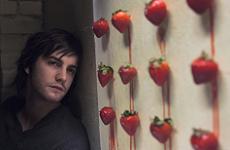
Amidst all of these surging C's, I wonder if I'm being slightly harder than I need to be on Neil Jordan's The Brave One and Julie Taymor's Across the Universe. The former at least accommodates some daring camera angles and taut sequences near its beginning, as well as some welcome attempts to trouble the stylistic mandates of realism; the latter yields four or five genuinely stirring images (strawberries nailed to a canvas, bone-white women and ceramic masks floating like genocide victims in gray water), and Taymor at least wants to push cinematic depth of field and risk extremes of figuration and superimposition in ways that James Mangold and Paul Haggis, more comfortably ensconced in the Hollywood system, will never even consider. But, for all that—well, the movies suck. A lot. Precisely as he did in In Dreams, Jordan fails utterly to set rational boundaries around his fairy-tale idioms in The Brave One, winding up with a totally indigestible mix of the overblown, the sadistic, and the unpersuasive. Meanwhile, the script ties itself in contortionist's knots to find ways of jerry-rigging, excusing, and abstracting the Jodie Foster character's outlandish acts of mercenary violence. The actress herself is lost somewhere between repeating all the established tropes of her woman-besieged subgenre and wallowing like some reckless exhibitionist amidst the seamy iconographies of her own troubled star persona: gun-wielding assassins, publicity-shy celebrity, homoerotic clinches with a teenage hooker, butch haircuts, veiled "is she or isn't she" innuendos. You leave the film feeling sorry for Foster but also angry at her, baffled at Neil Jordan, and helpless to explain why actors as good as Terrence Howard, Naveen Andrews, and Mary Steenburgen can't find a movie that cares remotely about their characters. Across the Universe is less ethically offensive than The Brave One, and for a movie that does almost nothing right, I was surprised at how easy this one was to spend 131 minutes with, hoping that Taymor's capricious visions would actually cohere into something, if only in her next film. As far as this one goes, what can I say? The singing is awful, the songs are shoehorned into generic and disconnected contexts, none of the characters have more than a single facet, entire transitions are palpably missing (how about those steamboat crossings?), and the politics are so ludicrously simplified and self-contradictory they make Rent look like Brecht. Is love all you need, or not? Hard to say, and even harder to sing. Plus, just like The Brave One, Across the Universe has nothing to say to, for, or about black people, but doggone if it can't stop panning to and over them, reminding us that They are Wise™, and also picturesque and sonorous when they grieve. Though this grief sometimes takes the discordant and stupidly opportunistic form of gospel choirs singing "Let It Be." Which still isn't as bad as brand-new acquaintances singing "A Little Help from My Friends" or bewildered-looking actors who a) sing "Dear Prudence" to a girl, named Prudence!, in a locked bathroom, b) float through a thinly Photoshoppy spacetime continuum while doing same, and c) exchange patronizing winks and smiles because Prudence is a total lesbian...which allows Across the Universe to add one more item on its rainbow-brite List of Totally Deep Themes. Both films: D+

And so now I'm left with the best but also the most frustrating of all of these September releases, David Cronenberg's Eastern Promises. Cronenberg's London is more consistent and credible than Jordan's New York City, but Eastern Promises keeps holding itself back from really thinking or feeling its way through the city, opting for anodyne interiors rather than building on the potential of its unique take on London locations. Like The Brave One and Across the Universe, Eastern Promises is dogged at portraying for us a world of ethnic and cultural life that it doesn't seem to know anything about, so that the hoariest clichés of music, dialogue, vocal affectation, and sinister connotation are enlisted to form the movie's amalgamated "Russianness." Steve Knight's shaky script needs Naomi Watts' Anna to find the diary that catalyzes the plot but then never thinks of a single other reason for her to be in the movie, much less to be the second lead. Unsatisfied by Vincent Cassel's heavily insinuated desire for Viggo Mortensen's steely, reticent chauffeur, Knight writes an overstated episode where Cassel forces Mortensen to strip and have sex with a prostitute right where he can observe—thus constituting the most patently absurd scenario of pathetically lurid and dramatically implausible homoerotic longing since Judi Dench danced appallingly in Cate Blanchett's living room. Cinematographer Peter Suschitzky and composer Howard Score admirably resist repeating their earlier triumphs with Cronenberg, but they both seem to take the new film's edgy/scruffy aesthetic to an ill-advised extreme of crudeness and cliché, and the big finale is as artificial and warped as the one in The Brave One (well, almost).

Still, the reviews have largely been raves. I concede that Mortensen is excellent: he is terse, slithery, intellectually potent, and physically articulate, and best of all, he is morally illegible in a way that often feels remarkably fresh in such a genre-bound entertainment. Unlike Cronenberg (although certainly with Cronenberg's intensive assistance), he has fully risen to the challenge of assaying unworthy material and justifying how a real artist can perceive and realize the potential in a heap of empty contrivance. But the bathhouse interlude you've heard so much about disrupts the style and flow of the piece much too drastically—it's the only scene where Cronenberg comes alive, but his priorities are perplexing and the tonal register, especially regarding the exaggerated violence, is off—and I left the film wondering what to make of that barbershop prologue, wondering whether the dead girl's voiceovers from her diary were exactly necessary, wondering why you'd introduce a huge plot twist ten minutes from the end of your picture and then do nothing at all with this new information, and wondering what in the hell an "eastern promise" could possibly be. Cronenberg always deserves a second shot, and maybe I have underrated Eastern Promises because it so drastically refuses to take shape as any of the multiple movies I would have liked it to be. But my second trip to Spider in 2002 only affirmed that a hamstrung Cronenberg movie still feels hamstrung on the second go-round, and I'm increasingly suspicious that this Promise simply isn't kept. A C+ isn't out of the question, but then I remember that teenaged-screenwriter device of the traumatic miscarriage, and the underlit hospital and the crunchy quality of the curbside London light, and the oogah-boogah way in which the movie keeps trying to scare us with the words "Vory v Zakone", and Armin Mueller-Stahl's way-too-long pause before the words "a diary?", and the creaky coincidence of the right nurse passing the right gurney in the right corridor at the right time, and that animatronic infant, and I wind up back at C.

Labels: , , , , , , ,

Friday, September 21, 2007

Getting in on the Festival Action

I try to keep the self-pity on a tight leash around this blog, but every year I tell myself I'll scrounge up the money to hit the Toronto Film Festival, and I never ever make it (even though, this year, my disappointment was more than compensated by a personal visit from my idol-critic Mainly Movies on his way back from the big event, as well as detailed, sensational write-ups at The Film Experience and GreenCine).

But then, I realize, what am I griping about?? The Chicago Film Festival, despite a paucity of big premieres and a shortage of national coverage, is a pretty top-flight shindig and it's right in my neighborhood. Last year, having just moved here, I didn't hear about the festival until lots of the showings were sold out, and I was limited to three screenings, albeit interesting ones. This year, though, I had my act all kinds of together, and I scored a killer itinerary. I've never actually covered a film festival before, but I'm looking forward to regular updates and write-ups all through this one—and also to that coffee-fueled, bloodshot, Donnie Darko state of being that even the most inveterate festival goers tend to describe. Bring it on, and stay tuned!

FRIDAY, OCT 5
Control (UK, Anton Corbijn) - Biopic of the lead singer of Joy Division that's been winning plaudits and audience love since Cannes; Samantha Morton's on board, which is always a plus, and I like the still images
Men in the Nude (Hungary, Károly Esztergályos) - Could be a fairly banal story of middle-age coming out prompted by some kind of Death in Venice encounter, but Eastern Europe has been churning out great stuff lately, and who could resist that title?

SATURDAY, OCT 6
The Aerial (Argentina, Esteban Sapir) - One of those mad experiments that wash ashore at festivals; this one is a pastiche of silent-movie tropes as well as a comic screed against mega-corporate media
Scream of the Ants (Iran, Mohsen Makhmalbaf) - A living legend who still has trouble getting American distribution; I prefer his daughter's films to his own, which are sometimes too austere or dogmatic, but his best work (A Moment of Innocence, Kandahar) is frequently stunning
Hallam Foe (UK, David Mackenzie) - Whatever its shortcomings, the best parts of Young Adam (no, not just the naughty bits) have lingered well over the past couple of years, so I'm eager to see this new project, headlined by Jamie Bell (Billy Elliot, Undertow)
Stuck (Canada, Stuart Gordon) - Mena Suvari (remember her?) and Stephen Rea in some exploitation thriller that was a surprise critical fave in Toronto. The late-night slot is promising.

SUNDAY, OCT 7
Dreams of Dust (Burkina Faso, Laurent Salgues) - Story about African goldminers forced to tunnel, mole-like, more than 100ft. into the ground in search of their quarry. Interesting to see whether gorgeous images and political content get blended any better here than in Western films about African immiseration
4 Months, 3 Weeks, and 2 Days (Romania, Cristian Mungiu) - A major coup, for the festival and for me: the world hasn't stopped wagging about this one since the first day of Cannes, and certainly not after it scooped the Palme. Should be a high point.

MONDAY, OCT 8
Yella (Germany, Christian Petzold) - Mainly Movies loved this one in Berlin, as did the awards jury. I don't know much about the plot except that it concerns an extremely estranged married couple.
Taxi to the Dark Side (USA, Alex Gibney) - Gibney, director of Enron: The Smartest Guys in the Room and producer of the current No End in Sight, exposes post-9/11 American torture practices, focalizing the case of an Afghani taxi driver who was imprisoned and killed in 2002
The Last Mistress (France, Catherine Breillat) - A convalescent Catherine Breillat (Fat Girl) makes an unexpected swerve into costume drama, with the equally unexpected Asia Argento at her side

WEDNESDAY, OCT 10
Opium: Diary of a Madwoman (Hungary, János Szász) - Let's hope I'm not burned out by all the intensity before I even get to this acclaimed dramatization of a real-life relationship between an asylum inmate and her morphine-addicted doctor, adapted from the doctor's diaries
Chicago 10 (USA, Brett Morgen) - Rack one up for hometown stories, and for interesting multimedia experiments, with this doc about Chicago's radical anti-war demonstrators of the late 1960s. Currently on Mike D'Angelo's list of the year's best

THURSDAY, OCT 11
The Man from London (Hungary, Béla Tarr) - I'm a virtual novice with Tarr, having only seen Almanac of Fall, so even though this one's gotten mixed notices at best, I'm still intrigued
Lars and the Real Girl (USA, Craig Gillespie) - I'm mostly avoiding the imminent commercial releases, but the timeslot was right for this one, and I'm curious to see how a faux-indie like this looks amid the context of so much international drama and documentary

FRIDAY, OCT 12
Silent Light (Mexico, Carlos Reygadas) - My most anticipated ticket of the fest. The reviews have trumpeted just what I wanted to hear: that Reygadas has preserved his brilliant visual acumen and jettisoned his compulsive petulance in tone and content. Fingers crossed to high heaven.
Irina Palm (Belgium, Sam Garbarski) - An unusual cast (Marianne Faithfull, Miki Manojlovic, Jenny Agutter) and production history for this tale about a 50-year-old prostitute. I clearly ruined myself in Nathaniel's Best Actress contest with this pick (among others!), but the film still intrigues me

SATURDAY, OCT 13
Faro: Goddess of the Waters (Mali, Salif Traoré) - I seek out as much African cinema as I can at events like this, since commercial distributors are never any help, even on DVD
The Witnesses (France, André Téchiné) - Téchiné might be back in Wild Reeds territory with this AIDS-influenced domestic drama set in France in the 1980s. And any film that recalls Wild Reeds is a good thing
Flight of the Red Balloon (France, Hou Hsiao-hsien) - Some foreign artists try to break into Hollywood; Hou has opted to break into French cinema with this light-touch expansion on the classic Red Balloon short film. A one-time Special Event showing for the fest

TUESDAY, OCT 16
The Banishment (Russia, Andrei Zvyagintsev) - I'm kind of asking for it here, since no one said anything nice about this one at Cannes, but I loved the director's first movie The Return, so I'll extend benefit of the doubt, at least once
One Hundred Nails (Italy, Ermanno Olmi) - The title refers to a mad act by a disillusioned university professor who nails 100 books to a library door before seeking refuge in a new life. Hopefully I will meet some different fate than this. In any event, Olmi is an old master (The Tree of Wooden Clogs) in whose work I'm entirely unversed, plus there are echoes here of Tarkovsky's ravishing Nostalghia, a personal favorite

WEDNESDAY, OCT 17
The Savages (USA, Tamara Jenkins) - The closing night gala, with Jenkins and Laura Linney in attendance, and a glowingly-reviewed film to boot. The trailer delights me every single time I see it. A great way to end what I anticipate will be an extremely rewarding couple of weeks!

Labels: ,