Saturday, May 23, 2015

Cannes 1995: Day 7: May 23


Nasty Love, Italy, dir. Mario Martone

It is on to-day, honey. The hits keep getting bigger!  Four of the Competition titles from the last 48 hours have handily eclipsed the rest of the field, but today's discoveries are invigorating in a different way than yesterday's because they were so much less heralded. Mario Martone, highly regarded in Italy but barely known outside of it—he's competed for the Golden Lion four times, and swept the Donatello awards a few years back with his prestige literary adaptation We Believed—wowed me more or less from out of nowhere with the directorial verve of Nasty Love, simultaneously steely and luscious, sexy and sad. Many of the most conspicuous directorial signatures of Cannes '95 have been high-handed or humorless; Martone figures out how to impress and entertain at once. No slight on sobriety, though, when it's done with the odd, immaculate mannerism of Terence Davies's The Neon Bible, though I'm suspicious I may have responded better to this one than at least a couple of my peers. All that, plus L'enfant noir is an uncommonly beautiful West African coming-of-age tale, and Safe is one of the definitive movies of the decade. Hard to swing a better day at a festival than this.

Read more »

Labels: , , , , , , , , , , , , ,

Saturday, March 23, 2013

Please, Please Judge This Book By Its Cover

I have just received my book cover from my editors at Oxford University Press and from their obviously fabulous art department. The fabulousness achieves greater dimensions if you click the image at left. I cannot even believe what I am seeing, not least because I'm still acclimating to the idea that this book will actually have a public life after more than a decade I have spent working on it in various incarnations. But also, can we talk about how amazing this cover is? Especially for an academic monograph?

Oxford allowed me input on which images from which movie to consider, and even on some of the design elements after they generated a few mock-ups—none of which university presses are required to do, and from what I gather, they usually don't.  Even with that level of participation, however, I would never have hit on this layout, that amazingly retro title font, or this spin on Deleuze's theory of the image as a crystalline self-reflection. (More on that concept between the covers!) I'm elated. I feel like I might be crowning with a baby that I'm now assured will be cute? We'll find out about "healthy" once people read it, but I'm happy with it, the lovely blurbs on the back are from four scholars I idolize in various ways, and cute is one good step in the direction of health, right? Isn't that what Hollywood has assiduously taught me?

Best of all, on even more personal notes, Velvet Goldmine is the movie that prompted me to apply to graduate school and to conceive of the project that became my Ph.D. dissertation and now this book; it's the subject of my first academic publication in cinema studies, as a chapter in this anthology, which I heavily rewrote as the last, anchoring chapter of my own book; and I met my partner of more than 13 years at a Velvet Goldmine-themed costume party.  So everything Manuela says in All About My Mother about her life being marked by A Streetcar Named Desire? I guess this is my movie, but in much happier ways.

The shilling begins now: you can pre-order The Desiring-Image: Gilles Deleuze and Contemporary Queer Cinema at Amazon. Oxford is making it available in price-friendly paperback during its very first printing—another unusual move for a top university press, and further proof of what a dream they have been to work with. I'll say more about what's actually in the book as its publication nears, but for now, feel free to relish what's on it. And if Jonathan Rhys Meyers striking Bowie-esque poses under Maryse Alberti's aqueous light while sporting Sandy Powell's shimmery, snakelike, Oscar-nominated, silver-and-periwinkle spandex is enough to lure your finger over to the One-Click, then all the better!

Labels: , , , , , ,

Wednesday, December 07, 2011

Eyes on the Critics' Prize: Safe

During the latter half of the 1990s, when my movie habit was really entering its mainlining stage, the Boston Society of Film Critics was the most excitingly off-consensus of the major American critics' groups, which was a particular pleasure to me because Boston is where I was living at the time. I have written before about my love for this group and their invigorating choices during this period, made all the more interesting by the lists of people who almost won during those years (like Katrin Cartlidge and Tilda Swinton in 1997, running close behind Helena Bonham Carter for very offbeat projects, and way out in front of Judi Dench, Kate Winslet, and Julie Christie).

The first Boston citation that really made me sit up and take notice of the group, during the first year I was attending school and absorbing cinema in that city, was the Best Cinematography prize for Alex Nepomniaschy's lensing of Safe in 1995. That season, the bulk of the prizes were being posted to Shanghai Triad, a typically dazzling light-show from the Zhang Yimou factory. The Oscar eventually went to the emerald greens, flying dirtclots, and battlefield immersions of Braveheart. At a stage in my movie education where "best cinematography" still meant "prettiest pictures," the Boston crowd's recognition of Safe's intimidating symmetries, its freezing pastels, and its wide-angle hyperbolizing of banal Valley interiors was a real wake-up call. Clearly, I would need to rent the movie as soon as the VHS bowed (!), motivated not just by a plotline that sounded so nervy and elliptical but by a panel-certified promise of visual imagination.

Granted, the indelible visuals of Safe have a great deal to do with the director's labors of framing the shot and placing the camera. How much this prize ought to have been shared between Nepomniaschy and Haynes is up for debate, yet it's notable that no other Haynes film has really looked like Safe, not even in the moments of Velvet Goldmine (shot by Maryse Alberti) or of Far from Heaven, I'm Not There, or Mildred Pierce (all shot by Ed Lachman) that evoke the antiseptic domesticities or the deoxygenated atmospheres that are so crucial to the earlier film. Those tropes get a very particular and brilliantly effective workout in Safe, and all the more so since the film was made for almost nothing, inside relatives' houses and a lot of other existing, creatively marshaled locations. Beyond the 2001/Clockwork Orange-style vertical lines, flat planes, and rectilinear severity of so many shots, and beyond the Fassbinder-ish way that Nepomiaschy and Haynes frame characters within nested boxes and under flat light (such that even casual encounters feel depersonalized and stagy), look how often the air just hangs there in Safe. Julianne Moore's line readings constantly suggest that Carol is being asphyxiated, but for reasons that make sense if you've seen the film, we have to feel that Carol is definitely getting air, and that something weird might be in that air.

There's a subtly frizzy quality to the light in Safe—making sunrays and pools of color diffuse a bit even in brightly lit rooms and sharply lensed shots. This lighting casts a slight blur in the women's locker room, the hair salon, the living room with the wrong-color couch, the sitting room with its DNA-shaped staircase, and even the "restorative" ceramic igloo where Carol eventually winds up. This quality of the light, not dry but not damp, not gaseous so much as atomically dense, makes the airspace in Safe matter in an almost literal sense, holding its own against the man-made structures and objects that are made so conspicuous in Haynes's shots. Carol moves through a vacuous, plastic universe, and later proceeds to an ostensibly cleansing, fresh-air retreat, but in all of them, she is constantly and unnervingly touched by vaguely visible, vaguely palpable molecules. What are those molecules? What do they bear within them or convey between them? Is there something inside them that makes Carol sick? (All the white noise in the sound design immeasurably assists this quietly creepy dimension of the lighting schemes.)

Nepomniaschy frequently has to help us locate Carol within very long and wide-angled shots, particularly by the standard of most interior shooting. Yet at the same time, Carol White is the last person in the world who should attract a spotlight, or a key light, or a backlit halo, which would feel all wrong for this profoundly recessive woman. Nepomniaschy is really ingenious, then, at helping us pinpoint Carol without violating the invisibility and insubstantiality that are fundamental to Haynes's and Moore's conception of her, using geometries within the frame or the softest caress of color or glow to highlight her when necessary, just the littlest bit. In other scenes where the camera is closer, as when Carol attends the allergist's office, the ugly, fluorescent lighting of the space is somehow just soft enough around Carol that we feel some compassion for her, some human weight and latent loveliness in her body. In this way, lighting itself extends an invitation to empathize, counteracting the institutional chill that encases her (including, for some viewers, the chill of the script itself, though Haynes's writing doesn't register that way with me). Something impalpable in these shots provokes us to worry and hurt for Carol, not mock her as a Barbie doll, or reject her as a zombie, or think of her only as a rhetorical stand-in for ourselves. Nor do we just sit there, helplessly perplexed as we might well have been by this soft-spoken San Fernando cypher. The light warms Carol as much as possible, even as it refrigerates her. I love, by the way, how Nepomniaschy allows Moore her freckles in scenes like these, more so than a lot of D.P.'s have done, and he doesn't adopt the easy strategy of making Moore's natural pallor register melodramatically as a signal of dangerous anemia.

Equally marvelous are Safe's shots in daringly low light: the overhead sex scene between Carol and her husband, the late-night prowl in the garden, the testy marital exchange across a mile-wide bed, the final straight-to-camera shot. In these moments, little except the crest of a cheekbone, the angle of a brow, or the copper sheen of her badly permed curls stands between Carol and a kind of Stygian oblivion. That such details communicate from within such broad, wide, grayed-out canvases, and that Carol's last, indelible lines ("I love you... I love you...") resonate as both encouraging and harrowing from within this world of shadow, have a lot to do with Moore's and Haynes's genius. But again, some of the credit is due to the precise calibrations of pessimism and hopeful sympathy that the cinematography invests in Carol's anxious days and in her waning, bruise-colored nights.

Safe's micro-budget miracles and nifty visual tricks don't stop here. Maybe that disastrous baby shower gets a little too pink/orange toward the end of the sequence, but there's a nice against-the-grain kick to any LA sunset that's allowed to look like lox that's been sitting too long at the buffet. I also love how the potted palms in the corners of those baby-shower shots don't remotely suggest a cute, predictable oasis of greenery and fresh air. If anything, they look brackish and black-leafed, as though the plants have got environmental illness, too, but like so much else in Nepomniaschy's shots, the effect isn't so strong that you notice right away. In general, Nepomniaschy cooperates well with the movie's smart production design, delicately highlighting props, shapes, and other visual triggers that make a suburban kitchen look subliminally close to a therapeutic center, or that foster a rhyme between a living room and a hospital room. The images guide our eyes in these and other ways, despite an overall aesthetic and a thematic framework that absolutely require the austere dehumanization of the film. The camera can't look like it's guiding us, or gratifying us at all, or even speaking our language.

Nepomniaschy hasn't had nearly the career one would project for the guy who made Safe look like a million bucks, despite having nothing but nickels to work with. He gave Joe Carnahan's Narc a nicely enervated texture and tint, but there's not much in it you haven't seen in other policiers. He filmed Julia Stiles falling in love with a prince, Drew Barrymore with a teacher, and a multi-culti group of high-school students with Antonio Banderas's dancing. He was the second-unit photographer on Country Strong and on most of D.J. Caruso's movies. I have no idea what to make of this successful but undistinguished résumé, but clearly, the most important signs of Safe's legacy fall elsewhere than the D.P.'s own filmography. I have thought a lot about Nepomniaschy's work in Safe while noting the rise of recent indie phenom Jody Lee Lipes, whose lensing of the apartment in Tiny Furniture recalled the deadening homespaces of Safe, but just a bit more preciously. His low-lighting of Martha Marcy May Marlene is often clever or evocative, and a few times, as in the swimming/diving scene, extremely resourceful, yet his images don't "stick" with me in the same way, and his visual strategies for coaxing inchoate, internalized trouble out of Elizabeth Olsen's remarkable face seem just a shade coarser and more obvious than how Nepomniaschy's camera interacts with Moore's equally remarkable face. Even the images I think I know best in Safe continue to pay new dividends the longer I dwell on them. I'll never know why Nepomniaschy doesn't have more filmmakers begging to work with him, but I'm glad he has one critics' prize to call his own, in recognition of one of the best and best-lensed American movies of its decade.

Previously in this series: Dead Ringers ('88)

Labels: , , , , , ,

Saturday, April 09, 2011

Mildred's Almost Piercing

I know I haven't properly blogged or reviewed anything since Joan Crawford filmed the first Mildred Pierce. And I'm still not ready to properly fix that: my real job is still running the show these days, in overdrive.

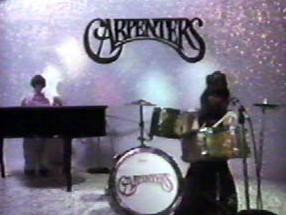
But I am in the middle of Tweeting my responses to all five installments of Todd Haynes's HBO miniseries of Mildred Pierce, so if you just can't live without hearing me express an opinion, and I can only imagine the masses of people for whom this must be true, head over there. I have to confess to being not quite besotted, which is, for me, an unprecedented response to a Haynes picture. I certainly like it, but I feel as though I'm watching my favorite designer show a collection that has drawn inspiration from a source that doesn't speak in nearly the same way to me. Granted, I would have said the same of Bowie and Dylan, but Haynes made those delectations contagious, whereas Mildred keeps them a little glassed-off. Maybe I just don't relate in the same way to television, which necessarily subdues some of my favorite aspects of Haynes's montage and the resplendent boldness of his visual ideas.

As a fresh take on a source we thought we'd seen—which is to say a "revelatory" return to what this decades-old property always was, or nearly so—this project pays dividends similar to those we found in the Coens' True Grit, and I'm feeling a similarly cool admiration, a sort of museal, intellectual interest spiked by exciting bursts of visual flair. I can't take credit for that analogy, which my friend Richard Knight held out to me a couple weeks ago. I'm also having a hard time not thinking about Carlos, as a five-hour canvas devoted to a figure of voluptuous interest to the filmmaker, sometimes translated in delicious nuance, sometimes through rhetorical strokes I find a little flat. From that angle I admire Mildred, like Carlos, as a statement of the artist's unrepentant fascinations of the moment, and as a major producer's coup in a time of dwindled budgets, hedged bets, and the decline of the two-hour drama, much less the five-hour. I just wish I adored this.

For a few more tidbits, I've got tiny hour-by-hour responses, appreciation for Ann Roth's costumes, and an ongoing Mildred Pierce Actress Watch, in which (you know me) I can't help dwelling on all the extraordinary women in the cast. Though I'll say it again: in an abnormal moment of gendered allegiance, my Best in Show bouquet gets tossed to Brían F. O'Byrne.

P.S. Maybe it's just the emotional release or maybe the project really does accumulate a wallop, but the fifth and final episode, airing tomorrow night, landed with me more than I had expected. Still not in love, but less inoculated than I had felt beforehand.

Labels: , , ,

Friday, January 02, 2009

Happy Birthday, Todd Haynes

Thanks for all the memories and inspirations, Todd, and for all the future projects. My very, very favorite is still Safe, a film that's all about the vulnerability—maybe the indistinguishability?—of inside and outside, and the scary porousness of borders, including psychological boundaries, and including the skin. Is Carol's cure worse than, or part of, her sickness? Nobody knows, but the dissolve from her hospital room to the deserts of Wrenwood is portentous, and totally apropos.


Safe, 1:06:12, © 1995 Sony Pictures Classics/American Playhouse/Chemical Films

Labels: , ,

Friday, December 12, 2008

Toddie Gets Listed

We've done a Campion short, so why not a Haynes? In fact, why not two?

Labels: , , , ,

Tuesday, November 27, 2007

I'm Not Finally There...

It only took me six days into its Chicago release, but I finally saw it, and I loved it. A or A–? Not sure yet. Certainly a few cuts and images don't work, and as much as it's a movie that seems to need all of its parts, I could have done without the whole Ledger/Gainsbourg track. But I also love that the movie is bigger than all of its elements, that it's edited with such unbelievable momentum, especially for a long film with such conceptual and intellectual designs, and that it borrows liberally from so many artforms (music, photography, painting, theater, sideshow) without ever once seeming like it could have worked as anything except a movie. Such formal vitality. Such directorial confidence. Clearly one of the year's best, and clearly more to follow (probably after a second viewing).

Oh, and for those of you still waiting, the answer to Saturday's riddle was actually #5. I love The Mist, in spite of and maybe even because of its lapses into stylistic and rhetorical and narrative egregiousness—because it's a top-flight B-movie that actually draws some fuel from its limitations of technique and finesse, and the images, atmospheres, and plot twists that do work are pretty great, including one of the year's most memorable endings. So I'll explain later why I prefer it to American Gangster, to Beowulf, to Margot at the Wedding, to The Savages, to Southland Tales, to Love in the Time of Cholera, even, I'm pretty sure, to No Country for Old Men.

But not to I'm Not There. So my secret's out at the very moment it becomes passé anyway. C'est la vie.

Photo © 2007 The Weinstein Company/Killer Films

Labels: ,

Wednesday, November 14, 2007

Inspirations and Holy Encounters

Maybe it's the onset of cold or the early darkness of autumn evenings, or maybe it's all the tremors of terrible news coming from the Fed and from Wall Street, or maybe it's every single article in the newspaper: for whatever reason, I keep talking to close friends about seeking inspiration and about how we're all keeping ourselves going amid busy jobs and worries about money and anxieties about how to find the time for the relationships, hobbies, and down time that do inspire us. I'm struggling as much as anyone to keep up with what I need to do and what I want to do, and to do it all without neglecting the people who are important to me. Amidst all of this, I've been lucky to stumble upon some unexpected jolts of pure inspiration lately, and if you'll pardon me, I'd like to write about them so I can hold onto them and also share them—and to invite you to share what inspires you, either lately or perpetually.

It warms my heart that a living genius like playwright Adrienne Kennedy is enjoying a revival in New York City, and that Charles Isherwood reviewed it so lovingly. I don't live close enough to New York anymore to see it, but knowing that it's happening and reading this review inspires me.

It warms my heart that another living genius, Todd Haynes, is rolling out his new film to such a rich and ardent reception by critics and early audiences, the kind of reception that should have greeted his last musical-fantasia masterpiece. This article about Haynes from the New York Sun, written by a good friend of mine from college, enlivens me both because of Haynes' candor and eloquence within the piece and because of the eager support and articulate admiration that the article extends to him. I'm Not There opens in Chicago a week from today, and I simply cannot wait.

In an added and wonderful wrinkle, which began as a frustrating wrinkle, I had to work during the Chicago preview screening that happened last week, where Haynes appeared in person for an audience Q&A. Thankfully, the work itself was invigorating that evening—I am lucky to have a job that gratifies and inspires me—but I was still feeling sorry for myself about missing a one-to-one encounter with a personal hero. So, calling on my inner Eve Harrington, I took a bus after work to the cinema where he was finishing his Q&A, bought a ticket for a movie I wasn't going to see so I could get past the usher, planted myself outside Auditorium #9 as people started filing out, and totally cornered him at the escalator, long enough to tell him that he is a personal hero to me, that I teach queer cinema classes at a university, and that my students invariably love Dottie Gets Spanked and Safe and Velvet Goldmine and Superstar and admire his hard work in creating them. The ensuing handshake was maybe my favorite handshake in my whole life. (And afterward, because I am a cheap rat, I got my unused ticket refunded. Sorry, Michael Clayton.)

A few weeks ago, as the Chicago Film Festival wound down, I had comparable luck (and comparable Eve-ishness) and managed to introduce myself to (The Lovely) Laura Linney at the closing-night screening of The Savages. I was initially so caught-off guard by my good fortune that I couldn't think of anything to say to her, though I did geek out and realized a dream of double-hand waving at her in the same way she does to Mark Ruffalo from inside the restaurant at the beginning of You Can Count on Me. If you've seen the movie, you know what I mean. She was wonderfully cordial and approachable—she even started the conversation, since I was so obviously unable, and she signed my DVD!—but I was even more moved by her response to a question I put to her during the post-screening Q&A. I prefaced to her, so I'll preface to you: I am so touched and gratified by how devotedly this actress commits herself to stories about unique, complicated, reorganized, fractious but tender families that aren't the families we typically see on screen—in You Can Count on Me, in The Squid and the Whale, in Jindabyne, and now in The Savages—and by how adept and precise she is at communicating entire and unbelievably specific histories with her screen siblings and children and relatives. I truly don't understand how she conveys all this depth of information, these lifetimes of mutual knowledge and bonding, so I asked her whether she prefers to spend more rehearsal time than normal with actors to whom she will have to relate persuasively as family, or whether she likes instead to be surprised by these actors (since her screen families do tend to be full of surprises). I also wanted to know whether she likes to collaborate with the actors or the screenwriter or director on forming articulated, comprehensive backstories for these characters or if it's more creatively exciting for her to go only on the evidence of the script, to hold in mind whatever makes sense to her about the characters' histories, and to assume that her fellow actors are doing the same thing. Here's what she said, and I love it:

I do think some actors have a particular process that they prefer to use and that works for them on every project. I don't. I like that each piece of work is different. Sometimes, my process is completely textual, and I can do the exciting job of sitting down with every line and every action and saying, 'Okay, why this? Why does that make sense? How does that fit?' And as you probably know, sometimes the answer is in another line, but it might also be in an action the character takes earlier or later in the script, or it might be somewhere else between the lines. Sometimes the process is textual because it's all you've got; I've been on projects where maybe I haven't liked the actor so much who I have to have a family relationship with, but it's okay, because the writing has enough to go on. [Ed.: !] But at other times, things do happen collaboratively or spontaneously on the set, or you engage in a different back and forth process based on the people you're working with and the mood of what you're doing.

Because you mentioned those movies, I do want to tell you that I am very, very lucky, because my two fictional brothers [Mark Ruffalo and Philip Seymour Hoffman] truly are two of my favorite people in the whole world, and if you knew them you would see why. And now I feel like you do in a family, like you have a sort of invisible string connecting you to that person wherever you are and whatever you're doing. And I love that audiences for those films think of us that way, too. It can actually be dangerous for the acting: I felt like they were my brothers, and you can sort of fall into that easy relationship and just relate with them as people instead of keeping it about who you're playing. So you need to be vigilant.

And really, despite what I said earlier, all of those four movies you named were wonderful experiences for me, and the scripts were so great that I'm sure that's why everyone chose to do those projects, including this one [The Savages]. So – thank you!


Of course I was thrilled to be "talking" with her, even across a stage/house divide and from within a huge public audience, but I was also inspired by the generous length and detail of her answer; by the idea that people I admire really do interact and take care of each other with the kind of sensitivity and mutual joy that I feel when I watch those movies; and, too, by her willingness to take each experience as it comes and bend her own rules rather than sticking to comfort zones or insisting on A Way To Do Things. It's a lesson I've thought about a lot in the weeks since, and I'd love to emulate the flexibility and adventure of her work life as well as her personal grace and the evident blend of seriousness, responsibility, playfulness, and passion that she brings to what she does.

This is as gushy and fanboyish as it gets around Nick's Flick Picks, but like I said, 'tis the season when a little gush won't hurt anybody. In response to another recent conversation, I don't agree with the conventional wisdom that critiquing movies or artworks entails a contempt for them or an air of superiority toward them; I think if you love movies, you take it personally when they're shoddy or misused, and more than being entertained, you are grateful and rejuvenated when they're good, and you want to be able to say why, specifically, this is so. Still, having said that, it's true that I don't always make the time (and do any of us?) to express that feeling of giddiness and awe and eager impressionability that we feel in front of our role models or in front of work that stirs up our spirits.

Setting aside, then, what's been "good" or "bad" in the movies lately, when have you felt encouraged, gratified, enthused, appeased? Who has said something, in print or on air or in person, or stuck with a project, or nailed a role, or challenged themselves in a way that resonated with you and made you glad, gave you energy? Who or what do you read for this kind of inspiration? (For example, the abundance and detail and inclusiveness of the posts at GreenCine are a constant spark to me to learn more, see more, think more carefully, and share more broadly.)
Chime in below: we can all use the tips. And go see The Savages! And be there for I'm Not There, though I expect I'm preaching to the converted on both points.

(Photos © 2007 New York Times/Gerry Goodstein; © 2003 WireImage/Jason Nevader; and personal archive)

Labels: , , , ,

Thursday, January 11, 2007

Todd and Me, Sittin' in a Tree, W-A-I-T-I-N-G

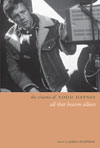
In fashion, as we know, you're either In or you're Out. Book publishing, however, appears to follow different rules. I can't tell if the anthology The Cinema of Todd Haynes, edited by James Morrison, is Out or Not. The original publication date from Wallflower Press in the UK was scheduled for last spring, with a joint publication from Columbia University Press, which later announced a June release. Then, both dates were moved to December. However, the Wallflower page indicates that the book has been out in the UK since September, and the unillustrated Amazon page says it's been available for purchase in the U.S. since November. But I haven't seen it anywhere, and nor has the editor.

Why do I care so much? Because I'm in it! Chapter 8, y'all. So, when the book eventually does come to a bookstore near you, give it some love! And don't begrudge a blogging academic who's geeked to see his name in print, particularly in connection to the work of a Living Genius, and who is therefore shamelessly hawking the wares. (It would help, of course, if the wares would appear, so that they might be hawked.)

Meanwhile, tomorrow's a big day for movie-going: I'll finally be hitting up Dreamgirls at midday and Children of Men in the afternoon. Comments and Globe predix soon to follow. I expect I'll also hunker down with When the Levees Broke over the weekend, and I've got a group date to go see Letters from Iwo Jima on Tuesday. Once those verdicts have rolled in, I'll just be waiting on this and this and especially this before my Top 10 list and all the other Best of 2007 features pop up on the main site. When that eventually happens, don't expect more than a nod apiece, if even that, for Our Brand Is Crisis, an intriguing documentary with a great subject that nonetheless holds back too far from the issues and events at its core, or for The Painted Veil, which is less precious and dainty than it might have been but still omits any fresh insights or directorial signatures, resulting in a movie with casual appeal but zero urgency.

(Image © 2005 Wallflower Press)

Labels: , , ,

Friday, September 29, 2006

A Killer Read

I had a Season-One-of-Project Runway experience with Christine Vachon's new memoir A Killer Life: How an Independent Film Producer Survives Deals and Disasters in Hollywood and Beyond. That is to say, I sat down with the book on the evening I bought it and read every page until I was finished, at around 3:30am. Granted, A Killer Life is hardly A Suitable Boy, and nor is Christine Vachon aiming to be Marcel Proust, so gobbling this book in one go is hardly a feat of readerly stamina. Rather, it's a testament to the absorbing way in which Vachon—the co-founder, leading shepherd, and most public face of Killer Films—conveys two decades' worth of professional experience as well as her own forthright, principled, occasionally abrasive, utterly unprecious view of what matters in a movie, and of how the American independent film scene should and does operate (which, predictably enough, amount to two very different things).

Vachon, working with a co-writer named Austin Bunn, shows the same helpful and lucid grasp of her book's audience that she has demonstrated in her stewardship and remarkably successful marketing of 32 feature films since 1991; she presumes the film literacy of her readers without pandering, but also without any alienating veils of insider posturing or untranslated industryspeak. As proud as she obviously is of her work, she doesn't expect the titles of her films to speak for themselves, even though several of them do: if the Killer Films imprimatur doesn't mean much to you, consider the phenomenal track-record contained within Vachon's 15-year portfolio, including not just some of the most seminal films of contemporary queer cinema (Go Fish, I Shot Andy Warhol, Boys Don't Cry, Hedwig and the Angry Inch, and all of Todd Haynes' films) but also some white-hot provocations (Larry Clark's Kids, Todd Solondz's Happiness), one midsized commercial breakthrough (Mark Romanek's One Hour Photo), and one late-career effort by a canonized auteur (Robert Altman's The Company).

These films don't get equal airtime in Vachon's account, and in a few cases, such as Hedwig and The Company, I was eager to hear a little more about the mechanics and vicissitudes of working with a floridly ambitious tyro like John Cameron Mitchell or a notoriously free-form marionette like Altman, whose films hardly radiate the queer angles and empathies that mark so many of Vachon's projects. Still, notwithstanding the inevitable omissions, Vachon is a frank and generous raconteur, and though the book is clearly being marketed as a "tell-all," she isn't being coy in asserting that her overriding interest is in clarifying the tough, frugal, extremely heterogeneous, but artistically rewarding tasks of being an artist-friendly independent film producer. She knows that even many film aficionados have a shakier grasp on a producer's duties than they do on other behind-the-scenes work, and this is for a reason:

"With every other credit in a film, you know exactly what it means; the production designer on Camp did exactly the same job as the production designer on Cold Mountain. But 'producer' is a catchall. In the morning, I could be talking to David Schwimmer about potential parts in our movies, because he got into the business to be De Niro, not 'Ross' from Friends. By the afternoon, I might be negotiating with a big composer's agent to do the score for One Hour Photo (and when he laughs at what we can afford to pay, we spin the Rolodex and go elsewhere). By the afternoon, I could be on a plane up to Toronto to support Glenn Close on set, who is having a hard time with her character and is nervous about working with a whip-smart but slightly overwhelmed director."

That last allusion is surely to Rose Troche's interesting but oddly stifled movie The Safety of Objects, which apparently tested through the roof but gained zero traction on the critical or commercial markets. Though Vachon tends to be terse about these sorts of misfires, probably because it's impossible to say for certain why The Grey Zone or Storytelling passed with nary a blip, she doesn't skew the book too grossly toward her roundest successes. You leave with a candid sense of why Kids was a horrendous shoot, despite yielding a satisfying product; of where and how A Home at the End of the World got unlatched from newbie director Michael Mayer's vision for the project, though Vachon seems as surprised as anyone that she wavered in this case on her usual policy of staunch director advocacy; of how a promising script with generous development momentum like The Shaggs, a story about folk-singing sisters that was intended as Kirsten Dunst's next project just as Spider-Man hit, suddenly gets scuttled despite every good intention; of how the unnamed but transparently designated Crime + Punishment in Suburbia unraveled into Killer's largest lapse in collective judgment.

To a naïve outsider like me, who has logged zero hours on a film-set or in a production office, one of the most valuable lessons built into A Killer Life is just how fine the line can be between triumph and fiasco; even the most unified artistic visions have often survived the kind of peril and disagreement that one tends to imagine as the exclusive property of flops and vanity projects. Vachon spends a good deal of time, for example, illuminating the disastrous corporate takeover of Far from Heaven, which was briefly indentured to its bond company. Vachon, who would later accept her first Independent Spirit Award for Best Feature for this movie, couldn't even access its bank account for several days and was routinely shamed by bookkeepers and insurance types for failing to regulate the budget. The Boys Don't Cry set was riven by several fractious confrontations between Ivy League director Kimberly Peirce and linchpin star Hilary Swank over their very different reads on Brandon Teena, and though Killer managed to trump a competing project at 20th-Cenutry Fox (which ultimately quashed its own movie and distributed Boys Don't Cry through its Fox Searchlight speciality division), karma is now biting back fiercely as Vachon's Infamous is trotting into limited release as the "other" Truman Capote movie:

"With Boys Don't Cry, I never spent a second thinking about what Fox Searchlight and [star/producer] Drew Barrymore were feeling when we scooped them, rendering their project irrelevant. We had the upper hand. Now I know what they were feeling: That sense that your passion and dedication isn't always enough. That the world is chaotic and you can't control everything. It's a lesson I have to keep relearning."

A Killer Life brims with enough production anecdotes that fans of Vachon's movies are assured of a good time. The book doesn't really promise an intimate glimpse of Vachon herself, though her persona emerges in ways that are both intended and not. It's refreshing to read a movieland memoir by someone as intellectually inclined as Vachon, who name-drops Laura Mulvey's "Visual Pleasure and Narrative Cinema" essay and speaks with fondness about her training in semioitics at Brown, but is just as transparently mad about movies. At the same time, she can be a tad uncouth and susceptible to hubris: it's a little dismaying to hear her cop to some gladhanding praise of Agnieszka Holland in a business meeting, expressing love for Holland's Washington Square even though she hasn't actually seen it, which she says "doesn't matter"—probably true from a brokerage and etiquette standpoint, but discordant, surely, with the proud cinephilia Vachon elsewhere professes. This blend of bracing honesty and curt impolitesse crops up in a few more personal anecdotes, too, as in Vachon's memory of the endless funerals for victims of AIDS that she attended in the 1980s. One of these was the burial of her friend and temporary mentor Bill Sherwood (Parting Glances):

"I can't really recall Bill Sherwood's funeral because I attended so many around the same time. It reminds me of an observation in John Weir's book The Irreversible Decline of Eddie Socket, set in the mid to late 1980s, about how all the memorial services became indistinct because all these gay men were kind of the same: they all liked show tunes, they all liked going to brunch, they all liked to talk on the phone. Since few of them were from New York, you'd attend a memorial service in the Village someplace—where the family didn't show—and you'd be like, Is this Larry's, or is this Robert's? Or Bill's?"

Is it sentimental of me to want a heroic artist like Vachon, a paragon in her field and a tremendous burr in the straight-boy oligopoly of most Hollywood production, to sound a little less tetchy or unmoved on a subject like this? It's immaterial, really, to the provenance of her book, and maybe it's why this kind of autobiographical element becomes increasingly scarce as the book proceeds: Vachon really walks the walk in asking to be judged on her work. In the same spirit, she doesn't exactly hold back from characterizing colleagues and Hollywoodland acquaintances in whatever better or worse countenance they have presented to her—Cate Blanchett, Steven Soderbergh, and, surprisingly, Jerry Bruckheimer will be proud of their depictions, Jeff Bridges and Sandy Powell rather less so, and Julianne Moore is something of a split decision—but all of them appear for the value and nature of their involvements with Killer Films, not to gussy up the book with gratuitous star cameos and salacious whispers. Even the requisite anecdote about Julia Roberts is evocative and germane (she expressed interest in the Harper Lee role in Infamous before pregnancy ruled her ineligible).

The best-showcased supporting roles in A Killer Life are filled not by celebrities but by executives, agents, directors, and producing partners, who interpolate their own memories of working with Killer and helming their own projects as satisfying aperitifs between Vachon's chapters. (Killer co-partner Pam Koffler writes an especially tasty one about screening Mrs. Harris for the real Jean Harris and The Notorious Bettie Page for Bettie herself.) Anyone who thinks they will enjoy A Killer Life almost certainly will. Anyone who is skeptical about learning anything practical from this book should be nicely surprised, though Vachon's earlier volume, Shooting to Kill, is probably a more helpful nitty-gritty primer for aspiring producers who are just getting started. A Killer Life offers generous and earnest points of entry for film students, cineastes, starfuckers, and anyone interested in the complex sociologies of an industry as obviously personal and political as independent film production. Vachon is proud of the fact that her brave, thorny, and unlikely movies tend to split their viewers into devotés and detractors, but A Killer Life may wind up doing something very un-Killer: that is, making all of its readers feel equally invited and equally well rewarded.

Labels: , , , , , , ,

Thursday, October 06, 2005

V.G. News!!!


That's V.G. in the Bridget Jones and also the Todd Haynes sense: I just got word that my article "'The Invention of a People': Velvet Goldmine and the Unburying of Queer Desire" has been accepted for publication in a book called The Cinema of Todd Haynes, to be published in Spring 2006 by Wallflower Press, a film-based subsidiary of Columbia University Press.

Some of you know that my dissertation chapter about Velvet Goldmine was the one dearest to my heart and also the one that met with the frostiest general reception at my dissertation defense. It's also my first print publication in the field of academic film studies. So, in my own mind, and relative to my own self-confidence about my work, to have a condensed version of that particular chapter accepted for publication is a real spirit-lifter. Thanks to everyone who left encouraging comments since yesterday... they worked! So, hey, are y'all on permanent call for this good-luck-charm hoodoo, or what??

Labels: ,

Monday, March 21, 2005

"You are my Goldmine, my only Goldmine..."

"You make me happy, when skies are gray...
"You'll never know, dear, how much I love you...
"Please don't take my Goldmine away..."

I get anxious and twisted trying to find the right words and the right argument and the right inspiration for my dissertation chapter, but then I tell myself, go look at how beautiful and amazing this movie is, and it makes we want to keep writing! To wit:

Labels: , , , ,