Nick's Flick Picks: The Blog

Cannes '96, Expert Witness #3: Noah Tsika
Following my wide-ranging survey of Cannes '96 with Hélène Zylberait and my Lone Star-focused exchange with John Alba Cutler, my third Expert Witness conversation is with Noah Tsika, an Assistant Professor of Film and Media Studies at Queens College, CUNY, where he specializes in historical, political, economic, and representational aspects of West African film and video. You can (and should!) get your fullest exposure to this dimension of Noah's work in his book Nollywood Stars: Media and Migration in West Africa and the Diaspora, which debuted just over a year ago from Indiana University Press. The book is a great, accessible, multi-sided assessment of celebrity, performance, narrative, circulation, and distribution in relation to a huge, Nigeria-based film culture with a mind-boggling and under-reported global reach.
Still, to say Noah "specializes" in any one thing feels like a misnomer, given his eclectic pursuits as a media scholar and his seeming awareness of every movie ever made. You might know his work from the short study of Gods and Monsters he published in Arsenal's Queer Film Classic series a while back, or from his contributions to anthologies about African sci-fi and genre fiction, or Brokeback Mountain, or 21st-century film criticism. I am desperately anticipating his next book, Pink 2.0, due out this October, about digital queer cinema. (Feel free to pre-order it!) Soon, we will feature together in a collection of feminist essays on each of Todd Haynes's movies, where Noah's attentions will focus on my beloved Dottie Gets Spanked. Noah's Twitter feed is the best place to enjoy his diverse and funny reflections on new releases as they bow, on the wide-ranging classes he teaches, on the latest exploits and milestones of African films and their headliners, and on important political causes, including those that directly affect his institution and its students.
I was most eager to engage Noah about Flora Gomes's Tree of Blood, a joint production of Portugal and Guinea-Bissau and a rare West African feature to grace the Main Competition at Cannes. Gomes's name and work were new to me through this #Cannes96 exercise (and perfect evidence of why I undertake these projects) but Noah, as ever, has been tracking this filmmaker for a while. Some of our exchange centered around this title, but in perfect tribute to my discussion partner, the talk spreads to race and racism on film, environmentalism, Robert Altman, misogynist archetypes, festival politics, places to see all-but-buried African features, and other topics far and wide...
ND: By the first week of Cannes '96, the three big stories were already Secrets & Lies, Fargo, and Breaking the Waves, and they maintained that status for the remainder. So first, I'm polling everybody: had you been on the jury, which of those three would you have championed for the Palme? What do you most love or admire about it?
NT: In 1996, Secrets & Lies was the one for me—and I suspect that it still is. I like to think of it as a film about passing, and I've taught it alongside such works as Basil Dearden's Sapphire (1959) and Imitation of Life (both the 1934 and the 1959 versions, directed by John M. Stahl and Douglas Sirk, respectively). Secrets & Lies upends the conventions of this particular subgenre, if you can even call it that. The film is about poor white people who struggle with their proximity to Blackness—who, in various ways, have attempted to pass as isolated, even hermetic, in their whiteness—and an affluent, tremendously accomplished Black woman who is utterly unperturbed by her own "difference." The performances are gorgeous. Brenda Blethyn is, despite what detractors might say, thoroughly in character with her histrionics. It's a dazzling turn: the Cannes jury got Best Actress exactly right, and Blethyn should have won the Oscar, too. Marianne Jean-Baptiste is wonderful, as is Timothy Spall, but young Claire Rushbrook is simply astonishing. Her displays of anger and resentment always terrify me. Secrets & Lies has a truly great ending, with Blethyn's character offering a lovely little benediction. The film is hardly "cinematic" in the conventional sense, but I love its dingy, downright televisual style. It looks like a home movie, which is apt, I think.
Are you a fan of the other two in that group, or was this a pretty easy decision for you?
My parents took me to see Fargo the day it opened in Maine. I remember thrilling to its opening text; the words "true story" and "respect for the dead" so impressed me that I immediately stiffened my back, steeling myself for a Very Important Film. The austerity of the images, starting with a car approaching the screen amid all that snow, along with the urgency of Carter Burwell's remarkable score, made me believe that this would be a life-changing experience. (My mother must have had a similar response; she leaned toward me and whispered, "You'll probably want to write about this one.") But something about the film—its comic tone, its stylized acting, its repetitive linguistic play—disappointed me tremendously. It was only later, watching the film on television, that I began to enjoy it. The constant parodies must have made it less strange. In just a few months, Marge had become a pervasive object of impersonation, and I suddenly felt profoundly comfortable with Fargo. It had been transformed, for me, into a kind of collectively produced folk art.
Read more »
Still, to say Noah "specializes" in any one thing feels like a misnomer, given his eclectic pursuits as a media scholar and his seeming awareness of every movie ever made. You might know his work from the short study of Gods and Monsters he published in Arsenal's Queer Film Classic series a while back, or from his contributions to anthologies about African sci-fi and genre fiction, or Brokeback Mountain, or 21st-century film criticism. I am desperately anticipating his next book, Pink 2.0, due out this October, about digital queer cinema. (Feel free to pre-order it!) Soon, we will feature together in a collection of feminist essays on each of Todd Haynes's movies, where Noah's attentions will focus on my beloved Dottie Gets Spanked. Noah's Twitter feed is the best place to enjoy his diverse and funny reflections on new releases as they bow, on the wide-ranging classes he teaches, on the latest exploits and milestones of African films and their headliners, and on important political causes, including those that directly affect his institution and its students.
I was most eager to engage Noah about Flora Gomes's Tree of Blood, a joint production of Portugal and Guinea-Bissau and a rare West African feature to grace the Main Competition at Cannes. Gomes's name and work were new to me through this #Cannes96 exercise (and perfect evidence of why I undertake these projects) but Noah, as ever, has been tracking this filmmaker for a while. Some of our exchange centered around this title, but in perfect tribute to my discussion partner, the talk spreads to race and racism on film, environmentalism, Robert Altman, misogynist archetypes, festival politics, places to see all-but-buried African features, and other topics far and wide...
ND: By the first week of Cannes '96, the three big stories were already Secrets & Lies, Fargo, and Breaking the Waves, and they maintained that status for the remainder. So first, I'm polling everybody: had you been on the jury, which of those three would you have championed for the Palme? What do you most love or admire about it?
NT: In 1996, Secrets & Lies was the one for me—and I suspect that it still is. I like to think of it as a film about passing, and I've taught it alongside such works as Basil Dearden's Sapphire (1959) and Imitation of Life (both the 1934 and the 1959 versions, directed by John M. Stahl and Douglas Sirk, respectively). Secrets & Lies upends the conventions of this particular subgenre, if you can even call it that. The film is about poor white people who struggle with their proximity to Blackness—who, in various ways, have attempted to pass as isolated, even hermetic, in their whiteness—and an affluent, tremendously accomplished Black woman who is utterly unperturbed by her own "difference." The performances are gorgeous. Brenda Blethyn is, despite what detractors might say, thoroughly in character with her histrionics. It's a dazzling turn: the Cannes jury got Best Actress exactly right, and Blethyn should have won the Oscar, too. Marianne Jean-Baptiste is wonderful, as is Timothy Spall, but young Claire Rushbrook is simply astonishing. Her displays of anger and resentment always terrify me. Secrets & Lies has a truly great ending, with Blethyn's character offering a lovely little benediction. The film is hardly "cinematic" in the conventional sense, but I love its dingy, downright televisual style. It looks like a home movie, which is apt, I think.
Are you a fan of the other two in that group, or was this a pretty easy decision for you?
My parents took me to see Fargo the day it opened in Maine. I remember thrilling to its opening text; the words "true story" and "respect for the dead" so impressed me that I immediately stiffened my back, steeling myself for a Very Important Film. The austerity of the images, starting with a car approaching the screen amid all that snow, along with the urgency of Carter Burwell's remarkable score, made me believe that this would be a life-changing experience. (My mother must have had a similar response; she leaned toward me and whispered, "You'll probably want to write about this one.") But something about the film—its comic tone, its stylized acting, its repetitive linguistic play—disappointed me tremendously. It was only later, watching the film on television, that I began to enjoy it. The constant parodies must have made it less strange. In just a few months, Marge had become a pervasive object of impersonation, and I suddenly felt profoundly comfortable with Fargo. It had been transformed, for me, into a kind of collectively produced folk art.
Read more »
Labels: Academia, African Cinema, Barbara Hershey, Blog Buddies, Cannes, Cannes 96, Coens, International, Lars von Trier, Mike Leigh, Olivier Assayas, Queer Cinema, Robert Altman
posted by NicksFlickPicks at 10:00 AM
0 comments


 I normally wouldn't double up on posts during the same day, especially when I've already linked to

 My first major discovery of the Chicago Film Festival is the documentary
  Judging from the comments (what comments?), this retrospective series about buried gems and split decisions from the last ten years is more fun for me to write than for you to read, but what can I tell you. I like it, and I'm learning a lot, as I certainly did in my first encounter with
  "A
"A 



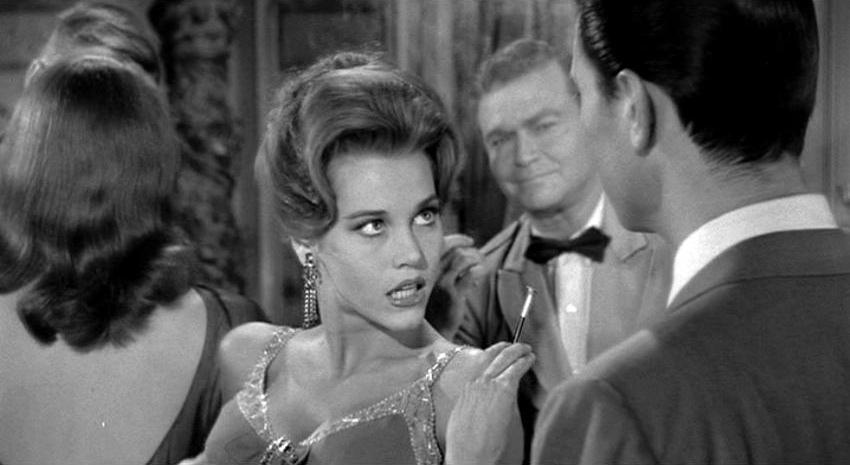

 Djibril Diop Mambéty's funny, harrowing, colorful, and terrifically astute Hyenas is an emblematic case of a masterpiece—and a good time at the movies, to boot—that these cultural trends wholly short-change. Heroically, it did participate in the Cannes competition lineup in 1992 and in that year's New York Film Festival, it was micro-mini released in commercial venues that fall, and it's available for rent on DVD or VHS. So, hop on it, and observe how piquantly Mambéty adapts Friedrich Dürrenmatt's The Visit, one of the twentieth century's great plays, and infuses the material with exciting, entertaining, and shrewd new meanings within the West African context. The plot concerns how Linguère Ramatou, an acerbic, broken-bodied, and vengeful old woman, returns to her small-town hamlet after decades of amassing a shadowy fortune. She now indulges the citizens with improbable luxuries and other, decadent incentives so long as they agree to execute the town's most popular citizen—in this version, an avuncular barkeep and shopowner named Draman Drameh, who long ago denied having fathered the illegitimate child that occasioned Linguère's banishment in the first place. The bankrupt village, whose town hall is impounded in a very early sequence, has a peculiarly African (but also not peculiarly African) susceptibility to superficial remedies and cults of personality, and they are sure that the woman's promised fortune shall be their redemption, even as they profess outrage at the demand for Draman Drameh's head... and even as Linguère and Draman volley back and forth between nostalgic recollections of their ancient affair and bitter disputes over her grudge and its consequences.