Nick's Flick Picks: The Blog

Two Weeks in Another Town: 1986
 It has become increasingly obvious that I won't be enjoying any big trips this summer, but there are always new methods for taking matters into your own hands. Needing a break from all of the high-intensity academic writing of the last year, and a different kind of break from the big Oscar projects, and inspired by all the fascinating coverage that came out of this year's Cannes Film Festival, I decided to take unusual advantage of working at a major research university and reassemble a Cannes Film Festival from the past for my own enjoyment. Some people like to restage Civil War battles or the Lewis & Clark Expedition, and I really can't speak to that, but if you want to resuscitate two weeks on the Croisette, here's what you do:
 • Visit the official page for the year you have picked at the Cannes Film Festival website, remembering to click the "All Selections" tab since, as we re-learn every year, the main competition film are often rivaled in quality by the sidebar selections and other out-of-competition titles. This will also entail visiting the relevant sites for the Directors' Fortnight and the Critics' Week pages, since these programs aren't archived on the Cannes page. Polish up your own page devoted to the Cannes festival you are revisiting, making sure to expand the archive past the Palme competitors. Draw up your ranked preferences of which films you are most intent on seeing, as though preparing to buy tickets at any other festival. As happens in real life, you occasionally will have already seen some of the titles before this new festival begins, so it's fair to record what you think about those films already, even if you saw them eons ago and plan on re-screening them.
 • Retrieve as many of the programmed films as you can get your hands on, through a combination of the public library system, the Interlibrary Loan office, MUBI, Odd Obsession, and Facets—since you still think other rental agencies besides Netflix deserve to have loyal (and local!) customers, and since a lot of what you're looking for may only be available on long out-of-print VHS tapes. Used media shops like Chicago's splendid, three-location Reckless Records may also come in handy here.
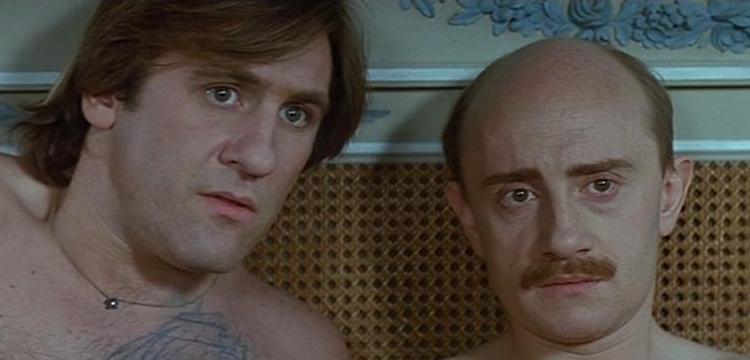 • Do your best to ascertain the order in which the Competition films debuted, because it's fun to simulate the particular sequence, contexts, and suggestive associations among different films that a Cannes journalist might have experienced at the time. This can be tricky, but some reading ability in French will help, since Le Monde is usually pretty diligent about reviewing these titles the day after each one premieres, and you can search their archive to find out when these columns appeared in print. If you pick a year before 1987, as I did, a lunch hour at the Microfiche station is the way to crack the case. Occasionally, you will find an article that actually lists the calendar for the whole upcoming festival, but you cannot count on this. You can cheat a little on the Out of Competition titles, since records here are blurrier, and they typically play more often and get reviewed in a less systematic fashion. Besides, you have to draw a line somewhere.
 • For added historical context, read a little of the initial Cannes coverage in Le Monde, Figaro, the Guardian, the Telegraph, the New York Times, the Los Angeles Times, the Washington Post, and especially Film Comment to learn what was in the air, culturally and politically and cinematically, at the time your festival fired up. This always yields fascinating tidbits, and if you wind up getting a little advance sense of which films flew and which ones bombed, that's fine, because usually when you show up to a festival, you already have some sense of the buzz around certain titles, including the ones about which everyone stays oddly silent. Just take it as a bad sign if, without variation, you always wind up agreeing.
• Buy a small piccolo of champagne and a lot of coffee, wake up early in the mornings since you still have work to accomplish later in the day, and start your itinerary!
 I decided to return to the 1986 Cannes Film Festival in honor of its 25th anniversary, which also happens to be the 25th anniversary of my beginning to see movies on my own and attending grown-up dramas with my parents. I hadn't seen a lot of the Competition selection before, although the actual Palme winner, Roland Joffé's The Mission, is maybe my least favorite recipient of this prestigious prize. Turns out this was both a popularly applauded and a viciously contested win, with rampant rumors of jury manipulation even before the festival opened. The scuttlebut: Gilles Jacob really wanted to premiere the movie, which Joffé and his ambitious producer David Putnam weren't finished editing; wags maintained that Jacob told Putnam, if you bring us the film, we'll tell the jury to feel very, very, very grateful for the opportunity.
 In general, the Palme was seen as a two-way race between the picturesque pop of The Mission and the austere, differently picturesque, semi-penetrable spiritual agonies of Andrei Tarkovsky's The Sacrifice, which I've also seen though I don't remember it all that well. Both movies grabbed multiple prizes from different bodies beyond just the main jury, controversially chaired by the devoutly mainstream Sydney Pollack. The Ecumenical Jury and the FIPRESCI International critics gave their annual citations to Tarkovsky, while the Technical Grand Prize council, who often cited films by director rather than singling out individual craftsmen, bestowed their plaque on Joffé. Pollack's crew did what they could to distribute the wealth of prizes in other ways, partly by divvying up Best Actress and Best Actor to two performances apiece from different films—the only time that has happened in Cannes history. Still, 1986 is remembered as one of those two-racehorse years on the Croisette, sort of like the 1994 Oscars and, possibly, the 2010 Oscars. Note which side always comes out on top in these situations.
 Aside from these two films plus Andrei Konchalovsky's Runaway Train and Neil Jordan's Mona Lisa—Oscar nominees and Golden Globe winners for Best Actor in 1985 and 1986, respectively—the main competition will all be new to me. This includes off-center work from Robert Altman, Martin Scorsese, Nagisa Ôshima, and Bruce Beresford; divisive outings from name directors to whom I've had at least some exposure, including André Téchiné, Margarethe von Trotta, Jim Jarmusch, and Franco Zeffirelli; and little-seen work by important figures whose movies I've never seen, including India's Mrinal Sen, Brazil's Arnaldo Jabor, France's Bertrand Blier, and Russia's Sergei Bondarchuk. The sidebar programs include Spike Lee's debut, the punk classic Sid and Nancy, the completion of a trilogy by Axel Corti and the beginning of one by Denys Arcand, a sexually provocative Tennessee Williams adaptation, rarely screened titles from Chantal Akerman and Amos Gitaï, a Carlos Saura dance film, and an Australian movie I've never heard of where Isabelle Huppert has a starring role as a blind woman. Plus, encore screenings of Hollywood favorites that hadn't yet opened in Europe (Hannah and Her Sisters, The Color Purple) and the big, four-film coming out party for a tremendously exciting Down Under talent named Jane Campion.
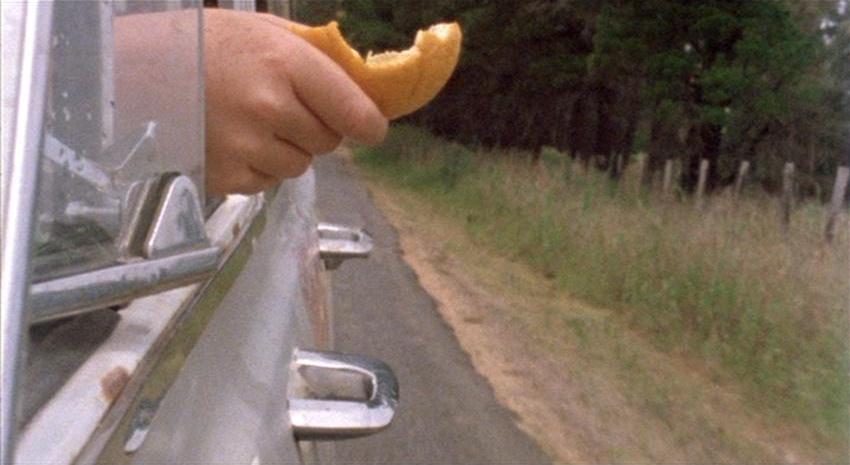 Campion won the Short Film competition for her peerless student film Peel, making her the first woman to win a Palme at any level of Cannes, seven years before she also became the first woman to win the Palme for feature films. Led by Mona Lisa, The Mission, and Sid and Nancy, I have read that the UK had more official selections in and out of the main derby than they ever had before. (Sid, the best reviewed of the lot, was relegated to Un Certain Regard.) Meanwhile, a single, Israeli-owned production company called Cannon Films, previously the industrial plant for such exquisite art works as Hot T-Shirts, Schizoid, and Exterminator 2, spent millions of
  The biggest story at Cannes that year, proving that some things never change, is that the U.S. had recently commenced a major bombing campaign in Libya, which had already claimed the life of one of Muammar Qaddafi's children (although this report was later exposed to be false). Security was at maximum intensity at Cannes, which gleams just across the Mediterranean from Tripoli, and virtually all the American talent that had previously planned to support their films in person wound up canceling their visits: Scorsese, Spielberg, Shepard, Whoopi Goldberg, Rosanna Arquette, Walter Matthau, Jon Voight. The casually fearless Robert Altman, the more bullishly fearless Eric Roberts of Runaway Train, and Griffin Dunne, the heavily invested star and producer of Scorsese's After Hours, were the only Yanks to hit the Croisette. By all accounts, the paparazzi were pissed, though the jury wasn't impressed enough by the intrepidity of Altman, Roberts, or Dunne to give a prize to any of them (though Scorsese did win Best Director). Military ships patrolled the shoreline at all hours, as did a giant replicated galleon commissioned to advertise the Opening Night film, Roman Polanski's comic farrago Pirates, which I'm not ashamed to say I'll be skipping.
 Among the 20 Palme entrants, I've been able to scrounge up all of them except for Raúl de la Torre's Argentinean political allegory Poor Butterfly; Marco Ferreri's I Love You, a story about a man who literally falls in love with a talking keychain, which was all but booed out of town; and Mohammed Lakhdar-Hamina's French-Algerian production The Last Image. The latter I am sorely disappointed to miss, since Lakhdar-Hamina's Chronicle of the Smoldering Years is one of my favorite Palme victors of the past, and certainly the least well-known of the really great ones. The only available DVD of Bondarchuk's Boris Godounov doesn't seem to have English subtitles, but it's also not clear how much dialogue it's got, so we'll see whether or not I can hang in there with it. It's a festival tradition to get punked by translations or the absence of needful translations, as it is also a festival translation to bail out when the going gets too tough.
Otherwise, stay tuned for some reviews soon. I plan on enjoying my two-week "trip" tremendously, and I hope you'll be along for the ride!
Labels: 1980s, Andrei Tarkovsky, Cannes, Cannes 86, Chantal Akerman, Festivals, I Get It That I'm Crazy, Jane Campion, Martin Scorsese, Palme d'or, Robert Altman, Spike Lee, Steven Spielberg, Women Directors
posted by NicksFlickPicks at 10:00 AM
4 comments


 #7: Walnut
 #6:
#6: 


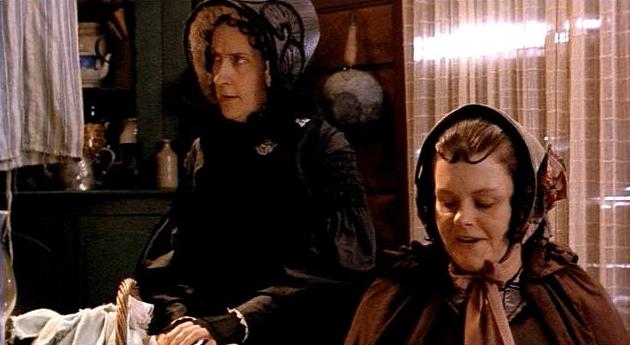


 After being on quite the roll there for a minute, I haven't posted in over two weeks, so I may as well pack a lot into this entry. Yesterday was, after all, a High Holy Day: the birthday of my grandfather, but also of the late, impossibly great
 Thanks, Nathaniel; thanks, Tim; thanks, Jane; thanks, Holly, Harvey, Anna, Sam, Jan, Stuart, Veronika, Michael, Janet, Andrew, Tungia, Kerry, Genevieve...; thanks, Katharine; thanks, Opa; overwork and underpay and all-nighters be damned, all is full of love today on Nick's Flick Picks.
 Is the
  Still, Sweetie is an absolute corker, genuinely unnerving and reliably hilarious, and also a movie that was practically invented for the Pause button, since each and every frame has been so wittily, punctiliously composed. Campion's estranging perspectives, her appetites for the alien bloodstreams inside domestic bodies and spaces, and her affinity for mannered performers and unlikely faces make her an especially glorious heir of photographers like Diane Arbus—although, much more than certain
 Heard that one before? It was initially delivered in a climate of teary, jubilant
  Yesterday, me pal Nathaniel got to
  If you want to read about some Jane, Virginia Wright Wexman edited a diverting
  As in, does anybody put one to better use than
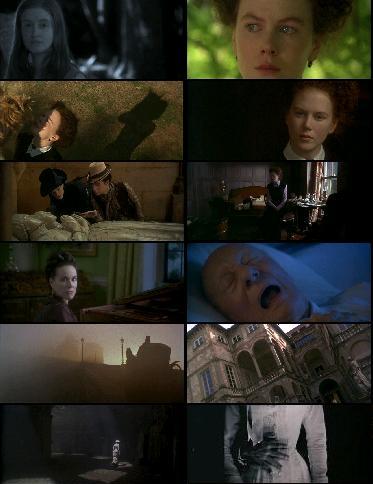
 One good way to combat weather like this is to rent movies that take place in more temperate climes. If you turn off all the lights and draw the blinds, you cna forget. I didn't rent