Thursday, June 03, 2010

Actress Files: Natalie Wood

Natalie Wood, Splendor in the Grass
★ ★ ★ ★ ★
(lost the 1961 Best Actress Oscar to Sophia Loren for Two Women)

Why I Waited: Nat²: i.e., Natalie herself, because everything she's ever done has left me somewhere on the spectrum between indifferent and annoyed; and Nathaniel, who has been my dearly valued friend and primary co-conspirator in actress idolatry for seven years and counting. He loves Natalie. I love Nathaniel. By the transitive property, I was hoping I, too, could love Natalie. And people had suggested I could fairly expect a career-best turn...

The Performance: ...and I got one! Granted, I am not ready to call Natalie a great actress, and not just because her ratio of hits to misses is still so lopsided in my book. There is a stiffness in her physical and vocal carriage and a strained look on her face in too many moments of even her strongest turns. Closely in spirit to an earlier performer like Jennifer Jones or Elizabeth Taylor, or more contemporary stars like Naomi Watts, Uma Thurman, or Jennifer Connelly, Natalie always strikes me as having scored a lot of her breaks based on her extraordinary beauty, in ways that both pleased and irked her, and that she therefore devoted herself aggressively to building up credentials on different grounds. It's not just that her talents needed time to catch up with the breathless pace set by her looks and her early precocity, but that her notion of acting took shape rather too strictly as a desire to prove that she is capable of—perhaps even unduly focused on—the kinds of anguish and "emotional depth" that the culture has a hard time associating with such an eye-catching exterior. As with Thurman or Connelly, I often detect an inward, sympathetic connection with the layers of the women she plays, but an unnerving sense that she's trying to broadcast all of them through a disproportionate reliance on knowing smirks, stunned or self-consciously frozen expressions, and hammering gazes. The whole performance may well be roiling in the back of her head or choked on the tip of her tongue, but she's having a hell of time getting it across her features, into her body, or past her teeth, except in the moments when she rather unreservedly shakes it all out.

The ironic thing for me about her triumph in Splendor in the Grass is that her performance initially feels archetypal of all of my usual reservations, and in some ways never fully detaches from them. Nonetheless, gradually but thrillingly, Wood's take on Deanie Loomis reveals itself as a high-wire essay on this very push-pull between beauty and depth, yearning and externalization, expressing an almost dizzying amount of motion but thinking, worrying, constantly, about just what's being expressed, and why. The film starts with a vociferous make-out session between Wood's Deanie and Warren Beatty's Bud Stamper, parked by the side of a waterfall, as much the creation of human engineering as of nature's laws. Director Elia Kazan keeps cutting to these foaming jets of water as head-slappingly literal equivalents for these teenagers' surging hormones, though the image of the dam also resonates. Deanie is stopping Bud from going all the way, less because she wants to than because of a man-made prohibition against being a "loose" girl, the kind that is electrically but too hyperbolically embodied through the first hour of Splendor in the Grass by Kazan's wife, Barbara Loden (whom you'd imagine would have been catnip to Supporting Actress nominators, but no). Beatty is sunk in that "pained" and mush-mouthed narcissism that ruins nearly all his performances until Bonnie and Clyde. Wood lies back in the seat, pushing at him and at us with a strong, uncomplicated expression of yearning and apology. The character and the actress look a bit clogged, inarticulate precisely in their fervent, inchoate desire to be more articulate. The script is by William Inge, a major midcentury playwright who never met an old standby of American small-town living that he couldn't reframe as a hamhanded symbol or distend into a broad cliché.

Kazan clearly has his work cut out for him, and for a long while he seems to be losing. Scene after scene of Splendor in the Grass's opening half tells us exactly the same things about the same characters, the repetition even more aggravating because there's so little subtlety involved in the scenes where we first identify, say, the paternalistic pressures on Beatty's squirmy quarterback-hero, or the steep social climb that Wood's Deanie will have to undertake to hold onto him, or the resentment that her prematurely spinsterish English teacher (Martine Bartlett) feels toward these infatuated lovebirds. The scenes at home with angsty Beatty, wildcat Loden, their tremblingly overbearing oil-tycoon father (Pat Hingle), and their profoundly recessive mother (confusingly not played by Mildred Dunnock) feel like Written on the Wind remade in the logy, pedestrian key of Peyton Place. Across town, Wood achieves a looser, livelier rapport with Audrey Christie, doing superb but self-effacing character work as her mother. They have an early, haunting conversation about how sex, or "coming near to someone," is little but a necessary imposition in the life of a young woman. "Woman" here translates to "future babymaker." Natalie has clearly been listening to Kazan's injunctions about realist acting and improvisation, conspiring with Christie to keep the pitch and cadences of their exchange unpredictable, and fondling some props with a slightly over-deliberate randomness. All those Method actors, hunting for years for another milk bottle, another one of Eva Marie Saint's gloves. Anyway, as ever, Wood's giving the good college try, but for a solid 45 minutes, I felt like I was forced to watch as she murmured the name "Bud..." (or sometimes "Bud...?") in various stages of adoration and whiny pique; as she coped with awkward, rehearsal-level experiments like the scene where Bud comes close to strangling Deanie; and watching passively as Loden's fireworks and Beatty's smug stab at fragility walked off with the movie. It still wasn't feeling like much to walk off with.

But then.

There's a special thrill in seeing a movie and a performance not only seize themselves back from the slow drain of banal inertia but do so in unexpected ways, going so far as to recuperate much of what previously felt unsatisfying. Not quite halfway into Splendor in the Grass, the Stamper family, engorged by their own affluence, holds a Happy New Year 1929 party, which seems all but guaranteed to doom Inge's script to hokey, Cavalcade-style historical literalism. You know Loden will party too hard and probably embarrass everyone, but I wasn't expecting Kazan to hit us with the movie's first pair of truly unnerving spectacles, first as she steals a quick, insolent glance straight at the audience on her way into the men's room, and then as she's carted away by a whole gaggle of young men in tuxedos, agitating rather overtly for an impending gang rape. Bud intercedes just in time (or maybe not? we can't tell...), and there's Deanie behind him again, screaming from the sidelines: "Bud....!" But the ensuing brawl—lit almost entirely by headlights, and thereby comparable to a scene in Kazan's directly preceding Wild River—actually snaps Splendor in the Grass awake, pouring some palpable, bloody stakes into its rhetorical notions about stifled youth, irrepressible libidos, acting according to rules vs. acting out of urges. The scene sends Loden out of the picture, which turns out to be a huge boon to Natalie Wood: she's no longer playing the intimidated foil to a grandiloquent emblem of female sexuality refusing to police itself. Neither, mercifully, is she goaded into filling Loden's shoes. Instead, she inherits the plum assignment of sending Deanie into a barely contained frenzy, unsure of whether to mirror Ginny Stamper and get brutalized for her wantonness or whether to stay put as Deanie Loomis and feel asphyxiated, unhappy, and sexually parsimonious. Even, however, if the character starts thinking in these stark binaries, the actress will quickly demonstrate that she and Kazan have better plans in mind. Meanwhile, it's clearer than ever that Splendor in the Grass is ready to take risks, heightening its spookily quiet but otherwise humdrum soap-operatic aesthetic into a nervier plane, a merging of the bold, confrontational colorism of Some Came Running and the odd, teasing, arrhythmic grammars of Kazan's most daring films, like Baby Doll and Wild River.

Does this mean that Wood gets to finally let loose and show us how she can throw herself into wailing and suffering? No. May I repeat that? No. Deanie gets to embody a more complicated case than the discontentedly repressed good girl who turns into a harlot on fire. To the extent that, during a long sequence surrounding a school dance, Wood does have to convey completely unhindered eroticism—just imagine how strongly you'd have to come on to scare off Warren Beatty—it's only one of several guises that Deanie Loomis adopts, while she's in a kind of identitarian free-fall. I need to describe this with some care, too, because Wood and Kazan concertedly avoid a Three Faces of Eve demonstration of kaleidoscopic personas. They seem intent on showing a Deanie in profound distress, but not a Deanie who is "crazy"; they also seem more interested in capturing a flailing character than in showing you that, Boy!, Natalie Wood can sure snap in a moment from full-on Jezebel to weeping novitiate to shell-shocked patient. Instead, all of these guises and more get excitingly blended into one another, even in those intervals when one of them becomes floridly primary. In Wood's first brilliant scene, she gets called on by that disgusted teacher while she sits in her desk, drifting in a fugue state, stunned at having pushed Bud away, and shocked at what, according to a wildfire of hearsay, she has pushed him into. On top of everything we're already tracking about Deanie as she walks into this classroom, Wood shows us things she hasn't disclosed thus far. For example, Deanie wants her teacher to like her, and has no wish to flout her rules; she does feel that poetry might be speaking to her, though today it's throwing back unwittingly painful reflections of herself; she hates everyone's prying eyes, not because of what it means they know, but because she herself has no idea how she'll react to all of this surveillance, and as her feelings well up, she's terrified of their incoherence. I'll add, too, that the signals Wood gives us here of Deanie being a flawed but at least an intentionally conscientious student only deepens the impression of how uncharacteristically obsessed with Bud she must have been to dawdle and drift so openly in the prior scenes. She's not some budding nympho. She was wild about him.

The good girl, the truant, the rejected lover, the unraveling mind, the school kid who actually cares what adults think about her, the student who cares but doesn't precisely grasp what Wordsworth is saying to her: it's all there. Did they film Splendor in the Grass in sequence? Almost certainly not, but how else to account for the fact that Wood seemed so flatly bottled up before, and so nimble, complicated, and fruitfully pushed onto scary promontories for the entire rest of the movie? Even when she's guilty of being fetishistic or a bit of an exhibitionist about the character's fraying moods, she's much more precise and potent than I've seen her before or since: raving in the bathtub, dunking herself in the reservoir. (Poor, hydrophobic Natalie, beating away at the water.) But this isn't Frances: we aren't swinging on a pendulum between Snake Pit mad scenes and sad, self-righteous lucidities. When Deanie is indeed sent for a while to an institution, Wood doesn't just forget everything that was smart, self-aware, or appealing about this girl before her heart got smashed—before she got simultaneously lanced by everyone she cares about her, for wanting to have sex and for refusing to have it. Deanie quite clearly charms her doctor, and not by coming on all cutesy-poo as the fetching pixie who isn't crazy, just "creative." She looks like she's thinking about herself—not just about Bud, or about her predicament, but about who she is. Wood disconcerts her parents, and she disconcerted me, with a mad, swooping sprint across the hospital grounds to come see them in the visitor's center; not everything about her feels immediately on balance, even in quick impressions like this run. But during the actual scene, she's thoughtful, permeable, and attentive. She sees, all of a sudden, that there's more to her father than she thought, and that her mother is much more seduced by the hormonal dramas of high school than she had understood. Usually these kinds of scenes turn into full-throttle takedowns of the parents, for being autocratic, passive, or both, but Wood manages to seem a bit at sea and a little disturbed while also intrigued at these new insights into her mother and father.

Wood, bless her, does not think that beneath every dutiful student and well-raised grocer's daughter there's a howling hysteric waiting to be unleashed. When she is hysterical, she and Kazan have filled the performance with so many specific choices and environmental triggers that we see what's pushing her, as well as enough linking threads to the "healthier" Deanie that she doesn't feel as though she has erupted into some different, undisciplined imago of herself. She's arresting when she needs to dial it up, gorging her mouth with invisible food while she screams at her mother from that steaming bath, but arresting, too, when she's distant or restrained. The final note in those hospital sequences, where she has otherwise seemed so unexpectedly plucky and restabilized, is a haunting long shot in which she confides her enduring feelings about Bud to a trusted doctor, gripping the door frame and dropping to a verbal and physical hush, while still sustaining this unexpected choice of a angle, anchored clear across the room.

Without giving away too many of Splendor's secrets, and without invoking too august a comparison, the final scenes of Deanie's homecoming and her subsequent, complicated visit to see her former flame offer the only moments in a movie about young love that has ever put me in mind of those devastating hours after Gena Rowlands returns home in A Woman Under the Influence, trying to be herself but also not herself—wanting to release something, but being terrified to, and feeling desperate not to hurt anyone, or bring more hurt on herself. Obviously, Wood is not Rowlands, but who even imagined we'd be able to see Rowlands from here? Deanie gets a final close-up where she either has absorbed Wordsworth's wisdom or else has learned to sedate herself with a homiletic, defanged, anaesthetizing version of that wisdom, to keep her from being bereft at the way sexual puritanism, whether parental or American, finally costs us too much. Especially as applied to the young and passionate, even with good, protective intentions, it can so easily stunt our culture and our individual happiness in bigger, broader ways than the occasional, ostentatious production of a dangerous rebel-livewire like Ginny Stamper. Wood, like Inge, is surprisingly and inspiringly willing not to over-sell some prim, condensed moral, not even the one I've just paraphrased. She holds to the character, not to some dubious, extreme version of the "truth" that she can refract through the character. I don't leave Splendor in the Grass thinking everything she does is flawless, and frankly, I'll probably walk into my next Natalie Wood vehicle with lots of the earlier reservations. But here, she is ambitious, careful, magnetic, touching, and memorable. Just this once, I get the fuss.

The Best Actress Project: 1 More Down, 6 to Go

Labels: , , , ,

Monday, May 31, 2010

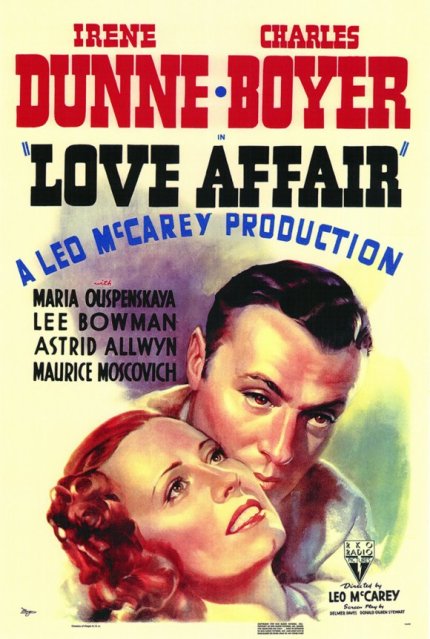
Actress Files: Irene Dunne

Irene Dunne, Love Affair
★ ★ ★ ★ ★
(lost the 1939 Best Actress Oscar to Vivien Leigh for Gone with the Wind)

Why I Waited: As with Lee Remick, checking off this performance meant signing off on a top-drawer roster, and I was sorry to see it go. Affection for Dunne, and hearsay that this was her favorite among her own movies, only amplified the anticipation.

The Performance: The first thing Irene Dunne does in Love Affair is say "I beg your pardon" through a porthole-shaped window connecting an enclosed hallway on a cruise-liner to an outdoor promenade. Why is that special? Because she says it in the quick, peremptory way that you'd actually say "I beg your pardon" in real life, and not as you would say it to a soulmate disguised as a stranger, whom you were meeting at the outset of a classic romance. Her character is called Terry, and the reason she has been hailed into conversation by Charles Boyer's Michel is that a gust of wind has just blown a telegram from his fiancée out of his hand and through this window; he's asking that she pass it back. Sizing up this charismatic, brutely handsome Continental and enjoying his embarrassment, especially after taking a glance at the ripely romantic telegram, Terry teases him to prove that the telegram is really his, forcing him to recite certain details. She's having a passing lark, like a woman who is used to entertaining herself on the spur of the moment with cheeky little dares and parries. She's also baldly flirting with someone she's never met, whom she can only see from the neck up, and about whom the only things she knows are 1) that he's engaged and 2) that he's rich enough to be with her on this boat. Within an instant, she seems like a pretty rare bird, and she has sized him up as one, too, ascertaining as well that they belong to the same flock. Thus, they have immediate bonafides as movie characters, and the makings of a high-flying, promising couple. Yet she's also the kind of woman who can say "I beg your pardon" like she's any woman, anywhere, talking to anyone.

Irene Dunne's appeal rests on such unusual fusions of the ordinary, the glamorous, and the subtly but defiantly odd. There are shots fairly early in Love Affair, while she's encased in a huge, armoire-shaped fur coat and coiffed in a matronly updo, when she looks a bit grandmotherly for a romantic lead. You can see why, as early as Cimarron, when she was eight years younger than she is in Love Affair she was so easily adaptable into old-age makeup. (She was in fact 41 when Love Affair opened, which should inspire a lot of Hollywood women, as well as their fans.) Dunne's air of strangeness has to do with how quickly she presumes familiarity and sets about seducing and needling men who are more "obviously" attractive than she is: Cary Grant, Charles Boyer, John Boles, Douglas Fairbanks, Jr. She takes liberties, verbally tickling them, looking fully confident that her rectangular smile, her mischievous gaze, her nutty hats, and her habit of throwing arch or exhausted "ah"s and "mm"s into her dialogue are as fetching as anything these matinée idols bring to the table. In her screwball and pseudo-screwball performances, but even in roles like the one in Love Affair, she comes across as a sort of tenuously acculturated version of Katharine Hepburn's Susan from Bringing Up Baby, pleased as punch to start a little trouble at any given moment, and it's both perplexing and funny that she can nonetheless transform in a second into a completely credible society type. One minute, in Love Affair, she's throwing a photographer's pictures into the ocean and having a dry, self-satisfied little chuckle about it. Three beats later, she's embodying the kind of woman who might need to worry if the gossip columns catch her scent, who would feel bad about breaking a rule if it hurt someone, or drew agitating attention to herself. Even if you don't know that Dunne was raised from solid, devout, Republican stock, you can feel her bone-deep handle on "proper" behavior in her performances, even the ones—which is most of them, especially in the 30s, whether she's laughing, yearning, or crying—where she's one way or another tossing dart after dart at the bulls-eye of respectability.

Stanley Cavell famously wrote in Pursuits of Happiness that, of all the great screwball heroines, Dunne is the one whose movies suffer most if you can't jive to her idiosyncratic appeal, even as she's also the actress who's wry and eccentric in just the sorts of ways that might annoy a lot of viewers. Compared to Theodora Goes Wild or Joy of Living or My Favorite Wife or even The Awful Truth, Love Affair strikes me as the film from Dunne's peak period where it's hardest to imagine not falling for her character, but it's wonderful to discover that this isn't because it's a boring or safe performance. Maybe Dunne knows that after playing so many daffy miscreants, it's something of a risk for her to play so many of Terry's feelings semi-straight, whether falling rather suddenly for Michel, or realizing their attraction to each other has an 8©-day lifespan until the ship reaches port. She takes undisguised and unironic pleasure in meeting Michel's stately but smiling grandmother (Maria Ouspenskaya, who also plays the ship) and bids her a full-bodied, close-to-tears farewell as they're prancing out of her house. The script even requires that Terry duck into the matron's private chapel and take a few moments out for God. Rudolph Maté lights this scene like a meaningful interlude of piety, catching Dunne and her all-white outfit in a nimbus of angelic light, and her look of simple, religious earnestness is as welcome a surprise as the solemn, perceptible agnosticism on Boyer's brow. Love Affair, a famous movie whose plot is even more of a cultural mainstay care of the 1957 remake An Affair to Remember, eventually depends on a big, bathetic plot contrivance and needs the ballast of plausible, un-tricked-out acting to avoid total shamelessness, and to pack the enormous charge that it has for decades of viewers. A lot of actors, even good ones, would seek to establish plausibility and overcome the big narrative stunt by expressing ardor, anticipation, devastation, and climactic, chin-up martyrdom with such surging commitment that the penny-romance conceits get buoyed along by sheer emotional force. We'll call that the Whitney Houston way to play the part, and make no mistake that I(IIIII-ee-IIIIII-ee-IIIIII....) can be a sucker for that stuff.
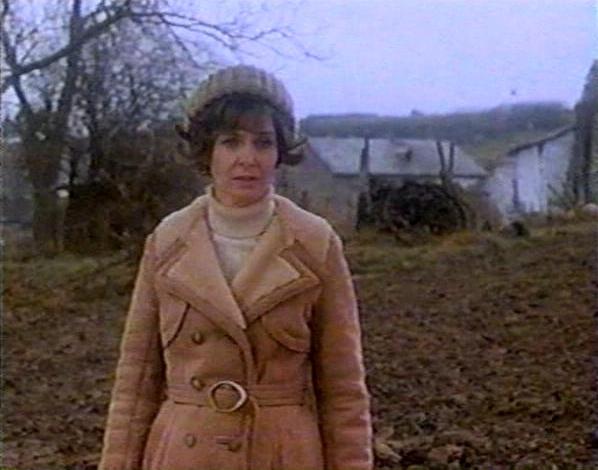
But Dunne takes the road of Dolly Parton, letting us know that she will always love Michel by allowing Terry an absolute candor around him, in mirth and passion and sorrow. She banks on the power of sharp, clear, modest phrasing to signal concealed depths, rather than plunging right into them and dragging us along. Some actors congenitally suggest that one mustn't play two emotions at once or can only do so by pointing huge arrows at your own double-meanings. Dunne, though, manages a tinge of sexiness while being briskly funny, adopting a slurry Mae West timbre while dissuading Boyer from confiding his secret romantic angst. "I'm really not very good at that sort of thing," she drawls. "I talk a lot." There's no double-meaning here, just a tangy friskiness that packs more into the line than it's asking. When Ouspenskaya's benevolent dowager worries that Michel has missed out on romantic partnership because "he's been too busy...," Dunne is the perfect actress to complete the sentence ("...living?") in a way that preserves the tactful euphemism, appropriate to speaking with one's elders, while grinning that she knows just what "living" involves in this context, and that she's the last person to frown upon it. "I guess you and I have been more or less used to a life of pink champagne," she confides to Boyer's playboy, without an ounce of the censorious, compulsory Hollywood pretense that the rich, or at least the best among them, don't care about their money. Dunne's Terry is thrilled to have money, and aware that it won't be comfortable to proceed without it, even as she's sportingly up to the fresh challenge of earning her own.

An actor can't give us such complete frameworks for grasping a character's complex feelings, especially those that are germane to the whole plot of the film, without being able and willing at crucial times to tell a different story with her face than with her voice, or able to turn nimbly from one affect to another, as when Terry follows her dreamy citation of her father saying "Wishes are the dreams we dream when we're awake" with the dry-gin chaser of "He drank a lot." In a brilliant bit of direction, perfectly enacted by Dunne, Terry outlines the famous meet-atop-the-Empire-State-Building stratagem for rendezvousing with Michel six months in the future as though she really has lost her heart to him and she enjoys a good romantic cliffhanger... and at the same time, she's clutching her arms and bobbing up and down like it's very cold out there on the deck, so she ends the scene with a clipped, over-the-shoulder "Take care of yourself" as she dashes inside for warmth. Love Affair has enough of its barrels aimed at the summit of screen romance that Dunne, Boyer, and McCarey know that not every shot they take needs to hit that same target. We might even believe the scenario more fully, or care about the characters more richly, if their layers and peccadilloes drive the narrative, rather than allowing the abstract goal of just smashing our hearts dictate everything they say and do, and every way they do and say it.

Why not five stars, then? Well, the final third of Love Affair, where The Whitney Approach would really start going for broke—and I presume, sight unseen, that this is just what Deborah Kerr attempts—is a little less hospitable to Dunne. Her genius lies primarily in timing and in creative, multi-faceted interactions with her co-stars. Therefore, long sequences of her singing unmemorable songs in close-up, while Terry builds up her nest-egg as a nightclub chanteuse, prove an unexpected advert for Dunne's opera-trained soprano but otherwise don't give her anything to do creatively. I love her typical counter-intuition in diluting the performance just when so many actors would start pumping up the volume, and she is a godsend in the moment when Terry and Michel unexpectedly meet in a theater, each in another person's company, and in the short taxi-cab scene just afterward, when she insists as conversationally as possible that she really doesn't want Michel knowing about her waist-down paralysis. But in other, neighboring scenes, playing the ukulele and singing with a cadre of orphans, or negotiating for a job with the orphanage director, she looks a little bored without a more inspiring scene partner. One sign is the deflated way in which she reads some of her lines, even if this deflation is meant to register the ebb in Terry's spirit following her accident. It's just as revealing, though, that in these scenes Dunne reprises some of her oldest standby mannerisms from other performances, like her mischievous grin, with one fingernail resting on her teeth. Not in every moment of an Irene Dunne performance does she look unreservedly involved in what's going on. There are flashes of this habit even in the long final scene with Boyer, where she emotes very movingly in some of her close-ups, but you still sense that she'd be thrilled to do a little more of the talking.

Still, Dunne succeeds memorably in being amusing and aroused and resilient and regretful and somewhere close to ideal in Love Affair, without almost ever taking the most predictable paths toward any of these goals. At 88 minutes, Love Affair itself is as succinct as she is, covering a lot of ground without needing a lot of time, and proving, in perfect sync with its leading lady, that sly and disciplined pithiness can be just as powerfully moving as extravagant excess. At the midpoint of the movie and again in the closing moments, Dunne has to recite a line concerning "the nearest thing to heaven"—I'm sure you can guess what that is—and the sentiments feel too inescapably on-the-nose for a performer who so clearly prefers to arrive sideways into a screenplay's designs, or to tell the audience what we expect to hear through a counter-harmonic approach that only Dunne would conceive. We don't need to hear about the nearest thing to heaven when, left to her own devices, and furnished the proper companions, she has such a sparkling track record for getting us there herself.

The Best Actress Project: 1 More Down, 9 to Go

Labels: , , ,

Thursday, May 27, 2010

Actress Files: Joanne Woodward

Joanne Woodward, Summer Wishes, Winter Dreams
★ ★ ★ ★ ★
(lost the 1973 Best Actress Oscar to Glenda Jackson for A Touch of Class)

Why I Waited: So what if Columbia had no idea how to market this movie to a general audience, saddling it with that title Woodward hated so much and an even worse tagline on the poster: "Beautiful. Frigid. She is called a Snow Queen." Were they dead-set on losing their investment? For me, though, this prospect is pure catnip: a pedigreed lead actress, 30s darling Sylvia Sidney in a comeback cameo, and nominations for both. I've enjoyed looking forward to this one.

The Performance: I know there are exceptions to this rule, but especially after the mid-60s or so, "a Joanne Woodward movie" means something at least as specific to me as "a Howard Hawks movie" or "an Alfred Hitchcock movie." Lots of actresses take pains to advertise their versatility, and Woodward's most famous, Oscar-winning role in The Three Faces of Eve accomplishes just that in the space of a single film. But at the expense, I'm sure, of working as often as she deserved to, Woodward's presence above the title signifies a strongly internalized drama, slightly vinegar in flavor, depending entirely on very fine subtleties in line readings, rhythms, and facial expressions—notwithstanding the fact that Woodward has an acerbic, somewhat defiant screen presence that would seem to forestall rather than encourage spectatorial penetration. For the most part, she's the polar opposite of more florid, gestural performers like Ellen Burstyn and Jessica Lange, although she adjoins them in my mind because they all share a gift for seeming wholly committed to their characters even when they telegraph a cranky discontent with their movies. They also seem a lot smarter and pricklier than most of the people who interview them, are quite unafraid to disclose this, and are completely uninterested in amending those aspects of their acting that detractors most dislike: Burstyn's officious, very Actor's Studio compositing of character tics, Lange's restless riflings through her regular bag of mannerisms, or Woodward's tendency to lower the temperature in a given room while looking rather haughty about it. Probably, by someone, she is called a Snow Queen. Disciples of movie divas who crave bright colors, movements across a range of genres, and zingy PR are inescapably brought up short by Woodward. If you like her style, though, you really like it, as witness her becoming only the fourth actress to rack up three Best Actress citations from the New York Film Critics Circle.

Summer Wishes, Winter Dreams was the second of those three films, and it perpetuates the driving paradox of Woodward's big-screen career: almost every one of her starring vehicles serves as a kind of apotheosis for her flinty persona and for her particular angles of interest in human character, and yet, if you set Eve White, Rachel Cameron, Rita Walden, Amanda Wingfield, and India Bridge side-by-side, they barely resemble each other. As Rita, the frosty, ornery centerpiece of Summer Wishes, Winter Dreams, she has none of the frustrated sensuality that she lights so slowly and fascinatingly under her character in Rachel, Rachel. Rita is neither looking to change her life (though she'd evidently prefer for people around her to change their lives a little), nor is she trying to charm anybody, nor does she appear to suffer in her marriage, regardless of some unmistakably arid winds that blow inside it. One of the earliest scenes in Summer Wishes finds Rita paying a cantankerous visit to an eye-doctor, and we're a good many beats into the scene before we understand that Martin Balsam's patient doctor is also her husband, Harry. As will be true for the rest of the film, Woodward remains just this side of bitchy and Balsam pulls back from acting beleaguered. Their characters appear inclined in those respective directions, especially after a long marriage, but she would be bored and remorseful at inhabiting the cliché of the inhospitable cold fish, just as he would feel defeated and deprived if he were to resent more consciously her sharp edges and impersonality. So, she threads a little warmth and tenderness into their exchanges, even as she sometimes looks as though she has to remind herself to do this, and he reminds himself, via spoken oaths to her, that he really is her intimate, sympathetic partner and a harborer of sexual feelings, however largely thwarted... not, in other words, or by any means, a vaguely disappointed colleague of many years, more of a friend than a husband.

Woodward wears her character the way you wear a well-tailored leather glove. As in other roles, she is a consummate professional at eliminating almost any sense of space between herself and Rita, even though Rita clearly finds her own habits stifling and itchy at times (at other times, she's more than happy to flaunt them), and her affects must be slightly itchy for the actress to have to play. But hand Woodward a dislikable woman of a certain age, and she'll play dislikability like it's a prized viola. She comes across as a staunch, somewhat severe defender of her characters, partly for contextual reasons. That is, so few American actresses seem willing (or, to be fair, get asked) to play these sorts of women; "difficult" types in American movies are so often barnstorming crusaders in the Norma Rae vein, or comic villainesses, or harridans. Woodward was very rare, then, in establishing a métier in forms of everyday astringency, and not only refusing to dull these women's edges but actively working to sharpen them, the way a practiced cook takes care of her knives. What I find most remarkable about this is that Woodward's protectiveness toward the characters' refusals to be charmers or mannequins does not spill into a subtle PR campaign to get us unreservedly on their side. Rita is a pill with a point of view, but still a pill. Her ornery way of pointing out her daughter's self-involvement is not likely to prompt the girl toward newfound generosity, just as it's not clear who wins, including Rita, by being so very caustic at a family funeral, where her refusal to sell off the property of the deceased is no more or less reasonable than the eagerness of her relatives to get rid of the estate and divvy up the profits. A crevasse has opened between Rita and her offscreen gay son, who communicates only with his sister; given Woodward's talent at conveying deeper feelings inside an inflexible, almost cutting reserve, you don't need to meet this son to empathize with his decision to estrange himself, even though you can't write Rita off as a harpy or a bigot.

Though Woodward seems determined not to repeat past characterizations, her director Gil Cates and the screenwriter Stewart Stern, who also penned Rachel, Rachel, harbor few such compunctions. Indeed, they steer Summer Wishes, Winter Dreams toward some formal and textural choices that seem to suit it much less than they did Rachel, maybe because Newman seemed to be thinking in terms of images and studying the French and British New Waves more closely, whereas Cates just seems to be aping Newman, thinking in terms of writerly conceits and trusting, understandably, in his tony cast. It's hard to imagine Woodward thinking very highly of a fantasy sequence in which she falls asleep during a screening of Wild Strawberries and imagines confronting her ballet-dancing son and his grinning male lover in laughable, faux-Bergman monochrome. She's not tasteless enough to pull back from the scene, or from a later, overly stylized interlude when Rita gets claustrophobic in a London tube station. Still, what is taut, nuanced, and exciting in Woodward's performance just isn't palpable in these errant sequences. At other times, I would diagnose an opposite problem. When, for instance, Rita steals into a basement cupboard to sample some of the jams that her mother canned years ago, or finds one of her own secret diaries hidden in a haybale in the family farmhouse, and sheds tears over her old entries about a lost love, the scenes and the performance choices too strongly recall the sort of rehearsal-workshop scenes through which an actor "finds" a character. They feel too contrived, though, too insularly focused on the performer and her exploratory choices, to be credible within the finished narrative. I'll hazard a guess that these sorts of scenes kept Woodward interested, but they're also the apertures through which a starchy theatricality creeps into the work. Woodward's gestures don't get too big, exactly, though a high-decibel standoff with her daughter in that hay loft does push this particular envelope. My larger misgiving is that her magnified, self-serious playing in these scenes recalls those moments in interviews where stage-worshiping actors start intoning about their "craft" and "process" without realizing how humorless and hokily overblown they've allowed themselves to sound.

Summer Wishes, Winter Dreams has a sort of Goldilocks problem, then, where some scenes feel too director-focused and some too indulgent of the actors and their character work. At times, the movie has too much of the stern aloofness of Woodward's character, and at others it conveys the main feeling of a scene with discomfiting, even awkward directness. But the whole ship comes into port well enough, and "craft" and "process," for all the ecclesiastical solemnity I'd like to erode from those terms, are precisely the reason why. Woodward doesn't give a negatively shaped performance—it's not as though she succeeds primarily by reactively rejecting some coarser version of her character, rather than building one from the script up. Nonetheless, it's easier to describe what she attains in this part as a series of avoided banalities, climaxing in a few particularly brilliant scenes where she negotiations a psychological obstacle courses. Woodward and Balsam have one near-argument about their marriage that isn't quite a fight, and given the tight rein they've had to give on their feelings up to that point, it's remarkable that they don't take the scene louder and bigger, if only for the thrill of release (a thrill the audience may also, at that point in the film, be craving). Woodward squeezes unexpected laughs, or almost-laughs, at unpredictable times and from unexpected sentiments. The overall movie may be cold and dour, but defensively teasing her husband about the notion of possible mistresses he might take, or admitting that, in her claustrophobic panic on the Underground, she has soiled her own clothes, she leavens the chilly sobriety that could so easily overtake the whole film. And it's precisely by being funny, sexy, teasing, facetious, bitter, regretful, or undeniably right at certain precise moments (rarely, of course, the same moments) that Woodward lets us know why Harry likes being married to Rita, despite her overall bents toward tartness and stoniness. Rita has a quickly recognizable exterior—though it's barely ever glimpsed in American movies, and certainly not in the form of a lead character—but from individual moment to moment, she is unexpectedly full of surprises.

Woodward brings a rare palette of affects to her movies, which is gratifying enough, but when she starts blending them together, the freshness of the combinations compensates for the pale wintriness of the overall portraits. Rita doesn't fascinate me quite the way Rachel does, and though the shortness of Summer Wishes's running time helps shape the movie as a compressed nugget of difficult emotion—its best scenes stay in your mind like a pebble you can't expel from your shoe—it also comes at some cost to Woodward's ability to flesh out Rita's arc a little more deeply. She loses a shot to evoke more gradations between "big" scenes, which is where this actress's talent always stirs me most. (I have a hard time with Eve, because it's so full of "big" scenes.) I remain an unquestioning Streisand voter in 1973, and given how disparate Katie Morosky's stridently showboaty excesses are from Rita Walden's minor-key irritabilities, or from Glenda Jackson's lacerating, slapstick ballbreaker in A Touch of Class, I wonder if Woodward admired these performances or whether she saw herself precisely as bringing something into American movies that the women in "he said, she said" comedies or sweeping, expensive melodramas recurrently miss. This often happens when I see or revisit a Woodward performance: after thinking of all the roles in which I'd love to have seen her cast in the right time and place (Julianne Moore's in The Hours, Annette Bening's in Mother and Child), I start wondering what she likes and dislikes in other people's performances. What can this mean, that I do this? I think it means that she often plays, as she does in Summer Wishes, somewhat imperious judges of character, in a way that implies her own high standards and flinty insistence on meritorious technique. I can imagine her being a very tough critic. But it also means that she's hard to predict, because even when you hand her a guarded or off-putting protagonist to play, she sees more things in that type of woman, and different things, than most other actors would be willing to see, or able to show. Her personal stamp is very, very strong, and I wonder about all the ways in which her range may not have been fully tested, but for all that, I must admit I never successfully predict what Woodward's got up her sleeve.

The Best Actress Project: 1 More Down, 13 to Go

Labels: , , , ,

Tuesday, May 25, 2010

Actress Files: Ava Gardner

Ava Gardner, Mogambo
★ ★ ★ ★ ★
(lost the 1953 Best Actress Oscar to Audrey Hepburn for Roman Holiday)

Why I Waited: The John Ford whose work I see on screen is the same one David Thomson describes in his Biographical Dictionary of Film, and if you follow what that means, you'll know why I haven't always made his pictures a topmost viewing priority. Plus, I wanted to see Red Dust before I hit Mogambo, and I only recently got around to it (and, incidentally, thought it was terrific). Plus, well...

The Performance: ...few Hollywood actresses have been as hard on their own abilities and dismissive of their own filmographies as Ava Gardner, who rarely shied away from telling reporters that she had made no really good films and was not a major boon to the ones where she appeared. I'm not sure from what source her IMDb biography has her saying, for example, "I never brought anything to this business and I have no respect for acting. Maybe if I had learned something it would be different. But I never did anything to be proud of." However, variations on these themes aren't hard to come by in writing by or about Gardner, who rivals this year's victor, Sandra "Did I just wear y'all down?" Bullock, as a varsity-squad self-deprecator, but with more edge and candid disappointment. The question of how much good PR Gardner racked up by performing such egolessness or pre-emptively writing her own bad reviews is a separate question, but my own hunch is that even a better actress would have a hard time prevaricating on that subject for that long.

Fair enough that Gardner's Eloise Kelly—the voluptuous escort who shows up in Kenya to "entertain" a departed Maharaja in Mogambo, thus winding up stranded and unwanted in the hunting outpost of Clark Gable's Victor Marswell—is not a performance that would have had Elia Kazan calling with Broadway leads on offer. A nomination for Gardner's Eloise would be unlikely if Mogambo hadn't been a hit; if John Ford's gratuitous and widely-reported cruelty toward his leading lady hadn't positioned her as a sympathetic underdog; if Jean Simmons's representation had succeeded in getting voters solidly behind one of her three laureled performances in 1953; and if the field of contenders hadn't felt thin enough that such weak sauce as that ladled out by Maggie McNamara, et al., found its way fairly easily onto the ballot. That's a list of caveats that Gardner herself might have proffered pessimistically to explain her one moment in the Academy spotlight, but from where I sit, she's a vibrant, sensational asset to Mogambo and is also, by several degrees, the salvaging figure in an otherwise dispiriting roster. It must have been cold there in your own shadow, Ada. Here, at last, is your place in the sun.

Still, to claim that Ava Gardner excels in Mogambo is to take a specific stand on what can count as great acting, and to acknowledge how a left-of-center approach to that question is all but forced by the strangeness of Mogambo as a vehicle, an up-to-the-date entertainment in some ways and a half-hearted throwback in many others. On the one hand, it's a color-saturated transplant of Victor Fleming's Red Dust from Indochina to Africa, with a commercial eye on recent adventure tales like the same producer's King Solomon's Mines, the modern affectation of having no musical score, and a seriocomic, self-conscious ironization of the frontier ethos and the theater of local color that Ford had brought to so many pictures, many but not all of them more sober in this one. (Recall that Mogambo follows by one year the natural-light merriment of The Quiet Man.) Then again, Gable's presence feels as backward-looking as Grace Kelly's is an arrow into Hollywood's future, and he seems less than happy about it. Ostensible set-pieces like the tense encounter at a village taken over by insurgent tribes barely feel like they've gotten off the ground, and the jarring discontinuities between the fervid location photography and the brazenly mismatched stock footage of apes and lions feels no more advanced than it did in Trader Horn. Ford doesn't seem all that committed to the material and Gable's increasing dramatic focus on his character's churlish self-interest seems like the only way to countenance his palpable air of peevish boredom as a proper take on the role. All of which might sound like Mogambo is much less fun than it is when, in fact, some second-hour slackening of the pace notwithstanding, it's a pretty juicy diversion, a tangy location-shoot tagalong, erected around a boilerplate romantic triangle among Gable, Gardner, and Kelly that occasionally springs to lurid life. Gable whipping the handkerchief off of Kelly's head after carrying her in from a highland rainstorm, while she gazes back at him in outraged but pleading arousal, is as potent an emblem as you'll get in mainstream 50s cinema of surging erotic desires (for which the Swahili word, incidentally, is "mogambo").

To no one's surprise, Gardner extends some automatic provisions to the film's exploration of eroticism. She makes an entrance showering behind a low bamboo wall, her bare shoulders nearly upstaged by her sexily insolent facial features. Watching her case out the grounds with the giraffes, the elephants, the leopards, the and rhinos is like seeing one exquisite, improbable specimen take a loping tour of fellow creatures that God designed while in the same buoyant, slightly absurd mood. Mercifully, Gardner doesn't gild the lily by doing anything to play "sexy" in these scenes; her figure and her costumes do that work for her. Her bigger accomplishment, the kind of thing that is perennially under-rewarded as good acting, lies in asserting her ease so quickly in what is nonetheless an uncomfortable locale. Neither in terms of her gender nor her carnality nor in any other respect does Gardner belabor Eloise's incongruity amid this scrappy, masculine, member's-only environment, even as the story and the direction take pivotal note of her flamboyant, temperature-shifting unexpectedness. All the guys around Gable, and eventually Victor himself, take a shine to the globetrotting gal as one of their own, not by any metaphorical association with her vocation but as people who don't require a lot of pillows or pretense. They're generally easygoing adults who know exactly who they are, despite their harsh, competitive, rough-and-tumble context. Leaning neither on an overdone masque of femininity nor on a strategic performance of "masculine" hardiness, gauging herself somewhere between a woman who's obviously out of her element and one who is pretty hard to unsettle, Gardner gives the movie swing, lightness, and personability, resisting all the typical routes for selling some generic persona of oneself to the audience or the other characters. She's witty, whipsmart, and confident of her attractiveness, but in a refreshingly rounded way that doesn't break a sweat flaunting any of those traits, or privileging one as her signal calling-card. She doesn't compete with Gable or with anyone to be the spitfire, the party-gal, or the wisely nurturing influence. She presumes her complementarity with him rather than figuring out how specifically to pitch it to him and to us, despite simultaneously suggesting that Eloise is more instantly drawn to Victor than he is to her.
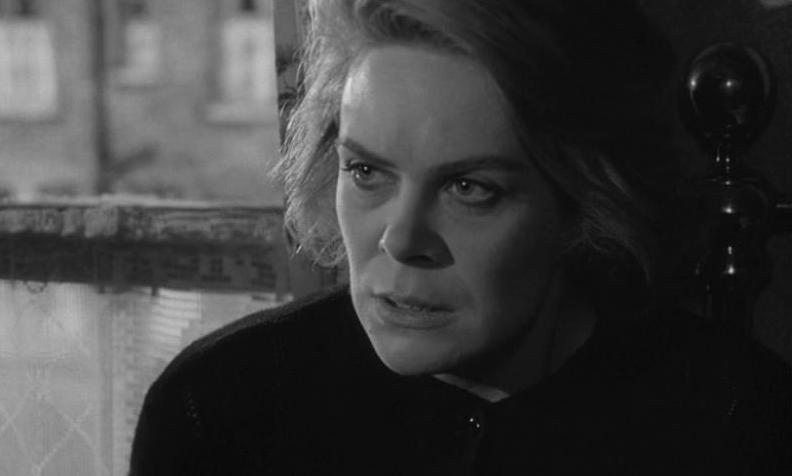
All of that speaks wonderfully to Gardner's presence and discipline in Mogambo, but what really distinguishes her work here is the saucy, showmanly comedienne that she turns out to be. For sure, she is pushed in that direction by the delicious dialogue that the script affords her, and at times, she is too grandly, incessantly sarcastic or too smug about how handily she's stealing the film from Gable and Kelly, from Africa, and from the animals. Still, the loose, limber physicality she finds for Eloise—whether swinging onto to a moving flatbed truck, or comically scrambling up a ladder from a low river, or dropping to her cot in loose-limbed relief after a cheetah skulks through her tent—finds an even tastier corollary in the spry, mordant, adaptable sense of humor that Gardner furnishes the character in almost every interaction, either with her friends or in teasing rebuke of her one, icicle-assed enemy. I love how flippantly Gardner reacts to the phrase "Dark Continent" as if it's the dumbest thing she's ever heard, and as much as I felt that Gardner wasn't playing an Eloise who's so sheltered as to be stumped by what a "marsupial" or an "anthropologist" is, she manages to be perplexed, annoyed, and self-mocking when Victor tosses these words at her, expecting her to be at a loss. "Excuse me," she responds, "I left my cap and gown at the cleaners," fessing up without embarrassment to what she doesn't know but hitting a return bull's eye at his priggish arrogance, laughing at herself and at him.

Gardner persists with this kind of sporting, fetching personality performance, making the first hour of Mogambo such a plummy and borderline-camp delight that the movie sails past what would otherwise be the obstacles of rather indifferent assembly and technique, a familiar story, and pretty hidebound clichés of frontier masculinity. I hooted at how she was just being herself but also deliberately offending the well-heeled sensibilities of the Grace Kelly character in their first conversation. Sauntering onto a porch after a long day outside, Eloise sighs, "I haven't walked that far since some palpitating halfback told me he'd run out of gas," grinning at herself and also at Kelly's ill-concealed retraction from such earthiness. I clapped at Eloise's annoyed indulgence of Gable's wishes that she go easy on the visiting innocents, pretending that she and he haven't just been enjoying each other's company for a few hot nights in the encampment: "I'll just act like your sister, down from Vassar for the holidays," she drawls. There's a lot more where that came from, across a spectrum of willful provocation, ungenerous needling, justifiable defense of herself, and a kind of baseline pleasure at tickling the ribs of social niceties. Then again, even at her cattiest, Gardner never loses that facet of Eloise that palpably does believe in a very square myth of romance. She looks suspicious that she's running out of time to find real companionship, though she's not the kind of gal who's going to humiliate herself running after it.

Gardner's not quite sure what to do with some of the scenes where the script backs her into an expository monologue about her past, and there are stiff close-ups and amateur gestures here and there that reveal her jitters, or her lack of training, or Ford's spiteful withholding of interest. (He wanted Maureen O'Hara.) Plus, as I've mentioned, she eventually has to wean herself of being the snarky showboat, after a midfilm safari sequence in which her performance teeters on the edge of canned schtick. Still, she had amassed so much good will from me by that point in Mogambo that she could more than withstand some shaky scenes. In a larger sense, Gardner seems to know when it's time to background herself a little. Of the three headliners, she's the only one who is capable of punching up what could otherwise be a slow and obligatory hour of exposition at the campsite, and boy does she come through with some home runs. Eventually, she passes the baton to Gable for the second, more sour, and more action-driven second hour. Yet Gardner is nobody's non-entity, even in that latter half of the film, and especially when she nails one of her strongest, most maturely played scenes, trying to extend an olive branch and to offer some feminine insight and understanding to the Kelly character, who predictably wants nothing to do with her. Gardner plays Eloise in these and the neighboring sequences as though the character truly believes she has lost Victor, an avowedly dubious catch, to this swannish blonde society girl, veering hopelessly far from her caste. When things come through for Eloise at the eleventh hour, partially through her own athletic leap to seize a lurid opportunity, it's almost as gratifying as when Shirley MacLaine earns her first, full blast of blissful satisfaction after putting up with all the sludgy middle-class constipation of the other characters in Some Came Running. Gardner's character is more emotionally guarded than MacLaine's, and as an actress, she's working with a much less compassionate director. Ford abjures dialogue and holds almost entirely to a mile-off long shot during what should, by rights, be Eloise's big, triumphant finale. But then, not only is Eloise not the kind of gal to require a big brass-band parade at the moment of getting something she wants—especially as she appears to know what a flawed prize she has actually won—Gardner's is not the kind of performance that a stingy camera angle and an unsympathetic director can wipe away. She's a joy and a pro in Mogambo, playing her tricky hand as nimbly and patiently as Eloise plays hers.

The Best Actress Project: 1 More Down, 15 to Go

Labels: , , , ,

Monday, May 24, 2010

Actress Files: Rachel Roberts

Rachel Roberts, This Sporting Life
★ ★ ★ ★ ★
(lost the 1963 Best Actress Oscar to Patricia Neal for Hud)

Why I Waited: Until very recently, I also had Leslie Caron's and Shirley MacLaine's nominations to fill in from the same year, which, short of Hud and 8½, has generally not offered a treasure-chest of great discoveries. Still, I figured it helped to catch 'em in close succession for sake of comparison, and if the Criterion Collection endorses this film, I figured it was worth looking forward to.

The Performance: To read Mark Harris's Pictures at a Revolution, as everyone seems to have done by now, is to make the indelible acquaintance of Rachel Roberts, the banshee wife of Rex Harrison, downing bottles of liquor till she's barking like a dog, howling for sex on or under the table, and rivaling the hundreds of animals on the Doctor Dolittle set for sheer cacophony and uninhibited instinct. This portrait hardly resonated with the imposing face but cast-iron reserve of the school mistress I had met in Picnic at Hanging Rock, and though I know I've seen her in two other pictures—Sidney Lumet's Murder on the Orient Express, which I've seen twice, and John Schlesinger's Yanks, for which she won her third BAFTA—I can barely remember more than a vague image of her from either performance. Not only has it been strange trying to reconcile the actress who is so often described in awestruck tones by the most demanding critics with these utterly evanescent semi-impressions, but I couldn't imagine anyone as harrowingly outlandish as Harris describes being so forgettable.

Just a scene or two into her one Oscar-nominated performance in Lindsay Anderson's This Sporting Life, I decided that I had seen Roberts before on one other occasion, playing one of the velociraptors who ferret those two kids out of the stainless-steel kitchen in Jurassic Park. With her scalpel brows, her incensed gaze, and an aura as tense as the surface of a drum, Roberts seems more than cut out for the role of the furious harridan. If anything, one of her obstacles, especially in a performance like this, is that her natural features and resting facial expressions imply that she's innately overacting the part, such that Roberts needs to act peevish, pessimistic, and miserly without looking like she just is this way; she may even need to pull back from the profound sourness that seems to course in waves off her body. But obviously, if she'd made this kind of forceful impression in the other films, I'd have a clearer recall of whom she played, and how. By contrast to those trace recollections, though, This Sporting Life's Margaret, more frequently called "Mrs. Hammond," constitutes an impressive etching of scabrous disillusion—suggestive of what the vituperative daughter in Secrets & Lies or the young protagonist of last year's Fish Tank might turn into after 25 more years of unreliable men, cruel setbacks, gruff but committed maternity, and tiresome chores in dark apartments.

Mrs. Hammond lost her husband Eric, a promising rugby player, in a freak drilling accident. We later connect this mishap to the tense, murky, disconnected impressions of danger and violence in the film's prologue, abstractly cross-cut with the groaning, intimidating sights and sounds of another rugby match (plus some chords of shrill, modern, experimental music thrown in for good measure). There is some question as to whether Mrs. Hammond has curdled into the broody, lemon-sucking skeptic she is today because of her husband's loss—as well as the various forms of class-based vulnerability that had him working such a risky job in the first place, despite the ostensible attention and salary paid him by the men who run the squad. Alternatively, Mrs. Hammond's withering hardness may itself have been one of the burdens that her husband had to shoulder during his life, possibly prompting him to tempt fate with tactical on-the-job carelessness. Does Mrs. Hammond know that some people think this about her? Did she conceive the possibility that she motivated Eric's suicide long before anyone else did, perhaps even while Eric was still alive? How much grief or humiliation is mixed in with her toxic mood of distrust and resentment? She still polishes Eric's shoes and leaves them out well past his death, but in the spirit of any plaintive, denial-based longing that he'll come swinging back into the door one day. Roberts suggests a powerful, ongoing, even carnal attachment to a man we suspect she would keep at arm's length, maybe even scream at, if he materialized for one more visit from the grave. No "ditto" and floating pennies and Whoopi-channeling and late-night pottery for these two; we imagine that no woman could look so armored and so forthrightly scabbed if Eric's premature death had interfered with previously uncomplicated bliss. Nothing about Margaret seems uncomplicated, not even her straight, no-chaser penumbra of hostility.

At present, Mrs. Hammond rents a room to another rising rugby phenom named Frank Machin (a hulking and excellent Richard Harris), and when she says she's only doing it for the money, we know she isn't making it up. Bent over a sewing machine, shooting off fuck-you glares while she makes the beds and brushes off Frank's tyro enthusiasm about his rise up through the ranks, Roberts's Margaret unquestionably feels that she's seen this all before: as an abandoned woman, as a wife who competed with the rival thrills of sport, as a toiler and saver in a highly class-stratified society where the working class oughtn't lie to themselves about their long- or even their short-term prospects. It's a brusquely pragmatic arrangement, and yet Mrs. Hammond does seem to study Frank as someone for whom she harbors both contempt and a grudging interest, as someone who might teach her something about the man she lost and/or pushed away, as someone whose own motivations for charming her children and begging romantic affection from her don't make immediate sense... though she may not be as dead-set against his hardbodied appeal as she thinks she is. And the prospect of more money—for all that she doubts whether Frank's burgeoning celebrity within the league will continue paying dividends or inspiring protectiveness from his owner-managers—cannot be lost on Margaret, either. She cracks one of many bitter jokes when Frank, after some nervy negotiation, returns to the flat with a kingly £1,000 paycheck. Shimmering with pride and excitement, he wants her to guess his worth before showing her the check. "Threepence?" she fires back, like a taut tripwire of emasculating blasts, yet her bolted-down frown does crack into its first smile as he divulges the actual fortune. Then again, it's only another moment before she reflects, spitefully, "It's a bit more than I got when my husband died... You didn't have to do anything for it... Some people have life made for them."

Mrs. Hammond's basic sense is that the world is rude, buffeting, and venomous, which is quite possibly what the "sporting" in This Sporting Life would mean to her: to hail from her caste or Frank's is to be the sacked and winded player, if not the tossed and manhandled ball, if not the stamped earth, routed with cleats, over top of which other people hammer and pounce at their tainted, pyrrhic goals. Roberts has to suffuse Mrs. Hammond with this outlook at all times, and even make her a deliberate poisoner of other people's self-contentment. The risk, not entirely avoided, is that Mrs. Hammond will play as a one-note figure, a shrew, a kitchen-sink Maleficent with blazing, belligerent irises. She bristles, repeatedly, upon being told that things will get better when she knows they won't, upon being pulled into bed by a rugged Adonis whose interest seems to dismay her when it isn't merely irritating. She's a knife-edged presence, written and directed with a kind of implacability that inherently constrains the range of variation in the performance. Moreover, because a certain acidic quality seems to come so easily to Roberts as it is, her enactment of Mrs. Hammond can feel, if not relentless, then at least somewhat qualified in scope, or like a product of can't-miss casting as much as skilled portraiture. Roberts pops off with some harangues, she takes literal and metaphoric blows in due course, and she's shot and lit with an intensity that frames the performance as an embodiment of an intractable, almost antagonizing force, rather than a human-scale character. You see fairly quickly where the performance is centered, and basically where it is headed, and how fundamentally occupied Roberts will remain in bringing Mrs. Hammond's already-impressive boil to an even more aggravated roll without appearing to overact.

But I must say, Roberts's moments of stock ferocity are much fewer and farther between than they might have been; that it's an achievement in any event to sustain such basically ill temper for two hours without the viewer wishing to be rid of you; and that she shades and layers Mrs. Hammond's personality over the course of This Sporting Life in ways that enrich the film as it plays. It's partly down to her and to the even hardier performance she helps elicit from Harris that This Sporting Life seems more complex as you mull it over, even after some climactic bouts of histrionic misery and needless literalizing of themes threaten to dull the force of a very strong, very sharp, robustly executed picture. When Frank takes his landlady and her children out for a day of picnic and sun, Roberts swipes a few occasions to show us a Margaret who enjoys a game, who appreciates company, who is pleased at seeing her children happy and her own consternations rendered unnecessary. Still, she unveils these hints in very brief, surgical strokes, avoiding the clichéd approach of showing a Mrs. Hammond who "softens," categorically, during anything so paltry as one sojourn in the fresh air. Indeed, her devices for evoking a bit of levity or unguardedness in Mrs. Hammond always manage to underscore, at the same time, the very formadibility of her usual defenses and overall disabusement. She fosters an impression not of a warmer woman eager to escape the body of this frosty and ornery one, but of a creature of kiln-fired habit for whom any restored sense of comfort pushes her awkwardly off balance, as though she's walking on legs she hasn't used for years.

One of the centerpiece scenes in Frank and Margaret's relationship—and in the script's mapping of how blue-collar heroes are as coarsely unprepared for privilege as they are systematically denied it—involves a doomed outing to a high-quality restaurant. Roberts is at her most labile leading up to this excursion: intrigued and even excited to be going, chagrined at the mink coat that Frank has bought her (which she knows her neighbors will castigate as the bit of childish ostentation it is), hopeful of finding some steady way of relating to this man who is also an eager and quite literal meal-ticket, furious at seeing what asses he makes of both of them in public, gratified in some dark way at having been right that he's an oaf, that the whole world is rigged, that she was foolish to imagine some deliverance into ease. This sequence hit home harder for me than some dramatically pivotal but on-the-nose exchanges between Frank and Margaret in the graveyard behind a chapel, although, during those latter scenes, Roberts takes a punch to the face with less flinching than many a male action hero. And it's here, as she howls about the late husband whom she dares Frank to even speak about, as she lacerates him with allegations that men as a race are a categorical horror, as she signals with a new kind of pain in her eyes that she'd yell just about anything to get him to leave her alone—it's here that Roberts makes Mrs. Hammond's anger the most total and harsh it has been to that point, but also the most polychromatic in its breadth and outrage and woundedness. She's a woman who's been used badly; a woman who maybe rebukes herself for not succeeding in keeping either of two men; a woman who might hate herself precisely for turning such a scouring, blaming eye on herself; a wise woman; a narrow woman; a self-consciously cash-strapped woman; a raped woman; a woman who'd rather be raped than paraded in tacky and ill-earned finery; a woman who saw all of this coming and didn't listen to herself; a woman who didn't see this coming and can't believe she's allowed Frank so close to her.

Sometimes you look at Roberts and see mostly that white-hot expression that serves as a backbone for most of her performance. That expression in turn can feel like the only affect she's recruiting into a scene: potent, but slightly familiar, and evidently close at hand for this performer. But at least as often, you look at that white-hot light and remember that white is not the absence of color but the total of all of them, and that inside the deceptive purity of Margaret's rage, there's a whole spectrum of separate frequencies. Not unlike the Patricia Neal performance that beat her to the trophy, Roberts's work comprises a series of deepening plunges into a predominating chord of feeling: plangent but aroused taken-for-grantedness in Neal's case, domestic truculence, ardor, and a taste for conflict in Roberts's. It's a smaller part than her male costar's and, in many ways, it exists to refract onto his. But Roberts, like Neal, manages not to seem like she's "supporting" anyone. She has her own story to tell, through and as this scrupulously drawn character. Within the film, you really feel the change once Mrs. Hammond, like Hud's Alma, departs for good; later, it's impossible to think back on the films without seeing these women's faces.

The Best Actress Project: 1 More Down, 16 to Go

Labels: , , , , ,

Saturday, May 22, 2010

Actress Files: Leslie Caron

Leslie Caron, The L-Shaped Room
★ ★ ★ ★ ★
(lost the 1963 Best Actress Oscar to Patricia Neal for Hud)

Why I Waited: First, the search for a print worth the trouble, which I finally resolved with a DVD I bought in the BFI shop, right before Tim and I saw The Trespasser. Then, by a combination of hope and skepticism that this really is the game-changer for Caron that I'd heard described.

The Performance: By this point in my Best Actress viewing, the only titles left to explore entail films, performances, or both about which I'm highly intrigued. Really, I haven't had to hold my nose since heading into Ship of Fools, and even that had some night-of-a-dozen-stars appeal. Bryan Forbes has coaxed such rich, unshakable performances out of bonkers Kim Stanley in Séance on a Wet Afternoon and surly Katharine Ross in The Stepford Wives, both of them gripping and atmospheric films to boot, that the prospect of The L-Shaped Room enticed me (and that's to say nothing of Edith Evans's nominated lead for Forbes's The Whisperers, coming up on a future post, which everyone seems to love). Unquestionably, though, of my remaining thesps, Leslie Caron is by far the most heavily sandbagged in terms of my past distaste for her work. It's not that she's a bad actress in An American in Paris, Lili, or Gigi so much as she's an empty one, seeming too girlishly deferential to her male co-stars and yet too much the p's-and-q's introvert to warrant a term like "girlish." Her catlike features are probably right up someone's alley in terms of adorability, but not mine, and her later-years appearances in small roles in Damage, Chocolat, and Le Divorce (where she at least shows a modicum of spunk) only reinforce the impression of someone who stumbled into movies as though by accident, finding them an inoffensive lark but not a prompt to real artistry, and serving some presumed niche-market in the audience that I'd be hard-pressed to sketch, much less to join.

The one caveat I'll supply about her work in The L-Shaped Room is that, for all its tremendous sensitivity and groundedness, it's the kind of excellent work that makes its strongest claims while you're actually watching the film. Something about Caron, some curtailing of complexity or a fundamental inhibition from bigger, nervier risks, precludes even this performance from lodging in the brain the way that Stanley, Ross, and Evans all manage so superlatively to do in their work with Forbes. (Yes, I'm a little ahead in my viewing from what I'm publicly admitting.) The performance grows a little vague in retrospect, maybe because the movie itself is such a delimited character study of a ragtag coalition of residents in a London boarding-house. Making do with the makeshift and crumbling walls, with each other's eccentricities, and with the problems weighing on their own hearts, the residents do not come to love each other. It's achievement enough that they come so close to liking each other, and yet the warm glow you might generically expect to be gradually lit from within The L-Shaped Room remains modest and fitful as warm glows go—soothing, but hardly effacing the uneasy dilemmas that these characters are still contending with, largely on their own, by the end of the film. What's special about The L-Shaped Room, allowing Forbes's usual weak-spots of overplayed mood and some trouble sustaining the narrative, is how palpable but fragile their bond as a "community" feels. As usual for this undervalued director of actors, his work yields strong psychological insights.

You could say the same for Caron's own achievements here, with even more emphasis on the positives. Sometimes, in that early-Binoche way, she opts for beatific lamp-lighting of broad emotion rather than precise delineations of how her character inhabits and shifts within a specific scenario, and I suppose, too, that the character doesn't navigate as complete or as rich an arc as an even more resourceful actress might have allowed. But even as I write that, I rush to defend myself from myself, for Caron does develop a very scared and secretive girl named Jane Fosset, unwed and pregnant, into a young woman who's learning to breathe a little easier and to trust a bit more in her own fortitude, even as she remains deeply unclear about her future and about the various enigmas of friends and lovers. The early scenes are lensed with such inky Gothic chiaroscuro, as a distasteful landlady leads the soft-voiced Jane up a huge set of stairs to the clammy, bare-brick attic room of the title, that I initially suspected Jane had some prior, Anne Radcliffe-style, but as yet undivulged relation to this haunted flat. Forbes keeps tunneling in for intimate, wide-angled close-ups, in which Caron's fretfulness and her tears threaten to be overplayed by the camera, though not by the actress. After over-exerting itself to put us on edge, though, The L-Shaped Room soon relieves itself of such broody intrigue as an end in itself. Jane is spooked by her room as anyone in her position would be: because she is lonely, with child, and seemingly cut off from any sources of solace. She's also got ants in her thin mattress, and an early sign of Caron's strength, of her immersion in the role rather than a preoccupation with the melodramatic contexts of the role, is that she responds to these bugs like a woman perturbed by having bugs in her newly-rented room—not like a meek or an overwrought heroine who processes every setback as a symbol of her cosmic trials, or as a soapbox from which to remind us How Hard She Has It. Jane discovers some backbone in having to stand up to Avis Bunnage's slatternly proprietress about the infestation, and it's nice to see how crisply Caron serves her own letter of intent to the audience: that she'll be playing the character appealingly but not preciously, and from the inside out rather than from the vantage of how paternalistic producers or castmates might wish to position her.

Helpfully, her tempting love interests in The L-Shaped Room are a jocular pair of fellas her own age in the boarding-house: Tom Bell's struggling writer and Brock Peters's warm, music-loving expat. Here, too, you start prepping yourself for a cutesy Truffautian triangle of romantic bonhomie, but without making Jane enervated or rigid, Caron shows us how Jane, for all her keenly felt loneliness, is also a bit annoyed at having her solitude impinged upon. Romance is the last thing on her mind. Toby, the prankish livewire so charmingly played by Bell, who likes to call Jane a "French maniac" when she has a mood swing or a misty moment, seems aroused, at least partially, from the moment he meets Jane. Peters's Johnny is more circumspect and maybe more complex as to why he comes on strongly as a buddy but less so as an angling suitor. But again, Caron holds fast against playing Jane as a wounded or an exasperated woman who cannot bear to think about men while she's living in a tenement, carrying an unwedlocked child. She's not uninterested in having a boyfriend so much as she's jealous of the time and space to think privately about what she's going to do for herself. In that way, Caron nicely rewrites The L-Shaped Room not as a maudlin story of a maid forced to resolve her fate in a damp, tawdry, unenviable little sublet but as a story about a woman who, after riding out her initial shock of this unappetizing real estate, is desirous more than anything of a room of her own. In other words, her L-Shaped Room is not about a woman who is suffering but, with much richer dividends, about a woman who is thinking.

Gigi and Paris's Lise Bouvier had less content at characters, and yet Caron had a tendency to play them as icons of cuteness, yearning, confusion, incipient restlessness. In The L-Shaped Room, she shows unprecedented dispositions and talents for playing Jane as no symbol of anything but as a girl with a problem, whose oscillating sense of what to do with herself grows even trickier to fix because living among this passel of London misfits inevitably pulls her into a wider circle than she intends, and most of these new acquaintances disrupt some preconception she has harbored about the ways people feel, or for whom they feel, or the ways people manage to be happy, or how happy they need to be. Caron's reflexes toward watchfulness, which sometimes make her seem too demure or self-effacing at the center of her own vehicles, serve her beautifully here, once Jane has broken her chrysalis enough to really start studying people. In these scenes, we realize that Forbes's entire approach to the material, not just with Caron, is to forestall as much cliché as you possibly can in a film that climaxes with a Christmas birth. Though some of what Jane learns from the introspective prostitute, the aging spinster, or the jealous and unrequited admirer sound entirely banal on paper, the adept performers of these roles redeem these moments into spontaneous, credible drama—but Caron herself is a crucial ingredient in how this happens, listening intensely and signaling a very active, subtle consciousness in response to what she sees and hears.

Caron doesn't overplay her reaction shots and never comes across as a particularly technical actress, but her emotional identification with Jane and, therefore, with Jane's series of encounters and her evolving judgments about herself and others add up to a rich characterization and a very detailed lens through which to watch the rest of the film. You believe that she's a young woman who would say in retrospect that "in the end I decided my virginity was becoming rather cumbersome," even as she lives out the heavy consequences of a physical relationship. Her bouts of despair, never histrionic but very sobering all the same, feel as genuine as her moments of mirth, and in long, key scenes like her barroom exchange with the father of her baby, she expresses so much of what Jane does and doesn't expect from this man, and of how she is responding to every moment of their conversation. This feels less like "consummate underplaying" and more like a settled, confident ability to be the character, lacking even the traces of fuss that often accompany naturalistic acting or ostensible underplaying. Within that gallery of Forbes's women, she "does" much less than Stanley or Evans do in their infinitely showier roles, which, thank heaven, they are both such inspired, captivating performers that you want them to tackle those characters as energetically as they do. Caron is much closer to what Ross managed in The Stepford Wives, a largely reactive performance in a film that's nonetheless about her, watching and listening in completely un-timid ways, adding up to a potent internal portrait of the watcher-listener and a rangy tour of her own affects and personality. Neither Ross nor Caron ever found another part as good as these, but they aren't the kind of actors for whom one necessarily imagines a long string of comparable triumphs even if the roles had been forthcoming. To watch Caron in The L-Shaped Room is to find her, at long last, ideally cast and utterly of a piece with her character, effacing any clichéd rhetorical line about what is "strong" or "weak" about Jane. In an era of British cinema full of restless, lunging, malcontented men, Caron moves more slowly and expresses herself less floridly, arriving at no higher perspective about how her troubles or her feelings have been rigged on her behalf by the the social apparatus. She's just a girl getting older and smarter before our eyes and, sometimes, getting hurt in new ways. If that reads like a hackneyed or a miniature or a lamely bourgeois journey, it certainly doesn't in light of the clarity, directness, and unflamboyant emotional heft with which Caron communicates the micro-shifts of feeling at a charged turn in the character's life, the day-to-day textures and tiny epiphanies of becoming Jane.

The Best Actress Project: 1 More Down, 17 to Go

Labels: , , ,

Friday, May 21, 2010

Actress Files: Geneviève Bujold

Geneviève Bujold, Anne of the Thousand Days
★ ★ ★ ★ ★
(lost the 1969 Best Actress Oscar to Maggie Smith for The Prime of Miss Jean Brodie)

Why I Waited: A nomination leader, starring an actress I already admire, and one of my father's favorite films: lots of reasons to hope I would like this one.

The Performance: Who knew that Anne Boleyn had three cervixes? Okay, not true. Not necessarily true, since Anne of the Thousand Days doesn't refute this point so much as it remains silent on the issue, despite much history-shaping debate about wombs, their fruit, and the legal and religious provenances under which they labor, including when they're in labor.

Forgive me if I cannot look at Bujold and not have trouble preoccupying myself with memories of her "mutant," sexually humiliated, but stalwart actress Claire Niveau in Dead Ringers, a film I treat quite extensively in the book I'm writing when I'm not writing these profiles. To see this Québecois performer acting twenty years previously in the film that made her a star to English-language audiences is to see a woman that is both strikingly smooth-surfaced compared to the middle-aged, pill-popping but fundamentally disabused traveler I know from the Cronenberg film and yet possessed of the same redoubtable face, the same formidable presence—all the more striking for a performer less than 30 years old who is shouldering a gigantically mounted period drama and withstanding the challenge of Richard Burton at full apoplectic bluster. In between these films, and subsequent to both, Bujold's résumé is filled with unusual roles and projects: the macabre perversity of Coma and Obsession, the different auteurist sensibilities of Medak, Rudolph, and Eastwood, the mother in The House of Yes, the teacher so content to be bedded by former student Callum Keith Rennie on the eve of apocalypse in Last Night. All that plus a recurring string of classics: Cleopatra, Cassandra, Antigone, Saint Joan.

Bujold suggests the high-minded but eccentric tastes as well as the intimidating hauteur of a Judy Davis, which only adds to the sense that a platform of ostentatiously dressed, studio-fabricated "prestige" like Anne of the Thousand Days will be hard-pressed to capitalize on her gifts. And yes, the vehicle seems clearly conceived to place in as many Oscar fields as possible, and walk away with a queen's trousseau of trophies (though in the end, it only nabbed one, for Costume Design). But contrary to every presumption that mainstream historical reenactments are one of the crannies where cinema slinks off to die, I found Anne of the Thousand Days enjoyable and tough, and Bujold's assignment more challenging than I had predicted, either because it was written that way or because her potent, ambitious, but ungreedy approach makes the part seem more sophisticated than it is.

The impression is not immediate. How many characters have we met in dramas like this while they danced some arcane step in a royal hall? Even amidst her galliard, Bujold's pugnacious face, a scalloped series of brute curves (the forehead, the lines under the eyes, the cheeks, the chin, the frowning mouth), bespeaks a substantial personage, even a strong trace of attitude. With her flirtatious dancing, her sprinting about hallways and grounds, her poking her head out of windows, she communicates Anne Boleyn's youthfulness without compromising her sense of resolute maturity: this is someone who rarely breaks eye contact and seems roundly unseduced by heraldry and pomp, even when she's bristling with coltish energy. In an early laze on the grass with her handsome lover Lord Percy, she inquires about his virginity and admits the years-ago loss of her own, handily establishing her untroubled candor about sex, her disinterest in playing the untouched bloom.

Thus is Bujold's basic charisma as Anne quickly, permanently settled, but she really catches fire when Burton's Henry VIII materializes in her household, imagining he can appropriate her as a willing mistress as one nets a butterfly in a field. Anne simply isn't having it—partly through innate personality, partly in protest at the summary casting-off of Percy, partly responding to her own sister's plight as Henry's prior mistress, impregnated and abandoned. The script entitles her to regular blasts of vituperative blowback against Henry, as he throws around his considerable weight: "You're spoiled and vengeful and bloody. Your poetry is sour and your music is worse. You make love as you eat, with a good deal of noise and no subtlety." Even the prosier complaints Bujold fires off with frank, unembellished fortitude. Where many actresses call attention to how much they enjoy lines like these, pausing over each insult or delivering them with a sort of debonair wickedness, Bujold expounds clearly but quickly, as if the whole speech is one big battering ram. You can see why Burton's Henry looks legitimately shaken, cautioning her that "this is not safe," and yet she has an iron justification under Henry's own requested terms for their interactions: "You ask me not to treat you like the king," she says. "I would have lied to the king."

There is nothing feckless or juvenile about the way Bujold's Anne tests the limits of what she can get away with. Her ire is so earnest and backed up by such a forceful screen presence—shaded at different times with all those nuances of filial defensiveness, revulsion for the aged and the presumptuous, pride in her own maturity, anger at the scuttling of her own desires, hotheaded refusal to wind up anything like her sister—that she doesn't seem as green or as foolhardy as perhaps she is. I felt like I was watching a legitimate clash of imposing wills, not a pre-ordained drama of a roaring mouse, getting stupidly close to the lion's jaw. This sense of resolute character, even when it does amount to a needless tempting of a killing fate, rarely leaves Bujold's performance; indeed, her performance only falters importantly in the moments she has been coached out of this bullish sense of herself, whether airily spouting Maxwell Anderson loftiest plaints from jail ("shall I ever be free?") or implausibly crumbling into tears after going toe-to-toe with Henry in her cell. Not that the performance doesn't encompass several other notes, from a trembling disgust at kangaroo-court accusations of adultery and incest to the almost camp-fabulous way in which she teaches her young daughter Elizabeth how to walk with a train. She experiences total, self-dismantling despair at the stillbirth of her son (cut in right after Thomas More's beheading, as though her failure to yield a foolproof heir entails as much of a death sentence as his immovable conscience), and she approaches Glenda Jackson levels of bitchy imperiousness informing Henry that he will not, in fact, be inviting his latest tart back to court from her exile in Northumberland. She is very moving, broken and scared at last but still refusing to spill all her feelings, as she's carted off to her execution.

Still, the performance is always strongest when it's based in Anne Boleyn's invigorating insistence on her own rights, her own survival instincts, her forthright demands on behalf of her own worth. Bujold's closeups are frequently indelible, as punchy as fists, as in the moment when she shoots a fearless, discomfitingly frank gaze at the headsman just before he brings down his axe. But her success in Anne of the Thousand Days—acknowledging the moments when she seems a bit untrained or uncertain how to handle the more sentimental or despondent passages—comes down to much more than having the right, imposing face and personality. There are essentially three movements to Anne of the Thousand Days: the long introduction to Anne and to her defiance of Henry's wooing; the political, ecclesiastical, and continental disarray that results from Henry's choice to marry her; and the coarse displacement and annihilation that befall her once Henry has realized he can really get away with anything, now that divine and royal law have been rewritten to suit his taste for women and his lust for sons. Bujold is a centerpiece player in the first and third passages but rather suppressed in the second, as lots of other players debate the problems that her presence and her intractability have fostered. To create an Anne who is as impetuous and as unwilling to be cast aside as Bujold's, while still enabling her to recede in the film's sprawling second act—that is, without coming on so strong that the drama will appear drab once she's made peripheral for a lengthy stretch, and without Anne's appearing to embrace a submissive position that she has thus far resisted—all of this requires a very nimble management of what seems like a headstrong, unflinching persona. Equally required is a solid, modest grasp of how her work will fit within the overall shape of the piece, itself presenting an occasion to which she must rise, but not one in which she should constantly pull focus.

Most rewardingly, as Anne negotiates these turns from the first movement into the second, and from the second into the third, Bujold has her own tricky sea-changes to navigate. It comes as a shock, and probably needs to, that after all of her gusty refusals of Henry in the first hour, Anne is suddenly so willing, so ambitious of being his queen. That's not the way Bujold has seemed to approach her preceding scenes, but she plants enough seeds of a pragmatic intelligence and a swagger of the champion game-player that she avoids any sense of psychological or motivational inconsistency. By a similar token, over the last hour, Bujold's Anne isn't just vanquished but is caught off-guard at recognizing just how vulnerable she has remained while seeming to play a game with such mastery. It's not clear she could have played any more savvily than she has, and still, this has not been enough. She has after all, in her way, repeated the fate of her sister. Yet even amid this epiphany, which we know to be deeply humiliating to Anne as well as patently unjust, Bujold completes the whole performance without expecting the audience to like her much more than do the heckling crowds of English Catholics, who hate her for displacing Irene Papas's devout, serene, politically becalming Katherine of Aragon. The film is full of moments where Anne demands things for herself and stands up for what she thinks is right, mostly enjoying some measure of our sympathy (given her predicaments) or our admiration (given her canny strategizing), but rarely eliciting real fondness. The performance itself betrays so little special pleading, and is unmarred by the viral blandness or the Encyclopedia Britannica formality that so often afflict screen renderings of famously wronged royals. Particularly, then, within a genre and amidst a decade of Hollywood filmmaking that all but enforce expensive mediocrity as a cardinal rule, this is admittedly improvable but nonetheless complex and inspiring work.

The Best Actress Project: 1 More Down, 18 to Go

Labels: , , , , ,