Saturday, August 09, 2008

Just so you know...

Outside the semi-regular Oscar posts, I realize this blog has been a bit bound and gagged lately, and yet the host site has not been stagnating as much as it may appear. As a place-marker and promissory note for future writing (as I finish revising the Julie and Vanessa essay, heading to my editor any day now...), let me just call some quick attention to some of the subtle but important changes that I hope you'll enjoy over at Nick's Flick Picks:

Remember, regular readers, when the site suddenly emerged from its literal Dark Ages of white text on black backgrounds? That happened a little over a year ago on the major pages of the main site, and a few months ago on this blog. Updating the individual review pages and special features is a painstaking process; Universal Replace software helps for the big stuff, but the html for all the awards information and permalinks are different on every page, so there's a lot of file-by-file revision to do. I'm up to about "H" right now as I fix my 2,000+ individual pages, but soon enough, all those reviews that used to look like this will look more like this. (Would that the actual movies made the same quantum leaps.) Please tell me when and where you notice obvious errors.

I've worked out some html kinks and beefed up some of the graphics on the Best Actress site especially, and I've added a new Best Picture interface, in case you haven't visited yet. Again, please let me know if things don't work.

The front page has been revised for the first time in a while, including tour-guide suggestions for new readers. Enjoy!

A major joy of recent years has been my increased access to festivals, imported DVDs, and other opportunities for viewing films outside of their commercial releases. This has wreaked a little havoc, though, on my system of classifying movies by year; last year, for example, I ranked 4 Months, 3 Weeks, and 2 Days high on my Top 10 list after seeing it at CIFF, even though it hadn't officially premiered Stateside yet. I'm now revising for a more consistent policy of classifying by year of U.S. release from 1995 onward, when my regular theater-going habits really began, and by year of initial production for earlier years, when almost all of my viewing has involved retroactive catch-up. In addition to organizing the site more coherently, this change has led to a page for unreleased films, about which I'll have more to say soon. It also frees me up to finish those "Best of" Features that I got stuck on when I ran into eligibility quandaries. Stay tuned!

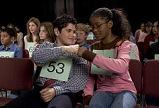
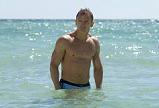
This increased attention to years of world premiere vs. years of U.S. release also has an impact on my Top Ten lists, which have recently been a bit indiscriminate on these points. Plus, WHO AMONG US doesn't occasionally wish to revise those lists. So, working backwards, I'm now outfitting each Year page with three Top Tens: one by U.S. release date, one by world premiere (including festival titles and delayed releases, which most of us didn't see until later), and the original list I wrote at the time, so I'm not falsely covering my earliest tracks, even as I've left myself new room to re-rank and re-prioritize in light of new encounters. You can see the changes already for 2003 (which further explains the image at the top of this post) and for every year since. For kicks, I've also furnished the runners-up, which are sometimes more interesting and less consensus-ish than the actual Top 10.

Changes will be even bigger for progressively more distant years, since my tastes have obviously changed in greater proportion, and my sense of exact release dates has been foggiest the further back you go. So again, stay tuned! The bumper years of 2002, 2001, and 1999, where I wondered even at the time how I could squeeze so much quality into a mere ten slots, are due for pretty intense overhauls, even though I still love all my original choices. (But no worries, Nathaniel: I'm no longer allowing myself ties!)

I've been re-watching lots of old movies and catching up with long-deferred pleasures while Nathaniel and Goatdog and I have been doing our Best Picture thing... which means, at long last, Year pages as far back as the Silent Era, currently up through 1933. Even more than on the modern Year pages, viewing lists, grades, and Top Tens on these pages will be subject to constant change—so once more, stay tuned! Disregard any link promising content after 1933, or before 1980. These are placeholders, but I know they're "broken" for the time being.

Are you bored yet? Eventually this blog will more obviously recede behind the main site, so I just like to keep you posted every now and then about what's going on over there during my massive Big Dig reconstruction. What I really can't wait to do after finishing all these nips, tucks, and overhauls, is to WRITE MORE and MORE OFTEN. The dream is still alive, and feeling closer all the time.

Labels: , , , ,

Saturday, February 10, 2007

The Best Films of 2006


Why is Clean called Clean? The most obvious reason is that the narrative centers around the attempted detoxing of Emily Wang (Maggie Cheung), the volatile, irresponsible, casually abrasive Mrs. of a rock star named Lee Hauser. Lee lives to see the other side of his prime but dies before truly acute embarrassment sets in: Emily procures some heroin one night in Hamilton, Ontario, they quarrel, they both take hits while spending the night separately but alone, he dies, and she doesn't. She does, however, serve six months in prison, loses her home-base apartment in London, and bears the perfectly apt decision of a Canadian court to award custody of her young son to Lee's parents, the bashful but magnanimous Albrecht (Nick Nolte) and the dying but hard-willed Rosemary (Martha Henry). In story terms, Emily's renunciation of drugs is most obviously a prerequisite for securing at least some visiting rights, if not full custody, of her child—and yet, neither in plot nor in style does Clean ever take shape as the maternity melodrama that writer-director Olivier Assayas leads us to expect. Neither a Sirkian bath in rich colors and expressionist worldviews nor a visually ascetic character drama in the Cassavetes mold (such as this year's fleetingly similar Sherrybaby), Clean refuses either to fetishize or to undercut Emily's bond with her son, and it breaks profoundly with its generic templates by emphasizing narrative momentum without leading Emily toward a plane of maternal competence or demonstrating definitively that she isn't cut out for the job. Clean takes the drugs out of Emily's hands, at least kinda sorta—there are hints of back-sliding all over the dialogue, and occasionally in the images—but has the gumption to withhold any clear, compensatory object of transference, for her or for us. "Clean" Emily is a listless but not quite lost Emily: inspired to write and sing music that is neither good nor terrible, guaranteed neither success nor failure in the pursuit of her own recording career, both in love with her son and impatient with her mothering role, both humbly responsive to Albrecht's benevolence and unable to be fully straight with him, Emily doesn't come into focus—a testament not to disarray but to uncommon discipline in Assayas' film.

If the cinematography weren't so precisely choreographed and gorgeously detailed, and the editing weren't so polished and rhythmically sound, Clean might come across as a shamble instead of a film that insists on Emily's plausible existence, and the humane, unheroic poetry of her personal and professional dilettantism. Colors, angles, camera movements: they are all exerted with consummate control in Clean's diverse sequences, from the enervated hustle of a greasy waitressing job to the endorphin rush of an amped-up club gig to the fragile politeness of offering shelter to a catastrophic friend to Nolte's frightened, dignified, and subtly rebellious reactions to his wife's mortality (and, by extension, his own) to a bit of comic skullduggery surrounding a lipstick-lesbian record producer and her captive ex-lover (which teases more quickly and playfully at retrograde crazy-dyke stereotypes than do the turgid excesses of Notes on a Scandal). Few films in 2006 so comfortably wedded visual finesse and savvy editing to such a pronouncedly story-driven endeavor, and if Clean doesn't always have a strong sense of where it's going, and if the indie-rock idiom occasionally outs itself as a naïve outsider's projection, one shouldn't overlook how brave the movie is to buck the trends not just of bad-mommy morality plays but of standard drug-recovery dramas and of Maggie Cheung's high-glamour iconography and of Assayas' own recent filmography. Clean follows, incongruously, the baroque paranoias and Lynchian short-circuitries of the estimable demonlover, though in its quiet way, Clean shares with its predecessor (and with Irma Vep) an interest in the tribulations and machinations of complex women in creative industries, as well as a polyglot sensibility that presumes the smallness of the world. Clean moves in and out of Canada, England, France, and the United States with the same understated fluency of its swerves in and out of redemptive drama, tacit comedy, and voyeuristic showbiz-fantasy. A second viewing is, in my experience, a shaky proposition: the film's refusal to settle questions and the concerted affectlessness of Cheung's performance, occasionally flirting with blandness, are not as refreshing the second time around. Too, the nascent Americanization of Emily in the final scenes feels like a rhetorical move with too little warrant in emotional substance or dramatic satisfaction. Still, Clean deploys its humanistic style in the service of legitimately interesting humans, who relate to each other in plausible, demanding, and affecting ways when they aren't name-dropping Tricky. Its sense of space and of place are beyond reproach, and without a Babel-like bone in its body, it captures the essence of a contemporary life lived across the outmoded borders of nation, region, genre, or conventionally defined gender roles—a life riven with self-destructive impulses but beginning to sound the first, tentative notes of stability.

Labels: , ,

Friday, February 09, 2007

The Best Films of 2006


One short sleep past, we wake eternally
And death shall be no more, Death, thou shalt die.


No one is about to confuse Darren Aronofsky with John Donne. Nevertheless, just as clearly, The Fountain represents this outrageously precocious third-time filmmaker's gambit at metaphysical poetry—and also at pre-Columbian mythmaking, science-fictional mindwarp, and Buddhist parable. As I indicated below, Matthew Barney's deliberately rarefied Drawing Restraint 9 makes something of a matching set with The Fountain, the year's most conceptually ambitious (if not commercially incongruous) mainstream release. But while Barney's lovers have the mad, fervent, forlorn passion of certain figures in Andrew Marvell, literalizing the notorious injunction to "tear our pleasures with rough strife/ Through the iron gates of life," The Fountain is contemplative, numinous, elusive, in the structure it elaborates as well as the shape of love that it traces. One of the movie's glorious surprises, then, is how broadly it differentiates itself, despite the trademark mannerisms of the colors and camerawork, from the blunt, confrontational, and harshly prescriptive style of Aronofsky's earlier films. The Fountain opts for a certain fragility and porousness between shots and subplots, laying sheets of emotion and implication over top of one another rather than slamming scenes together with the arrogant, thunderclap virtuosity of Requiem for a Dream, and without extending ambiguity all the way to paranoiac ends, as in π. The cuts here are strongly but enigmatically felt. As the protagonist of Margaret Edson's Wit suffers to learn, what separates life and death at the end of Donne's most celebrated Holy Sonnet is not a period nor an exclamation mark nor even a semi-colon, but a comma. The edits in The Fountain are almost all commas, for all that they mark expansive transitions of epoch and spirit. The film accumulates and expands, growing outward and nesting inward rather than, like most movies, simply barreling forward.

In a film replete with runes and metaphors, and concerned as much as anything with the enigmatic act of writing and its powers to distract, create, mislead, and immortalize, it's hard to verbalize why the movie works so well and exactly how it operates—both despite and because of its evident limitations. To be sure, there's much in The Fountain one can't help wanting to fix: the dingy under-lighting of the laboratory sequences, the truncated narrative and graphic-novel visual conceits of the Inquisition plot, the sentimental patina surrounding the dying Rachel Weisz, and the sour imperialist aftertaste of a conquistador's utterly sympathetic, almost beatific vanquishing of a Mayan priest. And yet, The Fountain resolves and redeems itself as a movie of ripples, radiating generously outward from what is sometimes cheap or unsatisfying in a given image and accruing spectacular emotional potency along the way. Ingenuities in the editing and the script encourage us to read the ancient fable of conquest and the prismatic, shimmering future-tale as two versions, hers and his, of evading death by imagining life. The scientific plotline avoids any dunder-headed impulse to act as a foil against such ardor and creativity, but the stakes of the researcher's failure and the harsh caprices of laboratory timing lend the film its mournful sobriety and furnish an important idea of human limits, if not an insistence upon them.

All of these storylines and motifs, laced together at times by something as simple as a reiterated camera move, allow everything in The Fountain to rhyme internally with everything else. Even the tangible factors of the film's own making—the shrinking budget, the abortive plots, the simply rendered visual effects—are absorbed into this echo chamber, such that The Fountain, at every level, keens and howls with the desperate wish to beat the clock and defy the ledger, to do more with less, to defy the Fates. It's an easy movie to explode with an ounce of cynical response, notwithstanding the unqualified triumphs of its music, its lead performance, and its golden backdrops of cellular life as a galactic frontier. But for a filmmaker who's had trouble breathing life into characters beneath all the fancy plumbing of well-honed technique, The Fountain holds life in impressively high regard, honoring its mysteries by enunciating some of its own.

Labels:

Thursday, February 08, 2007

The Best Films of 2006


Matthew Barney's Drawing Restraint 9 was one of two exciting, fiercely idiosyncratic films in 2006 in which carnal, compulsive love spanned wide dimensions of time and place, etching itself into lavishly syncretized idioms of east, west, and south, and casting the director's own real-life lover as the muse of erotic, ironically ambivalent abandon. Not content as Darren Aronofsky was with indirect (albeit insistent) authorial signatures, Barney plasters himself into his own images, characteristically using his own body as a canvas for graphic, cosmetic, and cultural bricolage, but injecting a level of self-conscious ardor and outside-observerism that the Cremaster films, greater pieces though they are, didn't often attempt. This movie is a sort of spiritual and artistic heir to Greenaway's Pillow Book, not just reflecting an Anglo fascination with Asian tropes and cultural currents, but critiquing that fascination through its own peculiar codes and complicated figures, which are just as often repellent (Greenaway's guttings and obese bodies, Barney's floating log of whale detritus) as they are sensuous (calligraphy, ceremony, costume). By adopting the central and controversial motif of whaling, Barney installs bright, cutting questions into his movie about which of these tropes and artifacts are properly Japan's, which belong more properly to nature or the world or prehistory, and which arise from that deep, aquatic, associative imagination of Barney's—a metaphorical ocean, which he trawls and patrols for inspiration in ways that are not themselves immune from critique. After all, who does this spectacularist think he is? What are the boundaries of what he can recruit as "art," or spend in the name of frequently obscure expression, or expect an audience to tolerate, particularly in the long, guignol climax?

I credit Barney enormously for planting these questions in his art, for cultivating a form of art that is premised on self-reflexive questions instead of just prompting them from a rightfully skeptical audience (like so many movies do), and for working at the scale and at the extremities that are necessary to make his artistry salient. Drawing Restraint 9 certainly has the courage of its strange, unique convictions, and if, like The Pillow Book, the movie extends itself a little too long, allowing too many of its conceits to grow overripe, the movie furnishes more than its fair share of images and sounds and ideas and juxtapositions for us to ponder. Best of all, in a way that Barney rarely gets credit for, he is shaping up terrifically as a filmmaker, not just a sculptor or gallery artist with a camera in one hand while the other is stuffed into Barbara Gladstone's big, fat purse. In the very way it is shot and edited, Drawing Restraint 9 echoes its own thematic and visual investments in tension, duration, and detail, and the film does an elegant job of showcasing its center-ring event—the molding and then the crumbling of a 45,000-pound mold of petroleum jelly—such that the movie conveys Barney's own enthusiasm for this sight, and even better, his own styles of seeing and feeling.

Labels: ,

Wednesday, February 07, 2007

The Best Films of 2006


To a degree that muffles my enthusiasm for the film, James Longley's aesthetic plan for Iraq in Fragments is something of a self-fulfilling prophecy: that is, if you splinter your movie into discontinuous shards, you will certainly achieve an effective mimesis of splintering, although you pay a certain price in sequence-level rigor and coherence. Portions of Iraq in Fragments seem arbitrarily assembled in their montage; at other moments, the robust, aesthetically powerful cinematography poses an equal risk of distracting us away from Iraq's contemporary agon and onto the facility, skill, and conceptual conceits of the filmmaker. However, with those caveats supplied, I think Iraq in Fragments is a stirringly wrought documentary incorporating footage that I can hardly believe anyone, especially a Western man with a movie camera, was able even to record, much less to safeguard through the various trials of local unease, possible censor reviews, and what was almost certainly a bear of an editing job. Iraq in Fragments looks as immediate and pressing in its sensual life on-screen as in its political and historical convictions—witness its heightened rendering of colors, of textures, of skylines, of a city that is decimated without being the rubble-pile that American news sometimes suggests, of facial close-ups at every juncture of the affective spectrum. The movie's full-scale immersion in the catastrophe it documents is a world away from the articulate but critically distant finger-wagging that characterizes so much modern documentary, and modern reportage in general. Longley was able to "see" the artistic possibilities of Iraq in Fragments while serving as his own cinematographer, camera operator, sound technician, composer, and editor because he insinuated himself so intimately with the quotidian life of a fractured country and allowed people, not just images or ideas, to speak eloquently and emotionally on their own behalf—especially in the first and third segments. The politics of characterizing an imperiled Sunni population (largely through the sentimentalized figure of a chastised, laboring child), a martial and resurgent Shia army of true believers, and a tremulous Kurdish north will be debated for years to come by the informed audiences the film draws to itself, but the especially salient point here seems to be that Longley has crafted a documentary that is guaranteed an afterlife as both a global-political time capsule and a benchmark of cinematic expression, blending the styles of the objective, anthropological survey and the personal essay-film with uncommon and topically appropriate finesse. Iraq in Fragments arrives on screen replete with indelible images, and with its finger credibly on the pulses of a country that is simultaneously passing away and convulsing into some new, volatile iteration of life.

Honorable Mention to When the Levees Broke: A Requiem in Four Acts, Spike Lee's sprawling, humane record of the disastrous aftermath of Hurricane Katrina, an emphatic result of political neglect—if not, as many interviewees feel, a socially eugenic and tyrannical will. In the understandable interest of quickly accruing massive amounts of footage and reflecting those impressions back to a nation in denial, Lee hasn't imparted to this film the argumentative consistency or rhetorical polish that he might have, or the refined, artistic technique that is more typical of Iraq in Fragments. Still, the film is prodigious in scope and deeply moving. Both portraits of concurrent catastrophes, serving as mirrors in some fashions and as direct contrasts in others, will endure as indispensable artifacts of the places and moments they describe, and, in Lee's case, as a crucial node within an already broad and accomplished filmography.

Labels: ,

Best of 2006: Cinematography


If I had any knack for achieving the artistry of filmmaking, instead of just observing it as well and as often as I can, I would love nothing better than to be a gifted cinematographer (or at least a stunning, keenly observant photographer, like Dr. S.). Such is my lot, however, that I can barely take a digital photo without scalping somebody at the top of the frame or planting my fingertip right on the lens. From the abject inadequacy of my own image-making, I absolutely revere the kinds of talent on display for us all in the best-photographed movies of 2006.

And now, only one more category to go... and you know which one that is!

Labels:

Tuesday, February 06, 2007

Best of 2006: Film Editing


Timing is everything, in movies as in life, which is why film editing is one of the most important arts in cinema—perhaps the most important art—and yet, editors get precious little respect. The scriptwriters for the Oscars always foist upon the presenters some twee little quip about how a good editor would make the telecast shorter, just as the Cinematography presenters are perennially obligated to make a dumb joke about how the principal job of a director of photography is to make the actors look pretty. In reality, good editors are like ideal gallery docents, smoothly directing you to look at just the right images for just the right amount of time, and in the most suggestive, interesting order.

They are also brilliant trainers, regulating the pace and energy of the film, and they are shrewd, observant psychologists. I'm sure I've mentioned it on this site before, but Tim Squyres, the usual editor of Ang Lee's movies (though not, for whatever reason, on Brokeback) once told a Cornell audience that his first Oscar nomination came, inevitably, for Crouching Tiger, Hidden Dragon, which was by far the easiest of Lee's films to cut: all the transitions between action and dialogue were right there in the screenplay, and most of the conversations were two-handers... whereas, in something like The Ice Storm or Sense and Sensibility, you've often got four or six or eight actors in a scene, all of them experiencing tremors and doubts and suppressed excitements, or harboring valuable knowledges that other characters don't have. To whom do you cut? Should the excitement of secrecy or the force of repression dominate the scene?

Editors are also poets: they cut expression down to its barest essentials, coordinating the meter of a film to its content and imagery, and hopefully furnishing us with something illuminating and special. These five definitely provided those kinds of experiences for me, but as you'll see from the copious runners-up, there was lots of great editing going around in 2006.

Labels:

Monday, February 05, 2007

Best of 2006: Lead Actress


Predictably enough, I had even more than usual to say about my five Best Actress candidates. Amazingly, the only one of them who got any real awards-season play was Luminita Gheorghiu, whom the LAFC crowned as their Best Supporting Actress, earning my love but also stealing my damn thunder. It's a tremendous performance, but I feel sure that it's a lead. Agree or disagree, Lazarescu fans? And who's shocked (or pleased, or not, or indifferent) that, after a year of me flapping my mouth about Clean, Cheung didn't make the final five? I must admit, the picture wasn't everything I remembered it to be when I returned to it last week, though it's still mighty good.

Labels: ,

Sunday, February 04, 2007

Best of 2006: Lead Actor


For once, I came up with a list that, in some plausible version of reality, could have been Oscar's as well: two of my nominees are shared with AMPAS, two others have a People's Choice pedigree that Oscar might have noticed if he weren't so snobby, and the fifth was hamstrung by an overshadowing castmate and a ridiculous, cynical mismarketing as a "supporting" performer. (Did Jodie Foster "support" Anthony Hopkins in The Silence of the Lambs, and I missed it?)

If you don't believe the merits of my list, check out Nathaniel's (as you no doubt already have), and ask yourself: could we both be so wrong?

Labels: ,

Saturday, February 03, 2007

Best of 2006: The Directors


Many, but not all, of these five artists will have their praises sung again when I post my Best Picture lineup in the next few days. But first, there will be stops along the way for Best Actor and my three favorite categories every year, Best Actress, Best Cinematography, and Best Editing.

Meanwhile, though it may be immodest of me, I can't resist the temptation to link to this article at the Reverse Shot Blog. Some portion of the web-writing I do feeds back into my professional life, but mostly, I do all of this for the fun, the conversation, and the challenge of practicing my writing and my thinking, especially about movies. It's enormously gratifying when people notice, and even better when they appreciate what they find here. Thanks to all of you who read and comment, and a particularly huge thanks today to the writers at Reverse Shot!

Labels: ,

Friday, February 02, 2007

Best of 2006: Non-English Language Films


To answer the obvious question, which only recently became a question, there are no American movies here... not just on principle, but because I think all five of these movies, as well as L'Enfant, the unnamed first runner-up, beat Letters from Iwo Jima on any day of the week, in any language.

Here, then, are my picks for the five best films I saw last year that weren't in the English language. Incidentally, there's no Almodóvar here, either, but if you were a fan of Law of Desire, I can highly recommend the fifth film on this list. Old Joy fans (oh, you zillions!) will groove on Syndromes, if it's ever actually released in the States, and Requiem is probably the great under-exploited import of the year. There's got to be a bigger American audience for this movie, and hopefully for all of these movies. I hope that audience is readying their Netflix queue even as we speak, but I also hope we'll all keep throwing money at these movies when they're actually in theaters, or soon enough our cinemas won't speak any more languages than our current president does. And we know how many that is.

Labels: , , , , , , ,

Thursday, February 01, 2007

Best of 2006: Best Supporting Actress


Dig in, StinkyLulu, and all the rest of you, too. I've already gabbed so much about three of these five women that there's less surprise in this announcement, but I hope you'll still find something to say in response. Next up: Best Director and Best Foreign-Language Film.

Meanwhile, Goatdog makes a great case for Amy Smart in Crank as his own pick for this year's Best Supporting Actress. If you've seen the film, you'll know exactly what it means, even if none of us would have phrased it this well; if you haven't seen the film... well, why haven't you?

Labels: ,

Best of 2006: Best Supporting Actor


Why beat around the bush? Here they are, along with seven worthy runners-up.

Labels: ,

Wednesday, January 31, 2007

Best of 2006: Art Direction & Costumes


The Visuals & Editing division of my Best of 2006 feature expands with the new citations for Best Art Direction/Production Design and Best Costume Design. From hungry houses to sinking ships, shimmy-shimmy dresses to expensive faux-hipsterism, these spreads were splendid and these duds weren't duds.

Labels:

Best of 2006: Visual Effects and Makeup


Categories #8 and #9 out of 20 join the ranks, and as in the Academy, the fields are narrowed: Best Visual Effects, where elaborate CGI shares the stage with a thrilling and cost-effective fantasy, and Best Makeup, where an ounce of careful, informative, and imaginative character work is worth a pound of scenery-chewing latex.

Labels:

Tuesday, January 30, 2007

Best of 2006: Screenplay Awards


The hits keep on coming with the year's best Original Screenplays and, if you scroll down a little, the Adapted Screenplays. Overlap with the Oscar lists amounts to exactly one shared honoree—William Monahan's expert script for The Departed. Then again, none of my Score, Sound, or Sound Effects nominees matched with Oscar's, either, even where you might have expected some common enthusiasms, as with Children of Men. Who's right? Who's wrong? Spill it in the comments. Amended at 11:08pm with runner-up citations in Original Screenplay.

Labels: ,

Best of 2006: Doc's, Sound, and Music


And we have liftoff! The curtain of the 2006 Nick's Flick Picks Honorees starts rising on the Best Documentary category and the four Sound & Music rosters, for Best Original Score, Best Sound, Best Song Score/Adaptation Score (since I thought the Original Songs were pretty bunk this year), and Best Sound Effects. Rationales all around and, wherever the competition was close, some runners-up. Comment away, and keep checking back for more updates!

Labels: ,

Sunday, January 28, 2007

Eleventh, But Not Forgotten


After much hemming and hawing, and a great deal of Mountain Dew, I've managed to hack out a Top Ten List that I'm happy with. I'll unveil it on Tuesday along with the Best of 2006 awards, but between now and then, reserve a fond thought for the four movies that were hardest to leave off the list. Not in the sense that I adore them; in a better year, there would have been little question of their inclusion. But I adore a great deal about them, and in a different moment, or after another Dew, I might have swapped them up. The graphics were ready to go. In fact, if I didn't have a little projected version of Nathaniel perched on my shoulder, admonishing me, "No ties! No ties!" I might have done some creative math to squeak these under the wire.

(P.S. to Clive Owen: So sorry to vote you out twice in the final round. Don't take it personally. But if you are taking it personally, call me, and we'll get to the bottom of this. Which is to say, please take it personally, so that you have a reason to call me. Clive? Clive??)

(Images © 2006 Universal Pictures; © 2006 Universal Pictures; © 2006 Lions Gates Films/Lakeshore Entertainment; and © 2006 Kino International)

Labels:

Saturday, January 27, 2007

Best Unsung Performances of 2006


Why this tribute? Because none of these turns quite made the cut for my year-end honors, but I want to give them some public props anyway. Because in an era where Cate Blanchett in Notes on a Scandal and Jake Gyllenhaal in Brokeback Mountain are considered "supporting" actors, it's important to recognize true-blue and top-flight support when it happens. Because some of the best-reviewed movies of 2006 hit some rough patches in their scripts that required a strong, smart, inevitably under-appreciated actor in a second- or third-tier part to smooth the path and keep things interesting. Because it's hard to create a person when some roles or films only want a silhouette, a stereotype, or a warm body to wear a fabulous outfit; we all know Vera Farmiga made the best of a mechanistic character this year in The Departed, but she wasn't the only one who spun a lot out of a little. And speaking of The Departed, that movie may well have boasted the year's most exciting ensemble, but at least four smaller movies worked comparable magic with their large, stellar casts.

Labels:

Saturday, January 20, 2007

Nick Davis' Block Party 2006


I think because I write such long, academic reviews, and because I put so much emotional and intellectual pressure on movies to be so many things in my life, I am often asked why I can't, or won't, "just sit back and enjoy" what I'm watching. My most sincere answer to this, as my students know, is that I actually think that objects of love—which for me include bad movies as well as good ones—prompt us to want to know more rather than less about how they work, who they are. My friends who like sports never tire of statistics and minutiae and possible trades and fantasy playbooks, and these knowledges seem to draw them into the excitement of the game rather than chuting them out of it. My friends who know (and love) cars or cooking or math or travel or clothes or landscapes or medicine or music feel the same way.

For me, it's movies. I don't want to "turn my brain off," whatever that means. However, I do know a pleasure cruise when I'm on one, and if you're ever haunting the video stores, wondering what to rent when you're looking for an effusive, energizing good time, these are the titles I'd recommend from 2006...

(Images © 2006 Lions Gate Films/Starbucks Entertainment; © 2006 MGM/Sony Entertainment; and © 2006 Lions Gate Films/Lakeshore Entertainment)

Labels: